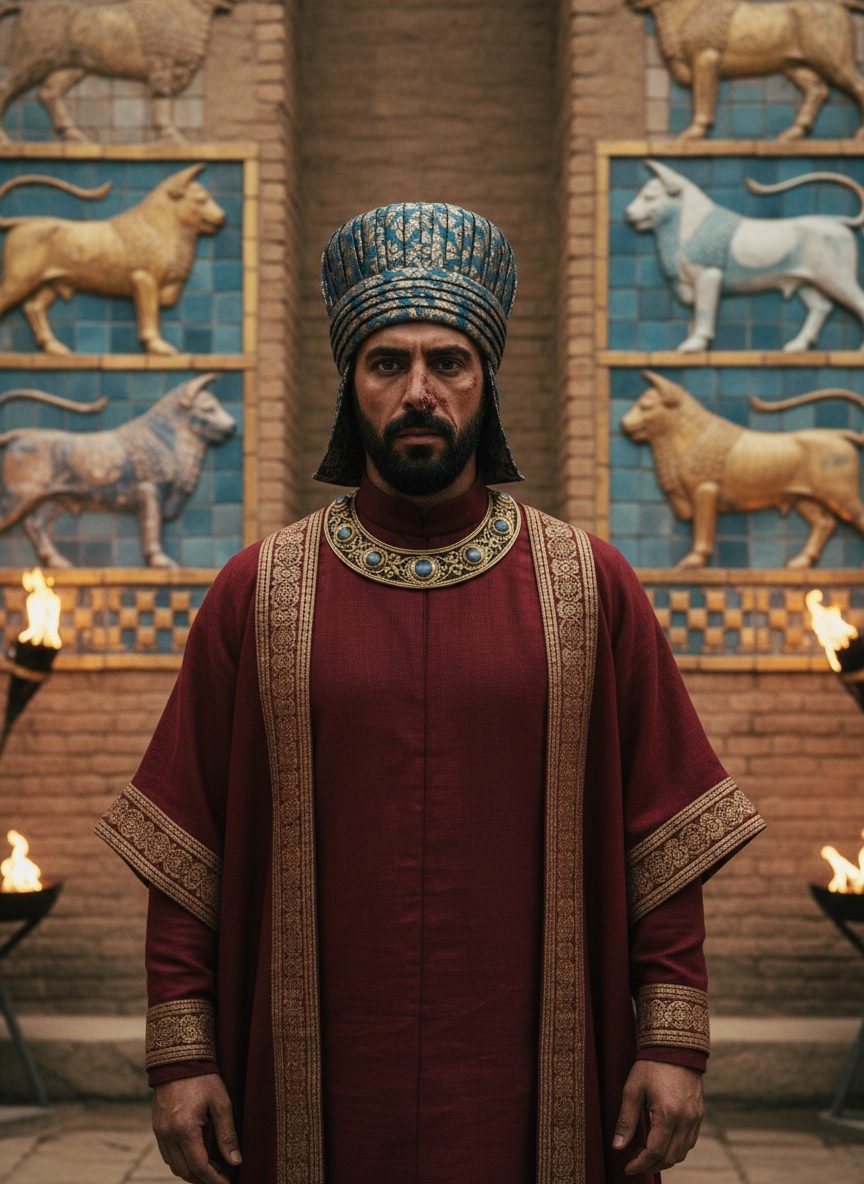
The air over Babylon was thick with anticipation, a subtle shimmer of heat distorting the horizons. The sun, casting a relentless glare on the imposing walls of the city, seemed a silent witness to the stalemate that had persisted. The sound of flapping sails and creaking harnesses filled the landscape just beyond those walls, where the armies of the Persian Empire lay camped in a siege that seemed destined to span eternity. Babylon, the jewel of Mesopotamia, had dared to defy Darius I, the king who ruled from the banks of the Persian Gulf to the edges of India. Despite the march of time and the might of men, her walls remained unbreached, her spirit unbowed.
The Cunning of Zopyrus
Among the ranks of the frustrated Persians was Zopyrus, a general renowned for his audacity and intellect. Exasperation gripped the camp as each assault on the city met failure. The air was thick with the murmurs of soldierly conversations, punctuated by the clang of armor being repaired and the crackle of fires springing to life as night approached. Amidst this stagnation, Zopyrus conceived a plan as daring as it was shocking. It was a stratagem that demanded a sacrifice few could fathom: the mutilation of his own body.
One dawn, as the first light stretched across the azure sky, Zopyrus emerged from his tent, his head shrouded and his gait steady with resolve. Before the assembled soldiers, he enacted his grim task, leaving himself bloodied, his nose and ears severed. It was a visually grotesque act, a physical transformation that left those who witnessed it shocked into silence. But Zopyrus’s resolve remained unbroken, his eyes reflecting a determination that spoke to the higher stakes of his sacrifice.
With his disfigurement, Zopyrus approached Darius, claiming he had been brutally punished by the king himself. The spectacle of his battered visage compelled all who saw him. Yet instead of receiving pity or scorn, his actions were understood and allowed to proceed by the king. He would enter Babylon as a defector, taking with him a plan as audacious as his self-inflicted wounds.
Inside the Impregnable Walls
Making his way to the gates of Babylon, Zopyrus embodied a picture of bitterness and betrayal. The Babylonians, enthralled by the sight, took him in, seeing in him someone whom their common enemy had wronged. He spoke of his anger against the tyrant Darius, weaving a tale of enmity and vengeance that resonated powerfully within the walls of the besieged city. Whether through belief or the sins of opportunity, the Babylonians chose to accept him into their ranks, bestowing upon him positions of increasing trust and responsibility.
The history-laden walls bore witness to many such intrigues, but few as bold as Zopyrus’s ruse. Days turned to weeks, and gradually he ingratiated himself, guiding the Babylonian forces with the strategic wisdom that had served him so well under Darius. Trust was a currency he spent wisely, and soon he commanded sections of the defense, his influence burrowing deeper into the city's military core.
Babylon’s night air was tinged with the scent of incense and distant murmurs of prayer, but danger lay in the shadows. Zopyrus was neither a deserter nor a traitor. He was a Persian to his bones, executing a plan spun with the threads of deception and courage. No Babylonian could suspect that the hand guiding their defenses would soon weave a tapestry of their own surrender.
The Fall of Babylon
As Zopyrus’s position solidified, he patiently orchestrated the denouement to his perilous play. A visage of mutilated loyalty coalesced with his strategic encroachment within Babylon ranks. On a night shrouded in the quietude of trust and routine, Zopyrus set his plan in motion. The vast city, teeming with history and defiance, could not withstand the subterfuge lying within its heart.
The gates of Babylon swung open not to the sound of a triumphant charge, but rather a silent acceptance from within. Before the break of dawn, Persian forces streamed into the city, bastions of Babylonian power now intertwining with their ranks. The city that had bested assaults from without succumbed to betrayal from within. Babylon fell with scarcely a shout or clash of weapons, its glory momentarily dimmed in the vast expanse of Persian power.
Standing amidst the victory, Zopyrus’s form remained by the gates, disfigured but triumphant, a testament to the extremes of human cunning and dedication. His act was not one of madness, but rather strategy carved in flesh. By sacrificing his own appearance, he had ensured the survival and expansion of the Persian Empire's dominion. Yet, even in victory, the costs weighed heavy, for the tale of Zopyrus reveals the lengths to which loyalty and determination might drive a man — a reminder of the sacrifices made in the shadows of history.
Zopyrus's gambit opened more than just the gates of Babylon; it revealed the softer underbelly of what it meant to be conqueror and conquered. The dominant world power learned a lesson in humility and cleverness, the echoes of which resonate in modern strategies of war and diplomacy. Thus, the tale of Zopyrus, albeit ephemeral in glory and steeped in personal loss, continues to intrigue those who unravel the tapestry of human ambition throughout history.