The Battle of Varna was over before it had truly begun. Yet, within the chaos, a young king carved a path to legend, alone.
Amid the blood-soaked fields of Varna on November 10, 1444, the horizon trembled under clashing steel and anguished cries. This was not how it was supposed to be. For Władysław III, the twenty-year-old monarch who held the crowns of Poland and Hungary, the crusade against the advancing Ottoman Empire was meant to be a beacon of Christian resurgence. Instead, it was devolving into what would soon be known as one of the most tragic military debacles in European history. With Turkish forces swarming over the battlefield, the air grew thick with despair.
Raised amidst the longstanding conflict between Christianity and Islam, Władysław was thrust into the heart of a densely woven political and military tapestry. He was chosen to lead this brave yet reckless charge against the Ottomans, a decision shaped as much by hope as by desperation. His youth and inexperience overshadowed by the evangelical fervor of the crusade, Władysław’s passion burned brightly, dangerously.
The mood at Varna had been one of hopeful resolution just days before the clash. A European coalition, composed largely of Polish and Hungarian forces, had assembled under the banner of a holy war, a campaign fuelled by the intent to push back Sultan Murad II's formidable army. The Christian coalition was confident, bolstered by past successes in campaigns against the Turks. They saw themselves as the spearhead of a new age, one that would redefine the power dynamic across Europe and the Near East.
As dawn broke on that fateful day, the opposing armies were set against each other—a field of tension poised to erupt. The Ottomans, experienced and calculated, faced a coalition whose unity was more fragile than its numbers suggested. Behind the Ottoman lines flew the sinister flag of Sultan Murad II, who, despite having previously abdicated, had returned to command his forces once more. The Sultan, having plotted his strategies with the patience of a seasoned tactician, could sense an impending victory as the Christian crusaders hesitated.
Despite strategic plans that unraveled quickly, the initial phase of the battle was tense but balanced. The carefully orchestrated cavalry charges and defensive stands painted a grim, yet epic picture of medieval warfare. However, the Ottomans’ ability to organize quickly and adapt was underestimated, and soon the tides turned overwhelmingly against Władysław’s forces. The cracks in the coalition were beginning to fracture into chasms.
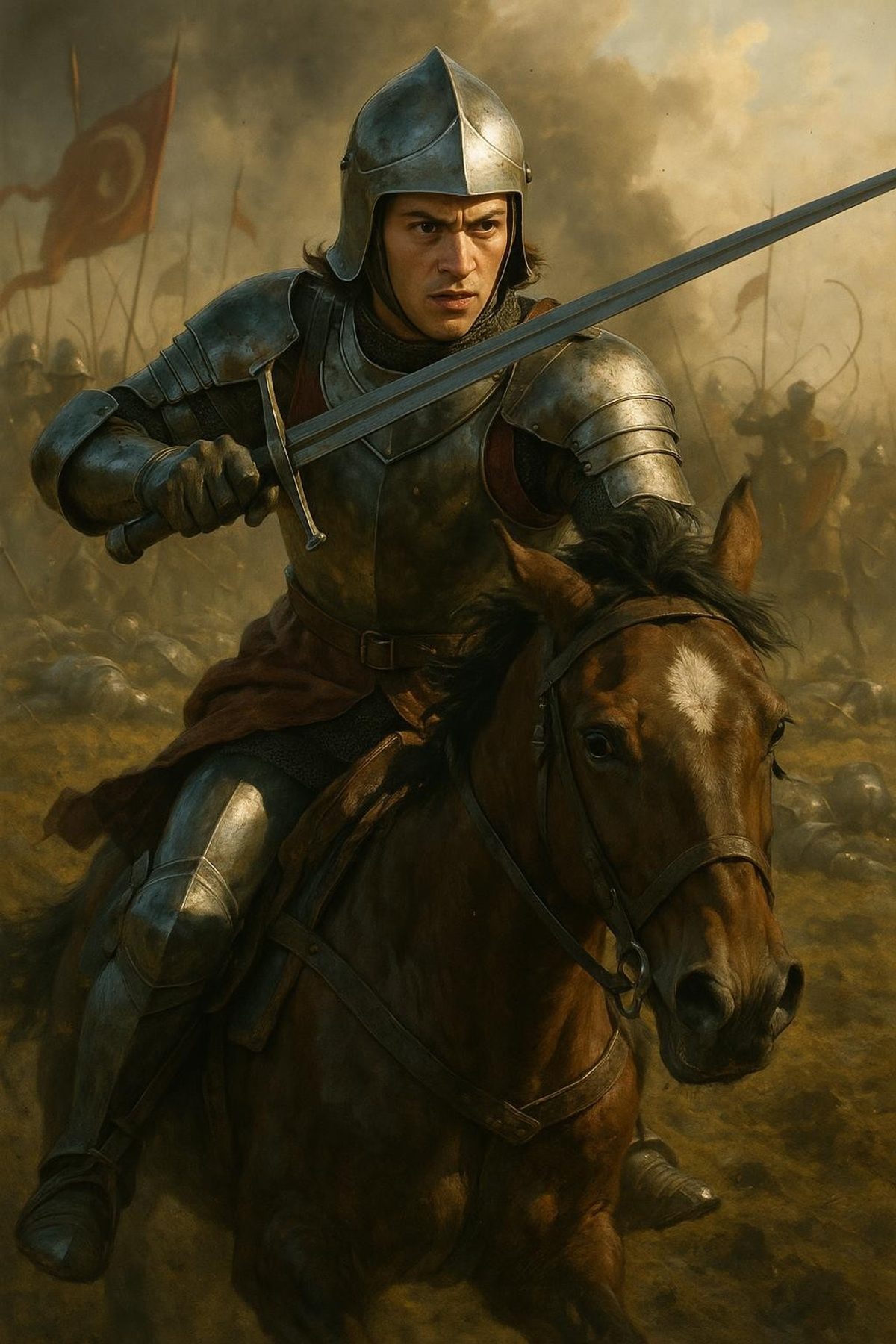
While his generals urged retreat, pleading reason in the face of overwhelming odds, the young king weighed his options. To fall back was to accept defeat; to stand firm was to gamble with his life and those of his men. Władysław chose a path few would have dared tread—the solitary charge into history. Spurring his battle-worn steed, he aimed not just at the Turkish forces, but directly for Sultan Murad’s elite guard.
Alone, Władysław's figure was a defiantly noble silhouette against the chaos, a testament to youthful gallantry or perhaps foolhardiness. His armor flashed beneath the autumn sun, a glimmer of hope swallowed by the might of insurmountable odds. For a brief moment, both armies halted in unexpected awe—a king charging headlong into the maw of his enemy alone. Warriors who had moments before been his prey now parted with a mixture of respect and disbelief.
What followed was swift and brutal. The Ottoman guard, seasoned and unyielding, encircled Władysław. It was here, amidst the dust and din of battle, that the young king fell to the Sultan’s soldiers, his life extinguished in his striving attempt to turn the tide. Murad himself is said to have been taken aback by the audacious act, one that might have been sheer madness but was undeniably heroic. The young king's lifeless body became a rallying cry momentarily for his men who, driven by Władysław's final act, surged in a desperate counter-assault.
Despite this newfound surge of fervor, the tactical advantage and numbers of the Turkish forces sealed the outcome. The field of Varna was drenched in Christian blood, its soil forever marked by the ambition of a young king’s charge. The Ottoman victory was as thorough as it was brutal, a definitive testament to the shifting power dynamics.
The story of Władysław of Varna stands apart, not merely as a tale of a lost battle, but as a nuanced reflection on the promise and peril of leadership. It is a poignant narrative of how youthful passion can both inspire greatness and invite catastrophe. In the grand historical tableau, his charge remains a vivid reminder of the courage and complexities inherent in the human spirit.
As the clamor of battle fades into history, the echoes of Władysław’s ride continue to resonate, not only in the annals of medieval warfare but also in the hearts of those who dare dream beyond the confines of caution. In every sense, he charged alone, but his legacy marches on with those who remember that moment when a young king chose courage over caution in a world darkened by conflict.