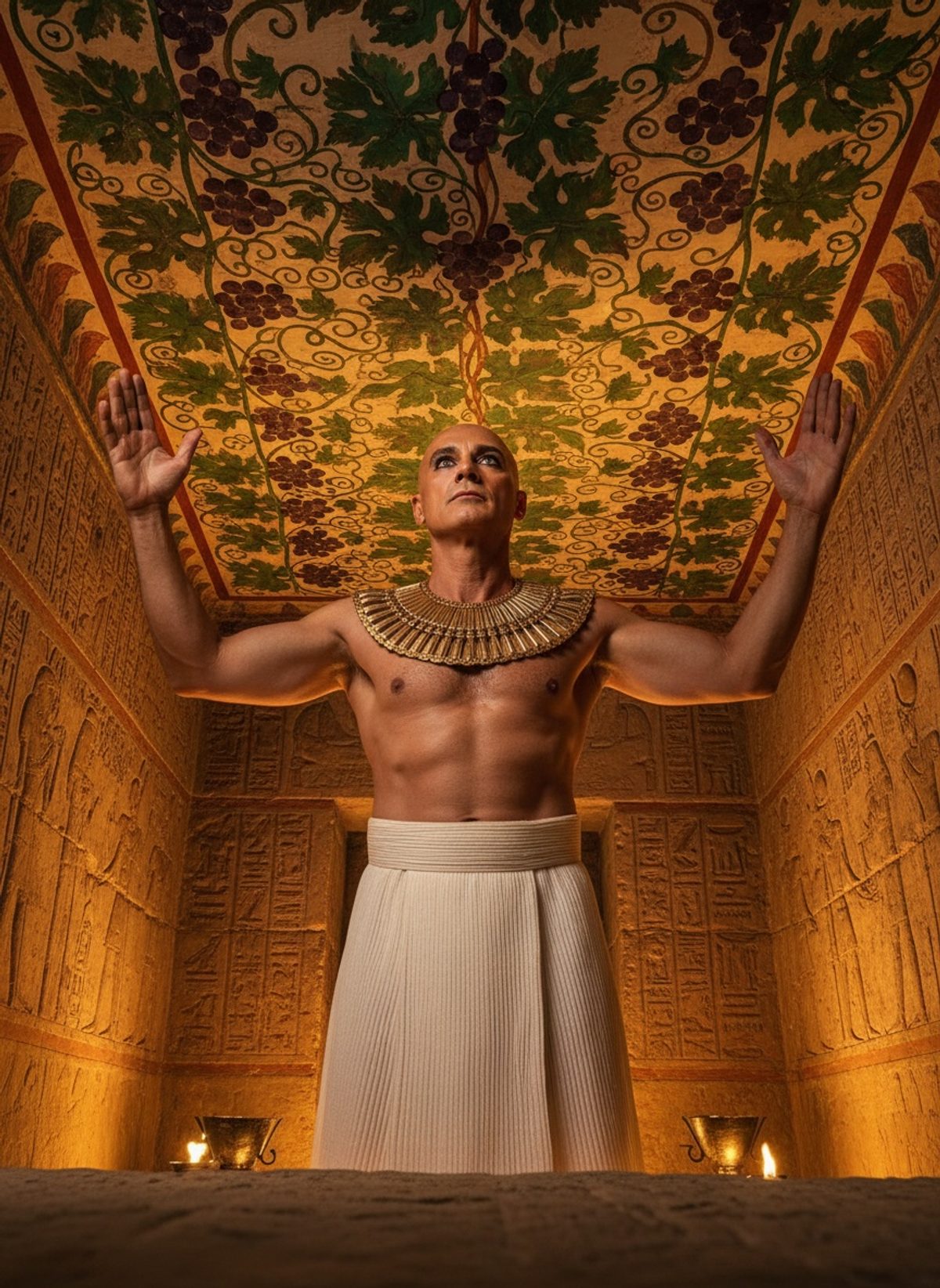
He was one of the most powerful men in Egypt. He wanted to be buried beneath a painted garden.
The Man Who Ruled Thebes
In the age of the pharaohs, where grandeur and opulence were the currency of the elite, Sennefer stood tall among the dignitaries of Egypt's storied 18th Dynasty. He served as the Mayor of Thebes under Pharaoh Amenhotep II, wielding power in one of the civilization's most revered capitals. As mayor, not only was Sennefer responsible for the administration of Thebes, but he also had a direct hand in managing agricultural lands, temple estates, and workforce allocations — the lifeblood of the region's prosperity. Many people would assume that such a man might desire to be interred with gold or symbols of earthly triumph.
Yet, what Sennefer chose for his eternal resting place defied the norms of his time. In an era dominated by monumental tributes and richly adorned burial sites, Sennefer's aspirations turned to the earth's more humble gifts. He envisioned a tomb painted not with scenes of domination or celestial voyages, but with vines heavy with grapes — a sanctuary blooming with the promise of life and abundance. This choice is a testament to his connection with the land and its enduring cycles. It offers a glimpse into a mindset that cherished nature's simple beauties over ostentatious displays of wealth.
The Painted Vineyard
Descending into Sennefer's tomb is akin to stepping across the threshold of a timeless vineyard. The ceiling, adorned with a painstakingly illustrated canopy of vines, transports its visitors to a realm where nature's bounty reigns supreme. Here, clusters of lush grapes dangle overhead, intertwined with meandering tendrils and verdant leaves. The artistry is so masterfully rendered that the vines almost seem to sway gently in an ancient breeze, whispering secrets of ages past.
In stark contrast to the vivid scenes of victory or divine judgment so common in other Egyptian tombs, Sennefer's painted vineyard offers a softer vision of the afterlife. It is a garden of tranquility and sustenance, untroubled by life's more grandiose concerns. This choice reflects an early appreciation for the earth's fertility, revered by ancient Egyptians as a source of renewal and eternity. By surrounding himself with such images, Sennefer embraced the hope of a life sustained by the same forces he once governed.
The tomb's vibrant ceiling remains remarkably well-preserved, a testament to the skill of the artisans and the profound peace encapsulated within its walls. Through its depictions, visitors can virtually taste the grapes ripening above, and perhaps, just for a moment, share in Sennefer's vision of paradise.
The Whispering Walls of Thebes
The allure of Sennefer's tomb extends beyond its ceiling of vines. Throughout its chambers, the walls whisper tales of daily life and devotion, rendered with delicate precision. Scenes depict Sennefer receiving gifts alongside his wife, reflecting a partnership anchored in mutual respect and shared responsibilities. His titles, inscribed upon the walls, capture the multifaceted nature of his leadership role, underscoring his importance at Thebes' administrative center.
Many of these scenes feature profound glimpses into the religious practices and societal values of his time. Offerings to the gods, feasts, and mythical creatures punctuate the tomb's interior, revealing a world where the spiritual and mundane were deeply interconnected. They speak of a culture that found significance in both grand rituals and everyday acts of reverence. These narratives wrap visitors in the warm embrace of history, allowing them not just to witness, but to partake in the rhythms of life long vanished.
The tomb, nestled in the cliffs of Thebes, serves as a sentinel of history, its walls echoing the conversations of ancient times. It houses not just the memory of a notable figure, but an encapsulation of life as it was, illuminating the continuum from birth to death and rebirth. Through these stone diaries, we draw nearer to the heart of a civilization that cherished both the terrestrial and the divine.
A Legacy of Simplicity and Peace
Thousands of years have passed since Sennefer walked the sunlit path from palace to temple, yet his garden endures. In crafting a resting place beneath a painted vineyard, he forged a legacy rooted not in opulence, but in the quiet strength of nature's cycles. Instead of imposing a monument of stone, he left behind a legacy of art, celebrating the earth's bounty — a simple yet profound testament to the values he cherished.
In a world often fixated on material wealth and power, Sennefer’s story remains poignantly relevant. His choice encourages reflection on what it means to leave a meaningful mark on the world, challenging modern notions of success and legacy. It invites us to consider the incomparable beauty of simplicity and the enduring power of nature's gifts. Sennefer's painted tomb, irreducibly tied to the natural world, is a relic that speaks in whispers — of beauty, of peace, and of a life well-lived beneath a canopy of vines.