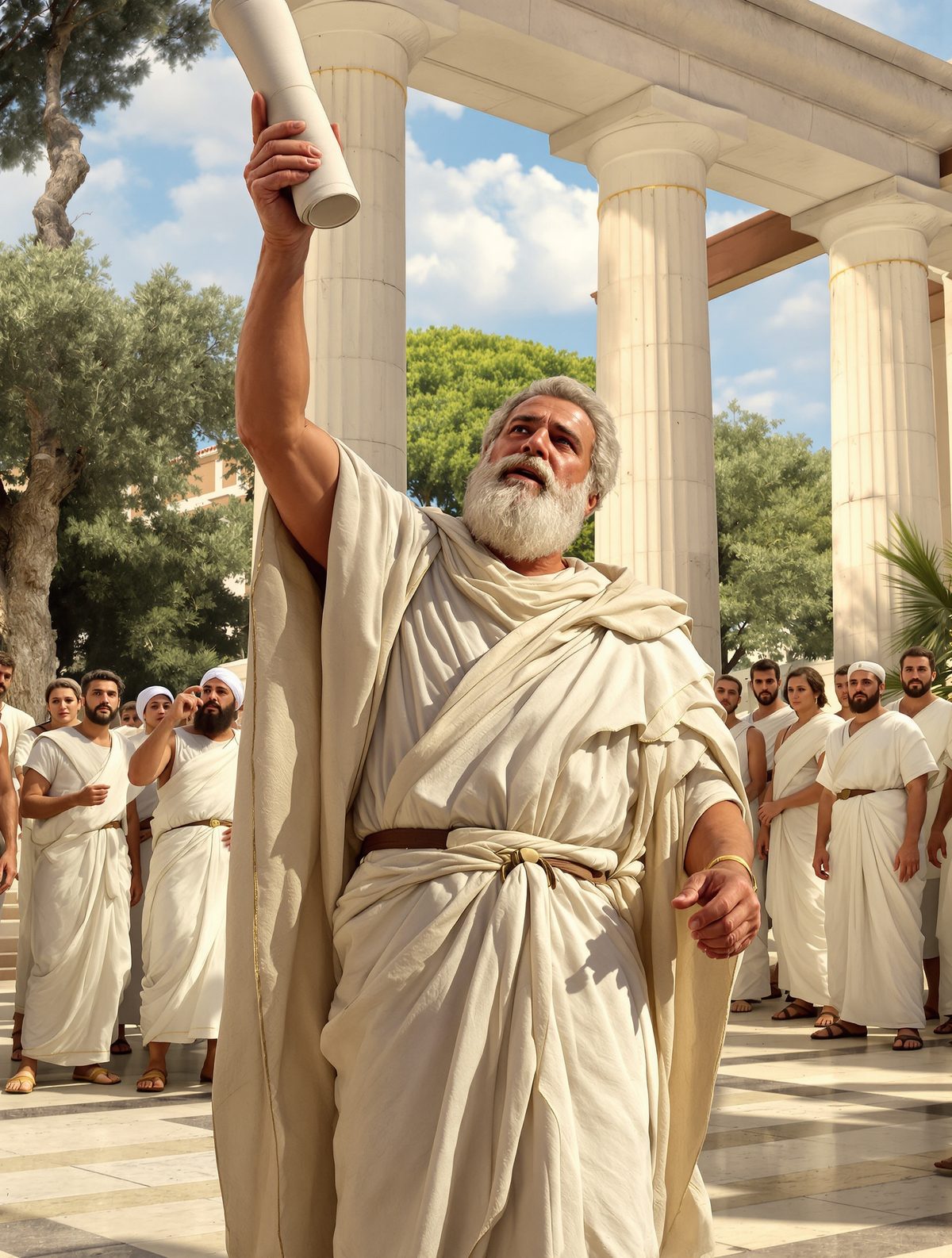
Imagine standing in the heart of Athens in 534 BC, amidst the fervor of a festival dedicated to Dionysus, the god of wine, fertility, and ecstatic celebration. The air is thick with anticipation as the fragrance of incense mingles with the chorus's rhythmic chant. Hundreds gather in a grand open-air theater, their curiosity piqued by the promise of divine entertainment. It’s a spectacle as old as the city itself. But this time, something extraordinary is about to happen. A single figure steps forth from the harmonized mass of voices—a solitary voice emerges. The world of theater is about to change forever.
The Festival of Dionysus: A Sacred Tradition
In the sixth century BC, the Athenian calendar was studded with various religious festivals, none more significant than the Dionysia. This celebration not only honored Dionysus but also reaffirmed the spirit and identity of Athens as a beacon of cultural sophistication. Every year, as spring unfurled its tender leaves, Athenians gathered at the foot of the Acropolis for days of music, drinking, and processions, culminating in theatrical performances.
The stage was set outdoors, and its backdrop was the austerity of the sky. Actors—though, at this point, they were not known as such—performed in religious choruses, their voices melding into one resonant entity. The chorus leader, usually chosen through rigorous selection, led the group in peans to the gods, their stories revered, yet resistant to individual embellishment. Audience members would witness a synchronized delivery of tales, with no room for personal flair or deviation.
Thespis: The Bold Innovator
Enter Thespis, the rebellious innovator who dared to unravel the fabric of theatrical tradition. Little is known about Thespis's early life. Some sources hint at his origins in Icaria, an ancient town with a fervent devotion to Dionysus. What can be discerned is his ambition to transcend the boundaries of the chorus and its consensual rhythm. On that groundbreaking day in the City Dionysia festival of 534 BC, Thespis took an unprecedented step—a choice that would forever echo through time.
As the story goes, Thespis approached the altar, dipped in white lead to mask his face—a technique that perhaps instigated the use of masks in Greek theater. Rather than blend his voice with the chorus, he spoke directly as an individual character. Through this singular decision, Thespis transformed storytelling into an art form that celebrated the complexities of human personas. The crowd, captivated by this unexpected departure, witnessed the birth of the *actor*, a new element in drama that could add depth and personal intrigue to the narrative.
The Dawn of Character Separation
Thespis's innovation did not merely end with stepping out of the chorus; he effectively engineered the profession of acting. By embodying a character distinct from his own identity, he laid the foundation for what we now understand as dramatic performance. In doing so, Thespis established a dichotomy between the actor and the character, prompting the realization that multiple personas could be depicted by a single performer, each with unique attributes and motivations.
This represented a profound shift. It allowed the audience to engage with the drama on an emotional and intellectual level, questioning motives, empathizing with dilemmas, and drawing parallels to their own lives. The art of perspective had entered the realm of theater, sowing seeds for the development of future dramaturgical techniques, including dialogues and complex plot structures.
Thespis's Legacy: More than a Footnote
Though Thespis's bold act of stepping out of the chorus continues to be revered, his personal history remains enigmatic. Yet, his influence echoes robustly through the annals of drama. The very term "thespian," now synonymous with actor, is derived from his name, an enduring tribute to his revolutionary role in theater. But beyond the nomenclature, the essence of Thespis lives on in every performance that celebrates character autonomy.
The rise of individual actor roles precipitated the flourishing of Greek tragedy and eventually comedy—a duality that continues to define modern genres. The dramatists who followed, including titans like Aeschylus, Sophocles, and Euripides, further expanded upon the paradigm Thespis introduced, pushing storytelling to new realms of psychological and sociopolitical commentary. Thespis's initial step opened the floodgates to creative exploration and the profound exploration of human nature.
Why It Matters Today
In today's age, teeming with digital content, streaming platforms, and immersive virtual experiences, the echoes of Thespis's first brave solo voice can still be felt. The fundamental components of drama—conflict, transformation, and revelation—remain as potent as ever. Theater continues to evolve, yet its core remains tethered to the same principles of character interplay and audience engagement set forth in ancient Greece.
The courage to challenge tradition, to step forward with one's voice, is the theater's enduring legacy. Thespis reminds us that innovation in the arts requires boldness and vision. As contemporary artists strive to push boundaries, they tread a path first carved out over two millennia ago by a lone figure in a chorus on a festival day in Athens.
Thespis, though often overshadowed by later dramatic giants, is the quiet pioneer behind this vibrant, enduring art form. His rebellious act of individuality, once heralded by gasps in an open-air theater, inspires us to appreciate, preserve, and progress the storytelling arts in their myriad forms. As we continue to evolve, it is individuals like Thespis who remind us that profound change often begins with a single step forward and a voice that dares to speak alone.