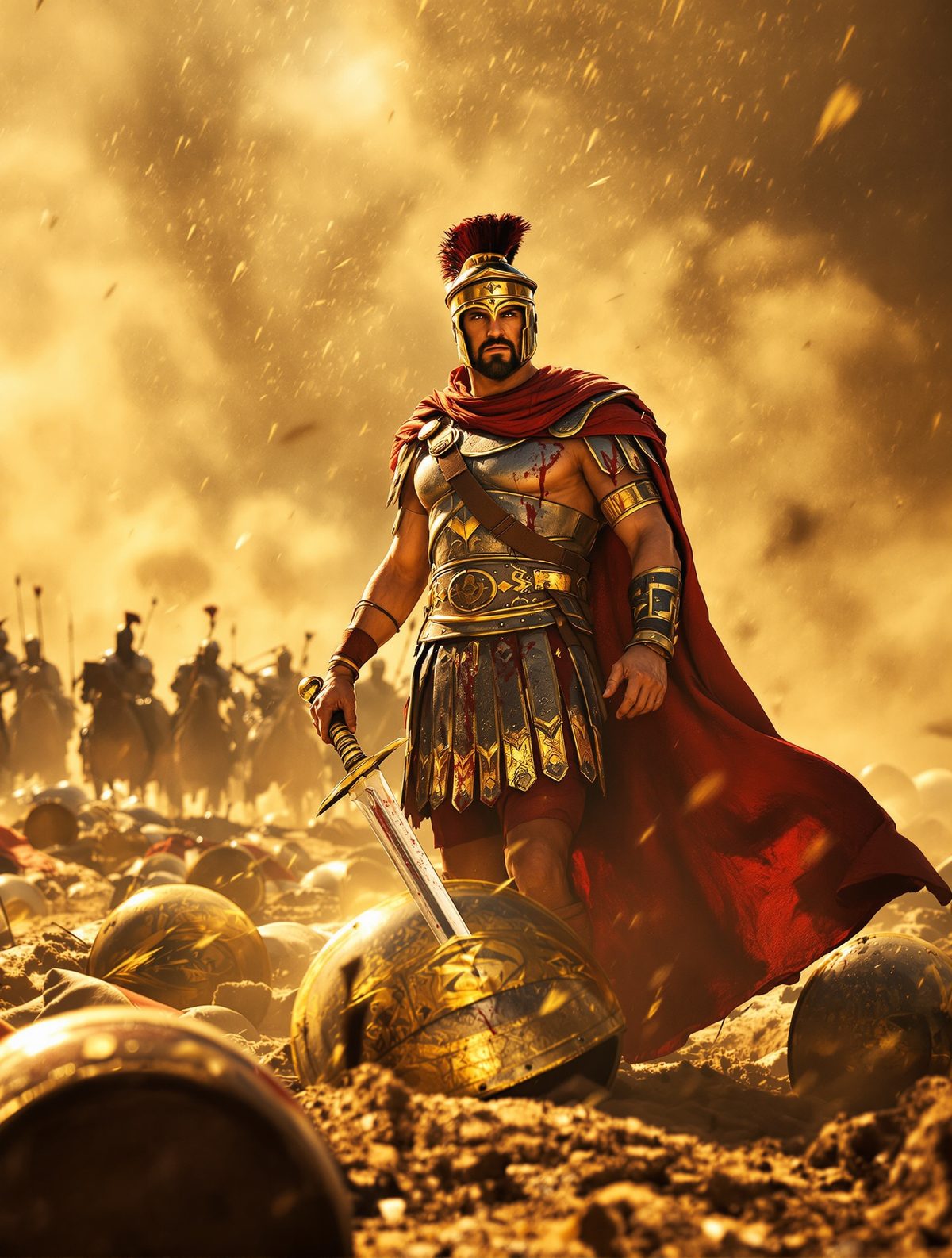
Picture this: a ninth-century battlefield somewhere in Anglo-Saxon England, littered with the fallen. The clash of steel has died away, but the day's horrors are far from over. Viking warriors drag a captured enemy king toward a makeshift altar of stones. What follows, according to the blood-soaked pages of medieval sagas, would become the most terrifying execution ritual in human history—the blóðörn, or blood eagle. But as the victim's screams supposedly echoed across the moors, was this brutal ceremony actually taking place, or were these just the fevered imaginings of storytellers centuries later?
The blood eagle stands at the crossroads of history and horror, where fact bleeds into fiction and the line between documentation and demonization becomes razor-thin. For over a thousand years, this alleged Viking ritual has haunted our collective imagination, but modern scholarship is finally asking the uncomfortable question: did the blood eagle ever truly spread its wings, or is it nothing more than medieval fake news designed to paint the Norse as inhuman monsters?
The Anatomy of Horror: How the Blood Eagle Supposedly Worked
According to the Norse sagas that describe it, the blood eagle wasn't just an execution—it was a masterpiece of ritualized agony. The victim, always someone who had committed an unforgivable offense like killing a king or betraying sacred oaths, would be forced face-down onto a stone slab. Using a sharp blade, the executioner would make deep cuts along both sides of the spine, methodically severing each rib from the backbone with surgical precision.
But this was only the beginning. Once the ribs were freed, they would be pried outward and backward, creating the grotesque impression of spread eagle wings. In the ritual's final, stomach-churning act, the victim's lungs would be pulled out through the gaping wounds and draped over the splayed ribs, creating what the Norse called "wings" that would flutter with each tortured breath—assuming the victim had somehow survived this long.
The entire procedure was allegedly performed while the victim remained conscious, their suffering prolonged for maximum psychological impact on witnesses. Some accounts suggest salt was rubbed into the wounds to intensify the agony. The ritual supposedly concluded only when the victim finally succumbed to shock, blood loss, or the simple impossibility of breathing with their lungs displaced outside their body.
Modern medical experts who have analyzed these descriptions paint a grim picture of what such a procedure would actually entail. Dr. Luke John Murphy, a Viking Age specialist, notes that the anatomical logistics alone would make this execution method extraordinarily difficult to perform as described, requiring both detailed knowledge of human anatomy and surgical tools far more sophisticated than typical Viking weaponry.
Tales from the Sagas: The Blood Eagle's Literary Debut
The blood eagle's gruesome legacy rests primarily on a handful of references in medieval Icelandic sagas, written between the 12th and 14th centuries—at least 200 to 400 years after the events they claim to describe. The most famous account appears in the Orkneyinga Saga, which tells of Earl Torf-Einarr's revenge against Halfdan Long-leg, son of King Harald Fairhair, around 895 AD.
According to the saga, Halfdan had killed Torf-Einarr's father, prompting the earl to hunt him down relentlessly. When Halfdan was finally captured on the island of Rousay in Orkney, Torf-Einarr supposedly declared: "Now I will offer Halfdan to Odin as a victory offering, and he shall be marked with the blood eagle." The saga describes the ritual in clinical detail, noting how the earl "carved the blood eagle on his back with his sword, and cut away all the ribs from the backbone and pulled out the lungs."
Another account appears in the Ragnar Lodbrok Saga, where the legendary Viking hero's sons allegedly perform the blood eagle on King Aella of Northumbria in 867 AD, avenging their father's death in Aella's snake pit. The Heimskringla, Snorri Sturluson's 13th-century chronicle of Norwegian kings, also references the practice when describing the death of King Edmund of East Anglia in 869 AD.
But here's where things get suspicious: these sagas were written during the height of medieval Christianity's influence in Scandinavia, often by Christian scribes who had never witnessed pagan practices firsthand. The authors were working from oral traditions that had been passed down for centuries, with all the embellishment and distortion that such transmission entails. Were they recording historical fact, or were they crafting propaganda designed to emphasize the savage nature of their pagan ancestors?
The Devil's in the Details: Archaeological Silence
For all its literary prominence, the blood eagle has left remarkably little archaeological evidence. Despite thousands of Viking Age graves excavated across Scandinavia and the British Isles, archaeologists have yet to uncover a single skeleton showing the distinctive rib damage that would result from this execution method.
This absence is particularly striking when compared to other forms of Viking Age violence, which have left clear marks in the archaeological record. Mass graves from battles like Ridgeway Hill in Dorset clearly show evidence of decapitation, while skeletons from execution sites display unmistakable signs of hanging, beheading, and other documented execution methods.
Dr. Cat Jarman, a bioarchaeologist specializing in Viking Age remains, explains that the type of systematic rib cutting described in the sagas would leave distinctive cut marks on bone that should preserve well in the archaeological record. "We see evidence of all sorts of violence and unusual burial practices from this period," she notes, "but the complete absence of blood eagle evidence is telling."
Some scholars argue that the victims of blood eagle executions might have been left unburied or disposed of in ways that wouldn't preserve skeletal remains. However, this explanation struggles to account for the complete lack of evidence across multiple centuries and geographic regions where the practice allegedly occurred.
Medical Reality Check: Could Anyone Actually Survive This?
Modern medical analysis raises serious questions about whether the blood eagle could be performed as described in the sagas. Emergency room physicians and trauma surgeons who have examined the accounts point to several anatomical impossibilities that suggest the ritual was either heavily embellished or entirely fictional.
First, the massive trauma involved in severing multiple ribs from the spine would likely cause immediate shock and unconsciousness, contradicting saga descriptions of victims remaining aware throughout the ordeal. The severing of intercostal muscles and nerves would cause excruciating pain, but the body's natural response would be to shut down consciousness as a protective mechanism.
Second, the blood loss from such extensive tissue damage would be catastrophic. The intercostal arteries run along each rib, and severing multiple ribs would sever multiple arteries simultaneously. Even with primitive methods of cauterization, victims would likely bleed to death within minutes of the initial cuts.
Most problematically, the mechanical act of breathing would become impossible once the rib cage structure was compromised and the lungs displaced. The diaphragm and intercostal muscles work together to create the pressure changes necessary for breathing, and the blood eagle procedure would destroy this mechanism entirely.
Dr. Tobias Capwell, a medieval warfare expert, suggests that if the blood eagle was attempted at all, victims would have died so quickly that the ritual's supposed psychological impact—watching the victim suffer prolonged agony—would have been impossible to achieve.
Viking Reputation Management: The Psychology of Terror
Whether real or imagined, the blood eagle served a crucial purpose in Viking Age psychological warfare. The Norse understood better than most ancient peoples that reputation could be as powerful as any sword or shield. Stories of extreme brutality, whether factual or fabricated, could demoralize enemies and prevent conflicts before they began.
The Vikings were masterful at cultivating an image of supernatural ferocity. From their dramatic longship prows carved with snarling dragons to their berserker warriors who fought in trance-like fury, every aspect of Viking culture seemed designed to inspire terror in their enemies. The blood eagle fits perfectly into this pattern of calculated intimidation.
Interestingly, the blood eagle's connection to Odin—the Norse god of war, death, and wisdom—adds another layer of meaning. In Norse mythology, Odin himself hung from the world tree Yggdrasil for nine days and nights, pierced by his own spear, in pursuit of knowledge. The blood eagle might represent a twisted mirror of Odin's sacrifice, offering enemy blood to the god while simultaneously displaying the victim in a crucifixion-like pose that would have horrified Christian observers.
This religious dimension suggests that even if the blood eagle was purely literary invention, it drew on deep cultural symbols that would have resonated powerfully with both Norse and Christian audiences—for very different reasons.
The Verdict: Medieval Myth or Brutal Reality?
After decades of scholarly investigation, the consensus among historians is shifting toward skepticism. The blood eagle likely represents a perfect storm of medieval mythmaking: oral traditions that grew more dramatic with each telling, Christian chroniclers eager to emphasize pagan barbarity, and Icelandic saga writers who prioritized compelling storytelling over historical accuracy.
This doesn't mean the Vikings were peaceful farmers—far from it. Archaeological evidence confirms that Viking Age Scandinavia was a violent world where execution, sacrifice, and ritualized killing were common. What seems increasingly unlikely is that they practiced this specific, anatomically implausible ritual exactly as described in the sagas.
The blood eagle's enduring power lies not in its historical authenticity but in its psychological impact. For over a thousand years, this alleged ritual has shaped how we view the Vikings, reinforcing stereotypes of Nordic brutality that persist in popular culture today. From Marvel's Thor movies to television series like "Vikings," the blood eagle continues to spread its wings across our collective imagination.
Perhaps the most disturbing aspect of the blood eagle debate isn't whether Vikings actually performed this ritual, but how eagerly subsequent generations embraced the story. Medieval chroniclers, Renaissance scholars, and modern entertainers have all found something compelling in this tale of extreme cruelty—suggesting that the blood eagle reveals as much about our own fascination with violence as it does about Viking Age Scandinavia.
In an era of "fake news" and viral misinformation, the blood eagle serves as a medieval cautionary tale about how sensational stories can overshadow historical truth. Whether it really happened or not, the blood eagle reminds us that sometimes the most powerful stories are the ones that tell us not what actually was, but what people needed to believe.