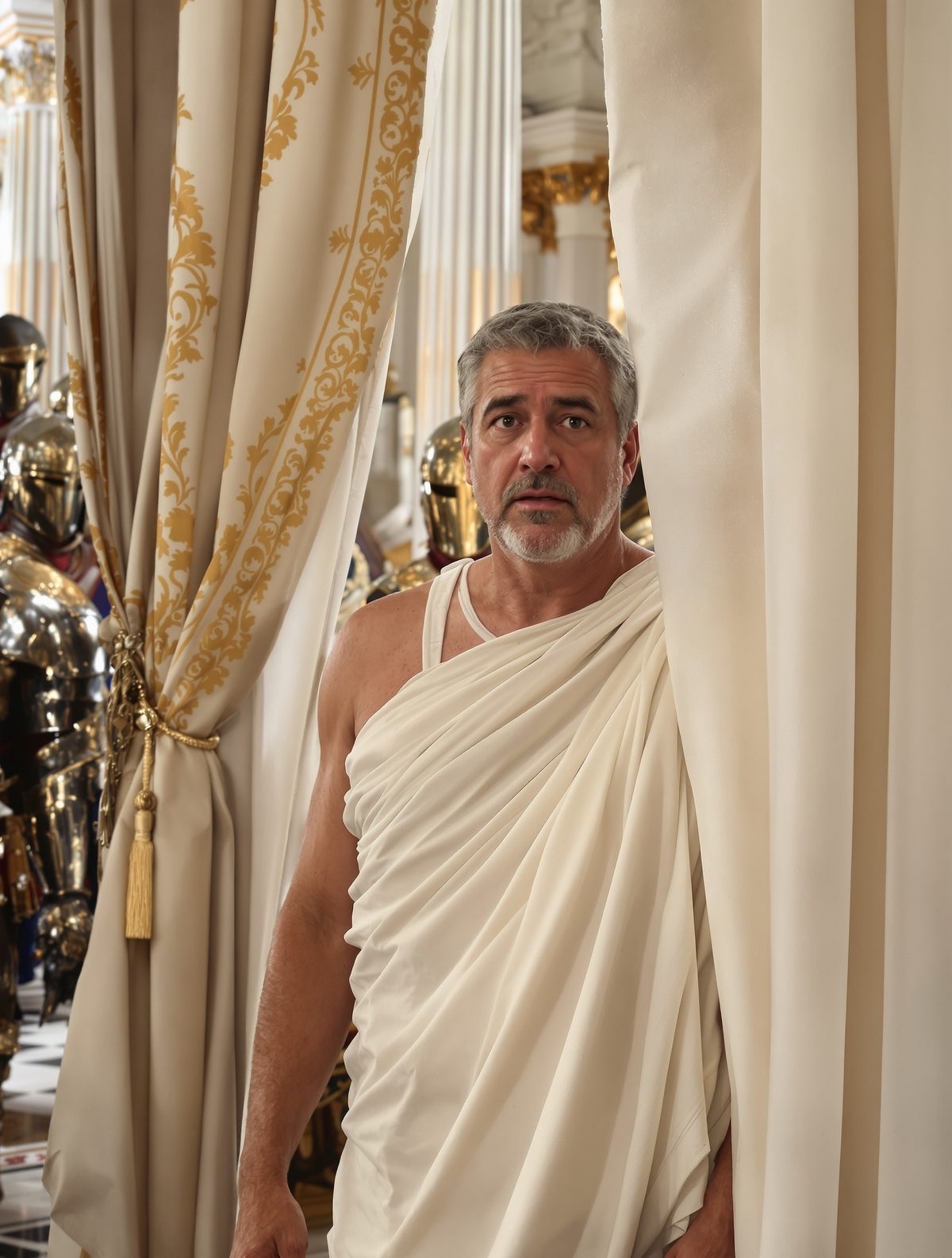
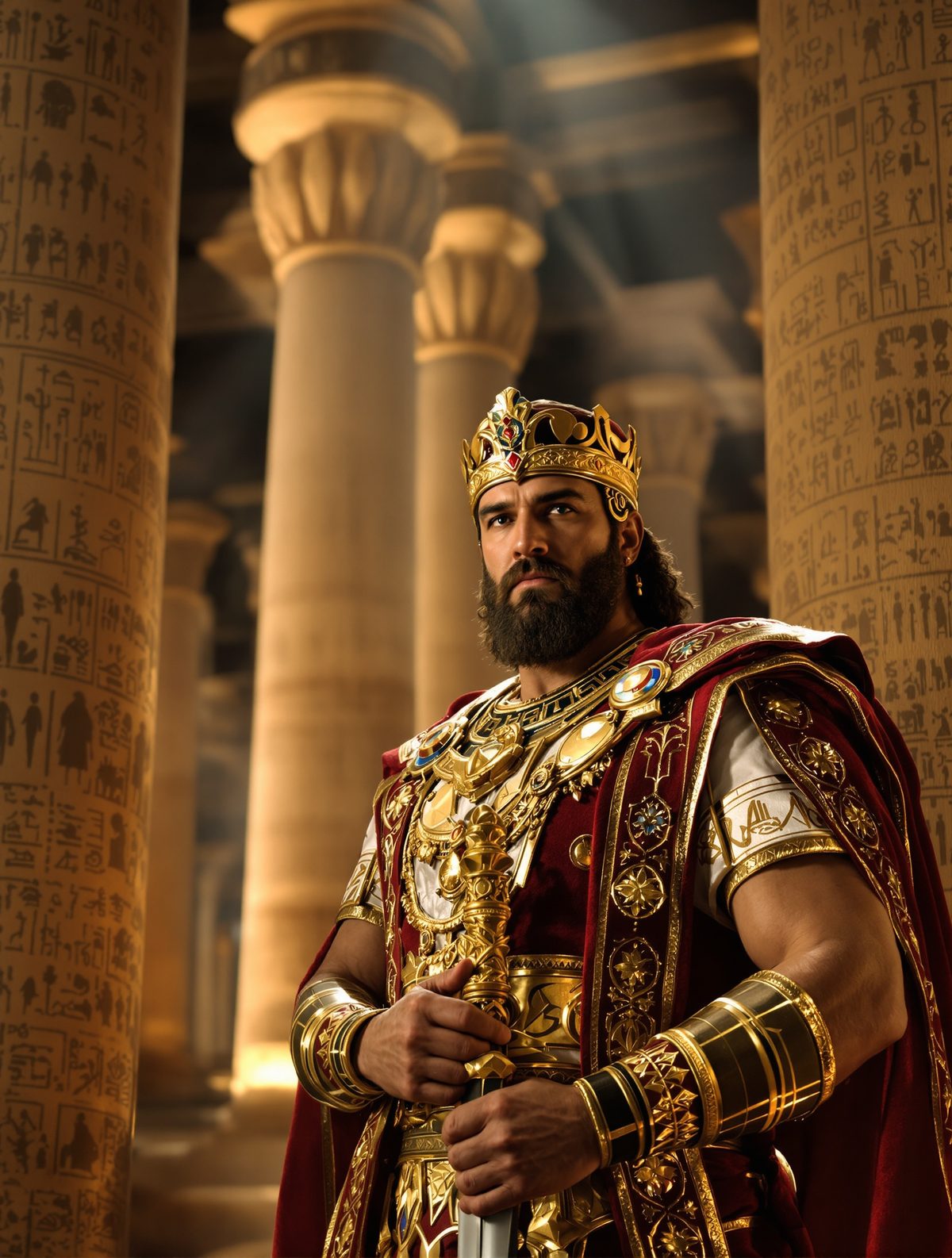
Picture this: You've survived brutal warfare against the mighty Persian Empire, revolutionized an entire art form, and written some of the most powerful theatrical works the world has ever seen. You're walking peacefully through the countryside on a pleasant afternoon in ancient Sicily when suddenly—thunk. A tortoise falls from the sky and kills you instantly.
This isn't the plot of some absurdist comedy. This is how Aeschylus, the father of Greek tragedy and one of history's greatest dramatists, actually died in 456 BC. The man who gave us some of literature's most profound explorations of fate, justice, and divine retribution was himself struck down by what can only be described as the universe's cruelest punchline.
The Titan of Tragedy
Aeschylus wasn't just any playwright—he was the playwright who essentially invented drama as we know it. Born around 525 BC in Eleusis, just outside Athens, he lived through one of the most extraordinary periods in human history. This was the era when democracy was being born, philosophy was flourishing, and Greece was locked in a life-or-death struggle with the Persian Empire.
Before Aeschylus came along, Greek theater consisted mainly of a single actor and a chorus chanting stories. It was Aeschylus who had the revolutionary idea to add a second actor, creating the possibility for dialogue, conflict, and true dramatic tension. Suddenly, characters could argue, scheme, love, and betray each other right before the audience's eyes. He didn't just write plays—he invented the very concept of theatrical drama.
His masterpiece, The Oresteia, remains one of the only complete tragic trilogies to survive from ancient Greece. This epic tale of murder, revenge, and ultimate justice in the house of Agamemnon is still performed today, nearly 2,500 years later. The themes he explored—the conflict between divine and human law, the cycle of vengeance, the price of power—remain as relevant now as they were in ancient Athens.
But here's what they don't teach you in literature class: Aeschylus was also a certified war hero. He fought at the Battle of Marathon in 490 BC, where a vastly outnumbered Greek force defeated the Persians in one of history's most stunning military upsets. He likely also fought at Salamis, where the Greek fleet crushed the Persian navy. This wasn't some delicate poet hiding in his study—this was a warrior-playwright who had stared death in the face on multiple battlefields.
The Prophecy That Haunted a Hero
According to ancient sources, Aeschylus had received a disturbing prophecy that he would be killed by a falling object. Like many Greeks of his era, he took such divine warnings seriously. The oracle's words gnawed at him, shaping his later years with an underlying current of dread.
In response to this ominous prediction, Aeschylus made a decision that seemed perfectly logical: he would avoid buildings, overhanging cliffs, and other places where objects might fall. He began spending more and more time in open countryside, believing that wide-open spaces would protect him from his prophesied doom.
It's almost tragically ironic—the man who wrote so eloquently about the inescapable nature of fate was actively trying to outwit his own destiny. His plays are filled with characters who attempt to avoid prophetic warnings, only to fulfill them through their very efforts to escape. King Oedipus fled his home to avoid killing his father, only to encounter and kill his true father on the road. Perseus's grandfather threw him and his mother into the sea to prevent a prophecy, setting in motion the exact events that would lead to his death.
Aeschylus knew these stories intimately—he had written variations of them. Yet he couldn't resist the very human impulse to fight against seemingly inevitable doom.
The Fateful Day in Gela
By 456 BC, the 69-year-old Aeschylus was living in the Greek colony of Gela on the southern coast of Sicily. Some sources suggest he had moved there after losing a dramatic competition to the younger Sophocles, though this may be literary gossip. Others indicate he was invited by Hiero I, the tyrant of Syracuse, who was known for attracting the greatest artists and intellectuals of the age to his court.
On that fateful day, Aeschylus was taking one of his customary walks in the open countryside outside Gela's walls. The Sicilian landscape stretched before him—rolling hills dotted with olive groves, the Mediterranean gleaming in the distance. It was exactly the kind of open, unobstructed terrain where he felt safest from falling objects.
High above, a lammergeier—a massive vulture-like bird also known as a bearded vulture—was engaged in its own daily routine. These magnificent creatures, with wingspans that can reach nearly ten feet, have a unique feeding habit that sets them apart from other raptors. While most birds of prey content themselves with meat, lammergeiers have developed a taste for bone marrow. To access this nutritious delicacy, they've learned to drop bones from great heights onto rocks, shattering them to reveal the marrow inside.
But bones weren't the only hard objects these clever birds had learned to drop. Tortoises, with their rock-hard shells, presented a similar challenge and an even richer reward.
The Moment of Cosmic Irony
What happened next reads like something from one of Aeschylus's own tragedies, complete with the kind of dramatic irony that would make audiences gasp. The great bird, circling high above with a tortoise clutched in its talons, spotted what appeared to be the perfect rock formation below—smooth, pale, and perfectly positioned for shell-cracking.
It wasn't a rock. It was Aeschylus's bald head, gleaming in the Sicilian sunshine.
The lammergeier released its cargo. The tortoise plummeted through the clear Mediterranean air, accelerating under gravity's inexorable pull. Aeschylus, lost in thought—perhaps composing verses in his mind or reflecting on his long, extraordinary life—never saw it coming.
The impact was instant and fatal. The playwright who had given voice to gods and heroes, who had explored the deepest questions of human existence, who had survived Persian spears and arrows, was killed by a reptile that had been minding its own business until a bird decided to use it as a nutcracker.
The irony was profound and multilayered. Here was a man who had fled to open spaces to avoid falling objects, killed by a falling object in the most open space imaginable. A warrior who had survived the chaos of ancient battlefields was felled by a tortoise. The poet who had written so movingly about fate's inescapable nature had his own prophecy fulfilled in the most absurd way possible.
The Legend Takes Flight
The story of Aeschylus's death spread rapidly throughout the Greek world and beyond. Ancient writers like Pliny the Elder and Valerius Maximus recorded it, ensuring its preservation for posterity. Some scholars have questioned whether the tale is literally true or if it's one of those "too perfect to be real" stories that ancient biographers loved to attach to famous figures.
But here's the thing—lammergeiers really do drop tortoises on rocks to crack them open. This behavior is well-documented and continues to this day in regions where these birds live. Even more convincingly, there are modern recorded instances of these birds mistaking unusual objects for rocks, including at least one documented case of a lammergeier dropping a tortoise on a car in Crete in 2013.
The ancient Greeks themselves seemed to accept the story as fact. They even created a somewhat macabre tourist attraction from it—for centuries afterward, visitors to Gela were shown the rock where Aeschylus supposedly died. Whether it was the actual spot hardly mattered; the story had taken on a life of its own.
When Life Writes Its Own Tragedy
There's something profoundly fitting about Aeschylus meeting his end in such a dramatically ironic fashion. His entire body of work explored the relationship between human agency and divine fate, between our attempts to control our destinies and the larger forces that shape our lives. His characters struggle against prophecies, fight against the gods, and try to escape their predetermined fates—usually making them inevitable in the process.
In death, Aeschylus became the protagonist of his own tragedy, complete with a prophecy, an attempt to escape destiny, and a conclusion that was both inevitable and utterly unexpected. It's the kind of ending he might have written himself—if he'd possessed a more twisted sense of humor.
But perhaps there's a deeper lesson here about the nature of existence itself. We make plans, take precautions, try to control outcomes, and build elaborate strategies to protect ourselves from life's uncertainties. Yet ultimately, we remain vulnerable to the completely unexpected—to the tortoise that falls from a clear blue sky.
Aeschylus gave us drama, taught us about fate, and showed us how the gods toy with human ambitions. In the end, he gave us one final lesson: that life itself is the greatest dramatist of all, capable of plot twists that no human imagination could devise. Sometimes the universe writes a comedy when we're expecting a tragedy—or perhaps it's the other way around.