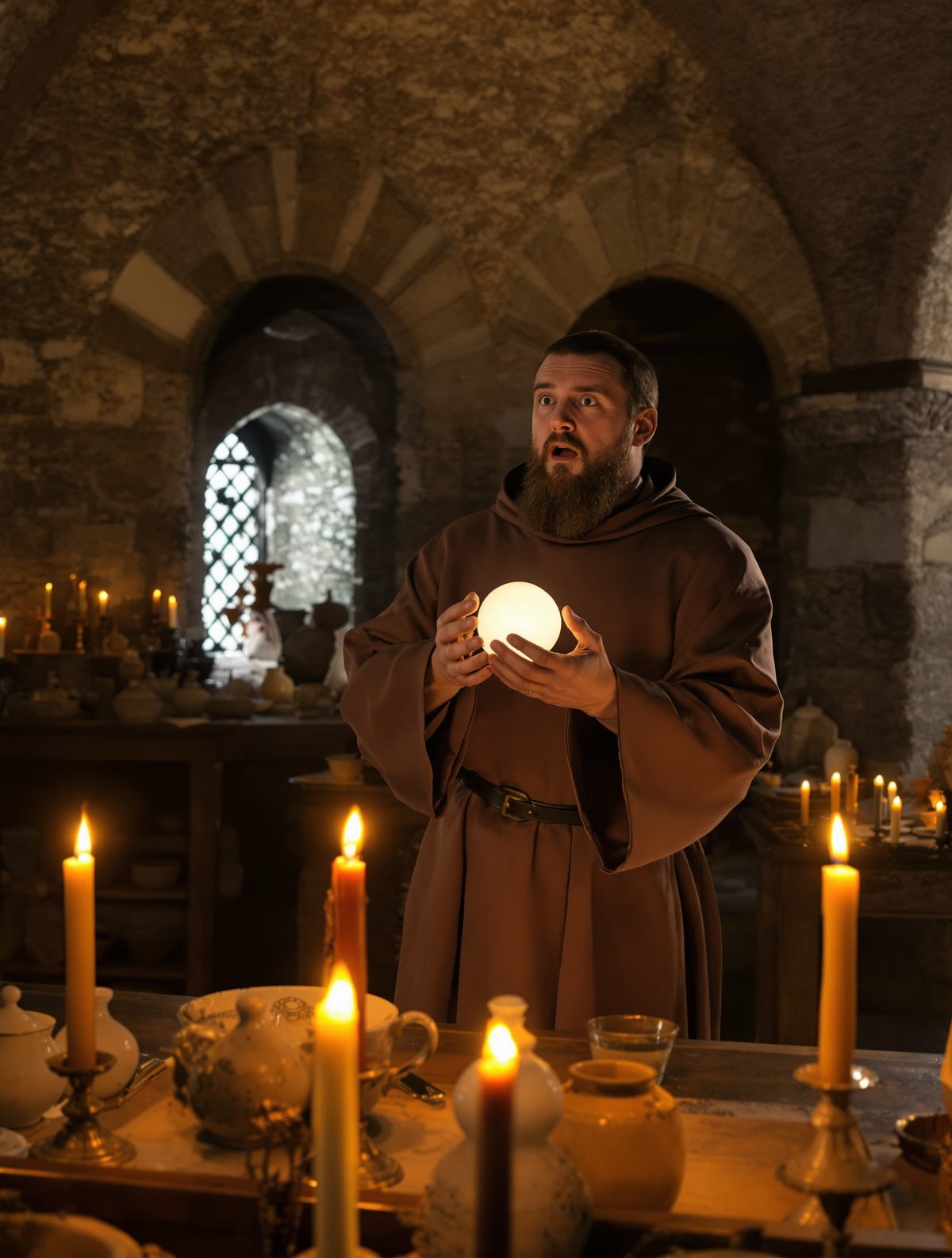
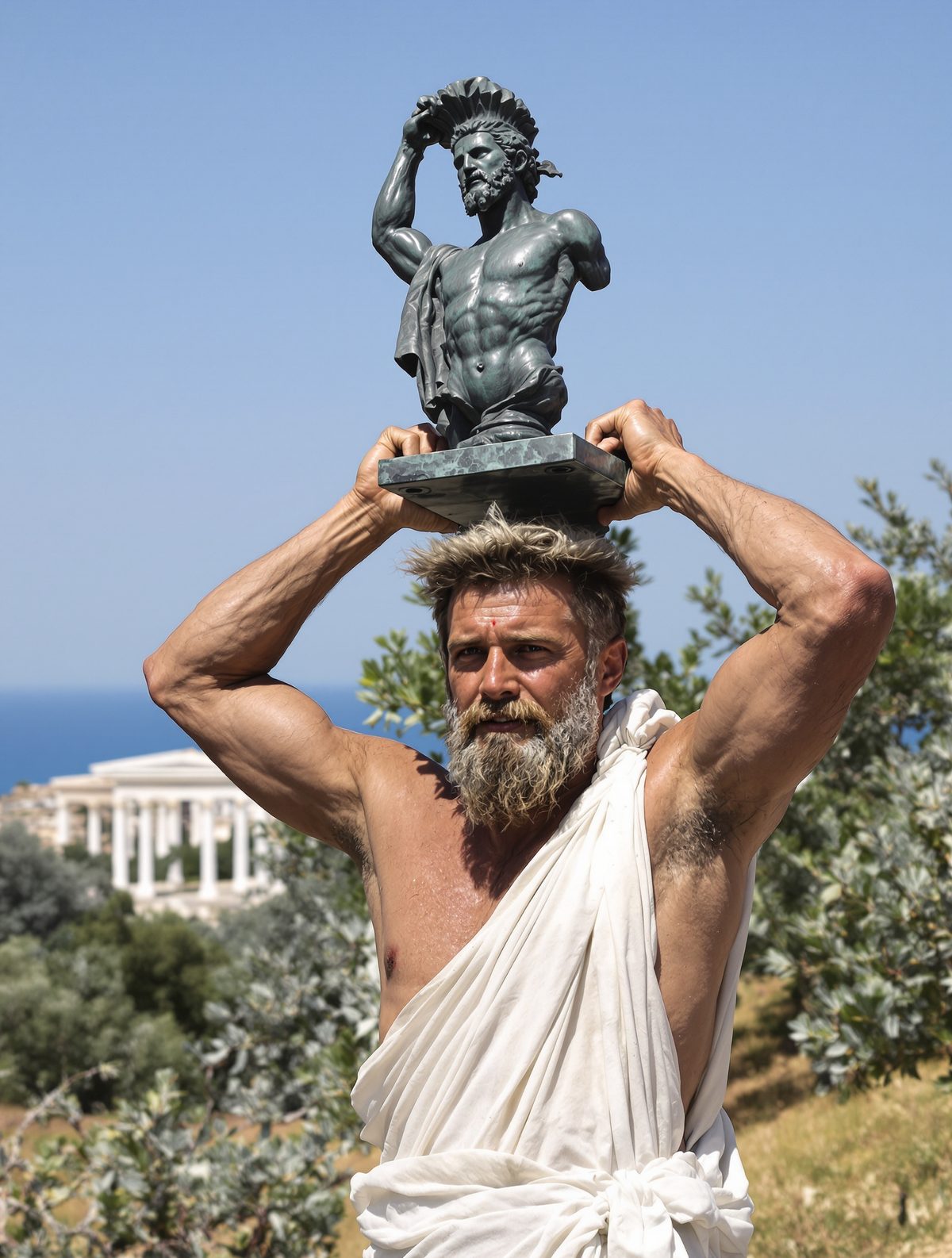
In the summer of 131 AD, a Roman legionnaire stumbled upon something that would haunt archaeologists for centuries. Deep beneath Hadrian's Wall, near what is now the village of Housesteads, his torch illuminated rough-hewn stone walls covered in Latin inscriptions. The carvings told an impossible story: a secret tunnel, three years in the making, and an engineer who had vanished into the darkness he was trying to conquer.
The final message, carved with an increasingly unsteady hand, still sends chills down the spine nearly two millennia later: "Dies MCDXXI. Tenebrae susurrant retro. Gaius Valerius hic non revertetur." Day 1,421. The darkness whispers back. Gaius Valerius will not return from here.
The Wall That Shouldn't Have Needed a Tunnel
Hadrian's Wall stands as one of Rome's most impressive engineering feats—73 miles of stone and turf stretching across northern Britain from coast to coast. When Emperor Hadrian visited Britain in 122 AD, he ordered its construction not just as a military barrier, but as a psychological statement: Here ends civilization, beyond lies chaos.
But why would anyone need to tunnel under this magnificent fortification? The wall had gates, after all—sixteen major crossing points with heavily guarded gatehouses. Official Roman business could pass through legitimately. This raises the first unsettling question about Gaius Valerius and his impossible project.
The tunnel's existence suggests something the history books don't tell us: that even Rome's most secure frontier had unofficial, perhaps even forbidden, traffic flowing beneath it. Archaeological evidence suggests the tunnel was designed for more than just military purposes. Its dimensions—roughly six feet high and four feet wide—were large enough for pack animals, indicating potential commercial use.
What makes Valerius's tunnel even more remarkable is its sophisticated engineering. Roman tunnel construction typically involved teams of dozens of workers, yet the carved records suggest this was largely a solitary endeavor. The mathematical precision required to dig a straight tunnel nearly 400 feet long, using only primitive surveying tools and oil lamps, borders on the impossible.
The Engineer Who Talked to Stone
Gaius Valerius Maximus—his full name recovered from the earliest tunnel inscriptions—was no ordinary laborer. His detailed progress reports reveal a man with advanced mathematical knowledge and an almost obsessive attention to detail. He recorded everything: daily progress measured in passus (Roman paces), soil composition, water infiltration rates, even the number of oil lamps consumed each day.
But Valerius was also talking to himself—or perhaps to something else. His early inscriptions read like standard engineering reports: "Day 47. Advanced three passus eastward. Clay soil, minimal water. Seventeen lamps required." Professional. Methodical. Sane.
By day 200, subtle changes creep into his language. He begins addressing his reports to "those who will come after," despite no evidence anyone else knew about his project. He starts describing sounds: "The earth speaks differently here. Water sounds, but no water found."
Modern engineers who have studied Valerius's route calculations express bewilderment at his precision. Working alone, with only basic Roman surveying equipment, he somehow managed to maintain a perfectly straight line through solid rock and shifting soil. His mathematical notations show familiarity with geometric principles that wouldn't be formally codified for several more centuries.
Descent into Darkness
The most chilling aspect of Valerius's story lies in watching his psychological deterioration through his own words, carved permanently into stone. Around day 400, his reports begin mentioning "voices in the deep places" and "echoes that answer questions not yet asked."
His engineering notes become interspersed with philosophical musings about darkness and light, civilization and wilderness. "Day 567. The Picts above know not what passes beneath their feet. But something else knows. Something else watches."
Archaeological analysis reveals Valerius was indeed working alone during his final year underground. Chemical residue from his oil lamps shows a single source of illumination, and tool marks indicate one person's work patterns. Yet his inscriptions from this period frequently refer to conversations, debates, even arguments with unseen companions.
The most disturbing entries describe his growing certainty that he was being watched. "Day 892. The darkness has eyes now. When I extinguish the lamp, I am not alone in the black. When I relight it, I am still not alone." Modern psychologists recognize classic symptoms of prolonged isolation, but Valerius's case presents unique elements that don't fit standard patterns of solitary confinement psychosis.
The Final Messages
Valerius's last dozen inscriptions, carved between days 1,410 and 1,421, reveal a man who had found something in the darkness—or something that had found him. His technical language gives way to increasingly mystical terminology. He writes about "the guardians of the deep threshold" and "voices that speak in tongues of stone and root."
His penultimate carving, dated day 1,420, contains a warning that has puzzled historians for centuries: "Let no Roman foot follow this path. The price of passage is higher than Caesar's gold. The old gods still hold dominion in the deep places, and they are not kind to invaders of their realm."
The final inscription, carved in increasingly erratic lettering, suggests Valerius had reached some kind of revelation—or breakdown. "I understand now. The wall was never meant to keep them out. It was meant to keep us from going deeper. But I have gone deeper. And they are coming with me."
Below these words, archaeologists found something that defies easy explanation: a perfect spiral carved into the stone, with mathematical proportions that wouldn't be understood until the Renaissance. At its center, a single word in a script that matches no known ancient language.
What the Darkness Left Behind
When Roman authorities finally discovered Valerius's tunnel in 131 AD, they found his tools neatly arranged, his oil lamp extinguished but still warm, and his final carving still fresh. No body was ever recovered. No trace of his exit from either end of the tunnel was found.
The Romans sealed both tunnel entrances with massive stone blocks and posted permanent guards. Official records list the area as "forbidden to imperial personnel by order of Governor Julius Severus." For an empire that routinely documented everything from grain shipments to latrine construction, the silence surrounding Valerius's disappearance is deafening.
Modern archaeological surveys using ground-penetrating radar have confirmed the tunnel's existence, though repeated attempts to excavate have been abandoned due to structural instability. The most recent attempt, in 1987, was halted after workers reported hearing "voices and movement" coming from sealed sections of the tunnel.
Perhaps most unsettling of all: local residents near Housesteads still report unusual phenomena. Strange sounds from underground, particularly during winter months. Lights moving beneath the earth with no apparent source. And occasionally, very occasionally, the sound of chisel striking stone echoing up from far below.
Echoes in the Modern World
Gaius Valerius's story resonates today not just as a historical curiosity, but as a profound meditation on isolation, obsession, and the human cost of pushing boundaries. In our age of deep-sea exploration and space travel, we understand better than ever the psychological toll of venturing into humanity's last frontiers.
His meticulous documentation of his descent into madness—or transcendence—offers unprecedented insight into the Roman mind confronting the unknown. More than that, it reminds us that the past holds mysteries that resist our modern desire to catalog and explain everything.
The tunnel beneath Hadrian's Wall remains sealed, its secrets buried with the man who spent three years of his life carving them into stone. But Valerius's final message continues to whisper across the centuries, asking us to consider what lies beneath the surface of our supposedly rational, mapped, and measured world.
After all, the darkness is still there. And sometimes, if we listen carefully enough, it still whispers back.