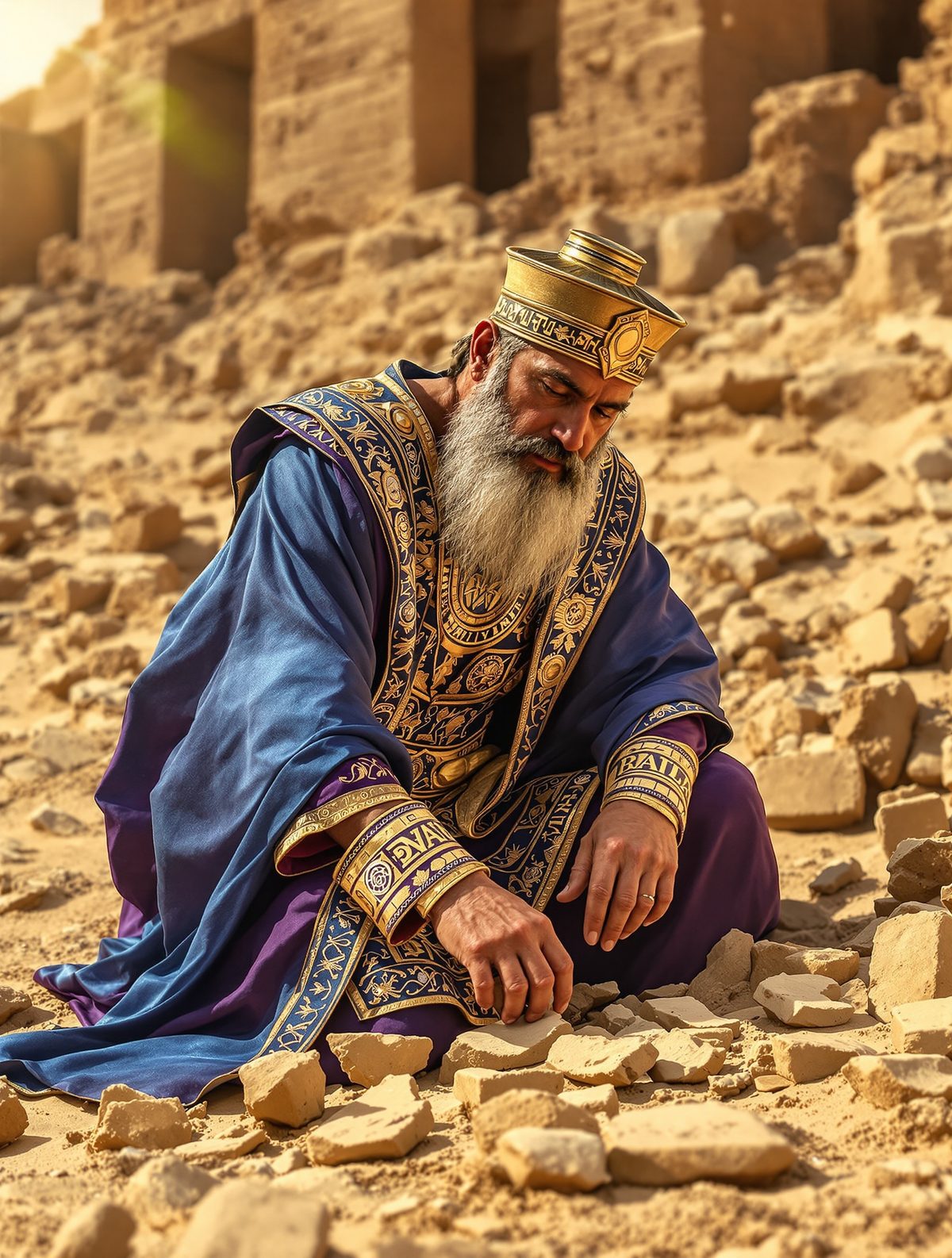
Picture this: you're standing on a windswept barrier island off the coast of North Carolina in 1590, surrounded by the skeletal remains of what was once England's boldest attempt to claim the New World. The wooden houses stand empty, their doors creaking in the salt-tinged breeze. Gardens once tended by hopeful families have grown wild. Children's toys lie scattered in the sand, abandoned mid-play. And there, carved deep into a wooden post with desperate urgency, is a single word that has haunted historians for over four centuries: CROATOAN.
This wasn't just any failed settlement. This was the first attempt to establish a permanent English colony in America, and its complete disappearance would become one of history's most enduring mysteries. But who carved that fateful message? And what happened to the 115 souls who vanished without leaving behind a single body, a single grave, or a single definitive answer?
The Dreamer Who Started It All
The story begins not with the mysterious carving, but with a man whose ambitions were as vast as the Atlantic Ocean itself. Sir Walter Raleigh, Queen Elizabeth I's favorite courtier, had obtained something unprecedented in 1584: a royal patent to establish colonies in the New World. This wasn't just about land or gold—this was about England's survival as a maritime power.
Raleigh's first attempt in 1585 was essentially a military outpost of 107 men on Roanoke Island, led by Ralph Lane. These weren't families looking to build a new life; they were soldiers, scientists, and fortune-seekers. When relations with local Algonquian tribes soured and supplies ran dangerously low, they abandoned the settlement in June 1586, sailing home with Sir Francis Drake.
But Raleigh wasn't finished. His next attempt would be different—revolutionary, even. Instead of sending soldiers, he would send families. Real people with real stakes in success: men, women, and children who couldn't simply sail home when things got difficult.
The Families Who Bet Everything
On May 8, 1587, three ships departed Plymouth, England, carrying 115 colonists under the leadership of John White, an artist and mapmaker who had been part of the earlier expedition. These weren't desperate peasants fleeing poverty—many were skilled craftsmen, merchants, and their families from London and surrounding areas. They had sold their businesses, liquidated their assets, and committed everything to this grand experiment.
Among them was Eleanor White Dare, the governor's own daughter, who was heavily pregnant. The original plan was to establish their colony in the Chesapeake Bay area, but circumstances forced them to land at Roanoke Island instead. On August 18, 1587, Eleanor gave birth to Virginia Dare—the first English child born in the Americas. Her birth certificate, in a sense, was carved into history itself.
Here's something most people don't realize: the colonists weren't planning to rough it in the wilderness. They brought with them the trappings of English civilization—furniture, books, musical instruments, and even playing cards. Archaeological evidence suggests they had glass windows, ceramic dishes, and other luxuries. This was meant to be a permanent transplanting of English society, not a survival camp.
The Governor's Impossible Choice
Within weeks of arrival, the colonists faced a crisis that would seal their fate. Supplies were running lower than expected, relations with local tribes were tense following the previous expedition's conflicts, and winter was approaching. The colonists made a desperate decision: Governor John White would sail back to England on the last departing ship to secure additional supplies and reinforcements.
Imagine being John White in that moment. You're being asked to abandon your daughter, your newborn granddaughter, and 114 other souls who depend on you, to sail across a dangerous ocean with no guarantee you'll ever return. But without supplies, they would all likely perish anyway.
Before departing on August 27, 1587, White established a crucial protocol with the colonists. If they had to abandon Roanoke Island, they would carve their destination into a tree or post. If they were in distress, they would include a Maltese cross above the message. It was a simple system that would become the key to one of history's greatest puzzles.
The Carving That Launched a Thousand Theories
White's return journey became a nightmare of delays that stretched from months into years. First, his ship was captured and looted by French pirates, forcing him back to England. Then, England's war with Spain made every available vessel essential for national defense. The Spanish Armada crisis of 1588 meant no ships could be spared for colonial rescue missions.
It wasn't until August 15, 1590—nearly three years after he'd left—that John White finally set foot on Roanoke Island again. What he found defied comprehension. The settlement was completely deserted, but not destroyed. The houses had been carefully dismantled, suggesting an organized departure rather than a panicked flight. Personal belongings had been buried in chests, as if the colonists intended to return.
And there, carved into a post of the fort's palisade, was the word that has echoed through centuries: CROATOAN. On a nearby tree, someone had carved simply CRO. Crucially, neither carving bore the Maltese cross that would have indicated distress.
But who carved these messages? While we can't know for certain, historical evidence suggests it was likely one of the colony's leaders—perhaps Ananias Dare, Eleanor's husband and Virginia's father, or another literate colonist entrusted with leaving word of their movements.
The Search That Never Ended
Croatoan was not a random word—it was the name of a nearby island (now Hatteras Island) and the tribe that inhabited it. Unlike other local tribes, the Croatoans had maintained friendly relations with the English. Their chief, Manteo, had actually traveled to England and been baptized into the Church of England. If the colonists had to relocate, the Croatoan settlement would have been their logical refuge.
White desperately wanted to sail to Croatoan Island immediately, but fate intervened again. A severe storm was approaching, and his ship's anchor cable snapped, forcing them to head for deeper waters. The captain refused to risk the ship and crew for what might be a wild goose chase. John White never saw his family again.
Here's a detail that might surprise you: the Roanoke colonists weren't actually the "Lost Colony" until much later. For decades after their disappearance, reports persisted of English-speaking people living among Native American tribes in the region. In 1607, when Jamestown was established, Captain John Smith was told by Chief Powhatan that he had killed the Roanoke survivors at his southern border. Other accounts described gray-eyed, English-speaking natives in the Carolina interior.
The Message That Still Speaks
Over 430 years later, that desperate carving in a wooden post continues to captivate us. Why? Because it represents something profoundly human—the need to leave a message, to communicate across the void of time and uncertainty. Someone, facing an unknown future, took the time to carefully carve those eight letters, hoping against hope that the right person would find them and understand.
Modern archaeology has uncovered tantalizing clues: English artifacts found on Hatteras Island, genetic studies of local populations, and evidence of European metalworking techniques among 16th-century Native American sites. Each discovery adds a piece to the puzzle, but the complete picture remains frustratingly elusive.
The Roanoke mystery endures because it speaks to our deepest fears and hopes. What happens when we venture into the unknown? How do we preserve our identity when everything familiar disappears? And perhaps most importantly: when we leave messages for the future, will anyone understand what we were trying to say?
That single word—CROATOAN—carved by an unknown hand in a moment of uncertainty, reminds us that even when civilizations disappear, the human need to communicate, to reach across time and space with hope and information, remains eternal. In our digital age of instant communication, perhaps we've lost something that those desperate colonists understood: sometimes the most important messages are the ones carved deepest, meant to last long after the messenger is gone.