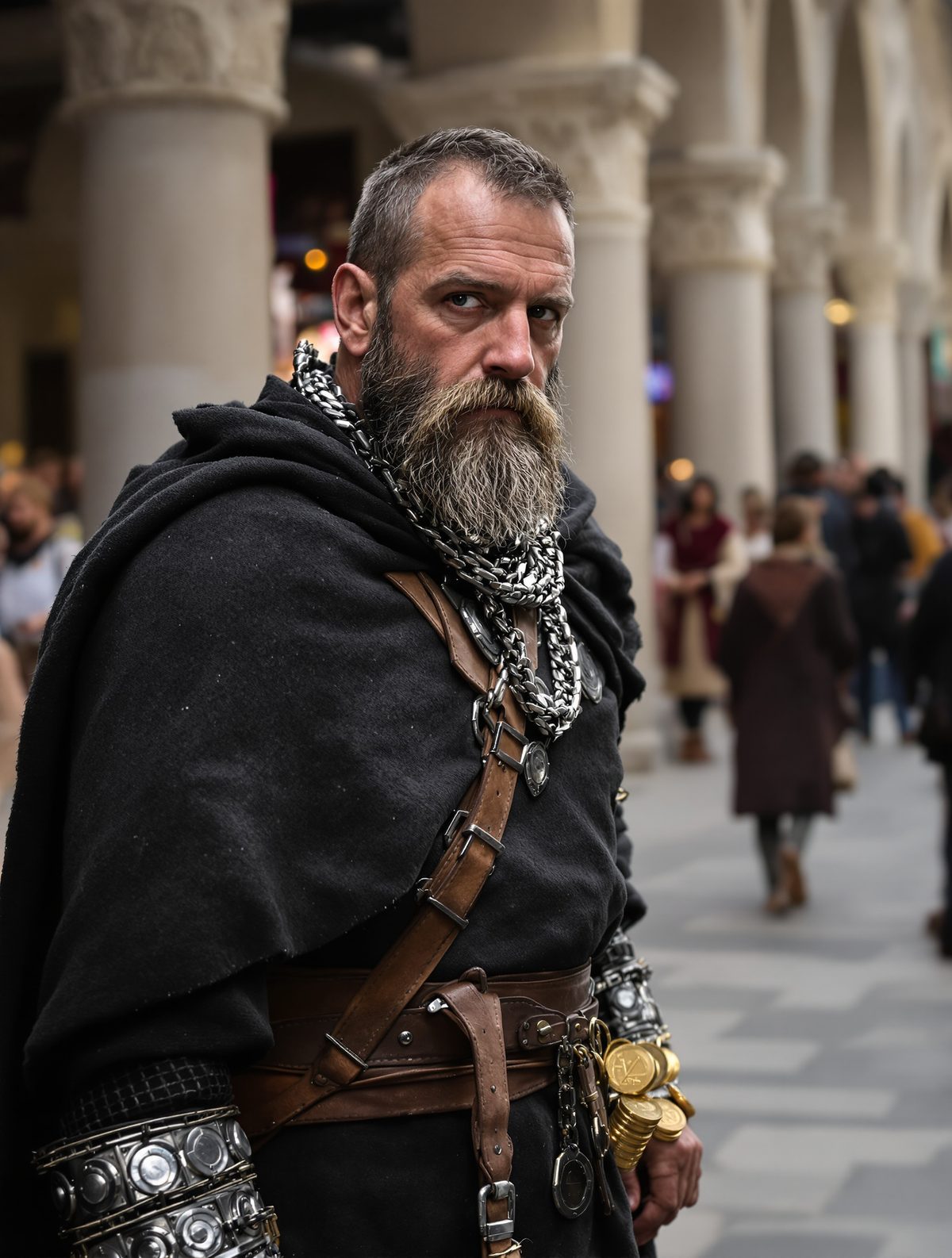
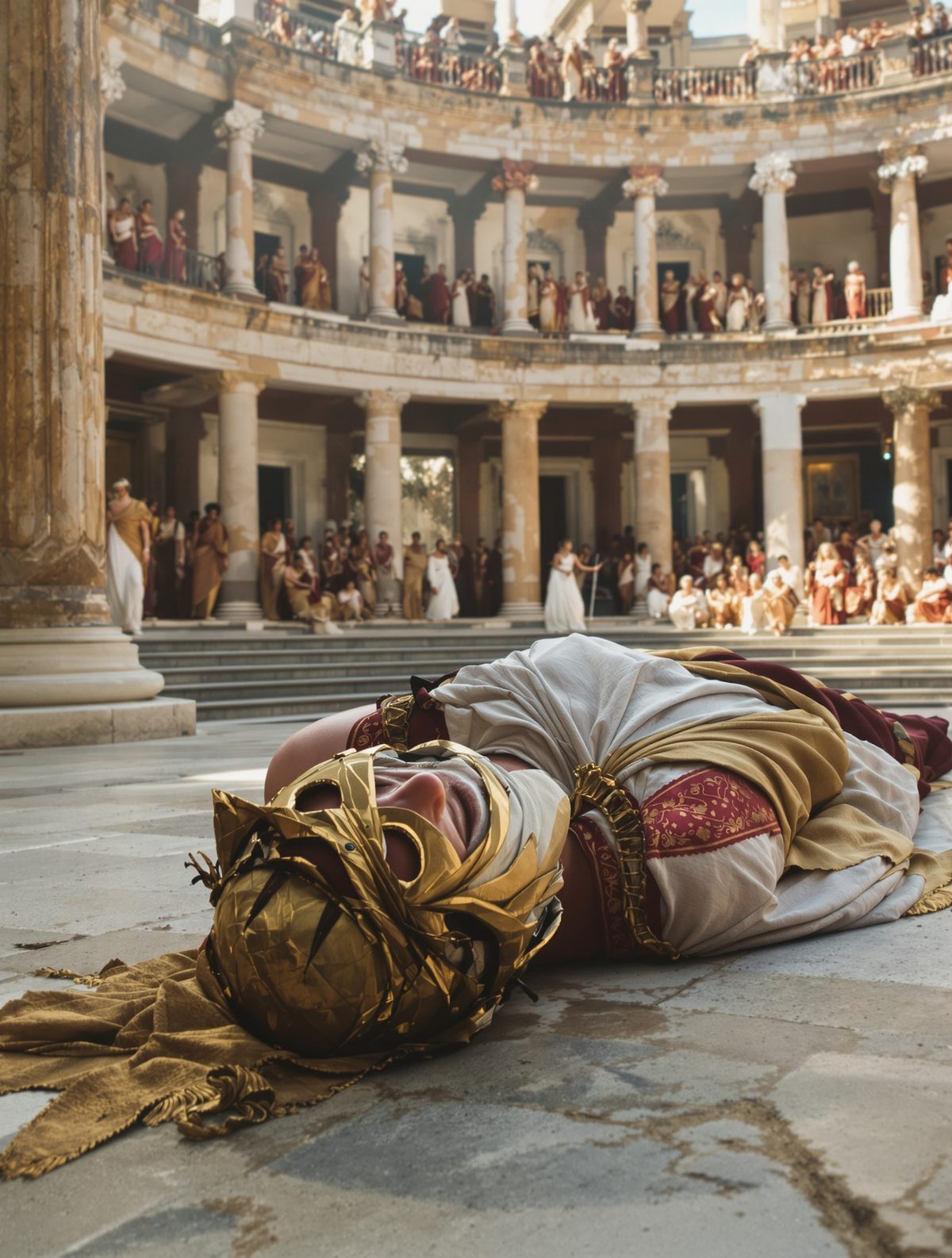
The morning sun cast long shadows across the blood-soaked walls of Acre as Sir Geoffrey de Montfort raised his sword toward the heavens. For 686 brutal days, this fortress city had withstood the combined might of Christendom's greatest armies. Now, on July 12, 1191, victory was finally within reach. The knight's mail hauberk, weighing nearly sixty pounds, had protected him through countless skirmishes during the siege. But as he lifted his blade in triumph, his body—pushed beyond all human limits—simply gave out. Geoffrey collapsed in his moment of greatest glory, becoming perhaps history's most ironic casualty of war.
It was a death that perfectly captured the paradox of medieval warfare: a knight could survive months of hell only to be killed by the very symbol of his victory.
The Siege That Nearly Broke Christendom
The Siege of Acre wasn't just another military campaign—it was a desperate attempt to salvage the Third Crusade from complete disaster. When Saladin's forces had recaptured Jerusalem in 1187, sending shockwaves throughout Europe, the Holy Land seemed lost forever. But Acre, with its strategic harbor and massive fortifications, represented the last realistic chance for the Crusaders to maintain a foothold in the region.
What began in August 1189 as a confident assault had devolved into a grinding war of attrition that would claim an estimated 100,000 lives. The Crusader camp outside Acre's walls became a city unto itself, complete with markets, brothels, and even its own currency. Disease ran rampant through the crowded conditions—more knights would die from dysentery and typhus than from enemy swords.
Sir Geoffrey de Montfort had arrived with the English contingent in 1190, part of a minor noble family from Leicestershire with a proud military tradition. Unlike the great lords who commanded armies, Geoffrey was what historians call a "household knight"—a professional warrior who fought for pay and the promise of land. His survival through nearly two years of siege warfare marked him as exceptionally skilled, or exceptionally lucky.
The medieval chronicler Geoffrey of Vinsauf described the siege as "a dance with death that lasted through four seasons of hell." Crusader knights, weighed down by armor that could exceed 70 pounds in full battle dress, had to fight in temperatures that regularly soared above 100 degrees Fahrenheit. Many simply cooked alive in their own mail.
The Weight of War
Medieval armor was both a knight's greatest asset and his most dangerous liability. A typical knight's kit included a mail hauberk (a shirt of interlocking metal rings), coif (mail hood), chausses (mail leggings), and helm—all told, about as much weight as a modern soldier carries, but distributed far less efficiently. Unlike today's tactical gear, medieval armor offered no ventilation system, no moisture-wicking materials, and certainly no consideration for the blazing heat of the Levantine sun.
What made Geoffrey's situation even more perilous was the state of Crusader nutrition during the siege. Archaeological evidence from Crusader latrines shows a diet increasingly dependent on whatever could be scavenged or traded at exorbitant prices. Fresh meat became so scarce that horses were slaughtered for food, leaving many knights to fight on foot—a significant tactical disadvantage that nonetheless may have saved some lives by reducing the total weight they had to carry.
Contemporary accounts describe knights fainting during battle not from wounds, but from sheer exhaustion. The chronicler Ambroise noted that "many a good man was felled not by Saracen blade, but by the weight of his own protection." Heat stroke was so common that experienced Crusaders learned to recognize the warning signs: stumbling gait, slurred speech, and the telltale glazed expression that preceded collapse.
The Moment of Truth
July 12, 1191, dawned with an unusual silence. After nearly two years, the massive stone-throwing engines called mangonels had finally breached Acre's seemingly impregnable walls. The city's garrison, reduced to eating leather and boiling grass for soup, had reached the breaking point. White flags began appearing on the ramparts—the universal medieval signal of surrender.
For the Crusaders, the moment felt surreal. Men who had spent months dodging arrows, catapult stones, and the dreaded "Greek fire" (an early form of napalm) suddenly found themselves facing victory instead of death. The psychological impact was overwhelming. Modern military psychologists recognize this phenomenon—the sudden release of extreme stress can trigger everything from uncontrollable laughter to complete physical collapse.
Geoffrey de Montfort was standing near what chroniclers called the "Accursed Tower"—a massive fortification that had been the focus of repeated, bloody assaults. As word spread through the Crusader ranks that Acre had fallen, knights began the traditional victory salute: raising their swords skyward while shouting battle cries. For Geoffrey, weakened by months of poor nutrition, dehydration, and the constant stress of siege warfare, this simple gesture proved fatal.
According to the chronicle of Roger of Howden, Geoffrey "raised his blade as if to pierce the very heavens in gratitude, but his mortal frame could bear no more." He toppled backward, his armor clanking against the stones as his fellow knights rushed to help. But it was too late—his heart had simply stopped.
Victory's Bitter Price
Geoffrey's death was far from unique, though it was perhaps uniquely ironic. Medieval warfare claimed victims in ways modern people rarely consider. The "victory collapses" at Acre were so common that they earned mention in multiple chronicles of the period. The sudden shift from life-or-death alertness to jubilant celebration created a perfect storm of physical and psychological stress.
But Geoffrey's fate also illuminated a larger truth about medieval knights that Hollywood rarely shows: they were as vulnerable to their own equipment as to enemy weapons. The very armor that symbolized their elite status could become a death trap under the wrong circumstances. Knights who fell into rivers regularly drowned under the weight of their mail. Others died from infection when their armor trapped dirt and debris in wounds.
The fall of Acre, while celebrated as a great Crusader victory, came at an almost incomprehensible cost. Conservative estimates suggest that for every defender who died within the walls, five attackers perished outside them. The city that the Crusaders finally captured was a shell of its former self, its population decimated, its buildings reduced to rubble.
Richard the Lionheart, who had arrived just weeks before the final victory, would later order the execution of nearly 3,000 Muslim prisoners when Saladin delayed paying their ransom. It was a decision that shocked even medieval sensibilities and demonstrated how the prolonged siege had brutalized everyone involved.
The Knight Who Became a Legend
Sir Geoffrey de Montfort's death quickly entered Crusader folklore, but not in the way one might expect. Rather than becoming a cautionary tale, his story was transformed into something approaching legend. Medieval poets, always hungry for new material, turned his death into a metaphor for the Christian knight's willingness to sacrifice everything—even his moment of triumph—for the glory of God.
The reality was likely more prosaic but no less tragic. Geoffrey probably died from what modern medicine would recognize as cardiac arrest brought on by extreme physical stress, dehydration, and malnutrition. His "victory celebration" was simply the final straw that broke an already overtaxed system.
Yet there's something deeply human about Geoffrey's story that transcends its medieval setting. Here was a man who had endured nearly two years of unimaginable hardship, who had seen friends die from disease and enemy action, who had probably questioned whether he would ever see England again—only to die at the very moment when it all seemed worthwhile.
Echoes Across Time
Geoffrey de Montfort's death reminds us that history's great victories often come at deeply personal costs that rarely make it into the official accounts. Modern military medicine recognizes conditions that medieval chroniclers couldn't understand: PTSD, malnutrition-induced cardiac stress, and the complex ways that psychological trauma manifests in physical symptoms.
His story also challenges our romantic notions about medieval warfare. The knights who populate our imagination—gleaming armor, noble quests, glorious battles—bear little resemblance to the reality of men like Geoffrey: professional soldiers grinding through brutal campaigns where disease killed more than swords, where victory could be as dangerous as defeat.
Perhaps most importantly, Geoffrey's fate illustrates how individual human stories can illuminate larger historical truths. The Third Crusade is typically remembered for its famous leaders—Richard the Lionheart, Saladin, Frederick Barbarossa—but it was fought and won by thousands of men whose names history has largely forgotten. Geoffrey de Montfort died as he had lived: as one small part of a vast historical machine, but carrying within his story all the contradictions, ironies, and tragic human costs that made the Crusades one of history's most complex chapters.
In an age where we often view medieval knights as larger-than-life figures, Geoffrey's death from his own victory celebration serves as a poignant reminder that behind every suit of armor was simply a human being, as vulnerable to the weight of his own ambitions as to any enemy blade.