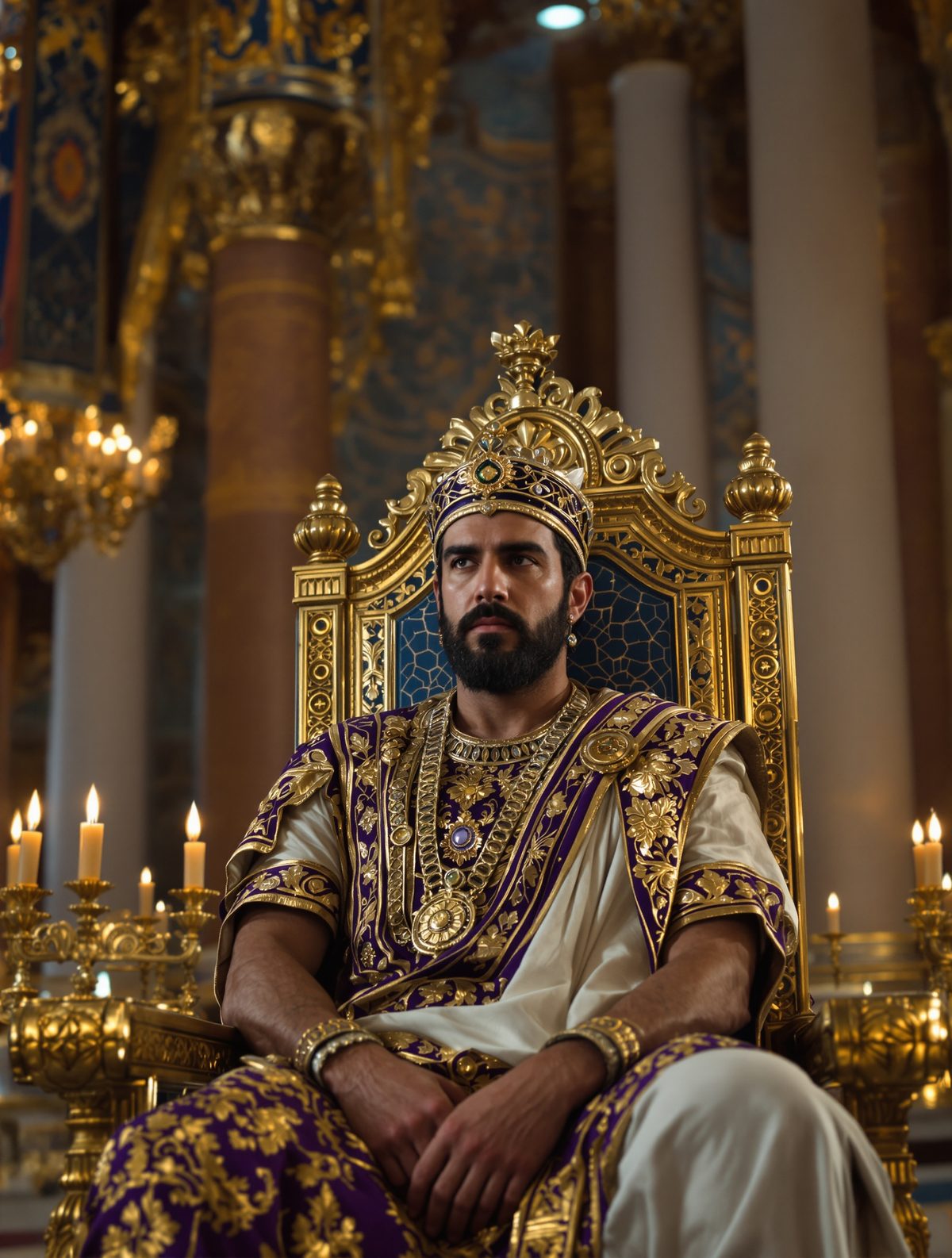
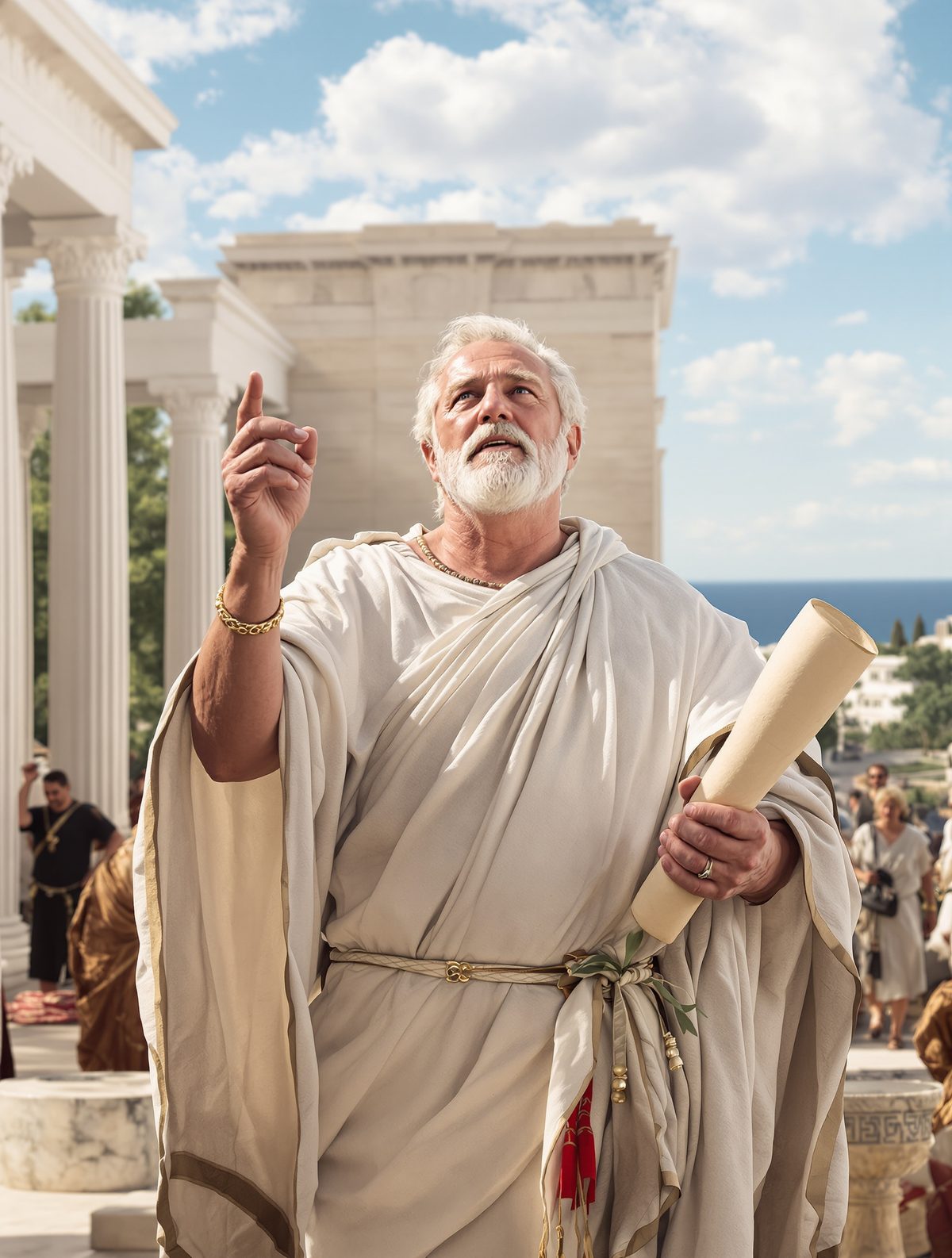
In the autumn of 210 BC, the most powerful man in the world lay dying in his imperial carriage, traveling through the Chinese countryside. Emperor Qin Shi Huang—the "First Emperor" who had conquered six warring kingdoms, built the Great Wall, and forged the foundation of modern China—was succumbing to the very substance he believed would grant him eternal life. For years, he had faithfully swallowed pills containing mercury, convinced by court alchemists that this liquid metal held the secret to immortality. Instead, the mercury was slowly destroying his nervous system, eating away at his organs, and driving him toward madness. The man who had defied kingdoms, geography, and tradition could not defy the laws of chemistry.
The Rise of China's Iron-Fisted Unifier
Born as Ying Zheng in 259 BC, the future First Emperor inherited the throne of Qin at just 13 years old. But this was no ordinary kingdom—Qin was a militaristic powerhouse in western China, hardened by constant warfare and governed by the brutal philosophy of Legalism, which valued order and strength above all else. By 246 BC, when Zheng took full control, China was fractured into seven major kingdoms that had been slaughtering each other for over 200 years in what historians call the Warring States period.
What happened next was one of history's most ruthless and efficient conquests. Over the course of just 25 years, Zheng's armies systematically dismantled every rival kingdom. His soldiers wielded advanced crossbows and iron weapons, while his generals employed innovative tactics like coordinated cavalry charges and siege warfare. When Han fell in 230 BC, followed by Zhao in 228 BC, then Yan, Wei, Chu, and finally Qi in 221 BC, Zheng had accomplished something no ruler had ever achieved—he controlled all of China.
To mark this unprecedented achievement, he took a new title that would echo through history: Qin Shi Huang, meaning "First Emperor of Qin." He wasn't content with mere political unification. In a stunning display of administrative genius, he standardized everything from currency to writing systems, from road widths to axle lengths. He connected and expanded existing border walls into what would become the Great Wall, stretching over 3,000 miles. But as his power grew, so did his greatest fear—death.
The Tyrant's Deepest Terror
Absolute power had given Qin Shi Huang everything except the one thing he wanted most: certainty that he would keep it forever. The emperor became obsessed with death in ways that bordered on pathological. He banned the word "death" from his presence. Courtiers who mentioned mortality, even indirectly, faced execution. He slept in a different palace each night, convinced that spirits of his enemies were hunting him.
This paranoia wasn't entirely unfounded. In 218 BC, an assassin hurled a heavy metal cone at the emperor's carriage during a royal procession. The weapon missed, but the psychological impact was devastating. From that moment forward, Qin Shi Huang became convinced that supernatural forces were actively working to end his life. If earthly power couldn't protect him from death, he reasoned, he needed supernatural protection.
The emperor's solution was as logical as it was deadly: he would achieve immortality through alchemy. This wasn't a fringe belief—many educated Chinese of the era genuinely thought that the right combination of substances could transform the human body into something eternal. The emperor summoned the finest alchemists in his realm, offering them unlimited resources and threatening them with execution if they failed. The message was clear: find the secret to immortal life, or lose your mortal one.
The Deadly Elixir of Life
The alchemists who served Qin Shi Huang weren't charlatans—they were the era's equivalent of cutting-edge scientists, working with the most advanced chemical knowledge of their time. They understood that mercury was unique among metals, remaining liquid at room temperature and seeming to possess almost magical properties. When heated, it transformed into a vapor and disappeared, then could be condensed back into liquid form. To ancient minds, this suggested that mercury existed in multiple states of being—perhaps even transcending the boundary between life and death.
The immortality pills they created for the emperor were primarily composed of mercury sulfide, often mixed with other minerals like lead, arsenic, and sulfur. These weren't crude concoctions—they were carefully crafted compounds that alchemists believed would purify the body and spirit. Some pills were even made with mercury that had been processed multiple times, concentrated and refined in ways that made them even more toxic.
Modern toxicologists estimate that Qin Shi Huang was consuming between 100 to 200 milligrams of mercury compounds daily—a dosage that would slowly but surely destroy human tissue. Mercury poisoning is insidious because it accumulates in the body over time. The earliest symptoms include irritability, mood swings, and difficulty concentrating. As the poisoning progresses, victims experience tremors, memory loss, and eventually complete nervous system failure.
What makes this tragedy even more poignant is that the emperor likely experienced periods where he felt energized and powerful after taking the pills. Mercury can initially act as a stimulant, creating a false sense of vitality that would have convinced him the treatment was working. He was literally feeling more alive as the poison slowly killed him.
The Quest That Killed Thousands
The emperor's obsession with immortality extended far beyond his personal pill consumption. In 219 BC, he dispatched a court sorcerer named Xu Fu on an extraordinary mission: sail east with 3,000 young men and women to find the legendary Penglai islands, where immortal beings supposedly lived. Xu Fu was given ships, supplies, and instructions to bring back the herbs of immortality or face execution upon his return.
Xu Fu never came back. Some historians believe he and his expedition settled in Japan, possibly founding some of the earliest Chinese communities there. Others think they were lost at sea. But the emperor, rather than accepting failure, sent additional expeditions. Thousands of young Chinese men and women were dispatched on these doomed voyages, sacrificed to one man's terror of mortality.
Meanwhile, back in the capital, the emperor's behavior was becoming increasingly erratic. Court records from this period describe sudden rage, paranoid accusations against loyal ministers, and bizarre proclamations. In 213 BC, convinced that scholars were plotting against him by studying ancient texts that questioned imperial authority, he ordered the burning of most books in China and buried 460 scholars alive. Modern historians recognize these actions as consistent with severe mercury poisoning—the emperor was literally going insane from his immortality treatments.
Death Comes for the "Immortal" Emperor
By 211 BC, Qin Shi Huang's health was visibly deteriorating, though he refused to acknowledge it. Court records describe him as having tremors in his hands, difficulty speaking clearly, and periods of apparent confusion. His trusted advisor, Li Si, later wrote that the emperor would sometimes forget conversations that had happened minutes earlier, then fly into violent rages when reminded of them.
In the summer of 210 BC, against his advisors' recommendations, the emperor insisted on traveling to eastern China to personally oversee the search for immortality elixirs. It was during this journey that his condition reached a crisis point. On September 10, 210 BC, in his carriage near the city of Xingtai, the First Emperor of China died at age 49—killed by the very mercury he had consumed faithfully for over a decade.
The irony was not lost on his inner circle, though they dared not speak it aloud. The man who had conquered death in every form—military defeat, political assassination, old age—had been undone by his own desperate attempt to cheat mortality. His closest advisors, terrified that news of his death would trigger rebellions across the empire, kept his death secret for weeks, even placing fish in his carriage to mask the smell of his decomposing body as they traveled back to the capital.
The Eternal Emperor's Mortal Legacy
Qin Shi Huang's death marked the beginning of the end for his Qin Dynasty, which collapsed just four years later. But the China he created—unified, centralized, and governed by standardized laws and customs—would endure for over two millennia. Today, more than 2,200 years after his death, tourists can visit his incredible tomb complex near Xi'an, where thousands of terracotta warriors stand guard over his burial chamber, which likely contains dangerous levels of mercury to this day.
The emperor's tragic end offers a timeless lesson about the human condition that resonates powerfully in our modern age of life extension research and anti-aging obsessions. In our era of biohacking, genetic therapy, and Silicon Valley billionaires seeking to "cure" aging, Qin Shi Huang's story serves as a cautionary tale about the dangers of pursuing immortality at any cost.
Perhaps the most profound irony is that while the emperor's physical body succumbed to mercury poisoning centuries ago, his legacy has achieved a form of immortality that no alchemical pill could provide. His unified China, his standardized writing system, and his vision of centralized government continue to shape the lives of over a billion people today. The man who died seeking eternal life had already built something far more lasting than any human body—a civilization that would outlive him by millennia.