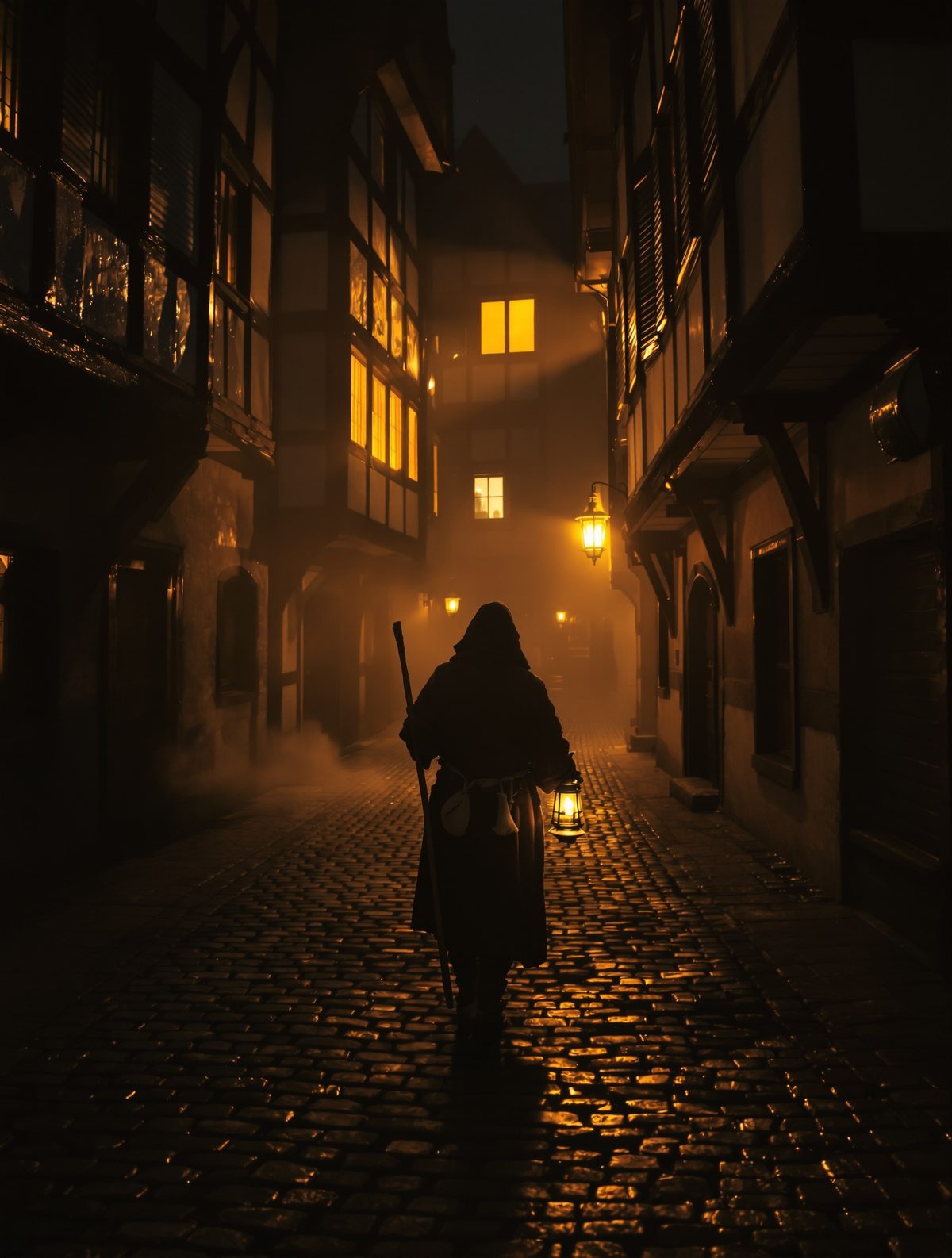
Picture this: it's a sweltering July morning in 1518 Strasbourg, and you're heading to market when you spot a woman in the cobblestone street, her body writhing and jerking in what can only be described as a violent, uncontrollable dance. Her name is Frau Troffea, and she's been at it for hours, sweat pouring down her face, her feet bloody and raw. You assume she's drunk or possessed, but as you watch in horror, she simply cannot stop. What you're witnessing is the beginning of one of history's most bizarre and deadly epidemics—a plague that would claim hundreds of lives not through disease or war, but through dance itself.
When Dancing Became a Death Sentence
Frau Troffea's frantic movements on that July day in Strasbourg weren't a celebration or religious ecstasy—they were the opening act of what historians now call the Dancing Plague of 1518, the most infamous outbreak of what medieval chroniclers termed choreomania or "dancing mania." Within a week of Troffea's solo performance, dozens of Strasbourg residents had joined her compulsive choreography, their bodies seized by an irresistible urge to move.
The dancing wasn't graceful or joyful. Witnesses described violent, jerky movements that continued day and night. The afflicted would leap, spin, and convulse with such intensity that many collapsed from exhaustion. Their feet bled through their shoes, their faces contorted in expressions of terror and anguish. Yet they could not stop—their bodies simply would not obey their minds' desperate pleas for rest.
By August, contemporary records suggest that around 400 people had joined this macabre dance marathon. The streets of Strasbourg had become an open-air asylum where hundreds of souls writhed in synchronized agony. Local physician Daniel Sennert documented cases of dancers suffering heart attacks, strokes, and complete physical collapse. Some, it was reported, danced themselves quite literally to death.
The Authorities' Catastrophic "Cure"
Faced with this unprecedented crisis, Strasbourg's city council convened emergency meetings with local physicians and clergy. Their diagnosis? The dancing was caused by "hot blood" and could only be cured by... more dancing. Yes, you read that correctly. The authorities believed that the afflicted needed to dance it out of their systems.
The city took extraordinary measures to facilitate this "cure." They hired professional musicians and strong, healthy dancers to accompany the afflicted. They constructed wooden stages in the grain market and other public spaces to give the dancers proper platforms. They even passed laws requiring certain citizens to dance along, believing that community participation would help purge the mysterious ailment.
This spectacularly backfired. The music and encouragement acted like gasoline on a fire, intensifying the dancers' compulsions and attracting even more people into the epidemic's grip. What had begun with one woman had now become a city-wide catastrophe, with entire neighborhoods caught up in the deadly choreography.
A Plague with Ancient Roots
The Strasbourg outbreak wasn't an isolated incident—it was merely the most well-documented episode in a series of dancing epidemics that terrorized medieval Europe for over 200 years. The first major recorded outbreak occurred in 1374 in Aachen, Germany, where hundreds of people began dancing in the streets following a catastrophic flood.
These earlier episodes spread like wildfire across the Holy Roman Empire. In Cologne, chroniclers reported that the dancers screamed about seeing visions of demons and called upon Saint John the Baptist to save them. In Metz, 1,100 people were reportedly affected in a single outbreak. The dancers often traveled from town to town, their compulsive movements spreading the contagion to new communities like a bizarre medieval flash mob.
What made these outbreaks particularly terrifying was their apparent randomness. The dancing plague didn't discriminate by age, gender, or social class. Peasants danced alongside merchants, children alongside the elderly. Entire families were sometimes consumed by the mania, leaving farms abandoned and businesses shuttered as the epidemic raged through communities.
The Science Behind the Madness
Modern historians and medical experts have proposed several fascinating theories to explain these deadly dance-offs. The most widely accepted explanation involves mass psychogenic illness—essentially, collective hysteria triggered by extreme psychological stress.
Consider the context: 16th-century Strasbourg was a powder keg of social tension. The city had recently endured famines, smallpox outbreaks, and syphilis epidemics. Religious upheaval from the Protestant Reformation had shattered traditional belief systems. Economic inequality was rampant, with the poor growing increasingly desperate while the wealthy flaunted their prosperity. In such conditions, mass hysteria becomes a very real possibility.
But there's another intriguing theory: ergot poisoning. Ergot is a fungus that grows on rye grain, particularly in damp conditions. When consumed, it causes symptoms remarkably similar to those exhibited by the dancers—hallucinations, seizures, and involuntary muscle spasms. The summer of 1518 had been particularly wet, creating ideal conditions for ergot contamination in the grain supply.
Some historians have also pointed to the cultural context of medieval dance. In that era, certain folk beliefs held that Saint Vitus (or Saint John) could curse people with uncontrollable dancing if they angered him. This created a perfect psychological framework for mass hysteria to manifest as compulsive movement.
The Surprising End of the Epidemic
After weeks of escalating chaos, Strasbourg's authorities finally abandoned their disastrous "more dancing" strategy. In late August, they abruptly changed course with dramatic results. The musicians were dismissed, the stages dismantled, and dancing was banned outright throughout the city.
Instead, the remaining dancers were loaded onto carts and taken to a mountaintop shrine dedicated to Saint Vitus at Hohlenstein. There, they were encouraged to pray for forgiveness and healing while wearing red shoes blessed by priests. The dancers were also given holy water to drink and small crosses to hold.
Remarkably, this approach worked. Within days of the pilgrimage, the dancing epidemic began to subside. By September, Strasbourg had returned to normal, leaving behind only official records and traumatized witnesses to attest to one of history's most bizarre medical mysteries.
Why This Medieval Madness Still Matters
The Dancing Plague of 1518 might seem like a curiosity from a superstitious age, but it offers profound insights into human psychology that remain relevant today. In our era of viral social media challenges, flash mobs, and internet-driven mass behaviors, the medieval dancers seem less like ancient oddities and more like distant relatives.
The epidemic demonstrates the incredible power of collective psychology and social contagion. It shows how quickly unusual behaviors can spread through stressed communities, especially when authorities make the wrong interventions. Most importantly, it reveals how societies in crisis often manifest their anxieties through their bodies when words fail them.
Perhaps most striking is how the "cure" came not through medicine or force, but through changing the social context—removing the triggers that sustained the behavior and providing an alternative framework for healing. In our own age of mass anxiety and social media-driven phenomena, the medieval authorities' eventual wisdom offers a surprisingly modern lesson: sometimes the best response to collective madness isn't more stimulation, but a return to quiet, sacred spaces where healing can begin.
The ghosts of Frau Troffea and her fellow dancers remind us that the line between individual psychology and social epidemic has always been thinner than we'd like to believe. In their tragic choreography, we glimpse both the fragility of human reason and the terrible power of communities in crisis.