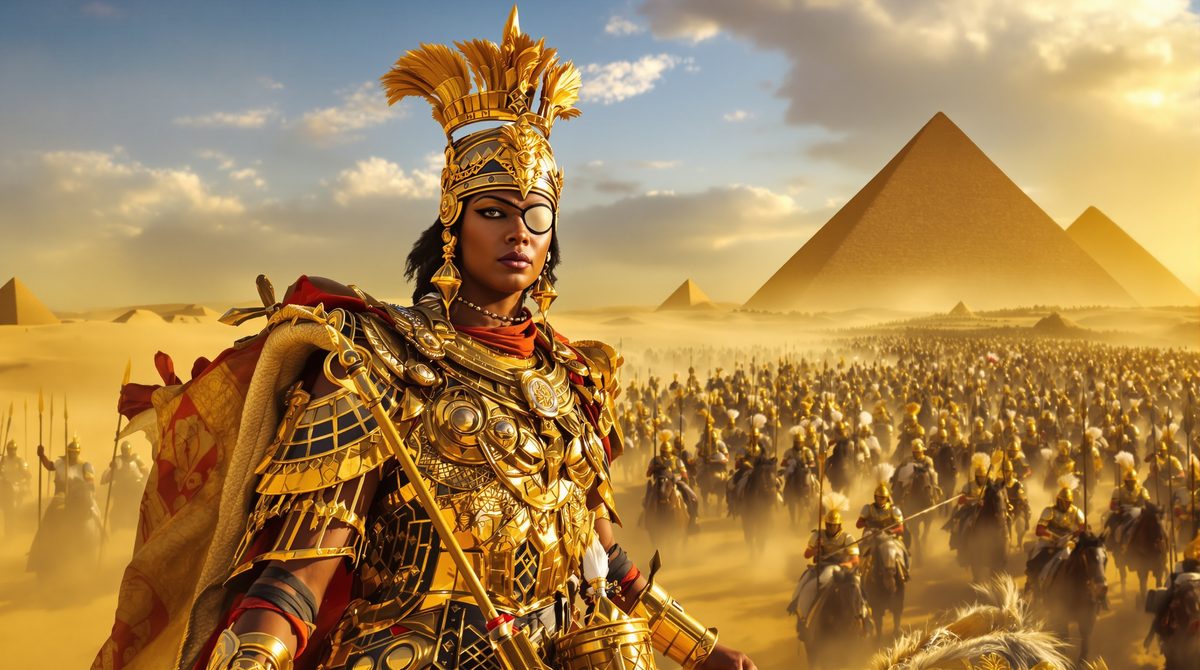
Picture this: It's a scorching morning in 1159 BC, and the sun blazes mercilessly over the limestone cliffs of the Valley of the Kings. But instead of the usual sounds of chisels striking stone and hammers shaping eternal resting places for pharaohs, an eerie silence fills the air. The most skilled craftsmen in all of Egypt—men who knew the deepest secrets of royal burial chambers—have done something absolutely unthinkable. They've stopped working.
These weren't just any workers. These were the elite artisans of Deir el-Medina, the "Place of Truth," a secret village hidden in the desert where generations of families had dedicated their lives to creating the magnificent tombs that would house Egypt's god-kings for eternity. And now, for the first time in recorded history, they were on strike.
The Secret Village That Built Eternity
Deir el-Medina was unlike anywhere else in the ancient world. Nestled in a narrow valley between towering cliffs, this isolated community housed roughly 120 families of master craftsmen, artists, and their support staff. These weren't your average Egyptian workers toiling in the fields or hauling stones for pyramids. These men were the crème de la crème—sculptors who could carve hieroglyphs so perfect they seemed to breathe, painters whose colors would remain vibrant for millennia, and architects who understood the complex religious symbolism required for a pharaoh's journey to the afterlife.
The village operated under a veil of absolute secrecy. Workers lived their entire lives within its walls, rarely venturing into the outside world. They knew the locations of hidden passages, the inventories of priceless grave goods, and the exact layouts of royal tombs—information that could make a man incredibly wealthy or incredibly dead if it fell into the wrong hands. In exchange for their discretion and skill, they received something almost unheard of in the ancient world: guaranteed employment, housing, and regular rations provided directly by the pharaoh himself.
But by 1159 BC, during the reign of Pharaoh Ramesses III, this carefully balanced system was beginning to crack under the weight of Egypt's mounting economic troubles.
When the Grain Stopped Coming
The trouble began, as it often did in ancient Egypt, with the Nile. Years of poor floods had led to reduced harvests, straining the royal treasury. Invasions by the mysterious Sea Peoples had drained resources for military campaigns. Corruption among officials meant that even when supplies were available, they didn't always reach their intended destinations.
For the craftsmen of Deir el-Medina, this meant their monthly rations—their lifeline—began arriving late. First a few days, then a week, then two weeks. These weren't just any rations, either. The workers received specific monthly allotments: four sacks of emmer wheat, one and a half sacks of barley, fish, vegetables, wood for cooking fires, pottery, and even clean clothing. It was a comprehensive benefits package that would make modern union organizers weep with envy.
By the 29th day of the second month of winter, the situation had become desperate. Families were going hungry. Children were crying. The workers had fulfilled their end of the bargain—they'd shown up, they'd worked on the tomb of Ramesses III, they'd kept their mouths shut about state secrets. But the pharaoh's administration had failed them.
That's when a scribe named Amennakhte picked up his reed pen and limestone flake—what Egyptologists call an ostracon—and began documenting something that had never happened before in recorded human history.
The Day the Hammers Fell Silent
What happened next was so unprecedented that it's remarkable we have any record of it at all. The craftsmen didn't just grumble and continue working, as countless oppressed workers had done throughout history. They didn't send a polite petition through official channels. Instead, they organized.
Led by their foremen, the workers laid down their tools and marched out of the Valley of the Kings. Their destination? The mortuary temple of Thutmose III, where they set up camp and began what can only be described as history's first sit-in protest. According to Amennakhte's careful records, the workers declared: "We have come here because of hunger and thirst. We have no clothing, no ointment, no fish, no vegetables. Tell this to the pharaoh, our good lord, and tell it to the vizier, our superior, so that provisions may be made for us to live!"
The symbolism was brilliant. By protesting at a mortuary temple—a place dedicated to the eternal memory of a dead pharaoh—they were sending a clear message: if you don't take care of the living workers who build these monuments, what good are your temples to the dead?
Local officials were flummoxed. These weren't rebellious peasants they could simply intimidate or arrest. These were skilled craftsmen whose knowledge was irreplaceable. Moreover, they held state secrets that could be devastating if they decided to share them with Egypt's enemies. The officials tried reasoning, pleading, and promising that the rations would come "soon," but the workers weren't budging.
Victory Through Unity
What makes this ancient labor dispute so remarkable is how it played out. The strike lasted for several days, with the workers maintaining their camp outside the temple. They were joined by their wives and children, turning the protest into a community-wide demonstration. The workers remained peaceful but firm, understanding that their specialized skills gave them negotiating power that ordinary laborers could never dream of possessing.
The breakthrough came when higher-ranking officials finally arrived to assess the situation. Faced with the reality that tomb construction—a matter of religious and political necessity—had ground to a complete halt, they capitulated. Not only were the overdue rations delivered in full, but the workers also received bonus payments to compensate for their suffering.
But the victory went beyond just getting paid. The workers had established something profound: the principle that even in an absolute monarchy, collective action could force those in power to honor their obligations. They had proven that skilled workers, when united, possessed leverage that could challenge even pharaonic authority.
Remarkably, this wasn't the end of labor unrest at Deir el-Medina. The success of the first strike led to several more over the following years, each time resulting in concessions from the authorities. The workers had learned a lesson that would echo through millennia: solidarity works.
The Scribes Who Saved History
Perhaps the most extraordinary aspect of this ancient labor dispute is that we know about it at all. In most ancient civilizations, the voices of ordinary workers—even skilled ones—were rarely recorded. Kings, priests, and nobles left behind monuments and inscriptions, but the daily struggles of working people vanished into historical silence.
The craftsmen of Deir el-Medina were different. Many were literate, and they had access to writing materials in their daily work. More importantly, they understood the power of documentation. The ostraca they left behind—hundreds of limestone flakes and pottery shards covered with hieratic script—provide an incredibly detailed window into their world. They recorded everything: work schedules, personal letters, shopping lists, legal disputes, and yes, labor strikes.
These aren't dry administrative records, either. The ostraca reveal the personalities, frustrations, and hopes of real people living 3,000 years ago. One worker complains about a colleague stealing his lunch. Another documents a neighborhood quarrel. A foreman carefully tracks how many days each worker spent on different tasks. It's ancient social media, preserved in stone.
An Echo Across Millennia
The strike of 1159 BC wasn't just about grain and oil. It was about something far more fundamental: the idea that working people deserve dignity, fair compensation, and respect for their contributions to society. These ancient Egyptian craftsmen established principles that would resurface again and again throughout history—in the Roman Empire, medieval guilds, the Industrial Revolution, and modern labor movements.
What gave these workers the courage to challenge the most powerful empire of their time? Perhaps it was their unique position as holders of state secrets, which made them too valuable to simply replace or execute. Perhaps it was their tight-knit community, which fostered solidarity and mutual support. Or perhaps it was simply the universal human instinct that when pushed too far, even the most oppressed people will eventually say "enough."
Today, when workers around the world continue to struggle for fair wages, safe working conditions, and basic dignity, the craftsmen of Deir el-Medina remind us that these battles are as old as civilization itself. Their limestone records whisper across three millennia with a simple but powerful message: when people stand together, even pharaohs must listen.
The next time you hear about a labor dispute on the evening news, remember those ancient artisans camping outside a temple in the Egyptian desert, demanding nothing more radical than the wages they had been promised. They may have been building tombs for eternity, but they were very much alive—and they refused to be forgotten.