December 1938. Snow crunched underfoot in the streets of Prague.
The Departure from Routine
In a world on the brink of war, the everyday rhythms of life continued. Leisure trips, like the ski holiday planned by a young London stockbroker named Nicholas Winton, were still a welcome distraction. But an unexpected phone call changed everything. A friend urged Winton to visit Prague instead of the slopes, to witness the desperate situation as Europe was enveloped in a tense prelude to chaos. Without hesitation, Winton diverted his plans—an alteration that would ultimately alter the paths of hundreds of lives.
Arriving in Prague, Winton was confronted with a city transformed. Once a vibrant hub known for its clock towers and cobblestone streets, it had become a quagmire of worry and unease. German forces were tightening their grip on Czechoslovakia, igniting a desperate need for escape among those targeted by Nazi oppression.
Operation of Necessity
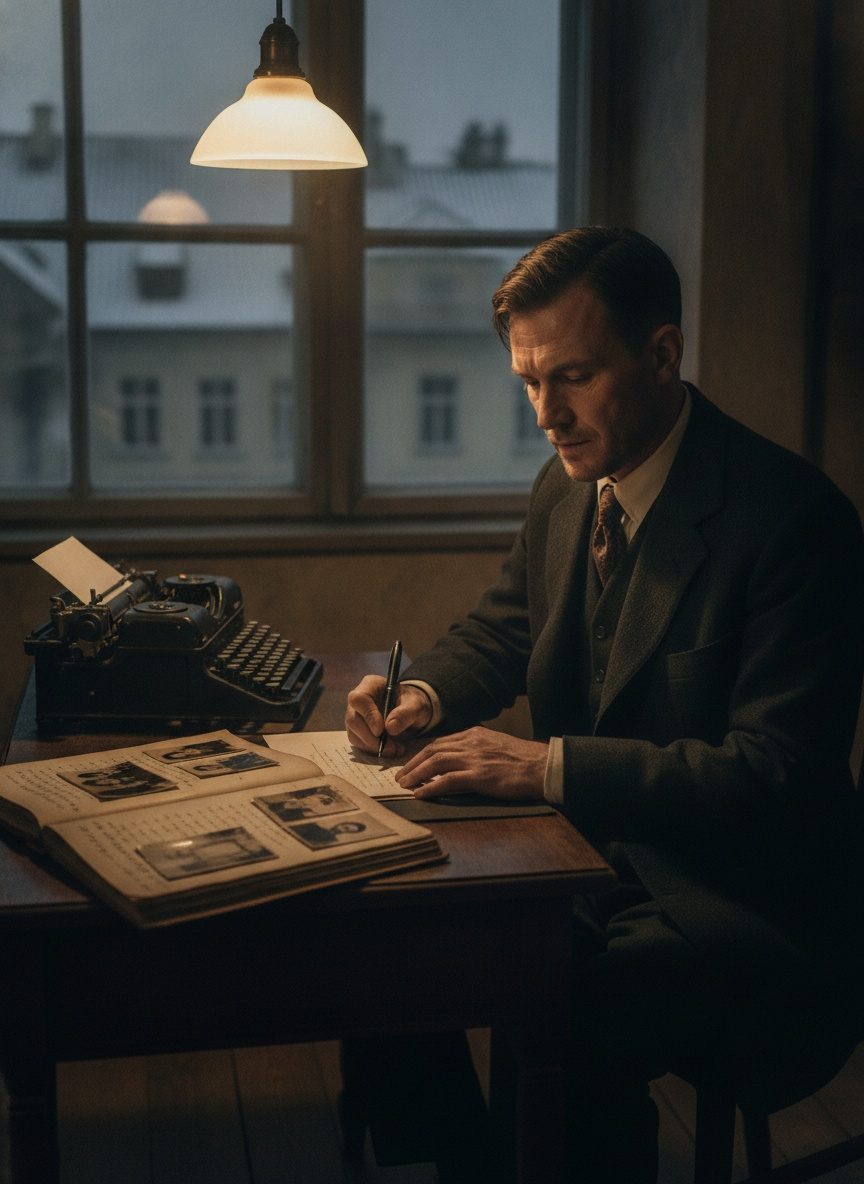
The glittering façade of the Hotel Sroubek in Prague became Winton’s base of operations. Armed with nothing more than a borrowed typewriter, a few supportive friends, and a steadfast determination, Winton embarked on a mission of heroic proportion. He quickly cobbled together a makeshift office within his hotel room—notes strewn, lists compiled, and pleas for assistance scribbled in haste.
In the heart of this city, braving the chill both inside and out, he worked tirelessly. He was driven by a single, simple idea: to mobilize and organize the transfer of at-risk children to the safety of Great Britain. It was a labyrinthine task that involved navigating the bureaucracy of multiple nations and overcoming the reluctance—and at times, outright resistance—of governments to accept refugees. Yet, Winton’s resolve was immovable.
Pathways to Safety
With the clock ticking ominously and borders tightening, Winton devised a plan to shepherd children away from the looming chaos. His strategy required the coordination of trains departing from Prague, ferrying children through Nazi-controlled regions to Holland, where they would board a boat to England. It was an intricate ballet of logistics sketched out, like many of history’s boldest plans, on scraps of paper and through whispered conversations.
The first rescue train departed in March 1939. With each child that boarded, a faint glimmer of hope surfaced amidst the encroaching darkness. Families made unimaginable sacrifices, thrusting their children into the arms of strangers, trusting that the envelope containing their British sponsors’ names would pave a path to salvation. Amidst the despair, there was gratitude for a lifeline thrown from afar.
The Silent Legacy
669 children escaped the looming Nazi shadow thanks to Winton’s unwavering resolve. And then, just as abruptly as it began, it was over. The war pressed on, and Winton continued with his life—quietly, privately, never uttering a word of his undertaking. The documents, records, and photographs of the operation gathered dust in his attic, forgotten except by him.
It wasn’t until fifty years later, in 1988, that the world came to know about Nicholas Winton’s covert campaign. His wife, Grete, unearthed a dusty scrapbook that doggedly chronicled the efforts of 1938-39. Its pages whispered tales of resolve, hope, and humanity etched into history by a man who never sought recognition.
Why History Remembers
The story of Nicholas Winton is a reminder that among the grand narratives of war, individual compassion and bravery craft the most extraordinary tales. The magnitude of his silence for five decades speaks volumes about his character—it reveals a profound humility, a belief that decency needs no spotlight. Today, as we contend with the complexities of displacement and refuge, Winton’s quiet deeds compel us to reflect on what it means to harness privilege and resource for the greater good.
Why did Nicholas Winton's story emerge after so long? In a world frequently starved for heroes, perhaps it wasn’t just the act of rescue that was profound; it was the reminder that the real power of humanity lies in the willingness to help without thought of self, to save strangers simply because it is right.