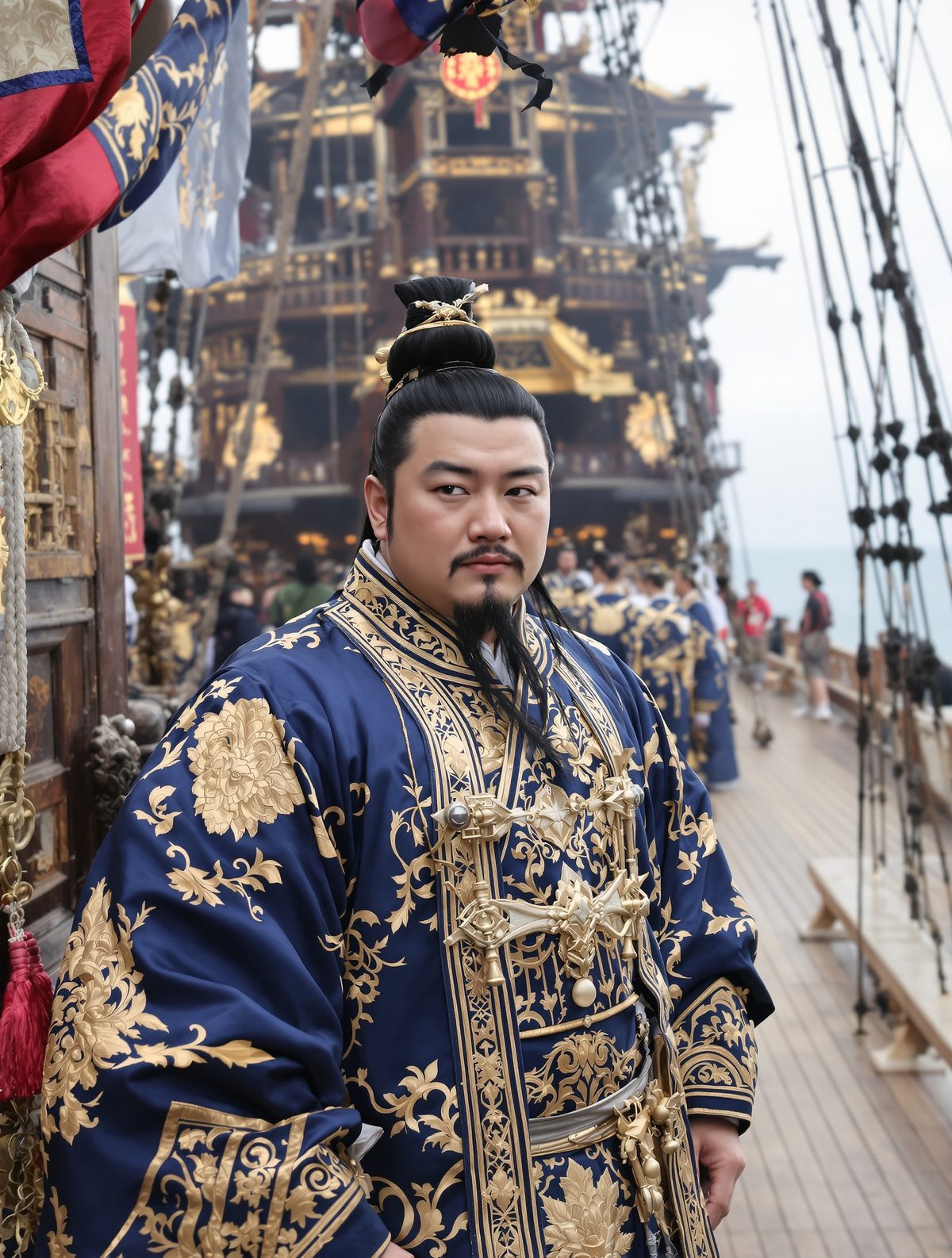
In the shadowy chambers of the Epang Palace, a man who called himself the Son of Heaven swallowed what he believed was liquid eternity. The year was 210 BC, and Qin Shi Huang—the first Emperor of China—had just consumed his daily dose of mercury pills, each one promising to grant him immortal life. Outside his palace walls stretched an empire larger than any the world had ever seen. He had conquered death on the battlefield, unified warring kingdoms under his iron will, and commanded millions to build monuments that would outlast civilizations. Yet the one enemy he could never defeat was time itself.
What the emperor didn't know was that each gleaming pill he swallowed was slowly killing him. The very substance his court alchemists proclaimed would grant eternal life was poisoning his body, day by day, dose by dose. In his desperate quest to cheat death, Qin Shi Huang had become the architect of his own demise—a cosmic irony that would have fascinated the ancient Chinese philosophers he had ordered burned along with their books.
The Man Who Would Live Forever
Born Ying Zheng in 259 BC, the future first emperor inherited the throne of Qin at just 13 years old. By 221 BC, this remarkable young man had achieved what no ruler before him had accomplished: the complete unification of China under a single crown. He didn't just conquer the other six kingdoms—he obliterated them, erasing their individual identities and forging them into something entirely new.
But conquest wasn't enough for someone who saw himself as a god among mortals. Upon unification, Ying Zheng took the unprecedented title "Qin Shi Huang," meaning "First Sovereign Emperor of Qin." The name itself was revolutionary—previous rulers had been mere kings, but he declared himself Huangdi, a title reserved for legendary divine rulers. In his mind, gods didn't die, and neither should he.
The emperor's achievements were staggering by any measure. He standardized currency, writing, and measurements across his vast empire. He built an extensive network of roads and canals. Most famously, he connected and extended existing fortifications into what we now know as the Great Wall of China—a project that required over one million workers and countless lives. Yet for all his earthly accomplishments, Qin Shi Huang became increasingly obsessed with one impossible goal: achieving physical immortality.
The Alchemists' Deadly Promise
Ancient Chinese culture was steeped in the pursuit of immortality through alchemy. The concept of xian—immortal beings who had transcended death through spiritual and chemical practices—captured imaginations across all social classes. For an emperor who believed himself divine, the promise of eternal life wasn't just appealing; it was his destiny.
Enter the court alchemists, a collection of scholars, mystics, and opportunists who claimed to possess the secrets of immortality. These men understood that their emperor's obsession represented the ultimate business opportunity. Leading among them was a man named Xu Fu, who convinced Qin Shi Huang that the elixir of life could be found on mystical islands across the eastern sea. In 219 BC, Xu Fu departed with 3,000 young men and women, along with massive resources, supposedly to retrieve these magical substances. He never returned—likely because he had established a comfortable life elsewhere, possibly in what is now Japan.
But other alchemists remained at court, and they had a different solution: mercury-based pills that they claimed contained the essence of immortality. Mercury was considered magical in ancient Chinese alchemy—it was the only metal that remained liquid at room temperature, seemingly alive and flowing like quicksilver. Surely, they reasoned, such a supernatural substance could grant supernatural longevity.
These weren't crude concoctions mixed in back alleys. The emperor's immortality pills were sophisticated preparations, often combined with cinnabar (mercury sulfide), jade powder, and other precious materials. The alchemists presented their deadly creations in elaborate ceremonies, complete with incantations and promises that each dose brought the emperor closer to eternal life.
The Slow Dance of Death
What makes Qin Shi Huang's story particularly tragic is that mercury poisoning doesn't kill quickly. Instead, it's an insidious assassin that works over months and years, gradually destroying the nervous system while creating symptoms that might have actually seemed like mystical transformation to ancient observers.
Modern medical knowledge reveals the horrifying reality of what the emperor experienced. Mercury accumulates in the brain, kidneys, and liver, causing progressive neurological damage. Early symptoms include irritability, anxiety, and mood swings—changes that court observers might have attributed to the emperor's increasing divine nature rather than recognizing them as signs of poisoning.
As the mercury levels in his system increased, Qin Shi Huang would have experienced tremors, memory problems, and paranoid delusions. Historical records from his final years describe an emperor who became increasingly erratic and suspicious, ordering the execution of scholars and burning books that contradicted his worldview. What seemed like the actions of a tyrant drunk on power may have actually been the behavior of a man whose brain was being systematically destroyed by heavy metal poisoning.
The emperor's physical appearance would have changed as well. Mercury poisoning causes a characteristic grayish discoloration of the skin, along with hair loss and dental problems. Ironically, these symptoms might have made him appear more otherworldly to his subjects, reinforcing the belief that he was undergoing some kind of supernatural transformation.
The Final Journey of a Would-Be God
In 210 BC, at the age of 49, Qin Shi Huang embarked on what would be his final tour of the empire. He was traveling to the eastern provinces, still searching for the secrets of immortality, when the accumulated years of mercury consumption finally claimed their victim. The emperor died suddenly in his traveling palace, likely from acute mercury poisoning combined with the organ damage that had been building for years.
Even in death, the emperor's obsession with immortality created chaos. Terrified that news of his death would trigger rebellions across the empire, his chief advisor Li Si and the eunuch Zhao Gao decided to keep the emperor's death secret until they could return to the capital. They placed the body in the emperor's carriage and continued the tour as if nothing had happened, with officials presenting daily reports to the sealed carriage and meals being delivered as usual.
The deception might have worked, except for one problem: the emperor's body began to decompose in the summer heat. To mask the smell, the conspirators ordered cartloads of fish to accompany the imperial procession, claiming the emperor had developed a sudden craving for seafood. For weeks, this bizarre funeral cortege traveled across China—a rotting god-emperor hidden behind silk curtains, surrounded by the overpowering stench of fish, while his most trusted advisors desperately tried to maintain the illusion of his continued existence.
The Eternal Emperor's Mortal Legacy
The irony of Qin Shi Huang's death extends far beyond the simple fact that his immortality pills killed him. In seeking to avoid death, he actually achieved a kind of immortality that no alchemical concoction could provide. His massive tomb, guarded by the famous Terracotta Army of over 8,000 life-sized clay soldiers, remains one of the world's greatest archaeological mysteries. The tomb itself has never been opened, partly due to historical accounts claiming it contains rivers of mercury—the same substance that killed the emperor now serves as his eternal guardian.
More importantly, Qin Shi Huang's political and cultural innovations outlasted his physical form by over two millennia. The concept of a unified China, the administrative systems he established, and even the writing system he standardized continued to shape Chinese civilization long after his mercury-poisoned body crumbled to dust. He achieved immortality not through alchemy, but through the lasting impact of his ideas and institutions.
The emperor's story offers a profound meditation on the human condition that resonates as powerfully today as it did in ancient China. In our modern era, we still chase our own versions of immortality—through technology, medicine, and the promise that science will eventually defeat aging and death. We invest billions in life extension research, cryonics, and genetic therapies, driven by the same fundamental fear that consumed Qin Shi Huang over two thousand years ago.
Perhaps the real lesson isn't about the dangers of mercury or the folly of trusting ancient alchemists. Instead, it's about recognizing that our desperate attempts to avoid mortality might blind us to the very things that make life meaningful. Qin Shi Huang built wonders that lasted millennia, unified a civilization, and changed the course of human history—but he was so obsessed with living forever that he may have forgotten to truly live. In the end, the emperor who conquered everything learned that the one battle no mortal can win is the war against time itself.