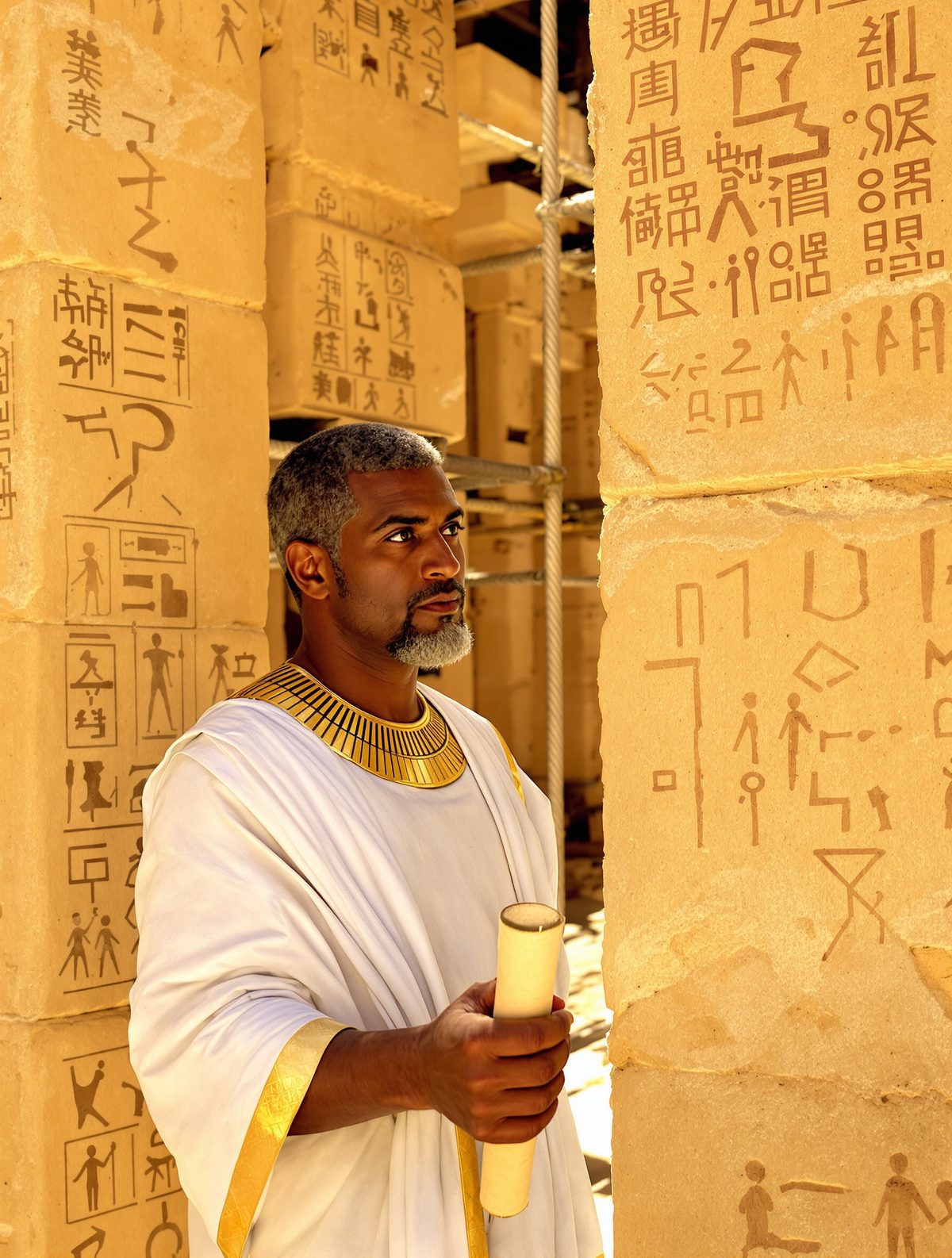
Imagine ruling a kingdom for so long that your subjects forget what life was like before you. Picture holding power for nearly a century—longer than most people live—while the world transforms around you, yet you remain unchanging on your throne. This was the reality of Pepi II, a pharaoh whose grip on Egypt was so absolute and enduring that when he finally died, his kingdom literally forgot how to function without him.
In 2278 BC, a six-year-old boy became the most powerful person in the known world. By the time Pepi II drew his last breath 94 years later, Egypt had known no other ruler for the lifetime of four generations. The consequences of this unprecedented reign would plunge one of history's greatest civilizations into two centuries of chaos.
The Boy King Who Never Grew Up (Politically)
When Pepi II ascended to the throne of Egypt's Sixth Dynasty, the pyramids of Giza were already ancient monuments, over 200 years old. The Old Kingdom was at its zenith—a time when pharaohs were considered living gods and Egypt's power stretched from Nubia in the south to the Levant in the north. But placing absolute power in the hands of a kindergarten-aged child would prove to be a decision that ultimately toppled this golden age.
During his early years, regent officials and his mother, Queen Ankhesemeryre II, effectively ran the kingdom. Ancient Egyptian records show that the young pharaoh was fascinated by exotic animals and distant lands—perhaps the only normal childhood interests he was allowed to maintain. One famous letter, preserved on papyrus, shows the boy king's excitement about a dancing dwarf being brought from Nubia for his entertainment. "Come north to the court immediately," he commanded with the enthusiasm of a child on Christmas morning, "and bring this dwarf with you!"
But as Pepi II grew older, something remarkable happened: he never relinquished the reins of power that had been held for him. Unlike other pharaohs who might rule for 20 or 30 years before death or abdication, Pepi II seemed determined to rule forever. And remarkably, his body cooperated with his ambition.
The Pharaoh Who Wouldn't Die
By ancient standards, Pepi II was a medical miracle. In an era when the average life expectancy hovered around 30 years, and even wealthy nobles rarely saw their 50th birthday, the pharaoh sailed past 60, then 70, then 80, showing no signs of stepping down or stepping into the afterlife. Archaeological evidence suggests he may have lived to be 100 years old—an almost impossible age for the 23rd century BC.
His longevity became both legendary and problematic. Egyptian records from his later years describe a ruler who had outlived multiple generations of advisors, priests, and provincial governors. The bureaucratic system that had been designed to support a pharaoh's reign of two to three decades began to strain under the weight of a near-century of rule.
Provincial governors, known as nomarchs, who had once been appointed directly by the pharaoh, began to see their positions as hereditary. After all, they reasoned, if they had served under Pepi II faithfully for 30 or 40 years, surely their sons deserved the same honor. The pharaoh, now an elderly man ruling over great-grandchildren of his original subjects, began to lose his iron grip on the provinces.
The Kingdom That Forgot How to Change
Here's where Pepi II's story becomes truly extraordinary: Egypt forgot how to transition power. Think about it—by 2200 BC, no living person in Egypt had ever witnessed the death of a pharaoh and the coronation of his successor. The elaborate rituals, the political negotiations, the careful balance of power between Memphis and the provinces—all of this institutional knowledge existed only in dusty scrolls and the fading memories of ancient priests.
The administrative machinery of Egypt had calcified around one man. Trade agreements were made in Pepi II's name, religious ceremonies centered on his eternal rule, and the entire economic system was built around the assumption that this pharaoh would always be there. Provincial governors had grown so accustomed to de facto independence that they barely remembered they served a central authority.
Archaeological evidence from Pepi II's later years tells a story of creeping decay. His pyramid at Saqqara, while impressively large, was shoddily constructed compared to the engineering marvels of earlier dynasties. The quality of royal inscriptions declined, and records show increasing difficulty in collecting taxes from distant provinces. It was as if the kingdom was slowly forgetting how to function as a unified state.
When the Immortal Pharaoh Finally Fell
In 2184 BC, the impossible finally happened: Pepi II died. The news must have struck Egypt like a thunderbolt. Citizens who had grown up hearing stories about "the eternal pharaoh" suddenly faced a reality no one alive had ever experienced. The administrative chaos that followed was swift and devastating.
Multiple claimants emerged for the throne, each backed by different factions of nobles and provincial governors who had grown powerful during the long twilight of Pepi II's reign. The central government in Memphis, which had grown weak and ceremonial during the pharaoh's final decades, couldn't impose order. Within months of Pepi II's death, Egypt splintered into competing kingdoms.
Archaeological evidence from this period—known as the First Intermediate Period—paints a picture of a civilization in free fall. Trade networks collapsed, monuments fell into disrepair, and provinces that had been unified under pharaonic rule for over 500 years began fighting each other like foreign nations. Hieroglyphic records speak of famine, civil war, and social upheaval that would make the French Revolution look orderly.
The 200-Year Hangover
What followed Pepi II's death was one of history's most dramatic examples of institutional collapse. For nearly two centuries, Egypt descended into what historians call the First Intermediate Period—a chaotic era of competing pharaohs, civil wars, and social revolution. At times, there were multiple people claiming to be the "true" pharaoh of Egypt, each controlling different portions of the Nile Valley.
The provincial governors who had grown powerful during Pepi II's declining years became warlords, fighting for control of trade routes and agricultural land. The careful religious and political balance that had sustained Egyptian civilization for centuries evaporated. Some records from this period describe servants overthrowing their masters and nobles fleeing their estates—a complete inversion of the rigid social order that had defined Egyptian society.
It wasn't until around 2055 BC that Mentuhotep II managed to reunify Egypt under the Middle Kingdom, but even then, the pharaonic system was forever changed. Never again would Egypt concentrate so much power in a single ruler for such an extended period.
The Dangerous Gift of Longevity
Pepi II's story offers a fascinating lesson about the unexpected dangers of stability and longevity in leadership. In our modern world, where we often celebrate long-serving leaders and bemoan political instability, the pharaoh's 94-year reign reminds us that even beneficial things can become destructive when taken to extremes.
His reign demonstrates how institutions can calcify around a single leader, how succession planning becomes impossible when no one remembers how succession works, and how the very longevity that seems like a blessing can become a civilization's greatest curse. Today, as we watch aging leaders around the world cling to power and witness the challenges of democratic transitions in various nations, Pepi II's ancient lesson feels remarkably relevant.
The boy who became pharaoh at six and refused to let go for 94 years teaches us that sometimes the greatest service a leader can provide is knowing when to step aside—before their kingdom forgets how to imagine life after them.