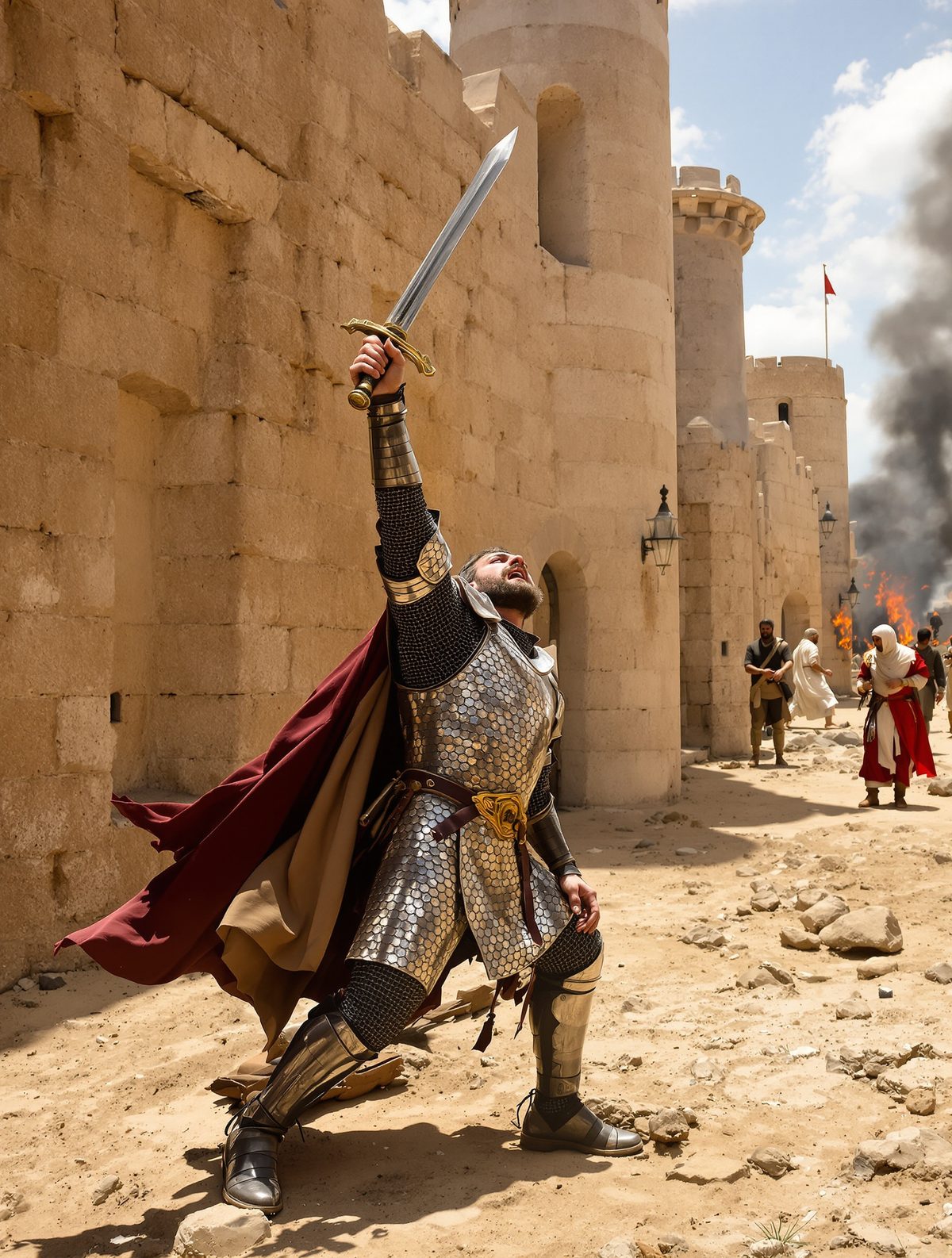
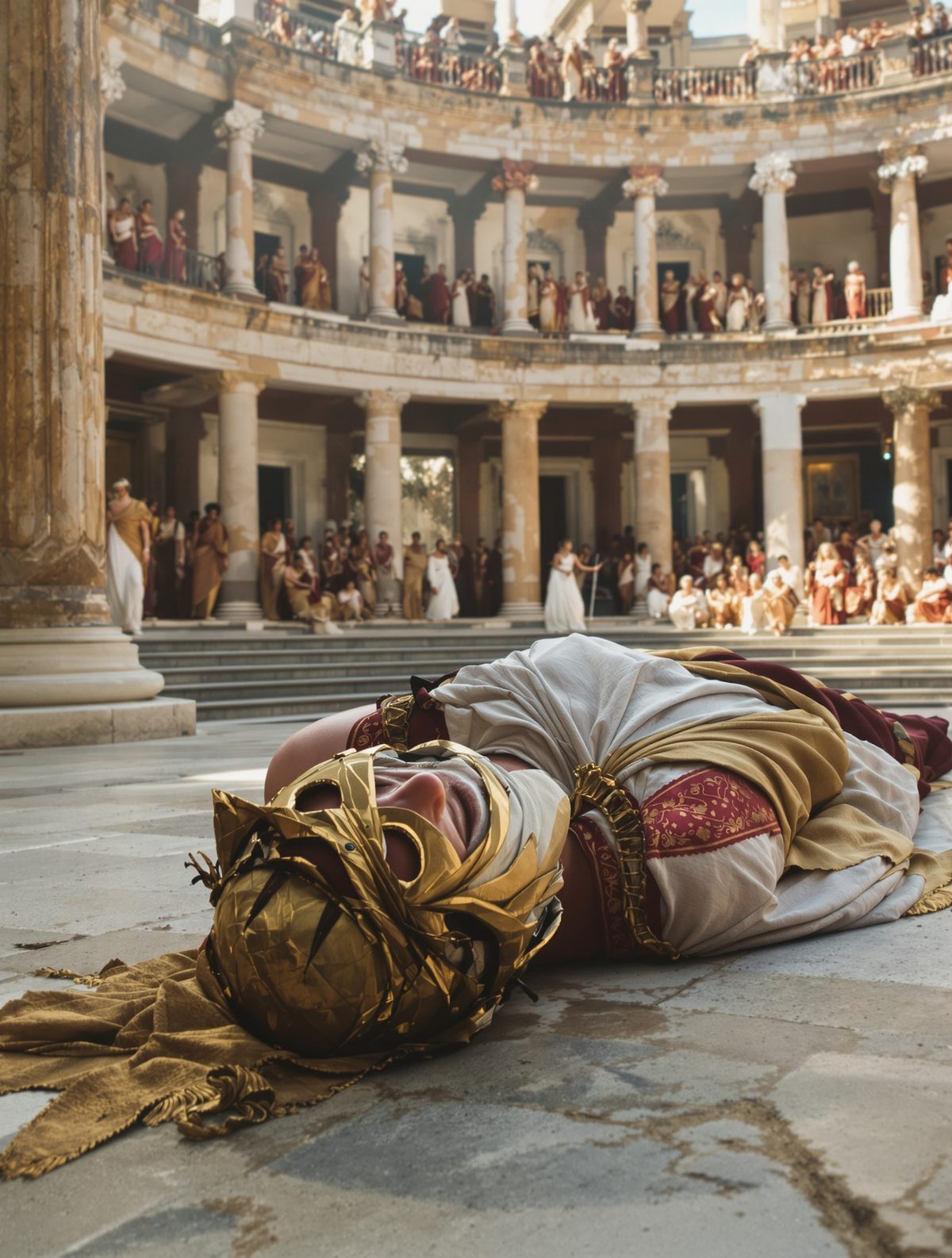
The golden ring gleamed in the flickering torchlight of Tenochtitlan's grand palace, its European craftsmanship alien among the jade and obsidian treasures of the Aztec court. Spanish conquistador Hernán Cortés extended the ornate band toward Princess Tecuichpo, daughter of the mighty Emperor Moctezuma II, believing this simple gesture would seal an alliance between two worlds. Instead, what happened next would scandalize the Spanish, mystify historians for centuries, and reveal the extraordinary defiance of a teenage girl who refused to be a pawn in the conquest of her own empire.
In one swift motion, the princess snatched the ring and bit down hard on the precious metal. The soft gold yielded under her teeth like butter, leaving clear dental impressions in what the Spanish had presented as their finest treasure. But Tecuichpo wasn't finished. As shocked conquistadors looked on in horror, she tilted her head back and swallowed the ring whole, her throat working visibly as the symbol of Spanish dominance disappeared forever into her body.
The Princess Who Inherited an Empire in Ruins
To understand the audacity of this act, we must first understand who Tecuichpo really was. Born around 1502, she was far more than just another royal daughter in Moctezuma's vast household of wives and children. Her name meant "Cotton Flower" in Nahuatl, but there was nothing delicate about this young woman who found herself at the epicenter of one of history's most brutal conquests.
When the Spanish arrived in 1519, Tecuichpo was approximately seventeen years old—already considered an adult by Aztec standards and likely married to her own nephew, Atlixcatzin, in keeping with royal custom. She had witnessed her father's humiliating capture by Cortés in November 1519, watched as the Spanish held the most powerful man in Mesoamerica hostage in his own palace, and seen her world begin to crumble around her.
The Aztec Empire that Tecuichpo inherited was a marvel of organization and brutality. Stretching from coast to coast across central Mexico, it controlled an estimated 15 million people through a complex system of tribute, diplomacy, and warfare. The capital city of Tenochtitlan, built on an island in Lake Texcoco, housed roughly 200,000 inhabitants—making it larger than any European city of the time. Yet this vast empire, built over centuries, was being systematically dismantled by fewer than 1,000 Spanish soldiers.
Gold, Gods, and the Art of Aztec Metallurgy
When Tecuichpo bit into that Spanish ring, she wasn't acting on impulse—she was applying centuries of Aztec metallurgical knowledge. The indigenous peoples of Mexico had been working with gold for over a thousand years before the Spanish arrival, and they had developed sophisticated techniques for testing the purity and quality of precious metals. Biting gold to test its softness was a common practice among Aztec goldsmiths and merchants.
The irony wasn't lost on those who understood both cultures. Spanish gold, which the conquistadors prized above all else, was often less pure than the refined techniques used by Aztec craftsmen. The Spanish saw gold primarily as currency and a store of wealth, melting down intricate indigenous artwork to create simple ingots for transport back to Europe. The Aztecs, by contrast, valued gold for its beauty and religious significance—they called it "teocuitlatl," meaning "excrement of the gods."
Tecuichpo's father, Moctezuma, had initially showered Cortés with gifts of gold, hoping to appease what he believed might be the returning god Quetzalcoatl. Instead, these gifts only inflamed Spanish greed. As conquistador Bernal Díaz del Castillo later wrote, "We Spanish suffer from a disease of the heart that can only be cured by gold." The princess had learned this lesson well.
The Theater of Conquest and Resistance
The engagement ceremony itself was a carefully orchestrated piece of political theater. By 1521, Tenochtitlan had fallen after a brutal siege that left much of the city in ruins. Cortés, ever the pragmatist, understood that legitimizing Spanish rule required more than military victory—it needed the appearance of indigenous consent. What better way to achieve this than through marriage to Moctezuma's daughter?
The ceremony took place in what remained of the royal palace, with Spanish officials and surviving Aztec nobles in attendance. Contemporary accounts suggest that Tecuichpo appeared compliant initially, dressed in a mixture of traditional Aztec finery and Spanish-style clothing that symbolized the blending of two worlds. The conquistadors had every reason to expect a smooth proceeding.
They had underestimated their bride.
When Tecuichpo examined the ring with the keen eye of someone raised among master goldsmiths, she immediately recognized its inferior quality. Spanish gold was often alloyed with silver and other metals to make it harder and more durable for jewelry, but this made it less pure than the refined gold of Aztec craftsmen. Her public testing of the metal was both a technical evaluation and a devastating insult.
Witchcraft, Rebellion, and Spanish Panic
The Spanish reaction to Tecuichpo's ring-swallowing was immediate and telling. According to Spanish chroniclers, several conquistadors crossed themselves and muttered prayers, convinced they had witnessed an act of indigenous sorcery. In their worldview, such behavior could only be explained by demonic influence or witchcraft—concepts that would later fuel centuries of persecution against indigenous spiritual practices.
Cortés himself reportedly remained silent for several long minutes, his political calculations crumbling along with his matrimonial plans. The Spanish had spent considerable effort presenting themselves as benevolent civilizers, but Tecuichpo's act exposed the brutal reality of conquest. Here was visible proof that not all indigenous people welcomed Spanish rule—and that resistance could take forms the European mind struggled to comprehend.
The practical implications were significant. Spanish colonial law required indigenous consent for intermarriage, at least in theory. Tecuichpo's dramatic rejection made it impossible for Cortés to claim she had willingly accepted the union. Worse, her act of swallowing the ring created what Spanish clerics considered a spiritual contamination—the blessed gold had literally become part of an "unbaptized heathen."
News of the incident spread quickly through both communities. For the Spanish, it became a cautionary tale about the treacherous nature of indigenous women and the need for stricter control. For the surviving Aztec population, Tecuichpo's defiance became a symbol of resistance, proving that even in defeat, dignity could be maintained.
The Princess's Later Life and Legacy
Remarkably, Tecuichpo survived her act of defiance, though her later life was shaped by the conquest's aftermath. Spanish records show that she was eventually baptized as "Isabel Moctezuma" and married several times to both Spanish conquistadors and indigenous nobles—always, it seems, under duress rather than choice. She became one of the wealthiest women in colonial Mexico, inheriting vast encomiendas (land grants) that made her Spanish husbands rich.
But perhaps her greatest legacy was her children. Through her various marriages, Tecuichpo became the mother of several children who carried both Aztec royal blood and Spanish colonial heritage. Her descendants would go on to play significant roles in Mexican history, serving as bridges between indigenous and European cultures during the long colonial period.
The ring itself was never recovered, despite Spanish attempts to monitor Tecuichpo's... output... in the days following the ceremony. Whether it passed through her system naturally or was somehow absorbed became a subject of whispered speculation among conquistadors, adding to the legend of the princess who literally consumed Spanish gold rather than accept conquest.
When Symbols Become Sustenance
Tecuichpo's story resonates today because it reveals how power operates through symbols—and how those symbols can be subverted by the powerless. In swallowing that ring, she transformed a symbol of Spanish dominance into literal sustenance, incorporating the physical manifestation of conquest into her own body on her own terms.
Her act reminds us that resistance takes many forms, and that even in history's darkest moments, individuals find ways to maintain agency and dignity. In classrooms where the conquest of Mexico is often reduced to a simple narrative of European technological superiority, Tecuichpo's story reveals the complex human drama behind historical events—the personal choices that shaped empires and the small acts of defiance that echo across centuries.
Today, as we grapple with questions of cultural identity, colonialism's lasting effects, and the power of symbolic gestures, the Aztec princess who ate her own engagement ring offers a powerful reminder: sometimes the most profound resistance comes not from grand gestures, but from refusing to swallow what others insist we must accept.