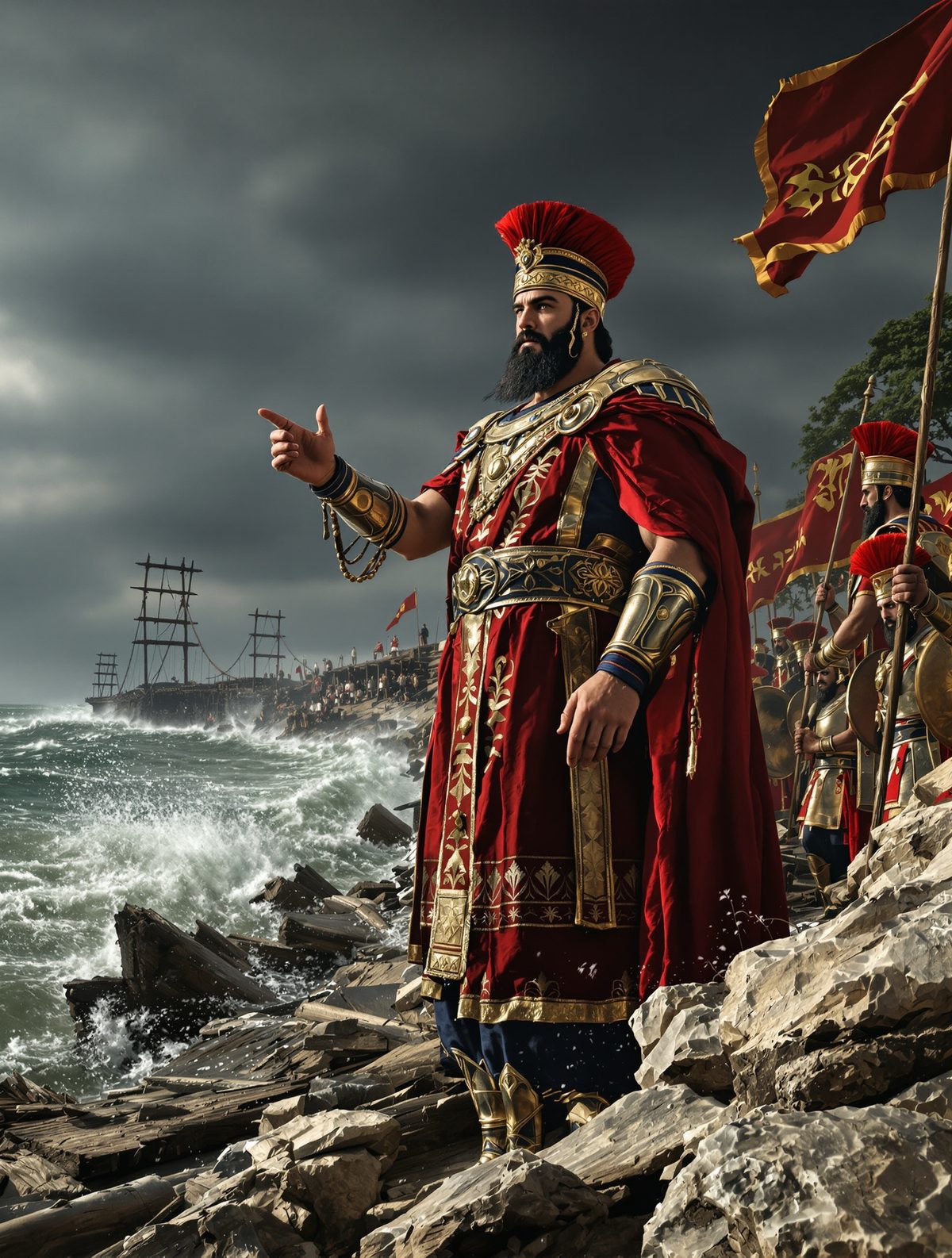
In the heart of the 1450s, while Europe was embroiled in its endless conflicts and exploration was tentatively mapping unknown worlds, an unconventional decision shook the foundations of the mighty Aztec empire. Within the verdant valleys of Central Mexico, the Aztec Triple Alliance faced an enemy on the brink of conquest. Yet, rather than strike a fatal blow, they stayed their hand—a choice not of fear, but of faith and ritual. This is the enigma of the Flower Wars, orchestrated by the visionary high priest Tlacaelel, where victory wasn’t measured in territories, but in bodies—living sacrifices for the gods hungry for human offerings. It's a decision that echoes through history, a reminder of a culture whose conquests were guided by celestial desires as much as earthly ambitions.
The Setting Sun of Total Victory
By the mid-15th century, the Aztec Empire, known as the Triple Alliance and comprising Tenochtitlan, Texcoco, and Tlacopan, was a formidable behemoth in Mesoamerica. The alliance had mastered both the art of war and statecraft under the cunning guidance of Tlacaelel, the high priest and kingmaker whose policies strengthened their dominance. The empire's influence stretched across the landscape in an embrace of inevitable conquest—only halted by the mysterious edict of a Flower War.
In a time when conquest seemed merely a breath away, Tlacaelel proposed a war devoid of the finality of destruction. Instead of annihilating their closest enemies, like Tlaxcala and Huejotzingo, the Aztecs would engage them in ritualized conflict. The aim was neither plunder nor possession, but rather to maintain a supply of captives for religious sacrifice, thus fulfilling a cosmic duty to their gods—especially Huitzilopochtli, the sun god, whose journey across the sky demanded constant nourishment.
The Architect of Blood and Ritual
Tlacaelel, a figure of soft-spoken power, was the grand architect behind the Aztec religious reforms that fueled this unique warfare. He elevated human sacrifice to not merely a component of religion, but to the very axis upon which the Aztec civilization revolved. Ritualized war became a theater for heroism and divine service, a means of securing cosmic stability and societal order. Under his edict, the state's most vital commodity was blood, and the battlefield became a sacred altar.
The allies and adversaries would agree on the time and place of these Flower Wars. Designed to test the warriors' honor, they served as live theaters where fate and prowess played center stage, with the captives' fate sealed in the heart of Tenochtitlan's sacred precincts. Instead of wiping out enemies, the Aztecs designed a terrifying cycle, where the opponent was preserved, only to engage once more under the banner of ritual obligation.
A Dance of Death and Diplomacy
The logistics of a Flower War were as delicate and intricate as a spider's web, spun with both cunning and cultural complexity. These engagements were premeditated, with the intention clear to all—capture, not kill. The combatants would meet in the heat of the day, with shimmering bronze and richly woven cotton armor clashing in symbolic rhythm, underscoring a deadly dance.
It's noteworthy that despite their codified brutality, these battles maintained a semblance of diplomatic decorum. Vows and oaths were exchanged, and despite the carnage, an understanding of mutual benefit existed. Tlaxcala, for instance, famously resisted Aztec domination, yet participated in these wars—a paradox that afforded them autonomy. While the captured were destined for sacrifice, this strange cooperation enabled Tlaxcala to remain a persistent thorn, often outlasting its contemporaries under allied protection, until the eventual conquest by Spanish forces.
The Unyielding Cycle of Sacrifice
Remarkably, this gruesome tradition allowed for societal cohesion in ways even more profound than simple conquest might. The citizens and warriors, bound by fate to curriculum vitae of formidable valor, were woven seamlessly into the cosmic narrative defined by Tlacaelel. Every captured soul was a gift to the gods; every war was a renewal of life and death seen in cosmic terms, a performance of profound belief in providence and destiny.
Flower Wars became not merely strategic, but a necessary instrument of survival in a world irrationally bound to the cycles of nature and deities. While on the surface a grim affair, they provided a perpetual supply of captives that preemptively quelled insurrection by channeling the fervor of adversaries into sacrificial homage rather than revolt.
Legacy of the Flower Wars: Lessons Unlearned
To modern eyes, the Flower Wars may seem a savage relic, a misapplication of warfare where lives were the currency of divine appeasement. Yet, as we unravel the tapestry woven by Tlacaelel, we encounter a deeper narrative. The wars exemplify the profound interplay between belief and politics, a coexistence that shaped civilizations and conducted the tides of empires.
The legacy of the Flower Wars today offers a reflection on the power of ideology and shared belief. In a world rapidly forgetting the past, it serves as a sobering reminder of how cultures could prioritize spiritual imperatives over material conquest, an obsession to connect with something transcendental beyond their own mortality—though often at a terrible human cost.
In the heart of ancient Tenochtitlan, war was not a mere tool of acquisition but an axis of belief. The Aztec princes, with their bloodstained altars and celestial narratives, stand in testament to a past where victory was defined in sacrificial blood rather than fertile ground—a haunting legacy etched in stone and skin, still whispering through the haze of history.