
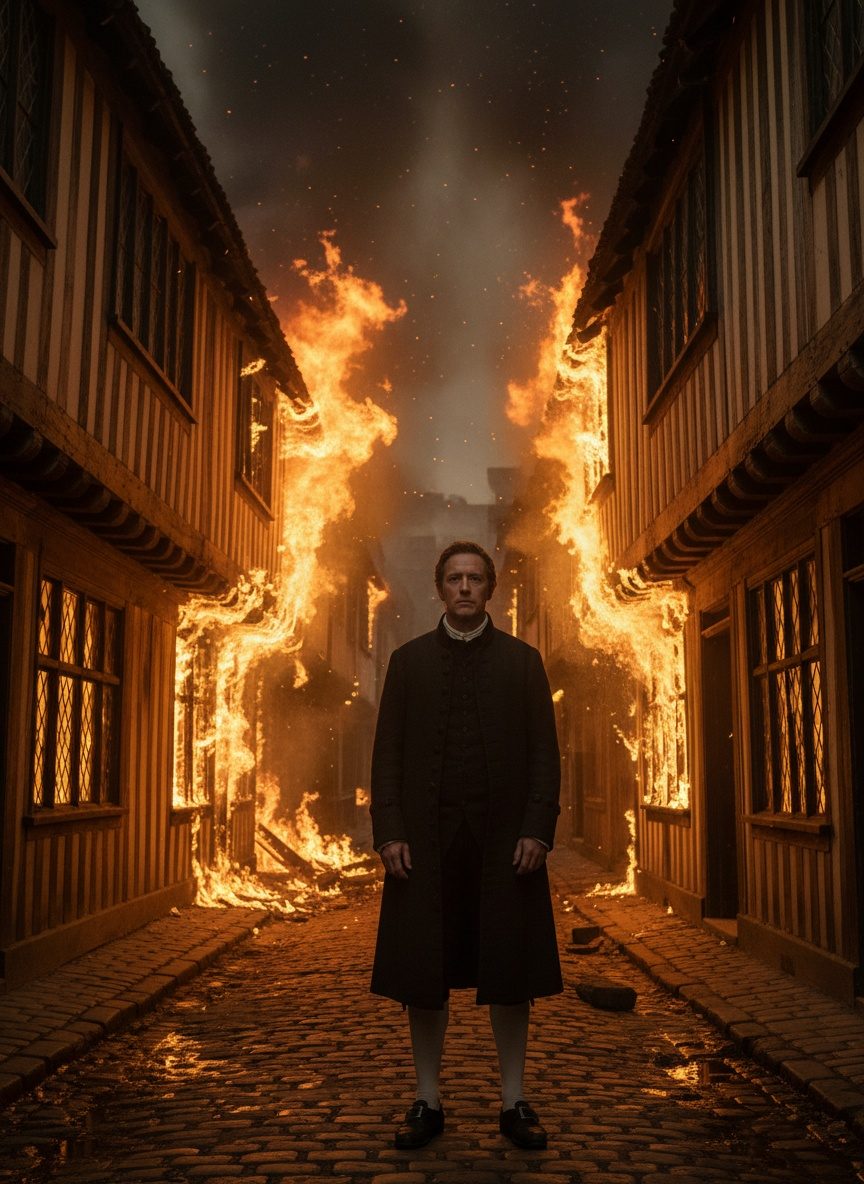
In the eerie pre-dawn twilight of September 2, 1666, the comforting aroma of freshly baked bread drifted through the air in London's Pudding Lane. All seemed quiet in the sleepy heart of the city. But beneath the silent surface, a spark smoldered. Within hours, it would ignite a blaze swallowing everything in its path. What began in the kitchen of Thomas Farriner, a humble baker, would ignite a chain of events so catastrophic and yet paradoxically beneficial, that even the most gifted storytellers would struggle to script it.
The Inferno Ignites
The fire started innocuously enough — a flash of sparks in a Pudding Lane bakery, a place whose name now echoes in the annals of infamy. On the night of September 1, a chance misfortune — perhaps a spark from the wood-fired oven or an ember left smoldering — found enough fuel to kindle flames that leapt hungrily across the wooden timbers. Baker Thomas Farriner rushed to battle the firestorm that quickly spread beyond his control, fed by the tightly-packed wooden homes that crowded medieval London's narrow streets.
By the time the sun blinked over the horizon, an inferno raged, and with the wind’s fickle aid, it rampaged through London Bridge and into the city's heart. As those ancient timbers surrendered to crackling flames, Londoners awoke to a fiery crucible that tested their very survival.
The Fire That Ate London
For four relentless days, the Great Fire of London roared through the city with an insatiable hunger. Firefighting techniques of the day were woefully inadequate against such fury; their tools were little more than leather buckets, axes, and primitive water squirts. Desperation bred drastic measures, and orders were given to demolish houses to create firebreaks. Yet, chaos reigned, and the attempt merely fueled the fire's fury.
The toll was monumental. By September 5, the blaze had claimed 13,200 houses and 87 churches including the iconic St. Paul's Cathedral. Landmarks vanished into ashen memories. But amid this destruction lay an unexpected silver lining, noticed only as the smoke began to clear.
The Plague That Vanished
The Great Plague of 1665 had laid a cruel blanket over London, claiming the lives of an estimated 100,000 souls — nearly a quarter of the city's population. While physicians and citizens alike searched for remedies and understanding, the plague’s grip seemed unbreakable. Yet, when the fire’s fury subsided, a peculiar phenomenon came to light: the deadly touch of the plague had weakened dramatically.
In a strange twist of fate, the fire's path of destruction had acted as a natural disinfectant, burning away the cramped, dirty quarters that provided the perfect breeding grounds for the plague-carrying fleas and rats. A pestilence's stranglehold over London had eased, ironically purified by the flames.
Surprising Revelations from the Ashes
The fire transformed more than just physical structures; it reshaped an entire city’s future. Sir Christopher Wren, the visionary architect, used the city’s ashes as a blank canvas, crafting the plans for a new London that balanced grandeur with practicality. His redesign encouraged broader streets and bricks in place of wood to thwart future blaze tragedies.
Less well-known, perhaps, is the role of Robert Hooke, the Surveyor to the City of London. His meticulous surveys and re-planning efforts laid down an urban architectural legacy that underpins the city we know today. Hooke's practical genius was often overshadowed by more famous contemporaries, but his contribution remains a building block in London's history.
The Baker On Trial
The rows of rubble demanded accountability, and Thomas Farriner was scrutinized under intense public eyes. Yet his trial resulted in an odd conclusion. Though the initial spark had originated in Farriner’s bakery, the baker escaped punishment. A French watchmaker named Robert Hubert, who confessed to starting the fire — under dubious circumstances — was hanged for the crime. Modern historians largely dismiss Hubert’s conviction as a miscarriage of justice, noting his confession was likely coerced.
The Legacy of the Fire That Saved a City
Today, the Great Fire of London serves as a stark reminder of the fragile line between tragedy and transformation. It was an unintentional savior, eradicating both the city's pestilential plague vectors and the antiquated urban sprawl that had left it so vulnerable.
As we reflect on this past, we're provoked to ponder resilience: how calamities can instigate renewal, turning devastation into opportunity. London's phoenix-like rise from these ashes offers a powerful lesson in how crises might spur unexpected growth and redefine the very fabric of existence. The Great Fire was a fiery reshaping, a catalyst not just for the survival of a city, but the rebirth of London’s spirit.
Next time you wander the rebuilt streets of the City, or a bakery’s warm aroma lures you in, remember the echoes of history — of the baker, the fire, and the invisible pestilence defeated by a disastrous yet strangely salvatory inferno.