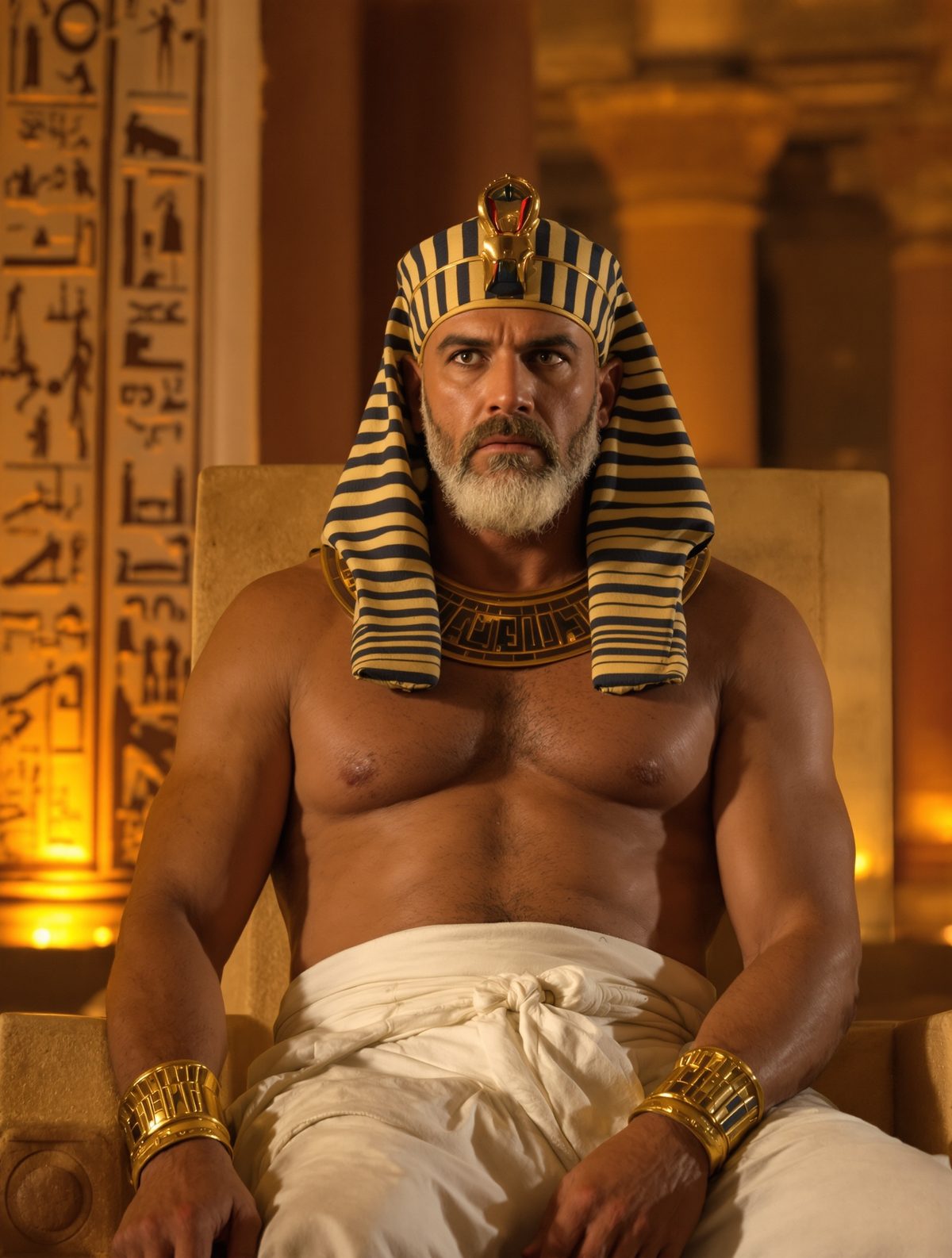
They came expecting another victory. For years, the Assyrian Empire had crushed neighboring kingdoms with brutal precision, their conquests stretching from Mesopotamia to the Mediterranean. But in 701 BC, as the Assyrian army marched toward Egypt, they encountered a formidable obstacle that would test even their vaunted might. From the dusty sands of Nubia rose Taharqa, a young Nubian king whose bold stand against these conquerors would echo through the centuries.
The Black Pharaoh: A King of Two Lands
Taharqa was not merely a king; he was a pharaoh of Egypt, a title he held while simultaneously reigning as king of Kush, a kingdom located in what is modern-day Sudan. Born around 690 BC, Taharqa hailed from a land deep in sub-Saharan Africa, whose existence the Greeks barely knew. Yet, his rule extended over vast territories, encompassing both the fertile banks of the Nile and the harsh deserts of Nubia.
As a member of the 25th Dynasty, known as the Kushite Dynasty, Taharqa was among the African rulers who would leave an indelible mark on Egyptian history. At a time when Egypt's power had waned, Taharqa revitalized the nation with a resurgence of art, architecture, and military might. His reign saw the construction of temples and pyramids, paying homage to the ancient gods and reinforcing his stature as a divine ruler.
The Assyrian Threat: Facing the World's Most Feared Military
The Assyrian Empire, renowned for its formidable army, was at the height of its power. Made up of skilled warriors armed with iron weapons and guided by ruthless generals, the Assyrians were capable of leveling entire cities. Their empire was a lesson in terror and domination, making their sights on Egypt a threat of existential magnitude.
The Assyrian king Sennacherib, intently focused on subjugating Egypt, sent his forces to capture the prosperous and strategically important Nile Valley. But standing in their path was Taharqa, who was not only determined to safeguard his lands but was also keen to prove that the Nubian kings could stand toe-to-toe with any world power.
The Battle of Eltekeh: A Biblical Clash
In a twist of fate, it was in the dense pages of the Bible that Taharqa's name would become immortalized. As the Assyrian army advanced into the Levant, their arrival was met with resistance in the form of a coalition of forces that included Hezekiah, the king of Judah, and the Egyptians led by Taharqa. The Battle of Eltekeh ensued, and although historical accounts differ, the Bible recounts the retreat of the Assyrians, offering Taharqa a momentous, albeit temporary, victory.
While the Assyrians would seek to diminish this setback in grandiose rock carvings, documenting their side of history, the reality remained that Taharqa had forced the mightiest of empires to reconsider their advances. His actions not only disrupted Sennacherib's ambitions but also solidified his status as a defender of an ancient homeland.
The Resilient King: Retaliation and Redemption
Despite this hard-earned victory, the Assyrians would not relent. Successive kings, Esarhaddon and Ashurbanipal, attempted to subdue Egypt. In 671 BC, Esarhaddon launched a devastating campaign, capturing Memphis and driving Taharqa into Upper Egypt, far from the heart of his kingdom. Yet, true to form, Taharqa's fierce resilience saw him regroup and drive the Assyrians out just two years later.
His ability to muster forces against such overwhelming odds was a testament to his leadership skills and his strategic brilliance. And while Assyria would ultimately press harder following his reign, Taharqa's staunch resistance illuminated the potential for African powers to engage on equal terms with even the most industrious of civilizations.
The Legacy of Taharqa: A Tale That Endures
For Taharqa, legacy was more than tangible structures or military victories. It was about crafting a narrative where the underdog could stand tall against seemingly insurmountable challenges. His story is one of a king who breathed life into a kingdom while resisting the eclipse of an empire bent on domination.
Today, Taharqa's tale matters because it sheds light on parts of African history that have long been overshadowed by European or Middle Eastern narratives. His experience as both a defender and a ruler speaks to the universal themes of resilience and identity. In this era of globalization, when borders blur and histories intertwine, recalling Taharqa's achievements invites us to revisit stories often left untold and recognize the nuanced mosaic of human history.
Indeed, history is not merely what survives on the battlefield; it's what is preserved in memory and what we choose to remember. Taharqa's refusal to be erased ensures that his tale remains not just etched in stone, but alive in the spirit of those who cherish the stories they never taught you in school.