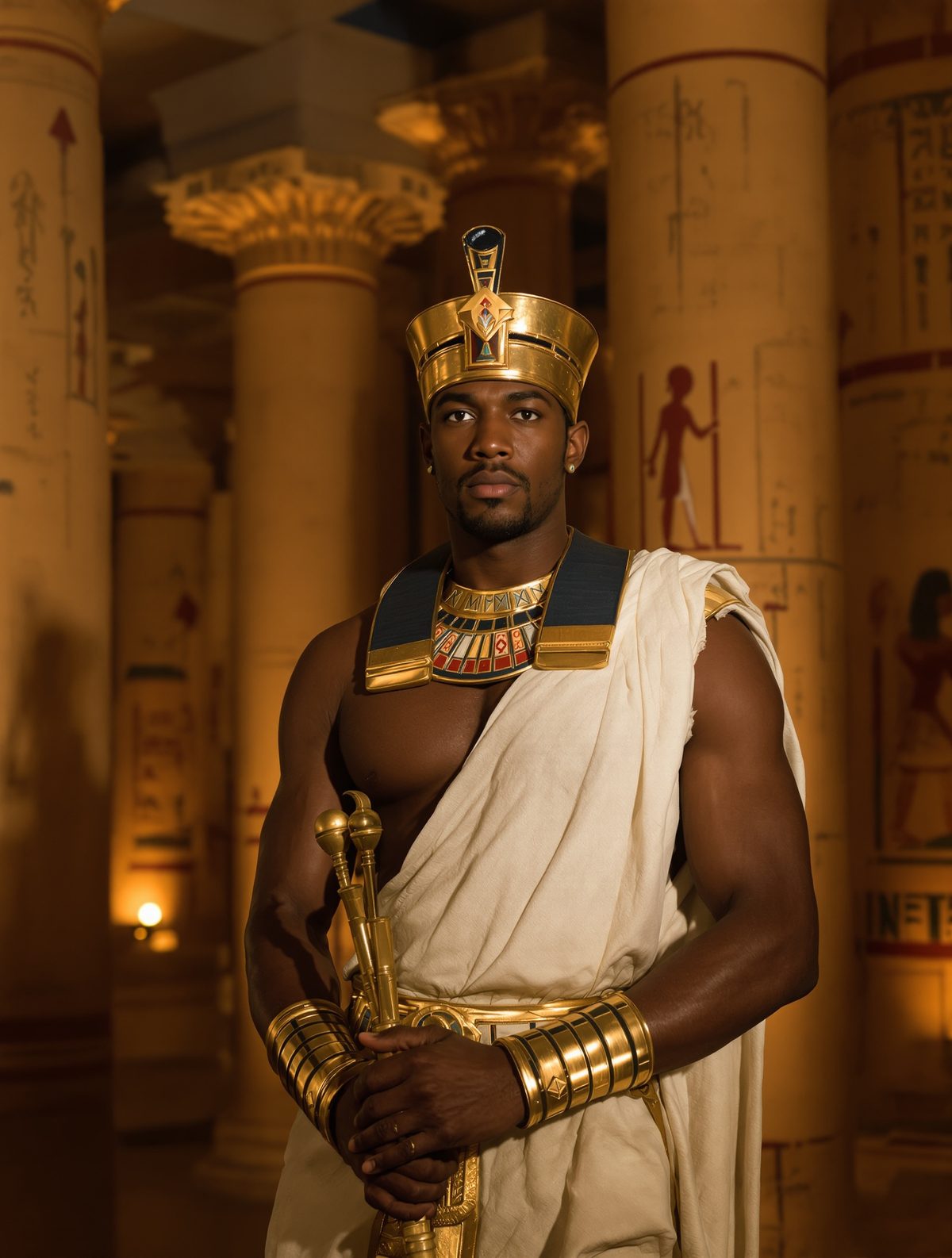
In the grand tapestry of ancient Egyptian history, few stories intrigue like that of Thutmose III, a young king whose ascent to power was halted before it had even begun. Crowded in the opulent halls of Thebes lie whispers of ambition, betrayal, and eventual vengeance. To grasp the epic tale of the nephew who waited 22 long years to rule, one must first step into the realm of the 18th Dynasty, where power, divinity, and the imperceptible hand of fate collided.
The Child King: An Uneasy Coronation
In 1479 BC, a child named Thutmose III was thrust into the limelight as pharaoh of one of history’s greatest empires. Yet, it was a kingdom teetering under the weight of court intrigue. His father, Thutmose II, had just passed away, leaving the throne to his young son. But the Egyptian throne was not merely a seat of gold and glory—it was a precarious perch fraught with potential dangers.
The young king, scarcely more than a boy, was vastly overshadowed by his formidable aunt and stepmother, Hatshepsut. As regent, she guided the boy-king—until she took the reigns entirely. Together, they formed an unusual co-regency, but the sands of the Egyptian desert whispered of an inevitable shift. With deft political maneuvering, Hatshepsut proclaimed herself pharaoh in her own right, adorned with the masculine titles and regalia of a male ruler. Little Thutmose was relegated to the background, a name whispered in the halls, a shadow waiting in the wings.
The Woman Who Would Be King
Hatshepsut’s reign is one of the most celebrated and contentious in Egyptian history, lasting until her death in 1458 BC. She was not just a placeholder; she became one of Egypt’s most successful leaders. Under her rule, trade routes flourished, monumental architecture reached new heights with the construction of her famed mortuary temple at Deir el-Bahri, and the arts and culture experienced a renaissance.
Curiously, Hatshepsut's reign was never marred by open rebellion from the young Thutmose III. Instead, the young prince was dutifully trained as a general, sharpening his skills on the battlefield. This time-tested warrior's education would ultimately shape him into the "Napoleon of ancient Egypt."
The Dawn of a New Era
The death of Hatshepsut in 1458 BC marked a turning point, a swift wind of change sweeping through the Egyptian landscape. Thutmose III was finally able to assume his rightful place as the sole ruler of Egypt. But instead of stepping delicately into the shadows left by his aunt, Thutmose took charge with unprecedented vigor. Almost immediately, he embarked on expansive military campaigns, stretching Egypt’s influence to its greatest in history. By the time his reign concluded in 1425 BC, Thutmose III had transformed Egypt into a superpower of its day.
Yet, it's his actions at home that garnered the most attention from historians. With the might of the Egyptian state at his disposal, Thutmose undertook a mission of historical erasure, eradicating every trace of Hatshepsut’s legacy from public record—her name, her monuments, even her gender. Statues were defaced, inscriptions altered, her memory pulverized into oblivion.
History's Persistent Ghost
Unraveling Thutmose III's reasons for such an obliterating sweep is akin to venturing into a storm; one can only speculate on its veiled intentions. Was it a calculated move to legitimize his lineage, to shore up his claim as a true, unchallenged pharaoh in the eyes of the gods and his people? Or was it an attempt to eliminate any record of a woman ruler, thus restoring what might have been seen as cosmic order?
This deliberate, systematic erasure is a curious phenomenon that speaks volumes about the importance of legacy and memory in ancient cultures. The objective to diminish Hatshepsut’s reign posthumously signals a dictatorial approach to historical narrative, one that modern scholars have gradually pieced back together in reverse-conspiracy fashion.
The Forgotten Lessons of History
In the end, the story of Thutmose III is a testament to the endurance of historical inquiry and the fragility of legacy. It speaks to the power struggles inherent in governance, the resilience of erased histories re-discovered, and the thin veneer separating fame from oblivion. These lessons resonate with today’s world as we consider how histories are constructed, who decides what is remembered, and why we must remain vigilant stewards of our collective past.
As we sift through the detritus of ancient dynasties, the lessons from Thutmose's calculated actions implore us to ask: What will history say of our age, and who will be tasked with telling it? The ancient Egyptians revered Ma’at—the balance of the universe—as something pharaohs were tasked to maintain. Perhaps the grandson usurper's tale urges us towards a modern Ma’at, one of inclusivity and honesty, a tapestry woven from each thread of our shared past.