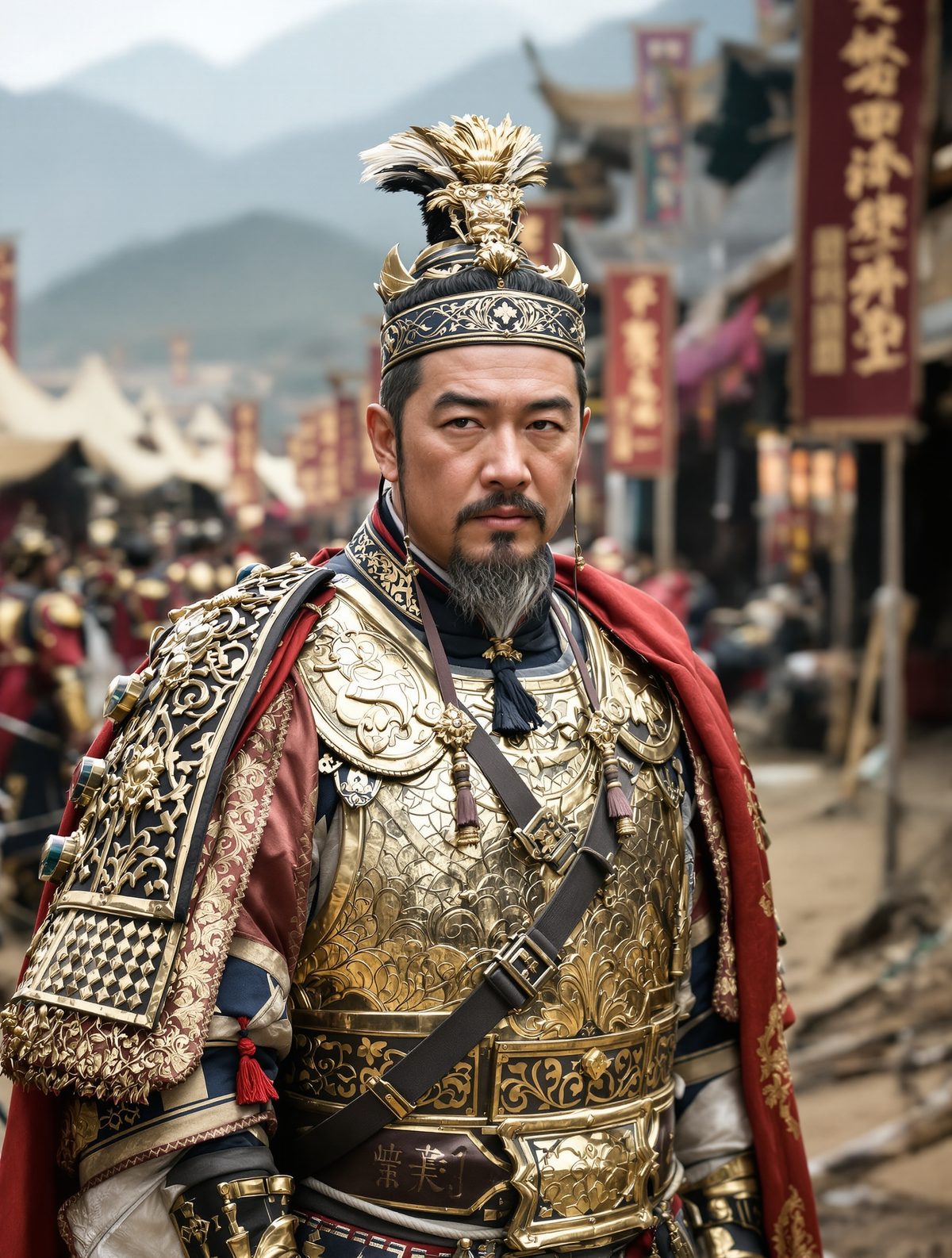
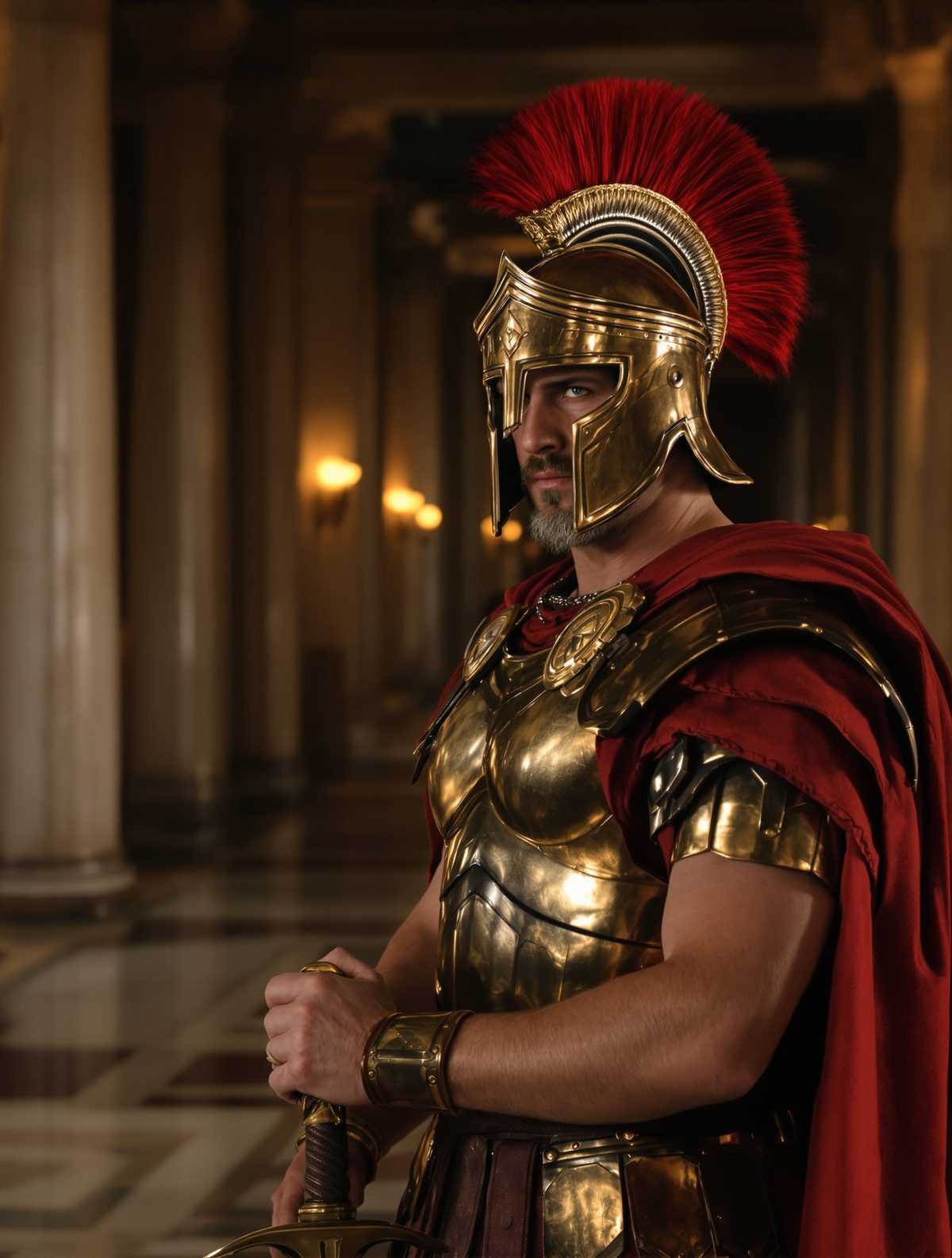
The reeds parted gently as the woven basket bobbed downstream, its precious cargo hidden beneath a carefully sealed lid. Inside, a newborn's cries were muffled by the rushing waters of the Euphrates River. This was no ordinary abandonment—this was a calculated gamble that would reshape the ancient world. The year was approximately 2334 BC, and floating toward an uncertain destiny was a baby who would grow up to become Sargon the Great, history's first true emperor.
What happened next reads like ancient fan fiction, except every detail was meticulously recorded on cuneiform tablets that archaeologists still unearth today. A humble gardener named Akki, tending to the royal irrigation channels, spotted the mysterious vessel caught among the river plants. When he pried open the basket, he discovered not treasure or grain, but a perfectly healthy infant with eyes that seemed to hold the fury of storms.
Akki could never have imagined he was cradling the future conqueror of Mesopotamia—a man who would unite warring city-states under one crown and establish the world's first multi-ethnic empire stretching from the Persian Gulf to the Mediterranean Sea.
The Mystery of the Floating Prince
Sargon's origin story, recorded in his own royal inscriptions, bears an uncanny resemblance to other legendary foundlings throughout history—Moses, Romulus and Remus, even Cyrus the Great. But Sargon's tale predates them all by more than a millennium, making his the original "baby in a basket" narrative that would echo through countless cultures.
According to the Sargon Birth Legend, discovered on tablets in Ashurbanipal's library at Nineveh, Sargon claimed his mother was a priestess who concealed her pregnancy. "My mother, the priestess, conceived me, in secret she bore me," the inscription reads. "She set me in a basket of rushes, with bitumen she sealed my lid. She cast me into the river which rose over me."
But here's where the story gets interesting: modern historians suspect this floating baby tale might have been political propaganda. Sargon likely invented or embellished his mysterious origins to legitimize his rule over people who saw him as an upstart commoner. In a world where divine bloodlines determined who could wear a crown, claiming mysterious parentage was far more acceptable than admitting you started life as a gardener's son.
The name "Sargon" itself means "the king is legitimate"—hardly the name loving parents would give a newborn, but exactly the kind of throne name an ambitious ruler would adopt. His real name, like his true parentage, remains lost to history.
From Palace Gardens to Royal Courts
What we do know is that young Sargon grew up in Kish, one of Mesopotamia's most powerful city-states, working in the palace gardens under his adoptive father Akki. This wasn't menial labor—palace gardeners were skilled professionals responsible for maintaining elaborate irrigation systems, exotic plants, and sacred groves. The position would have given Sargon unprecedented access to royal circles, political intrigue, and military planning.
Mesopotamian society was rigidly hierarchical, but the palace gardens served as a unique melting pot where slaves, craftsmen, nobles, and foreign ambassadors crossed paths daily. Here, a sharp-minded young man could learn languages, observe diplomatic negotiations, and study the strengths and weaknesses of neighboring kingdoms. Sargon absorbed it all.
The goddess Ishtar allegedly took notice of the ambitious gardener, blessing him with her favor. Whether divine intervention or shrewd political maneuvering, Sargon somehow caught the attention of Ur-Zababa, the king of Kish, who promoted him to cupbearer—a prestigious position that involved far more than serving wine. Cupbearers were trusted advisors, bodyguards, and often served as royal spies.
But gratitude wasn't Sargon's strong suit. Around 2334 BC, in a move that would make Machiavelli proud, he overthrew his patron and seized control of Kish. The foundling had become a king, but his ambitions stretched far beyond one city's walls.
Forging the World's First Empire
Sargon's conquest of Mesopotamia reads like a masterclass in ancient warfare and diplomacy. Unlike previous rulers who were content to dominate their immediate neighbors, Sargon envisioned something unprecedented: a unified empire spanning multiple cultures, languages, and ethnic groups.
His first major target was Lugal-Zage-Si, the powerful ruler of Uruk who controlled much of southern Mesopotamia. The two armies met in a battle so decisive that cuneiform records claim Sargon "defeated Uruk and tore down its wall." He didn't stop there. In a calculated display of dominance, he marched Lugal-Zage-Si to the temple of Enlil in Nippur—Mesopotamia's religious center—and publicly humiliated him before the assembled priests and nobles.
What happened next was revolutionary. Instead of simply looting conquered cities and returning home, Sargon systematically dismantled the old system. He removed local rulers, installed Akkadian governors, and created the world's first professional standing army—a force of 5,400 men who owed loyalty to Sargon personally, not to any city or tribe.
His empire, centered in the newly built capital of Akkad (whose exact location remains one of archaeology's great mysteries), eventually encompassed modern-day Iraq, Kuwait, eastern Syria, southeastern Turkey, and western Iran. For the first time in history, a single ruler controlled the entire length of the Tigris and Euphrates rivers, along with the crucial trade routes connecting Asia and Europe.
The Akkadian Innovation Engine
Sargon's empire wasn't just about military conquest—it was a cultural and technological revolution. The Akkadians spoke a Semitic language completely different from Sumerian, yet instead of suppressing local cultures, Sargon's administration created the world's first truly multicultural state.
Akkadian became the ancient world's first lingua franca, the language of international diplomacy and trade that would remain dominant for over a thousand years. Cuneiform tablets written in Akkadian have been discovered everywhere from Egypt to Iran, testament to the empire's vast commercial networks.
The Akkadians also pioneered new military technologies that gave them decisive advantages over their enemies. They were among the first to use composite bows made from wood, horn, and sinew—weapons that could penetrate armor at distances that rendered traditional shields useless. Their bronze weapons were superior to the copper tools used by most enemies, and their disciplined formations could outmaneuver the loosely organized militias of city-states.
Perhaps most importantly, Sargon understood the power of propaganda and image management. Akkadian artists created the first known realistic portrait sculptures of rulers, moving away from the stylized representations common in Sumerian art. These lifelike images of Sargon were distributed throughout the empire, ensuring that subjects could recognize their emperor even if they'd never seen him in person.
The Legend Outlasts the Empire
Sargon ruled for 56 years, an almost unthinkable length of time in an era when most kings died young from warfare, disease, or palace coups. When he finally died around 2279 BC, his empire had fundamentally changed how humans organized themselves politically and economically.
The Akkadian Empire itself lasted only about 180 years before collapsing due to climate change, internal rebellions, and invasions by the mysterious Gutians from the Zagros Mountains. But Sargon's innovations—professional armies, centralized administration, multicultural governance, and imperial propaganda—became the blueprint for every subsequent empire from Babylon to Rome.
More remarkably, Sargon's personal story never died. His legend spread throughout the ancient world, inspiring countless rulers to claim similar mysterious origins. The "foundling king" narrative became so powerful that it was borrowed by cultures that had never heard of Akkad, passed down through oral traditions until it reached the authors of Biblical and Greek mythology.
Even today, archaeologists continue searching for Sargon's lost capital of Akkad, whose location remains one of the field's greatest unsolved mysteries. Somewhere beneath the sands of modern Iraq lie the ruins of history's first imperial capital, built by a baby who survived a river journey that should have killed him.
Why the Floating Baby Still Matters
Sargon's story resonates across 4,300 years because it embodies humanity's most enduring fantasy: that humble origins don't determine ultimate destiny. In our modern world of rigid class structures and inherited privilege, there's something deeply appealing about a foundling who became the most powerful person on Earth through intelligence, ambition, and strategic thinking.
But perhaps more importantly, Sargon represents humanity's first successful attempt at creating unity from diversity. His empire proved that people of different languages, religions, and ethnic backgrounds could coexist under shared institutions and laws. In an era when nationalism and cultural division dominate global politics, Sargon's multicultural experiment feels remarkably contemporary.
The next time you see a basket floating down a river, remember that it might contain more than abandoned cargo. Sometimes, it carries the future itself—wrapped in reeds, sealed with bitumen, and destined to change the world. Just ask the gardener who pulled a crying infant from the Euphrates and accidentally rescued the first emperor in human history.