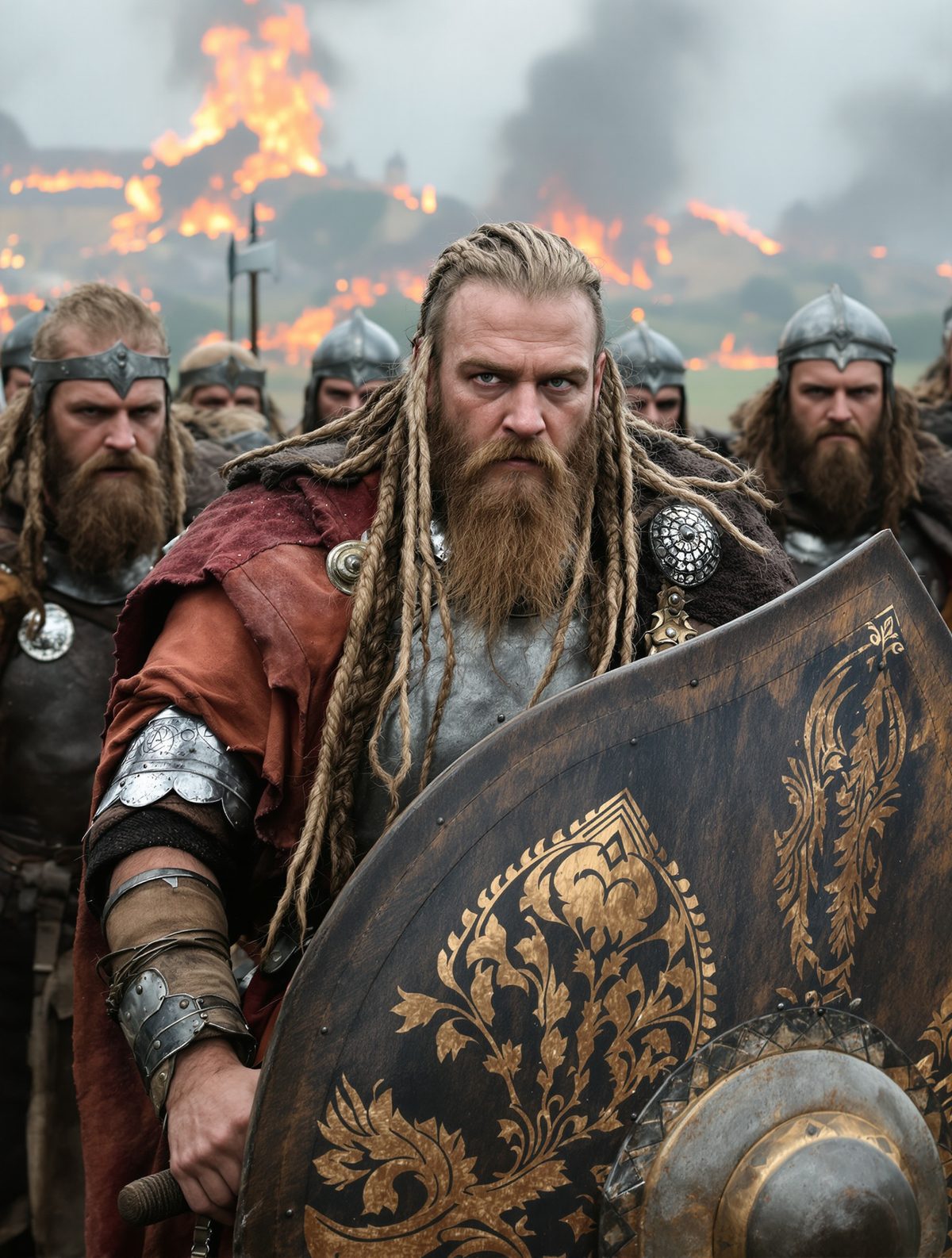
In the shadowy corridors of the Palatine Hill on January 24, 41 AD, the most powerful man on Earth was about to discover that even emperors can push loyalty too far. As Gaius Julius Caesar Augustus Germanicus—better known as Caligula—made his way through a narrow underground tunnel after watching theatrical performances, he had no idea that his most trusted protector was steps behind him, hand gripping a dagger. The man sworn to die for his emperor was about to kill him instead.
The assassination of Caligula wasn't carried out by political rivals or foreign enemies. It was orchestrated by Cassius Chaerea, a battle-hardened centurion of the Praetorian Guard who had spent years enduring daily humiliations that would have broken lesser men. But on this winter day in Rome, something inside the loyal soldier finally snapped—and the Roman Empire would never be the same.
The Soldier Who Earned an Emperor's Trust
Cassius Chaerea wasn't your typical palace guard. By 37 AD, when the 25-year-old Caligula ascended to the throne, Chaerea was already a grizzled veteran with decades of military service under his belt. He had served with distinction in Germania under Caligula's beloved father, Germanicus, and had proven his mettle in countless battles along the Rhine frontier.
What made Chaerea particularly valuable to the new emperor wasn't just his military prowess—it was his unquestioning loyalty and his reputation for absolute discretion. In a world where imperial bodyguards were as likely to sell secrets as protect lives, Chaerea stood apart. He was the kind of man who could be trusted with the emperor's darkest moments, his most vulnerable hours, and his most paranoid fears.
Caligula, whose nickname meant "little boots" from his childhood spent among the legions, initially seemed to appreciate having such a seasoned warrior at his side. Here was a man who had known his legendary father, who understood the weight of imperial responsibility, and who asked for nothing more than the honor of service. For the first months of his reign, the relationship between emperor and protector seemed almost cordial.
But Caligula was not his father, and as his reign progressed, the young emperor's behavior became increasingly erratic and cruel. What started as occasional mood swings evolved into systematic cruelty, and nobody was more exposed to the emperor's sadistic whims than the man who stood closest to him every single day.
The Daily Torture of a Loyal Soldier
The humiliation began subtly, as these things often do. Caligula discovered that despite his fearsome reputation on the battlefield, Chaerea had a surprisingly high-pitched voice—a detail that the emperor found endlessly amusing. What might have remained a private joke between ruler and subject instead became a public spectacle, as Caligula began openly mocking his protector's voice in front of other guards, senators, and visiting dignitaries.
But it was the daily password ritual that transformed casual mockery into deliberate psychological torture. As a senior member of the Praetorian Guard, Chaerea was responsible for receiving the daily passwords that allowed access to the emperor's presence. These passwords were traditionally dignified words befitting the majesty of Rome—names of gods, virtues, or military victories.
Caligula had other ideas. Day after day, he assigned Chaerea passwords designed to mock his perceived lack of masculinity. "Priapus"—the god of male fertility, delivered with a smirk as other guards tried not to laugh. "Venus"—the goddess of love and beauty, forcing this battle-scarred veteran to essentially call himself feminine. "Love" and "Kiss" followed, each password a small but public humiliation that chipped away at Chaerea's dignity.
Imagine the scene: a man who had faced Germanic warriors in hand-to-hand combat, who had earned his position through blood and sacrifice, forced to utter these emasculating words every single day while his fellow soldiers looked on. Each password was delivered by a giggling emperor who seemed to delight in watching his protector's jaw clench and his face redden with suppressed rage.
But Chaerea endured it all, because that's what soldiers do. He had sworn an oath, and Roman military discipline was built on the absolute sanctity of such oaths. Even as his fellow Praetorians began to whisper among themselves about the emperor's behavior, Chaerea maintained his stoic facade. The emperor's life was his responsibility, regardless of how that emperor chose to treat him.
When Loyalty Becomes a Weapon
By early 41 AD, Caligula's reign had become a nightmare not just for Chaerea, but for virtually everyone around him. The emperor had declared himself a living god, demanded to be worshipped, and had begun making increasingly erratic decisions that threatened the stability of the empire. He had named his horse Incitatus as a consul, forced senators to run alongside his chariot for miles, and had started construction on a bridge to connect his palace with the Temple of Jupiter so he could "visit his fellow god."
The breaking point came during the Palatine Games in January 41 AD. As Chaerea stood guard during the theatrical performances, Caligula was in particularly high spirits—which meant he was in a particularly cruel mood. In front of a crowd that included senators, foreign dignitaries, and fellow Praetorians, the emperor launched into another round of public mockery aimed at his faithful bodyguard.
This time, however, something was different. Perhaps it was the laughter of the crowd, or the way other guards avoided meeting Chaerea's eyes, or simply the accumulation of four years of daily humiliation. Whatever the catalyst, Cassius Chaerea made a decision that would echo through history: his emperor had to die.
What happened next reveals the true genius of Chaerea's position. Who better to plan an imperial assassination than the man responsible for preventing imperial assassinations? He knew every detail of Caligula's security protocols, every vulnerable moment in the emperor's daily routine, every blind spot in the palace's defenses. More importantly, he knew exactly which of his fellow Praetorians had grown sick of their emperor's behavior.
The conspiracy that formed around Chaerea wasn't driven by political ambition or foreign gold—it was fueled by the simple human desire to reclaim dignity. These were professional soldiers who had been forced to watch their leader mock everything they held sacred, and they were ready to follow their respected centurion into what amounted to a military coup.
Thirty Stab Wounds in the Dark
January 24, 41 AD, started like any other day in the increasingly paranoid world of Caligula's court. The emperor was attending the Palatine Games, enjoying theatrical performances in a temporary theater constructed near his palace. As always, Chaerea was nearby, watching the crowds for threats while maintaining his stoic expression as the emperor made his usual jokes at his expense.
As the performances concluded around midday, Caligula made a fateful decision. Rather than taking his usual route back to the palace, he chose to use a narrow underground tunnel that connected the theater to his private quarters. It was a route he had used before, and one that his security team considered relatively safe. After all, who could threaten an emperor walking through his own palace, surrounded by his own guards?
The tunnel was dimly lit and narrow enough that only a few people could walk abreast. As Caligula moved through the passage, accompanied by several attendants and a small security detail, he was effectively trapped—exactly as Chaerea had planned. The centurion had positioned his fellow conspirators at strategic points, ensuring that no loyal guards would be able to intervene when the moment came.
What happened next was swift and brutal. As the emperor paused to speak with a group of young actors who had performed that day, Chaerea approached from behind. Some sources suggest he asked for the day's password one final time—a darkly ironic reversal of their daily ritual. Then, without warning, he struck.
The first blow came from Chaerea's sword, delivered with the precision of a man trained in the art of killing. But this wasn't a clean execution—it was an explosion of years of pent-up rage and humiliation. As Caligula fell, other conspirators joined the attack. Thirty wounds were counted on the emperor's body, inflicted by multiple attackers who had each suffered their own indignities at his hands.
In a matter of moments, the most powerful man in the world was dead, killed by the very men sworn to protect him. The tunnel that was supposed to be his safe passage had become his tomb, and the loyal protector who had endured years of abuse had become his executioner.
The Aftermath: When Protectors Become Kingmakers
The immediate aftermath of Caligula's assassination revealed just how thoroughly the emperor had alienated those around him. Rather than rushing to avenge their fallen leader, many of the Praetorians seemed almost relieved. The Senate, when they learned of the emperor's death, actually began debating whether to restore the Roman Republic—a conversation that lasted exactly as long as it took the Praetorian Guard to realize they could choose the next emperor themselves.
Chaerea and his fellow conspirators had given little thought to what would happen after their act of vengeance. They were soldiers, not politicians, and their primary goal had been ending Caligula's reign of terror rather than establishing a new one. This oversight would prove crucial in the hours that followed, as other members of the Praetorian Guard discovered Caligula's uncle, Claudius, hiding behind a curtain in the palace and declared him emperor on the spot.
The new emperor faced an immediate dilemma: what to do with the men who had killed his predecessor? Claudius was no fool—he understood that the same guards who had eliminated Caligula could just as easily eliminate him if he proved unpopular. At the same time, he couldn't appear to reward regicide, or every future emperor would live in fear of his own protectors.
Cassius Chaerea was executed within weeks of Claudius's ascension, along with several other key conspirators. But their deaths were presented not as punishment for killing Caligula, but as necessary measures to maintain military discipline. It was a careful balance that allowed Claudius to eliminate potential threats while sending a message that emperors' lives were sacred—even when those emperors behaved like tyrants.
The Bodyguard's Dilemma
The story of Cassius Chaerea forces us to confront an uncomfortable question that remains relevant today: what happens when loyalty and dignity become mutually exclusive? Throughout history, we've seen countless examples of individuals caught between their duty to an institution and their obligation to their own moral principles. From palace guards in ancient dynasties to modern whistleblowers in corporate and government settings, the fundamental tension remains the same.
Chaerea's transformation from protector to assassin wasn't the result of foreign manipulation or political ambition—it was the inevitable consequence of a leader who forgot that even absolute power has limits. Caligula's mistake wasn't just in humiliating his bodyguard; it was in failing to understand that true loyalty cannot be maintained through fear and degradation alone.
Perhaps most remarkably, Chaerea's story reminds us that even in the most authoritarian systems, individual agency persists. The very mechanisms designed to protect tyrants—their guards, their institutions, their inner circles—can become the instruments of their downfall when pushed too far. In the dark tunnel beneath the Palatine Hill, a loyal soldier taught his emperor the oldest lesson in human history: no one is truly untouchable, and dignity, once lost, demands a reckoning.