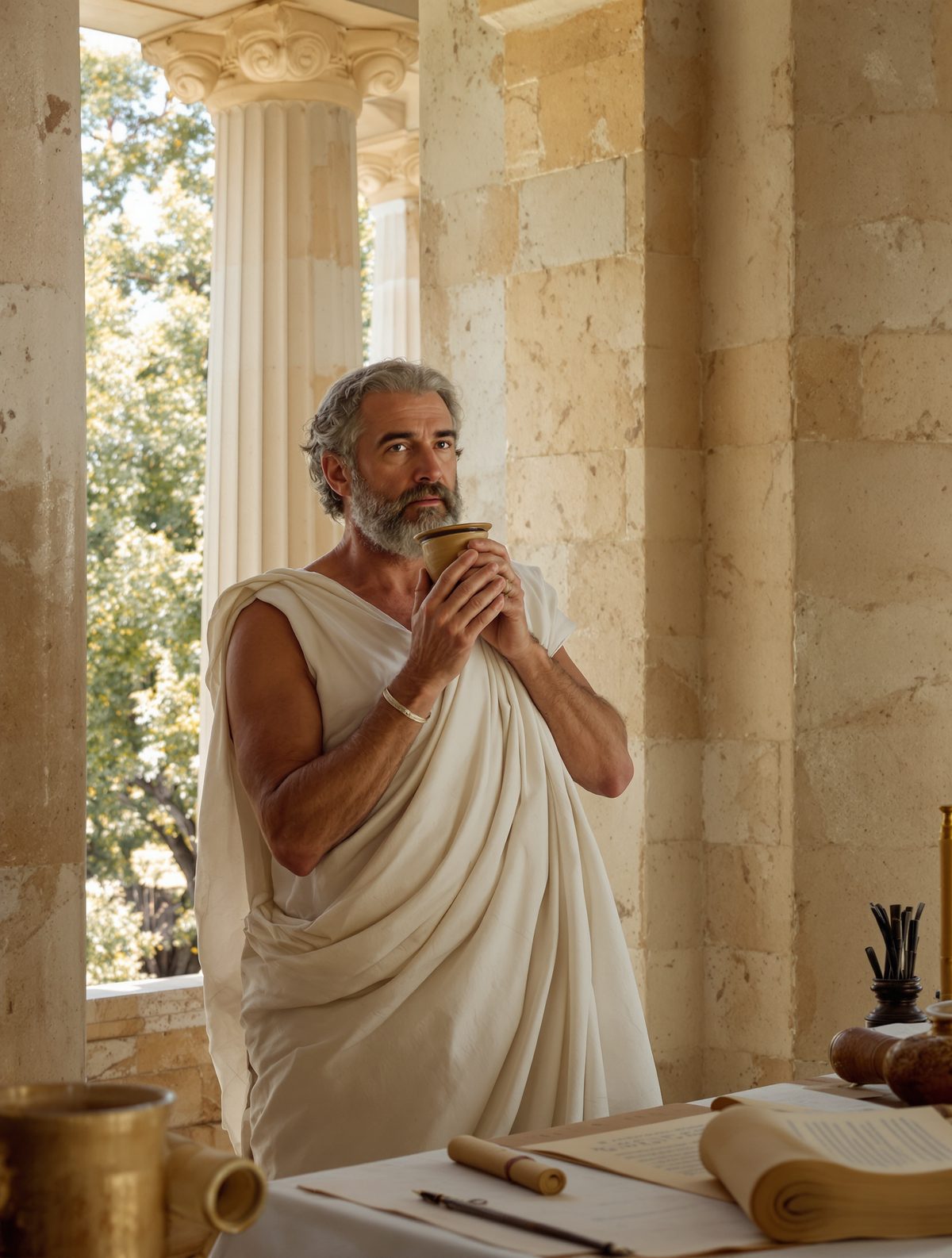
Picture this: It's a cold December night in 62 BC, and the most powerful women in Rome are gathering in absolute secrecy. The doors are barred, the male servants dismissed, and even the household cats have been removed—because this sacred ritual of Bona Dea, the "Good Goddess," must unfold in the complete absence of anything male. Yet somewhere in the shadows, a figure in women's robes clutches a harp with trembling hands, trying desperately to blend in. This isn't just any party crasher—this is Senator Publius Clodius Pulcher, one of Rome's most notorious politicians, about to commit what Romans considered the ultimate act of religious terrorism.
What happened next would trigger the greatest scandal of the late Roman Republic, destroy multiple careers, and shake the very foundations of Roman society. This is the story they definitely didn't teach you in school.
The Most Sacred Secret in Rome
The festival of Bona Dea wasn't just another religious ceremony—it was the Fort Knox of Roman spirituality. Held annually in early December, this mysterious ritual took place in the home of a high-ranking magistrate, and the guest list read like a who's who of Roman high society. But there was one iron-clad rule: absolutely no men allowed. Not even male animals, artwork depicting men, or wine (which had to be disguised as "milk" and served in vessels called "honey pots").
In 62 BC, the ceremony was hosted by Pompeia, the wife of none other than Julius Caesar, who was serving as Praetor Urbanus. Caesar's house on the Subura, already one of Rome's most politically significant addresses, became ground zero for the most exclusive gathering in the empire. The participating women included Vestal Virgins, senators' wives, and the cream of Roman aristocracy—all sworn to absolute secrecy about what transpired during their nocturnal rites.
Modern historians still debate exactly what happened during these ceremonies. Some evidence suggests the women performed fertility rituals, made offerings for the protection of the Roman state, and engaged in prophecy. What we do know is that the Romans considered Bona Dea's favor essential for the empire's survival, making any violation of her sacred space not just sacrilege, but potentially treasonous.
Enter the Wolf in Sheep's Clothing
Publius Clodius Pulcher was exactly the kind of man your mother warned you about—if your mother happened to be a Roman matron in the first century BC. Born into the prestigious Claudian family, Clodius had already earned a reputation as a beautiful, reckless, and utterly amoral political operative. At just 30 years old, he'd been involved in military scandals, political bribery, and was rumored to be conducting an incestuous affair with his sister, Clodia.
But Clodius wasn't just a pretty face with flexible ethics—he was politically savvy and dangerously ambitious. He understood that information was power, and the Bona Dea ceremony represented the ultimate intelligence-gathering opportunity. Here were the most influential women in Rome, likely discussing politics, sharing secrets, and making deals that could affect the entire empire.
So Clodius hatched an audacious plan. Working with a female slave named Abra (who served Pompeia), he obtained women's clothing and prepared to infiltrate the ceremony disguised as a citharist—a female musician hired to provide entertainment. The plan seemed foolproof: slip in during the confusion, blend with the other musicians, gather intelligence, and slip out undetected.
What could possibly go wrong?
When Gods and Mortals Collide
Everything, as it turned out. On the fateful night of December 4th, 62 BC, Clodius successfully entered Caesar's house dressed in a long tunic, veil, and the elaborate headdress typical of female musicians. For a brief, shining moment, it seemed his brazen gambit might actually succeed. The house was dimly lit, filled with incense smoke, and buzzing with dozens of women performing various ritual activities.
But Clodius made a fatal error: he apparently didn't know the layout of Caesar's house well enough to navigate it effectively. When he became lost and started wandering around looking for either Pompeia or a way out, Abra spotted him and tried to help. However, their whispered conversation attracted the attention of another servant.
Here's where the story becomes almost comically dramatic. When this servant approached and asked Clodius to identify himself, he tried to speak in a falsetto voice. But there's no faking the vocal cords you're born with, and his unmistakably masculine voice shattered the sacred silence like a thunderbolt.
The reaction was immediate and explosive. Women began shrieking, sacred objects were hastily covered, and the entire ceremony ground to a halt. Clodius, realizing his cover was blown, abandoned all pretense and fled into the night. But the damage was done—the most sacred ritual in Roman religion had been violated by male eyes, and everyone knew exactly who was responsible.
The Scandal That Ate Rome
If Clodius thought he could simply disappear and let the scandal blow over, he severely underestimated the religious fury of the Roman people. News of the sacrilege spread through the city like wildfire, and the reaction was swift and merciless. The College of Pontiffs declared that the entire ceremony was polluted and would need to be repeated. More ominously, the Senate began discussing formal charges.
Julius Caesar, displaying the political instincts that would later make him dictator, immediately divorced Pompeia. When asked why he was divorcing a wife he admitted might be innocent, Caesar delivered one of history's most famous lines: "Caesar's wife must be above suspicion." This wasn't just about protecting his marriage—it was about protecting his political career from association with the greatest religious scandal in recent memory.
But the real fireworks were just beginning. In 61 BC, Clodius was formally charged with incestus—religious violation—under a specially convened court. The trial became the most sensational legal proceeding of the late Republic, featuring testimony from some of Rome's most powerful figures and enough political intrigue to fill a modern Netflix series.
The prosecution was led by some of Rome's finest legal minds, while Clodius assembled an equally impressive defense team. The stakes couldn't have been higher: conviction could mean exile, massive fines, and the complete destruction of his political career. More broadly, the trial became a proxy war between different factions of the Roman elite, with scores being settled that had nothing to do with religious law.
Money Talks, Even to the Gods
Here's where the story takes a turn that would make modern political scandals seem quaint: Clodius won his case through what can only be described as industrial-scale bribery. According to multiple sources, including the historian Dio Cassius, Clodius and his supporters systematically bought off the jury with massive cash payments.
Cicero, Rome's greatest orator and Clodius's bitter enemy, was apoplectic about the verdict. He famously quipped that the jury had been so expensive that they needed a bodyguard to protect their money, and that they'd feared Clodius less than they'd feared poverty. The acquittal was so obviously corrupt that it became a symbol of everything wrong with the late Republic's justice system.
But Clodius's legal victory was a pyrrhic one. While he escaped formal punishment, his reputation was permanently destroyed among Rome's religious conservatives. More importantly, he'd made powerful enemies who would spend years plotting their revenge—particularly Cicero, who would later pay dearly for his mockery of the corrupted trial.
The Long Shadow of Sacred Scandal
The Bona Dea affair might seem like an ancient episode of political theater, but its implications echoed through Roman history for decades. Clodius used his survival to launch an even more radical political career, eventually becoming a populist tribune who pioneered new forms of street politics and organized violence. His feud with Cicero escalated until Clodius had the great orator exiled from Rome—a remarkable revenge for the humiliation of the trial.
More broadly, the scandal highlighted the growing cracks in Roman society. The fact that a sacred religious ceremony could be violated with relative impunity, and that justice could be so obviously bought, signaled to many Romans that their traditional values were crumbling. This erosion of religious and legal authority would contribute to the Republic's collapse within a generation.
Perhaps most intriguingly, the incident reveals how gender, power, and access intersected in ancient Rome. Clodius understood that the real political decisions weren't just being made in the Senate—they were happening in spaces where women wielded influence behind the scenes. His desperate gambit to access that world, however crudely executed, showed a sophisticated understanding of how power actually operated in Roman society.
Today, when we live in an era of leaked recordings, hacked emails, and surveillance scandals, Publius Clodius seems almost quaint in his methods. But his story remains a timeless reminder that the powerful will go to extraordinary lengths to access information, and that no space—however sacred—is immune to political ambition. The senator who dressed as a woman to crash a religious ceremony wasn't just committing sacrilege; he was pioneering a form of political espionage that would have made him right at home in the modern world.