The morning sun cast long shadows across the rocky slopes of Little Round Top as Professor Joshua Lawrence Chamberlain watched Confederate soldiers surge uphill toward his position. It was July 2, 1863, and this former college rhetoric instructor from Maine was about to make a decision that would echo through American history. With his ammunition nearly exhausted and his men dying around him, Chamberlain faced an impossible choice: retreat and lose the Battle of Gettysburg, or do something so audacious that even his own soldiers would think he'd lost his mind.
What happened next defied every military manual ever written.
The Professor Who Never Should Have Been There
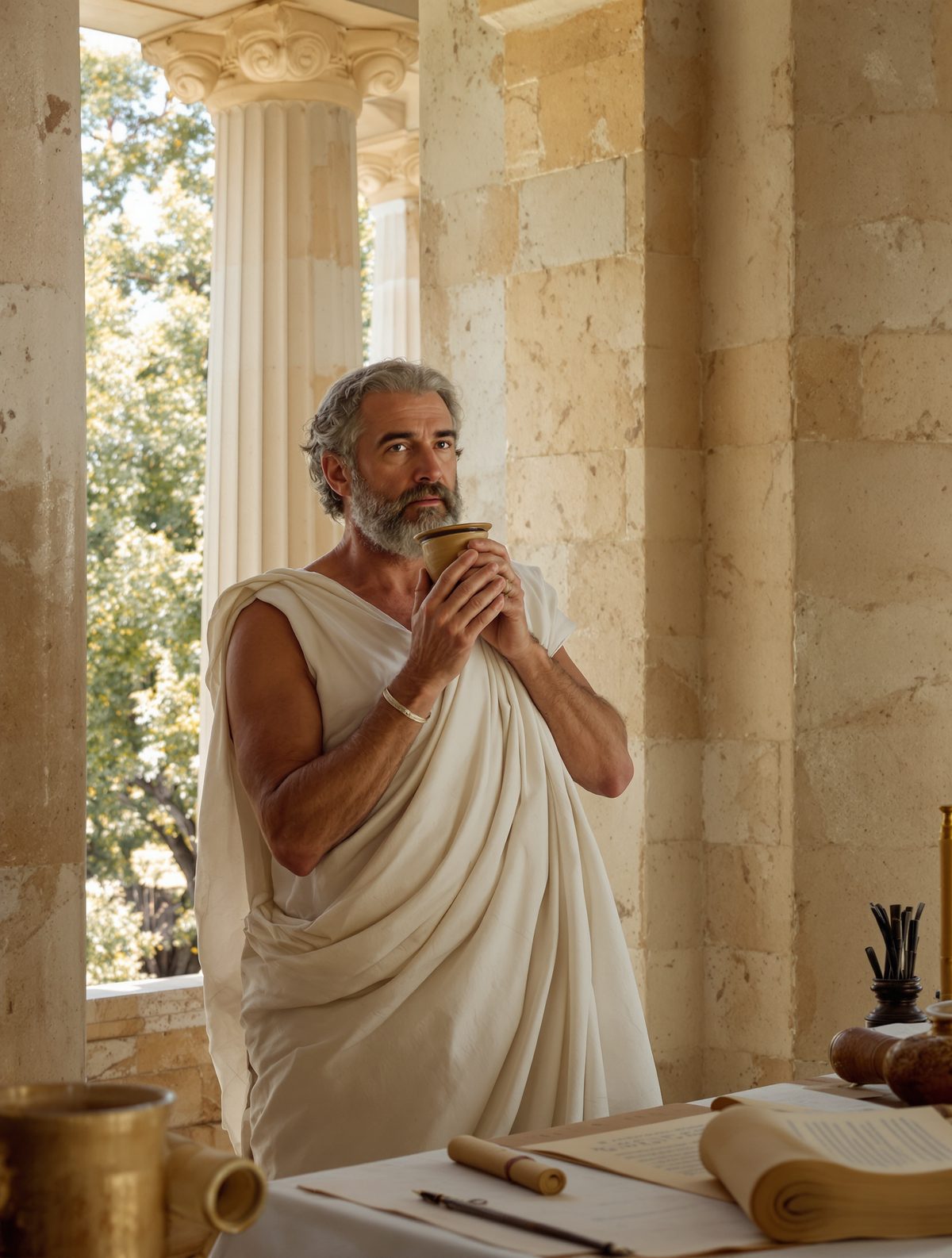
Joshua Lawrence Chamberlain was perhaps the most unlikely hero in American military history. Just two years earlier, he had been standing in front of blackboards at Bowdoin College in Brunswick, Maine, teaching rhetoric and modern languages to sleepy undergraduates. The 34-year-old professor spoke nine languages fluently, held degrees in theology, and had planned to spend a sabbatical year studying in Europe.
Instead, when the Civil War erupted, Chamberlain quietly enlisted as a private in the 20th Maine Volunteer Infantry Regiment. His academic colleagues were horrified. The college trustees actually forbade him from joining the army, worried about losing such a brilliant scholar. Chamberlain's solution was characteristically clever: he told them he was taking that European sabbatical after all, then immediately reported for military duty.
By 1863, this mild-mannered professor had been promoted to colonel and commanded the 20th Maine—a regiment of lumberjacks, fishermen, and farmers who initially weren't sure what to make of their bookish leader. They soon learned that the same man who could recite Homer in ancient Greek could also march them through twenty-mile forced marches without losing a single man to desertion.
The Hinge of Fate: Little Round Top
On the second day of the Battle of Gettysburg, the Union Army faced a crisis that could have ended the war. Confederate General Robert E. Lee had devised a plan to flank the Union left wing by capturing two key hills: Big Round Top and Little Round Top. If Confederate forces seized these heights, they could position artillery to devastate the entire Union line and potentially win the battle—and perhaps the war.
The 20th Maine, numbering just over 300 men, was assigned to the extreme left flank of the Union army on Little Round Top. Chamberlain received orders that were both simple and terrifying: hold this position at all costs. If his line broke, the Confederate Army could roll up the entire Union flank like a carpet.
What made the situation even more desperate was that Chamberlain's regiment had been reinforced earlier that morning with 120 mutineers from the disbanded 2nd Maine Regiment. These men had been told they were going home, only to be transferred to the 20th Maine instead. They were angry, demoralized, and sitting under guard when Chamberlain arrived to address them.
In what may have been the most important speech of his academic career, the professor convinced nearly every one of these reluctant soldiers to pick up their rifles and fight. "I'm not going to shoot you," he told them. "I'm going to trust you." By battle's end, many of these former mutineers would be among his most heroic fighters.
Against Impossible Odds
At approximately 3:30 PM, Confederate Colonel William Oates led the 15th Alabama Infantry—along with elements of other Alabama regiments—in a determined assault up the steep, rocky slopes of Little Round Top. These weren't ordinary soldiers; they were battle-hardened veterans who had marched 25 miles that morning in sweltering heat without water, then immediately been thrown into combat.
For over an hour, the Confederates charged up the hill again and again. The slope was so steep that men on both sides had to grab onto trees and rocks to maintain their footing while firing. The 20th Maine held, but barely. Chamberlain later described the fighting as "a literal hell of fire and brimstone."
The casualties were staggering. The 20th Maine had started the day with 386 men; by late afternoon, nearly 130 were dead or wounded. Worse still, they were almost completely out of ammunition. Some soldiers were down to their last few cartridges, while others had none at all.
It was then that Chamberlain noticed something that chilled him to the bone: the Confederate forces were attempting to flank his position. If they succeeded, they would get behind the Union line and the battle would be lost. The professor-turned-colonel faced the moment that would define not just his life, but potentially the entire war.
The Decision That Defied Logic
Military doctrine dictated that Chamberlain should either retreat to a better position or desperately hold his ground until relief arrived. Instead, the former rhetoric professor made a decision so unexpected that it caught everyone—Confederate and Union alike—completely off guard.
"Bayonets!" he shouted.
As his men fixed their long steel blades to the ends of their rifles, Chamberlain ordered something that had never been attempted in the war: a downhill bayonet charge by an outnumbered, exhausted, nearly out-of-ammunition regiment against a larger enemy force.
The tactical brilliance of this moment cannot be overstated. Chamberlain ordered his regiment to wheel like a door swinging on its hinges—the right side of his line held fast while the left side swept down the hill in a great arc. This maneuver, performed under intense enemy fire by men who had never practiced it, managed to both protect the Union flank and surprise the Confederate attackers.
The sight must have been extraordinary: 200 Maine farmers and fishermen, led by a college professor, screaming and charging downhill with fixed bayonets against 500 Alabama veterans. The psychological impact was immediate and devastating.
The Miracle of Little Round Top
What happened next shocked everyone on the battlefield. The Confederate assault, which had been gaining momentum for over an hour, completely collapsed. The 15th Alabama, seeing this wild charge coming straight at them, broke and ran. Within minutes, Chamberlain's men had captured 101 Confederate prisoners—including several officers—and completely secured Little Round Top.
Colonel Oates of the 15th Alabama later wrote that he had been on the verge of breaking the Union line when "the enemy charged my line, running like wild Indians." The surprise was so complete that many Confederate soldiers simply threw down their weapons rather than face the bayonet charge.
Perhaps most remarkably, the 20th Maine suffered only 40 additional casualties during the charge—a surprisingly low number for such a desperate action. The element of surprise, combined with the psychological impact of a downhill bayonet attack, had achieved what conventional tactics could not.
Among the prisoners captured was a Confederate officer who, upon learning he had been defeated by a college professor, reportedly said, "If I had to be beaten, I'm glad it was by a gentleman and a scholar."
The Ripple Effect of One Decision
Chamberlain's charge at Little Round Top didn't just save his regiment—it likely saved the Union. Military historians have long argued that if the Confederate forces had broken through on the Union left, they could have rolled up the entire Army of the Potomac. The Battle of Gettysburg, widely considered the turning point of the Civil War, might have been a Confederate victory instead.
The professor who became a warrior went on to receive the Medal of Honor for his actions that day. More importantly, he demonstrated something profound about leadership under pressure: sometimes the most effective response to an impossible situation is to do the impossible.
In our modern world of calculated risks and committee decisions, Chamberlain's story reminds us that there are moments when bold action, informed by intelligence but driven by courage, can change the course of history. A mild-mannered college professor, faced with a choice between certain defeat and possible catastrophe, chose to charge downhill into legend. In doing so, he proved that heroes aren't born—they're made in the crucible of impossible decisions, one brave choice at a time.