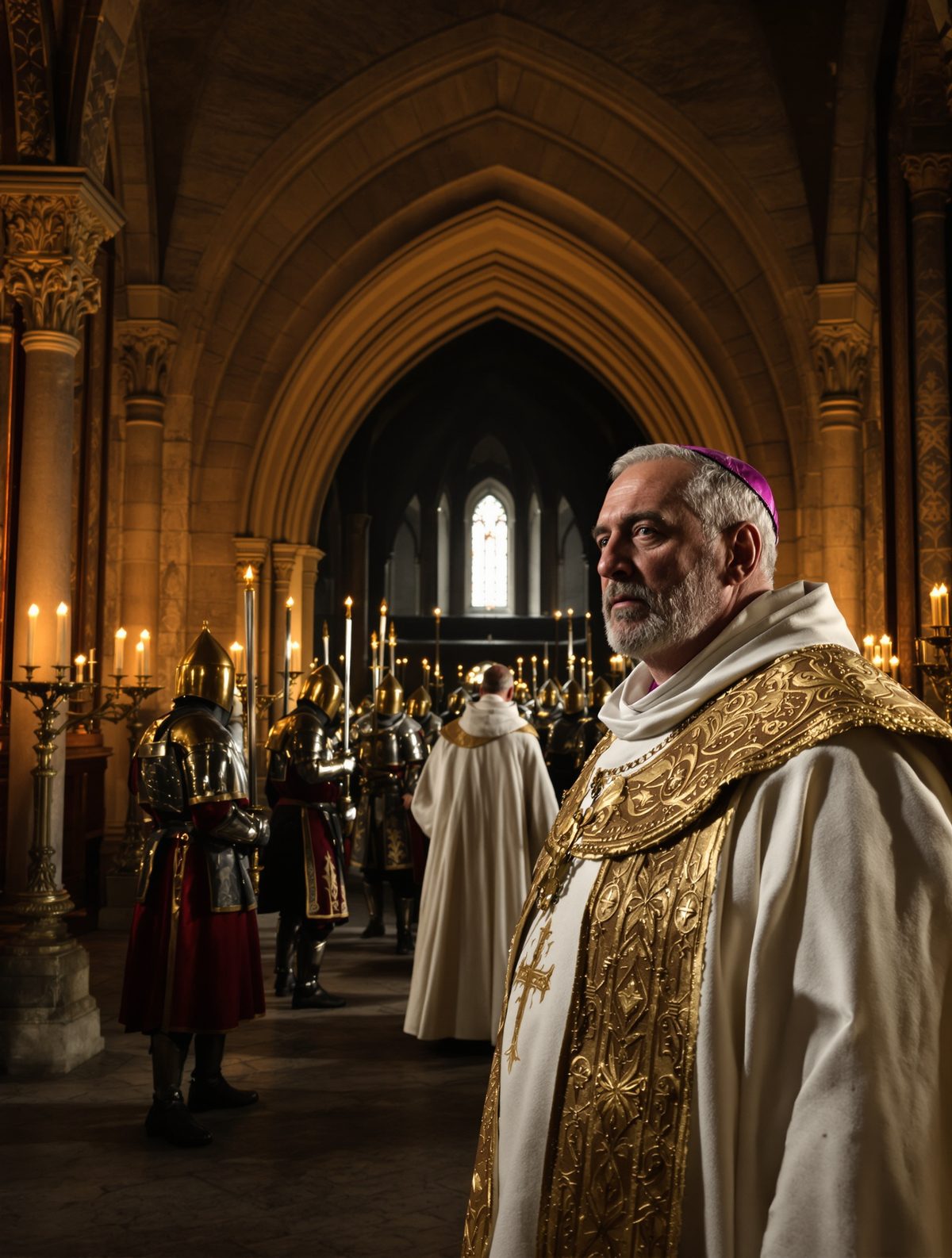
Picture this: you're sitting in a marble-columned court in ancient Sicily, watching the most powerful man in the Greek world recite his latest poem. The verses are so spectacularly awful that you physically wince. The tyrant's eyes scan the room, searching for approval. Everyone nods enthusiastically—except you. You're the court's poetry critic, and your job is to tell the truth. The question is: do you value honesty more than your life?
This was exactly the dilemma facing Philoxenus of Cythera in 370 BC. His answer would make him a legend—and nearly cost him everything.
The Tyrant Who Fancied Himself Homer
Dionysius I of Syracuse wasn't your average dictator. Sure, he commanded the most powerful military force in the Mediterranean, controlled a maritime empire that stretched across Sicily and southern Italy, and ruled over nearly a million subjects. But what really got his blood pumping wasn't conquest or politics—it was poetry.
The tyrant genuinely believed he was destined to become the next Homer. He spent hours each day crafting elaborate verses, composing epic poems about heroes and gods, and staging dramatic performances in his palace theater. There was just one tiny problem: Dionysius was absolutely, catastrophically terrible at poetry.
Contemporary sources describe his verses as "painful to the ears" and "an insult to the Muses themselves." One fragment that survived antiquity goes something like: "The bronze-armed warrior strode forth mightily with mighty might." Even by the generous standards of ancient epic poetry, this was cringe-worthy stuff.
But here's what made the situation truly dangerous: Dionysius wasn't just bad at poetry—he was violently sensitive about it. This was a man who had executed dinner guests for making jokes about his bald head. Cross him on the subject of his artistic genius, and you might find yourself taking a very long swim in Syracuse harbor, weighted down with chains.
Enter the Critic: A Man Who Couldn't Lie
Philoxenus of Cythera was everything Dionysius wasn't: a genuinely gifted poet, a respected critic, and a man with an unfortunate allergy to flattery. Born around 435 BC on the island of Cythera, he had been captured as a slave during an Athenian raid and eventually sold to Syracuse, where his extraordinary talent earned him his freedom.
By the time he entered Dionysius's court, Philoxenus was already famous throughout the Greek world for his dithyrambs—complex choral poems performed at religious festivals. His work was so innovative that he's credited with revolutionizing Greek music and poetry. Think of him as the Bob Dylan of ancient Greece, constantly pushing artistic boundaries and refusing to play by the old rules.
This reputation for artistic integrity was exactly why Dionysius wanted him at court. The tyrant craved legitimacy for his poetry, and having a celebrated critic praise his work would be worth more than a dozen military victories. What Dionysius failed to realize was that Philoxenus's reputation was built on one unshakeable principle: he always told the truth about art, no matter the consequences.
The collision between these two men was inevitable. One day in 370 BC, Dionysius summoned Philoxenus to hear his latest masterpiece—a tragic epic about the fall of Troy that the tyrant was convinced would cement his place among the immortal poets.
The Review That Shook an Empire
Picture the scene: the great hall of Dionysius's palace, with its soaring columns and frescoed walls depicting the tyrant's military triumphs. Courtiers, generals, and foreign ambassadors fill marble benches, all wearing carefully neutral expressions. At the center, Dionysius himself, draped in purple and gold, clutches a scroll containing what he believes to be his poetic masterpiece.
For nearly an hour, the tyrant recited his verses. The epic rambled through stilted dialogue, tortured metaphors, and rhythms that seemed to fight against the very concept of meter. Lines like "Achilles, son of Peleus, warrior-born, did battle with much battle-ing" rang through the hall.
When it was over, Dionysius turned expectantly to Philoxenus. The critic could have saved himself with a few well-chosen words of praise. Instead, he delivered what may be history's most expensive book review.
"My lord," Philoxenus said, his voice carrying clearly through the suddenly silent hall, "your verses would be improved by being thrown into the sea."
The reaction was immediate. Courtiers gasped. Guards reached for their swords. Dionysius's face went through several interesting color changes before settling on a shade of purple that matched his robes.
"Take him to the quarries," the tyrant commanded.
Life in the Stone Hell
The limestone quarries of Syracuse were where inconvenient people disappeared. Located just outside the city walls, these vast excavations had been carved out over centuries to build Syracuse's magnificent temples and fortifications. By Dionysius's time, they served as a combination prison, labor camp, and death sentence.
The most infamous section was called the "Ear of Dionysius"—a cave with acoustics so perfect that guards stationed at the top could hear every whisper from prisoners below. Legend claimed that Dionysius himself would sometimes stand at the entrance, eavesdropping on the conversations of his enemies.
For eight months, Philoxenus hauled blocks of limestone under the scorching Sicilian sun. His fellow prisoners were a mix of political dissidents, captured enemies, and unlucky souls who had somehow offended the tyrant. Many never survived their sentences. Those who did emerged as broken shadows of their former selves.
But Philoxenus was different. Even in chains, surrounded by the constant sound of chisels and hammers, he continued to compose poetry. Fellow prisoners later reported that he would recite verses while he worked, turning the rhythm of his labor into the meter of his poems. The quarry that was meant to break him instead became his inspiration.
The Return and the Ultimate Response
Dionysius eventually began to miss his court critic. Perhaps he started to suspect that the constant praise from his remaining courtiers wasn't entirely genuine. Or maybe he simply realized that having a celebrated poet rotting in his quarries wasn't doing much for his cultural reputation.
In early 369 BC, Philoxenus was summoned back to the palace. He emerged from the quarries lean, weathered, but unbroken. Dionysius welcomed him back with apparent warmth, claiming the whole imprisonment had been a misunderstanding.
But the tyrant couldn't resist testing his critic one more time. After a lavish dinner, Dionysius produced another scroll—a new epic poem that he was convinced would finally win Philoxenus's approval.
The critic listened in silence as Dionysius recited verses that were, if anything, even worse than before. When the tyrant finished and asked for his opinion, Philoxenus didn't hesitate.
He stood up slowly, looked directly at Dionysius, and spoke just three words: "Back to quarries."
The hall erupted in laughter—something that hadn't happened during Dionysius's poetry readings in quite some time. Even the tyrant, caught off guard by the sheer audacity of the response, found himself chuckling. Philoxenus had managed to deliver his devastating review with such perfect timing that even his target couldn't help but appreciate the artistry of it.
Why This Ancient Drama Still Matters
Philoxenus's story might seem like ancient comedy, but it touches on something profoundly relevant to our modern world. In an age of social media echo chambers, corporate yes-men, and political spin, the figure of the honest critic seems almost mythical.
The critic who survived his encounter with Dionysius didn't do so because he learned to compromise his principles. He survived because he found a way to tell the truth with such style and conviction that even power couldn't entirely silence him. His story reminds us that sometimes the most dangerous thing you can do is also the most necessary: refuse to pretend that the emperor's new clothes are beautiful.
Today, when we see critics fired for negative reviews, journalists silenced for uncomfortable reporting, or experts dismissed for inconvenient expertise, Philoxenus's courage feels both inspirational and urgently needed. His willingness to choose truth over comfort, integrity over safety, offers a model for how to resist the eternal human temptation to tell power what it wants to hear.
And perhaps most importantly, his story suggests that truth-telling doesn't always have to be grim and humorless. Sometimes the most effective way to speak truth to power is with the kind of wit that makes even tyrants laugh at themselves—even if only for a moment.