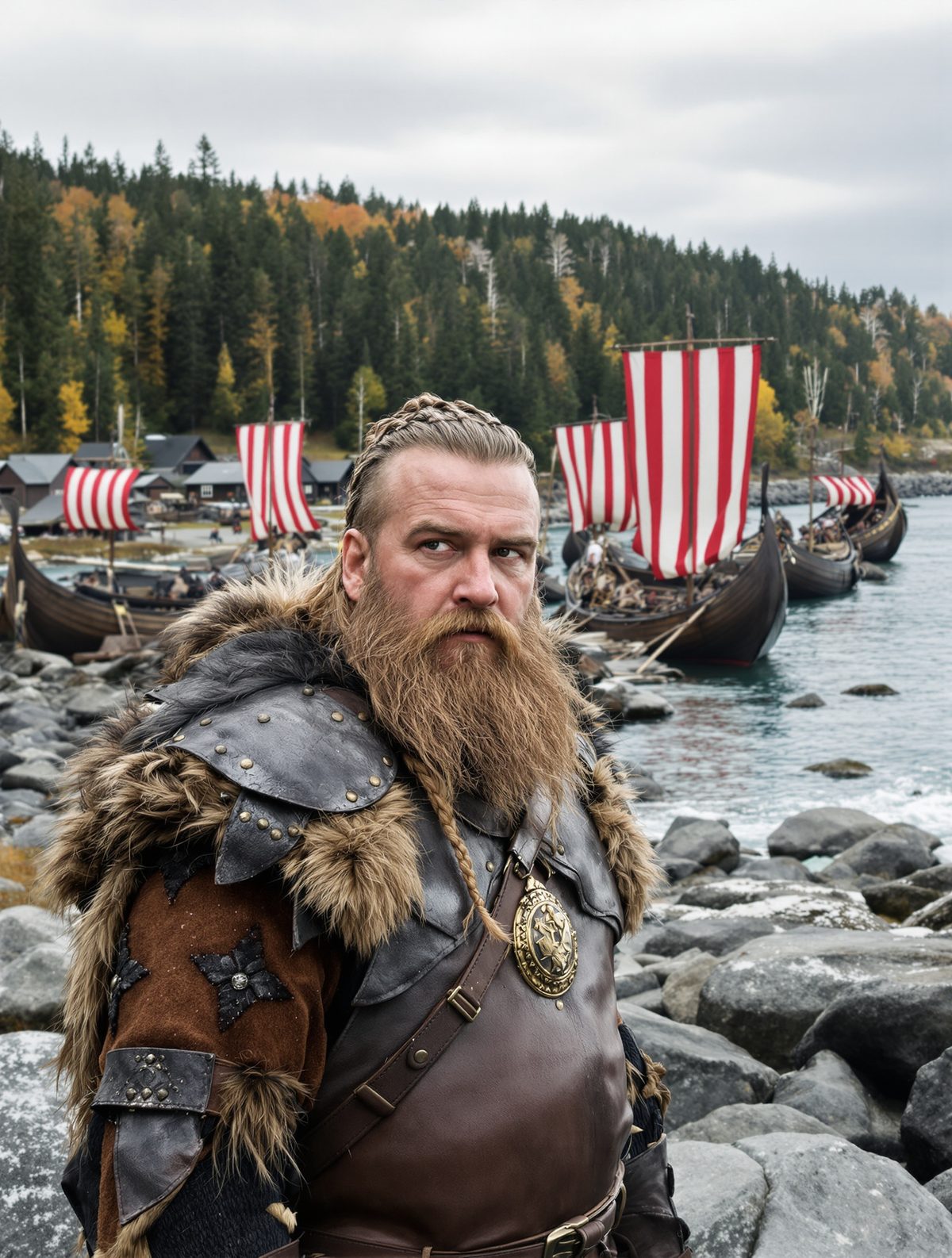
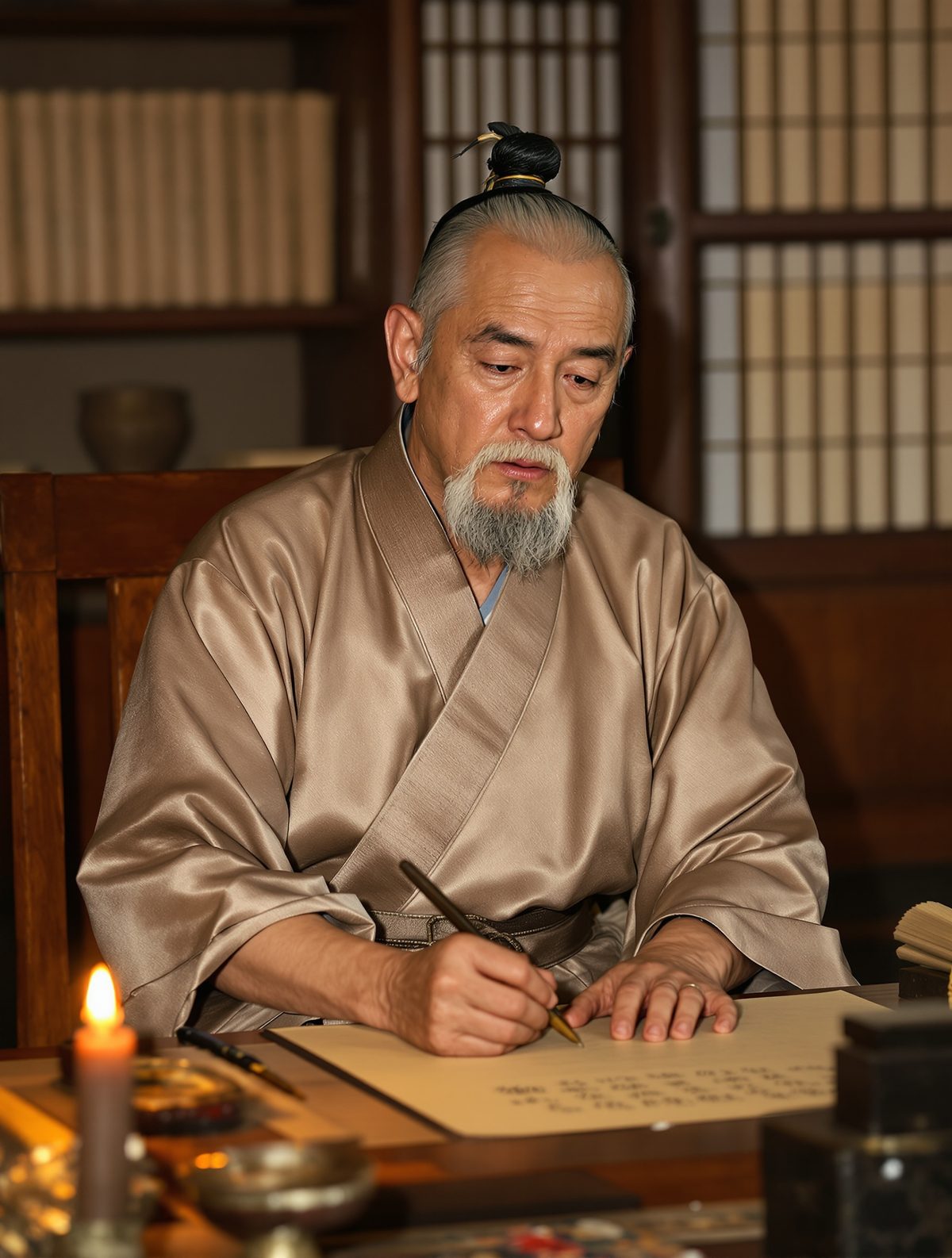
The scratching of quill on parchment continued without pause, even as smoke rose from the village of Saint-Évroult-de-Montfort just three miles away. Brother Orderic Vitalis barely looked up from his manuscript as refugees stumbled past his monastery's gates, their homes reduced to ash by yet another marauding army. While England and Normandy convulsed in the chaos of civil war, this middle-aged monk had appointed himself history's most dedicated war correspondent—armed only with ink, determination, and a shocking willingness to tell the truth.
It was 1141, and the world seemed to be ending. But Orderic kept writing.
The Monk Who Wouldn't Stop
Orderic Vitalis had been chronicling the violent birth pangs of Norman civilization for three decades when the Anarchy—England's brutal civil war between Stephen and Matilda—reached his doorstep. Born in 1075 to a Norman father and English mother, he'd been handed over to Saint-Évroult Abbey at the tender age of ten, a common practice that essentially sentenced him to a lifetime behind monastery walls. Most monks would have found this limiting. Orderic found it liberating.
From his scriptorium in the Norman countryside, he had access to something more valuable than armies or gold: information. Traveling nobles, displaced clergy, and wandering merchants all passed through the abbey, each carrying stories of the outside world. While his brothers focused on prayers and farming, Orderic became medieval Europe's most unlikely intelligence gatherer, compiling what would eventually become 2,000 pages of the most brutally honest historical writing of his era.
His masterwork, the Ecclesiastical History of England and Normandy, reads less like typical medieval chronicle and more like embedded war reporting. Where other historians of his time sanitized violence or wrapped it in divine purpose, Orderic described the gory reality with unflinching detail. He named names, recorded exact dates, and—most dangerously—assigned blame.
Writing Through the Apocalypse
The year 1141 brought the chaos closer than ever before. King Stephen's grip on England was slipping, and the civil war between his supporters and those of Empress Matilda had devolved into a free-for-all of competing warlords. Normandy, caught between conflicting loyalties, became a battlefield where mercenary companies pillaged at will.
As armies crisscrossed the countryside around Saint-Évroult, Orderic documented their movements with the precision of a military strategist. When Geoffrey de Montfort's soldiers burned the nearby village of La Lande-Patry in March 1141, killing twelve civilians in the church where they'd sought sanctuary, Orderic recorded not just the event but the names of the victims. When Robert of Gloucester's forces requisitioned the abbey's grain stores that summer, leaving the monks to face winter with empty larders, Orderic noted the exact amount: "forty-seven bushels of wheat, thirty-two of barley, and all our stores of oats."
His fellow monks begged him to flee. The nearby abbey of Jumièges had been abandoned after repeated raids. Saint-Wandrille's monks had scattered to the winds. But Orderic refused to leave his manuscripts. "If I do not write it," he reportedly told his abbot, "who will remember what we have suffered? Who will record what we have seen?"
The Chronicles That Changed Everything
What made Orderic's writing revolutionary wasn't just his eyewitness access to events—it was his willingness to challenge the official narrative. In an age when history was typically written by and for the victors, Orderic gave voice to the victims. His chronicles overflow with the stories of common people: the pregnant woman killed while fleeing burning Argentan, the miller who starved after soldiers destroyed his waterwheel, the children orphaned when disease swept through refugee camps.
But Orderic didn't limit his truth-telling to nameless peasants. He fearlessly criticized the most powerful figures of his day. He described King Stephen as "well-meaning but weak," called the notorious Geoffrey de Montfort "a wolf in knight's clothing," and even took aim at Church leaders who collaborated with brutal rulers. In one particularly bold passage, he accused Bishop Roger of Salisbury of "caring more for his treasury than his flock" after Roger refused sanctuary to refugees from Winchester.
Perhaps most remarkably, Orderic understood that he was witnessing the birth of a new kind of warfare. The conflict between Stephen and Matilda marked a shift from the relatively honorable combat of earlier Norman conquests to something uglier: systematic destruction designed to terrorize civilian populations into submission. "War has changed," he wrote in 1142. "Now armies burn not to clear the field, but to spread fear. They kill not warriors, but farmers and their children."
The Final Pages
As 1142 dawned, the sixty-seven-year-old monk's health was failing, but his pen remained steady. Even as arthritis gnarled his fingers and cataracts clouded his vision, Orderic continued documenting the ongoing catastrophe. His final entries, written in an increasingly shaky hand, describe the Great Famine of 1142, when failed harvests combined with warfare to create widespread starvation across Normandy.
"I have seen mothers sell their children for bread," reads one of his last passages. "I have seen knights reduced to banditry and priests abandon their altars to forage for roots. Yet still the lords war among themselves, blind to the suffering they have wrought."
Orderic Vitalis died in 1142, probably in late summer, though the exact date is unknown. According to abbey records, he was found slumped over his writing desk, his final sentence incomplete. The last words he ever wrote were: "And so the land bleeds, and God alone knows when—"
His brother monks completed the sentence with their own addition: "when He will grant us peace."
The Truth Teller's Legacy
Modern historians consider Orderic Vitalis one of the most reliable sources for 12th-century Norman history, precisely because of his unflinching honesty. While contemporary chroniclers like William of Malmesbury and Henry of Huntingdon wrote to flatter patrons or advance political agendas, Orderic wrote to preserve truth. Archaeological evidence has consistently validated his accounts of battles, sieges, and even seemingly minor details about daily life during the Anarchy.
But perhaps Orderic's greatest insight was recognizing that history isn't just made by kings and bishops—it's experienced by ordinary people who suffer the consequences of their leaders' ambitions. His chronicles gave voice to the voiceless centuries before such an approach became common in historical writing.
In our own age of conflict and upheaval, when truth itself seems under siege, there's something deeply moving about this Norman monk's dedication to recording reality, no matter how ugly or uncomfortable. While armies burned the world around him, Orderic Vitalis sat in his cell and wrote it all down—not because anyone asked him to, not because he expected reward, but because he believed that bearing witness to truth was itself a form of resistance against the darkness.
His 2,000 pages remind us that in times of chaos, sometimes the most radical act is simply refusing to look away.