The Portuguese governor sat smugly on his ornate wooden throne, its carved lions and crosses gleaming in the humid Angolan air of 1622. Across from him stood Queen Nzinga of Ndongo, summoned like a common subject to negotiate peace terms. The governor's message was clear: no chair had been provided for the African queen. She was expected to stand throughout the proceedings, or perhaps sit on the floor like a supplicant.
But Queen Nzinga didn't flinch. Without a word, she turned to one of her attendants and made a subtle gesture. The man immediately understood, dropping to his hands and knees. The queen arranged her colorful robes and sat gracefully upon her human throne, meeting the Portuguese governor's gaze with unflinching dignity. For the next several hours, as they negotiated the fate of kingdoms, she conducted business from the back of her loyal servant.
The governor had intended to humiliate her. Instead, he had just been schooled in power politics by one of Africa's most formidable rulers.
The Queen Who Refused to Bow
Nzinga Mbandi was never supposed to rule. Born around 1583 into the royal family of Ndongo, a powerful kingdom in what is now Angola, she was the daughter of King Kiluanji. In a patriarchal society where women rarely held political power, Nzinga seemed destined for the shadows of the royal court. But destiny, it turned out, had other plans.
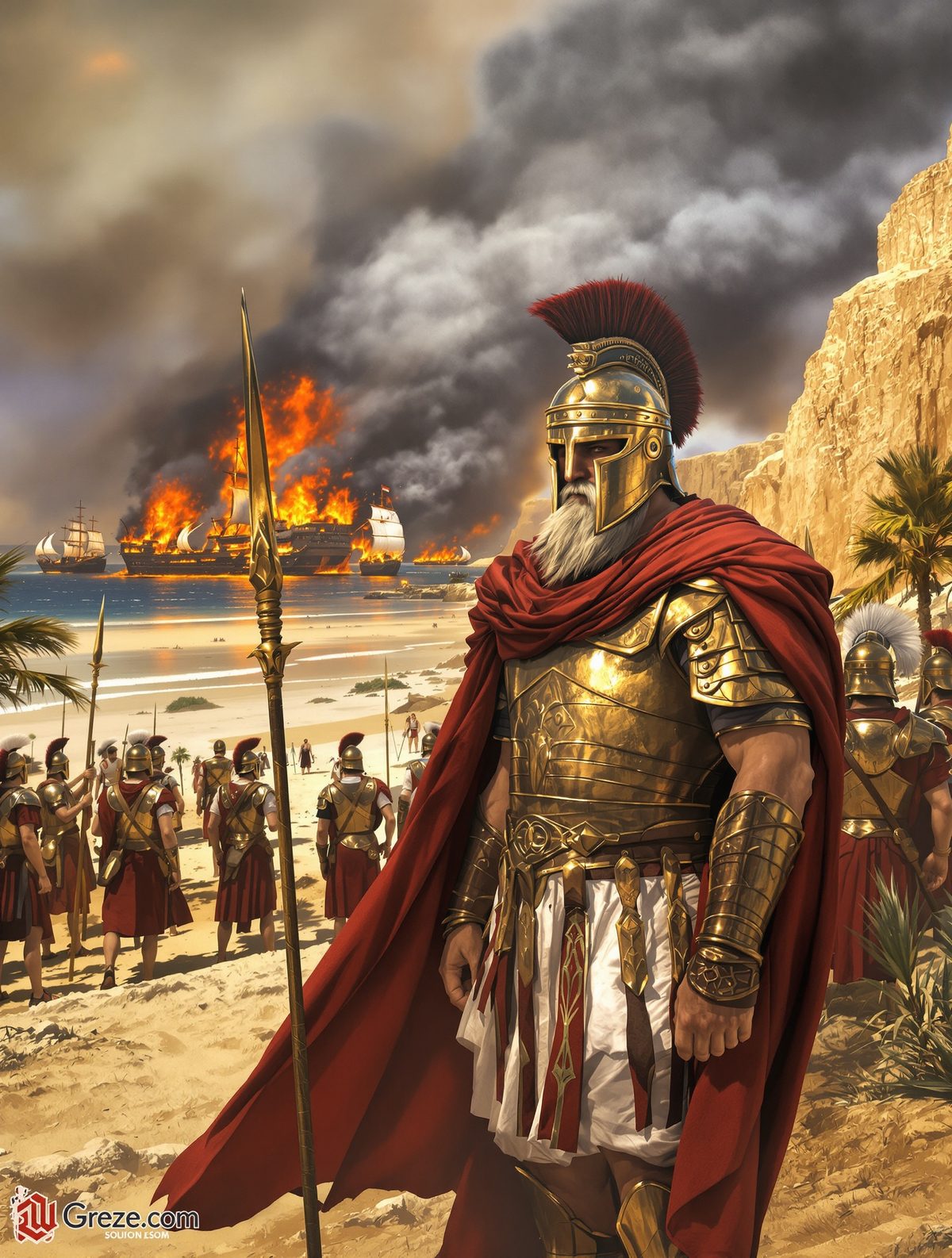
Her brother Ngola Mbandi inherited the throne in 1617, but he proved to be a weak leader at the worst possible time. The Portuguese had been steadily encroaching on Ndongo territory for decades, enslaving thousands of people and establishing the colonial settlement of Luanda in 1576. They brought with them superior firearms, missionary fervor, and an insatiable appetite for human cargo to fuel their Brazilian plantations.
By 1622, Ngola Mbandi's kingdom was hemorrhaging people and territory. Desperate for peace, he made a fateful decision: he would send his sister Nzinga to negotiate with the Portuguese governor in Luanda. It was a choice that would change the course of African resistance to European colonialism.
A Masterclass in Diplomatic Theater
The throne incident wasn't just about furniture—it was a carefully orchestrated piece of psychological warfare. In both Portuguese and Ndongo cultures, where you sat (or whether you sat at all) communicated everything about your status and power. By denying Nzinga a chair, Governor João Correia de Sousa was attempting to establish dominance before negotiations even began.
But Nzinga had grown up in royal courts where every gesture carried meaning. She understood that accepting the slight would undermine her negotiating position and, by extension, her brother's authority. Her improvised human throne was a stroke of genius that transformed an insult into a demonstration of her own power. The message was unmistakable: she commanded such loyalty that her followers would literally become furniture at her command.
Contemporary Portuguese accounts describe the governor's visible discomfort as the negotiations proceeded. Here was an African woman who refused to be intimidated, who turned his power play against him, and who negotiated as an equal despite every attempt to diminish her. The talks resulted in a treaty that temporarily halted Portuguese expansion, though like many colonial agreements, it wouldn't last long.
The Making of a Warrior Queen
When Nzinga returned from Luanda, she brought more than just a peace treaty. Portuguese sources claim she had converted to Christianity and taken the name Ana de Sousa. But this apparent submission was likely another calculated move in a larger game of political chess.
Her brother Ngola Mbandi died under mysterious circumstances in 1624, with some sources suggesting Nzinga had him poisoned. What followed was even more dramatic: according to tradition, she had her nephew—Ngola Mbandi's son and rightful heir—killed as well. In a society where women weren't supposed to rule, Nzinga had eliminated the competition and seized the throne through sheer audacity.
The Portuguese quickly discovered that the woman who had sat on a man's back was even more formidable as a queen than as an envoy. Nzinga immediately repudiated the 1622 treaty, declared herself the rightful Queen of Ndongo, and began preparing for war.
Forty Years of Resistance
What followed was one of the longest and most successful resistance campaigns against European colonization in African history. For nearly four decades, from 1624 until her death in 1663, Queen Nzinga waged relentless warfare against Portuguese expansion.
Her military tactics were revolutionary. Unable to match Portuguese firepower in traditional battles, she pioneered guerrilla warfare techniques that would be studied by military strategists centuries later. She formed alliances with other African kingdoms and even with Dutch forces who were competing with the Portuguese for control of the region. When the Portuguese captured her capital, she simply relocated to the mountains and continued fighting.
Perhaps most remarkably, Nzinga personally led her troops into battle well into her sixties. Portuguese accounts describe her fighting alongside her warriors, dressed as a man and wielding weapons with deadly skill. She understood that in a society that questioned female leadership, she had to prove herself stronger and more capable than any man.
Her resistance network became a haven for escaped slaves and refugees from Portuguese territories. Thousands flocked to her banner, drawn by her reputation as the African leader who could stand up to European military might. At its height, her domain sheltered an estimated 200,000 people who had fled Portuguese enslavement.
The Human Cost of Defiance
Nzinga's forty-year war came at an enormous price. The constant fighting devastated the region's population and economy. Traditional trade routes were disrupted, agricultural production collapsed in many areas, and thousands died in battle or from war-related famine and disease.
The Portuguese proved to be ruthless enemies. When they couldn't defeat Nzinga militarily, they targeted her family and supporters. They captured her sisters, holding them as hostages for years. They executed prisoners, destroyed crops, and systematically dismantled the social structures that had sustained Ndongo for centuries.
Yet Nzinga never wavered. Even when offered generous terms for surrender—including recognition as a Portuguese vassal with significant autonomy—she refused. Her throne incident had revealed a fundamental truth about her character: she would rather create her own seat of power than accept a diminished position in someone else's hierarchy.
A Legacy Written in Resistance
Queen Nzinga died in 1663 at the age of 80, still fighting. She had outlasted multiple Portuguese governors and had seen European colonial strategies evolve from crude military conquest to more sophisticated forms of political and economic control. Though the Portuguese would eventually establish dominance over Angola, it took them nearly two centuries longer than they had originally planned, largely due to her resistance.
Today, Queen Nzinga is remembered as one of Africa's greatest leaders. In Angola, she appears on currency and statues commemorate her defiance. But her story resonates far beyond her homeland. In an era when European accounts dominated historical narratives about African societies, her throne incident has become a powerful symbol of dignity in the face of attempted humiliation.
The image of a queen sitting regally on her servant's back while negotiating with colonial powers captures something essential about resistance to oppression. It reminds us that power isn't just about military might or economic resources—sometimes it's about the refusal to accept someone else's definition of your worth.
In our modern world of corporate boardrooms and international diplomacy, where subtle slights and power plays remain common, Nzinga's story offers a timeless lesson: true authority comes not from the throne you're given, but from the one you create for yourself. The Portuguese governor thought he was delivering an insult. Instead, he had given history one of its most enduring examples of grace under pressure and the unbreakable power of human dignity.