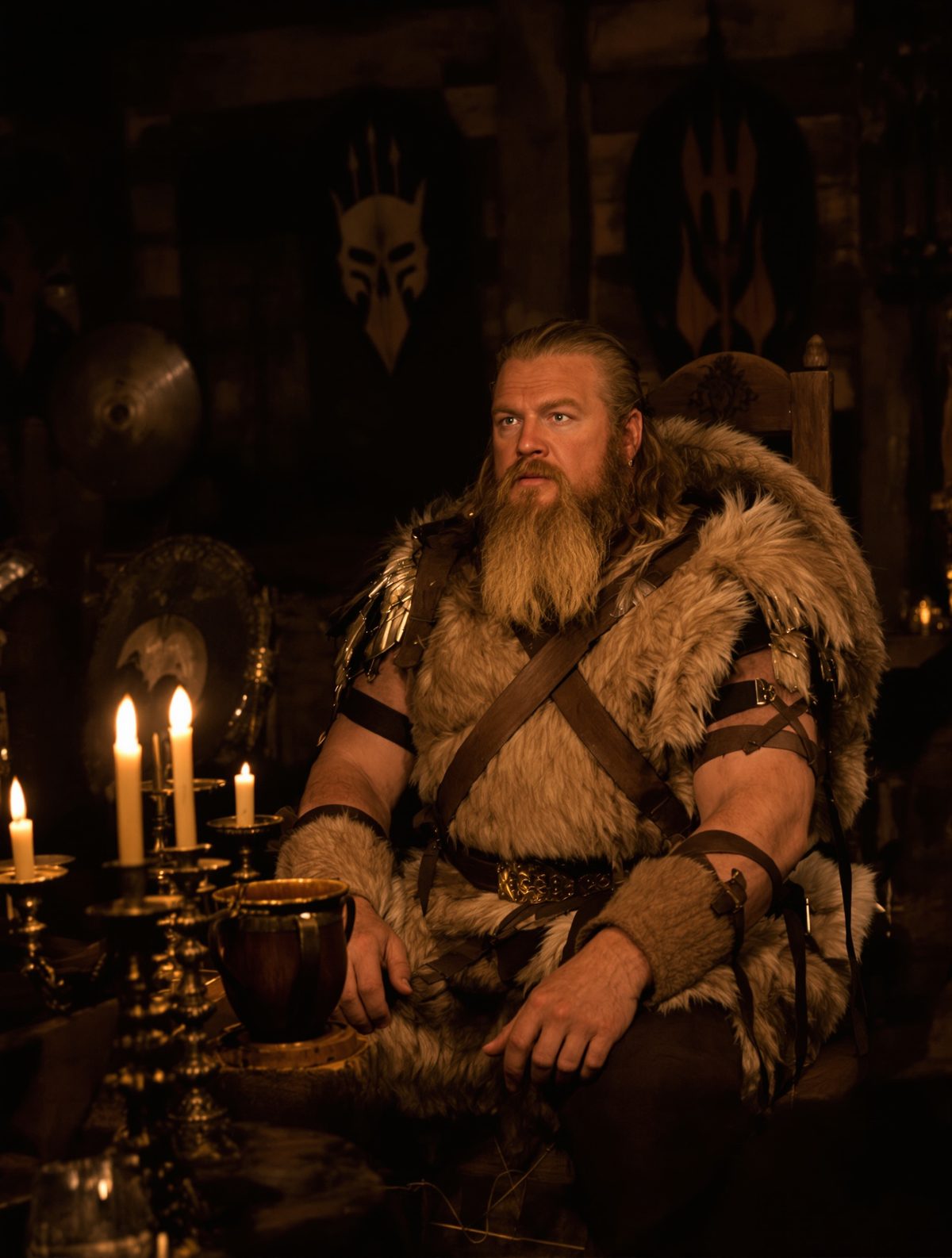
The flames crackled higher as the young Roman thrust his right hand deeper into the sacred fire. His flesh sizzled and burned, filling the tent with the acrid smell of charring skin, yet Gaius Mucius didn't flinch. He didn't scream. He simply stared into the eyes of Lars Porsena, the mighty Etruscan king who held Rome's fate in his hands, and spoke with deadly calm: "See how little we Romans think of our bodies when we have glory in sight."
It was 508 BC, and this single act of horrifying self-mutilation was about to end a war that had brought the newborn Roman Republic to its knees. But how did a botched assassination attempt turn into one of the most psychologically devastating displays of Roman virtus ever recorded?
When Kings Came Knocking at Rome's Gates
To understand why young Mucius was willing to destroy his own hand, we need to step back to the political earthquake that had just rocked the ancient world. In 509 BC, the Romans had done something almost unthinkable—they had expelled their king. Not just any king, but Lucius Tarquinius Superbus, whose very name "Superbus" meant "the Proud," and whose tyrannical rule had finally pushed the Roman nobility past their breaking point.
The catalyst was brutal: Tarquin's son Sextus had raped Lucretia, the virtuous wife of a prominent nobleman. Rather than live with the shame, Lucretia took her own life—but not before extracting a promise from her male relatives that they would avenge her honor. Led by Lucius Junius Brutus (yes, an ancestor of that Brutus), the Romans rose up and drove out the entire Tarquin dynasty, establishing what would become the Roman Republic.
But here's what they don't tell you in most history books: overthrowing a king is one thing, but keeping him overthrown is quite another. Tarquinius Superbus wasn't about to accept early retirement. He fled to his powerful allies, the Etruscans, and convinced their greatest king, Lars Porsena of Clusium, to help him reclaim his throne.
Lars Porsena was no ordinary barbarian chieftain. Archaeological evidence reveals that Etruscan civilization was, in many ways, more sophisticated than early Rome. They had perfected metallurgy, created stunning artwork, and built cities that made Roman settlements look like villages. When Porsena marched south with his army in 508 BC, he brought the full might of Etruscan military technology with him.
The Siege That Nearly Strangled a Republic
The siege of Rome that followed was unlike anything the city had ever endured. Porsena's forces didn't just surround the city—they systematically cut off every supply route. The Romans found themselves trapped behind their own walls, watching their food stores dwindle as Etruscan siege engines pounded their fortifications day and night.
What made this siege particularly terrifying was its precision. The Etruscans had learned siege warfare from the Greeks and perfected it through decades of Italian campaigning. They built elaborate earthworks, diverted water sources, and established such a tight blockade that even individual messengers couldn't slip through their lines.
Inside Rome, panic was setting in. The aristocrats who had led the revolt against Tarquin began to wonder if they had made a catastrophic mistake. Food prices skyrocketed, and there were whispers that perhaps bringing back the old king wouldn't be so terrible after all. The Roman historian Livy later wrote that the city had never faced a more dangerous enemy—not because of Porsena's cruelty, but because of his competence.
It was against this backdrop of desperation that young Gaius Mucius stepped forward with a plan so audacious it bordered on suicidal: he would sneak into the enemy camp and assassinate Lars Porsena himself.
The Assassination Plot That Went Horribly Wrong
Gaius Mucius wasn't a professional soldier or a trained spy—he was a young Roman citizen from a respectable family, driven by the same patriotic fervor that had toppled Tarquin. At barely twenty years old, he possessed the kind of reckless courage that only comes with youth and absolute conviction in one's cause.
His plan was elegantly simple: dress as a civilian, slip through the Etruscan lines during the chaos of a supply convoy, and get close enough to Porsena to strike a fatal blow. The Roman Senate, desperate for any hope of victory, gave him their blessing and probably their prayers.
Under cover of darkness, Mucius made his way through the Etruscan camp. Here's where the story gets fascinating: he actually succeeded in the hardest part of his mission. Ancient sources tell us he made it all the way to Porsena's command tent without being detected—a remarkable feat of infiltration that speaks to both his skill and the confusion of a massive military camp.
But then disaster struck. As Mucius prepared to strike, he realized he couldn't tell which man was the king. Lars Porsena was meeting with his paymaster, distributing silver to his troops—a routine but crucial task in an era when soldiers' loyalty often depended on regular pay. Both men were dressed in fine robes, both carried the bearing of command, and in the dim light of oil lamps, young Mucius had to make a split-second decision.
He chose wrong. His blade found the throat of the paymaster instead of the king.
The Hand in the Fire: Psychology as Warfare
The moment Mucius struck down the wrong man, chaos erupted. Etruscan guards seized him before he could draw his weapon again, and within minutes he found himself dragged before the very man he had come to kill. Lars Porsena, shaken by how close an assassin had come to success, demanded to know everything: who had sent him, how many other assassins were coming, what other plots Rome was hatching.
Here's where the story takes its legendary turn. According to Livy, when Porsena threatened torture to extract information, Mucius said something that must have chilled every man in that tent: "I am a Roman citizen. My name is Gaius Mucius. I came here as an enemy to kill an enemy. I am as ready to die as I was to kill."
But words alone wouldn't have ended a siege. What happened next was a masterpiece of psychological warfare that reveals something profound about Roman mentality. Without hesitation, without even a change in his expression, Mucius walked over to the sacred fire that burned constantly in the king's tent and thrust his right hand directly into the flames.
The ancient sources are clear about what followed: total silence except for the sound of burning flesh. Mucius didn't scream, didn't plead, didn't even grimace as his hand was slowly consumed by fire. Instead, he spoke with the calm of a man discussing the weather: "See how cheap men hold their bodies when they see the path to glory!"
But he wasn't finished. As his hand burned, Mucius delivered a psychological blow that would haunt Porsena's dreams: "There are three hundred young Romans who have sworn the same oath I have sworn. I was first by lot. Even if you kill me, another will come, and another after him, until one of us succeeds."
When Legends Become Reality
Whether there really were 299 other would-be assassins waiting in Rome is something historians still debate. What isn't debatable is the effect Mucius's demonstration had on Lars Porsena. Here was a king who had conquered cities, commanded thousands of warriors, and seen every form of human courage and cowardice—yet he had never witnessed anything like this calculated self-destruction.
The psychological impact was devastating. If Rome could produce young men willing to burn off their own hands rather than reveal state secrets, what other horrors awaited anyone who conquered the city? How could you rule a people who valued abstract concepts like honor and duty more than their own flesh?
According to Roman historians, Porsena's reaction was immediate. He not only spared Mucius's life but began peace negotiations that very day. The siege that had brought Rome to the brink of starvation ended not with military victory, but with a Etruscan king's decision that these particular enemies were simply too dangerous to rule.
Mucius returned to Rome as a hero, earning the cognomen "Scaevola"—literally "left-handed"—since he could no longer use his right hand. His descendants carried this name with pride for generations, turning a physical disability into a badge of honor that proclaimed their ancestor's incredible sacrifice.
The Burning Question: What Really Happened?
Modern historians approach the story of Mucius Scaevola with healthy skepticism. The tale has all the hallmarks of Roman propaganda: the brave young citizen, the dramatic gesture, the enemy so awed by Roman virtue that he abandons a winning campaign. Some scholars argue the entire story was invented centuries later to explain why the powerful Etruscans suddenly withdrew from their siege of Rome.
But here's what's fascinating: whether or not Mucius Scaevola actually existed, the story reveals something profound about Roman identity. This wasn't just a tale Romans told their enemies—it was a story they told themselves about what it meant to be Roman. The willingness to sacrifice everything, including one's own body, for the abstract concept of republican liberty became the cornerstone of Roman virtue.
Archaeological evidence does confirm that Rome faced a serious Etruscan threat in the early 5th century BC, and that this threat mysteriously evaporated despite Etruscan military superiority. Something convinced Lars Porsena—who really did exist and really was one of the most powerful rulers in Italy—that conquering Rome wasn't worth the cost.
Whether that something was a young man's burning hand or more mundane political calculations, the legend of Mucius Scaevola became a defining moment in Roman consciousness. For the next 500 years, Roman politicians, generals, and ordinary citizens would invoke his name when facing impossible choices between safety and principle.
In our modern age of instant communication and viral videos, there's something almost incomprehensible about Mucius's gesture. We live in a world where people struggle to endure minor discomfort for abstract principles, yet here was a young man willing to destroy his own hand to protect state secrets and intimidate an enemy king. Whether we admire or recoil from such extremism, we cannot deny its effectiveness—sometimes the most powerful weapon isn't a sword or a siege engine, but the willingness to demonstrate that some things matter more than survival itself.