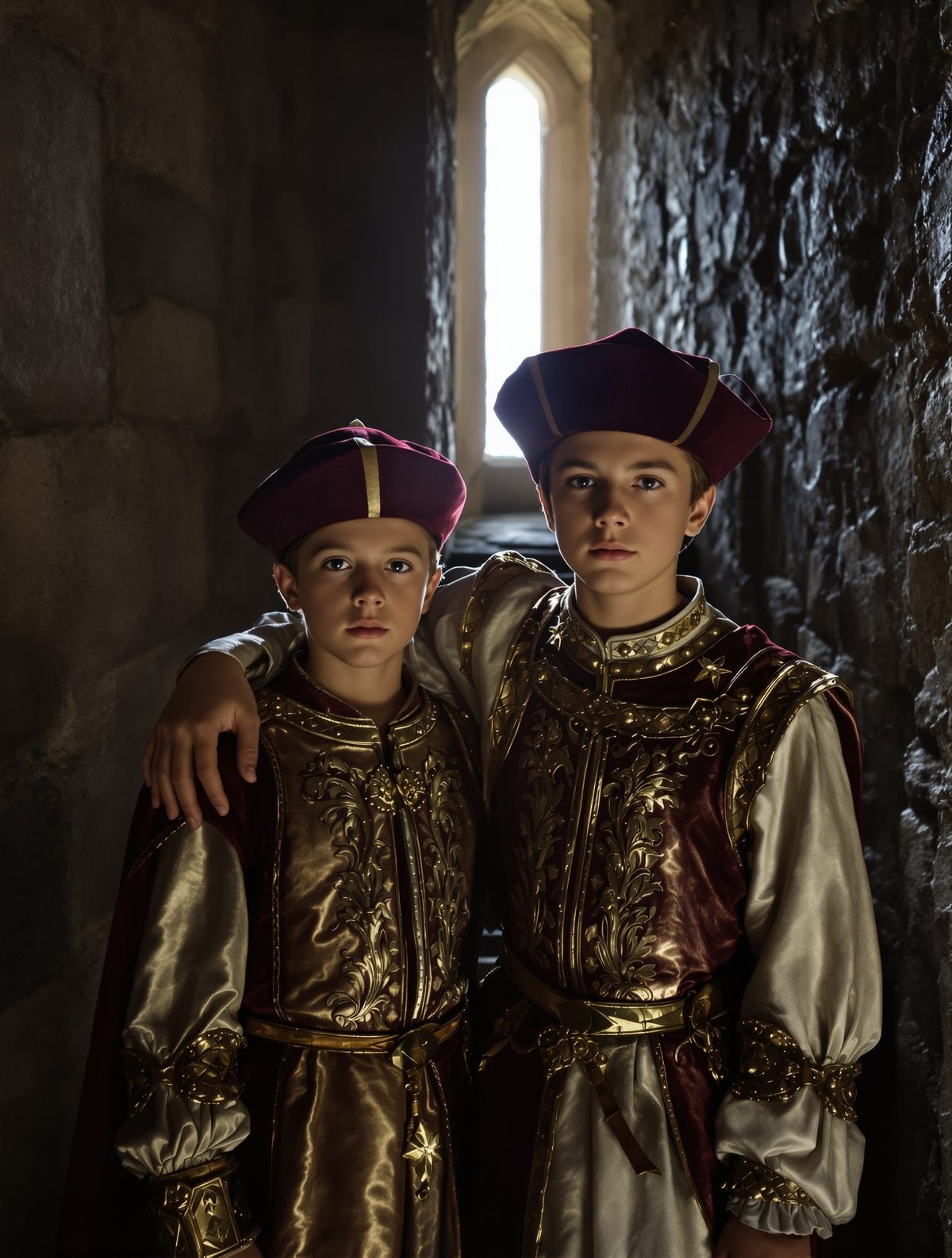
The great hall reeked of roasted meat, spilled ale, and barely contained violence. Flickering torchlight cast dancing shadows across the stone walls of York's royal court, where King Erik Bloodaxe held dominion over northern England in the year 948 AD. At the high table sat a man who should not have been there—a towering Viking warrior with coal-black hair and eyes like winter storms. His name was Egil Skallagrimsson, and by all rights, he should already be dead.
Instead, he was getting spectacularly drunk.
What happened next would become one of the most extraordinary tales of wit, poetry, and survival in all of Norse literature—a story where words proved mightier than swords, and alcohol became the unlikely catalyst for one of history's greatest poetic performances.
The Warrior-Poet Who Rewrote the Rules
Egil Skallagrimsson wasn't your typical Viking. Standing nearly seven feet tall with shoulders broad enough to block doorways, he looked every inch the fearsome Norseman who had terrorized coastlines from Iceland to England. But behind that intimidating exterior lay something far more dangerous than muscle and steel: one of the most brilliant poetic minds of the medieval world.
Born around 910 AD in Iceland to the legendary warrior Skalla-Grimr, Egil had composed his first poem at age three—a feat so remarkable that even the Egil's Saga, written two centuries later, recorded it for posterity. By age seven, he had killed his first man during a ball game that turned violent. This was a child who understood that in the Viking world, you survived through strength, cunning, and the power of words.
The Norse culture revered skalds—court poets who could weave complex verses that preserved history, honored heroes, and wielded language like a weapon. These weren't simple rhyming couplets, but intricate linguistic puzzles called dróttkvætt, featuring elaborate metaphors, internal rhymes, and alliteration patterns so complex that only the most gifted minds could master them. Egil didn't just master this art form—he revolutionized it.
A Feud Written in Blood and Verse
The deadly game of cat and mouse between Egil and King Erik Bloodaxe had been brewing for decades. Erik, who had earned his gruesome nickname by murdering most of his brothers to secure the Norwegian throne, had been driven from Norway in 947 AD and established himself as ruler of the Viking kingdom of York in northern England. This wasn't just any petty king—Erik commanded respect through sheer brutality and had already demonstrated a particular talent for creative executions.
The bad blood between them ran deep. Years earlier, Egil had killed several of Erik's men, including his son Rognvald, in various skirmishes across the North Sea. He had also composed scathing verses mocking Erik's exile from Norway—verses that had spread across the Viking world like wildfire, damaging the king's reputation more effectively than any sword blow.
In the autumn of 948 AD, fate conspired to deliver Egil directly into his enemy's hands. While sailing from Iceland to England on a trading mission, a fierce storm drove his ship onto the Yorkshire coast, mere miles from Erik's stronghold in York. Any reasonable man would have waited for another ship or tried to flee overland. Egil Skallagrimsson was not a reasonable man.
Walking Into the Dragon's Den
What Egil did next defied all logic and survival instinct: he walked straight into York and presented himself at Erik's court. His reasoning was as bold as it was desperate. Viking law and tradition held that a man who willingly placed himself under his enemy's roof could not be killed immediately—he was entitled to a hearing, a last meal, and the chance to speak his piece.
But Egil had something far more ambitious in mind than a final speech.
The scene that unfolded in Erik's great hall that night was unlike anything in recorded Viking history. King Erik, initially stunned by his enemy's audacity, decided to make the most of this unexpected gift. He ordered a feast to be prepared—not out of hospitality, but to savor the anticipation of revenge. The wine flowed freely, tongues loosened, and the hall filled with the raucous laughter of warriors who knew they were witnessing something extraordinary.
Egil drank with the enthusiasm of a man who knew it might be his last night alive. Horn after horn of mead passed his lips, each one adding fuel to the creative fire burning in his mind. While his enemies celebrated around him, convinced they were watching a condemned man's final hours, Egil was working. Behind those storm-gray eyes, one of history's most complex poems was taking shape.
The Poem That Changed Everything
Dawn broke gray and cold over York on what should have been Egil's execution day. But as the court assembled and Erik took his throne, the Icelandic giant rose to his feet with steady hands despite the previous night's drinking. What emerged from his lips wasn't a plea for mercy—it was poetry so magnificent that it stopped time itself.
The poem, later known as Höfuðlausn (Head-Ransom), consisted of twenty stanzas of pure linguistic genius. Each verse was a masterpiece of dróttkvætt form, weaving together praise for Erik's martial prowess, acknowledgment of his royal legitimacy, and subtle requests for mercy—all while never once admitting guilt or showing weakness.
Consider just one stanza, as preserved in the original saga: "The keen-eyed king has come from the east, / Generous giver of gold arm-rings. / I have heard that the hardy ruler / Has crossed the cold sea with his army." Simple words in translation, but in Old Norse, they formed an intricate pattern of internal rhymes, alliterations, and metaphorical kennings that demonstrated intellectual mastery no Viking could ignore.
For twenty minutes, Egil held the entire court spellbound. Warriors who had planned to cheer his execution found themselves leaning forward to catch every word. Even Erik, who had built his reputation on ruthless violence, sat transfixed by the verbal sorcery unfolding before him.
The Power of Words Over Swords
When the last syllable faded into silence, something unprecedented happened: King Erik Bloodaxe, slayer of brothers and destroyer of enemies, granted Egil his life. Not out of mercy, but out of respect for an artistic achievement so profound that killing its creator would have been cultural vandalism.
The poet's gamble had paid off in the most spectacular fashion imaginable. He had wagered his life on the Viking appreciation for intellectual excellence and won. But Erik's mercy came with conditions—Egil had until sunset to leave York, and he was never to set foot in Erik's territory again. Fair enough terms for a man who had been destined for the executioner's block.
As Egil walked free from the hall that morning, he carried with him proof of something remarkable: that even in an age defined by violence and brutality, intellectual brilliance could triumph over brute force. His head-ransom poem would be recited in halls across the Norse world for generations, inspiring countless other skalds and cementing his reputation as the greatest poet-warrior in Viking history.
Legacy of the Last Great Skald
Egil Skallagrimsson lived for another thirty-odd years after his miraculous escape from York, continuing to compose poetry and fight battles with equal skill until his death around 990 AD. His life became the subject of one of the great Icelandic sagas, preserving not just his story but dozens of his poems for posterity.
But perhaps the most remarkable aspect of Egil's tale isn't just that he survived through wit and words—it's what his story reveals about Viking culture itself. These weren't simply bloodthirsty barbarians, as popular imagination often suggests. They were a people who valued intellectual achievement so highly that even mortal enemies would spare a life in recognition of artistic genius.
In our modern age of social media soundbites and diminishing attention spans, there's something profoundly inspiring about a culture that could sit transfixed for twenty minutes of complex poetry. Egil's drunken night of composition reminds us that true creativity often emerges from pressure, desperation, and yes—sometimes alcohol. His story stands as testament to the enduring power of words to change hearts, minds, and fates.
The next time someone dismisses the Vikings as mere raiders and pillagers, remember Egil Skallagrimsson: the warrior-poet who drank his enemy's wine, composed a masterpiece, and walked away free because even in the Dark Ages, genius deserved to live another day.