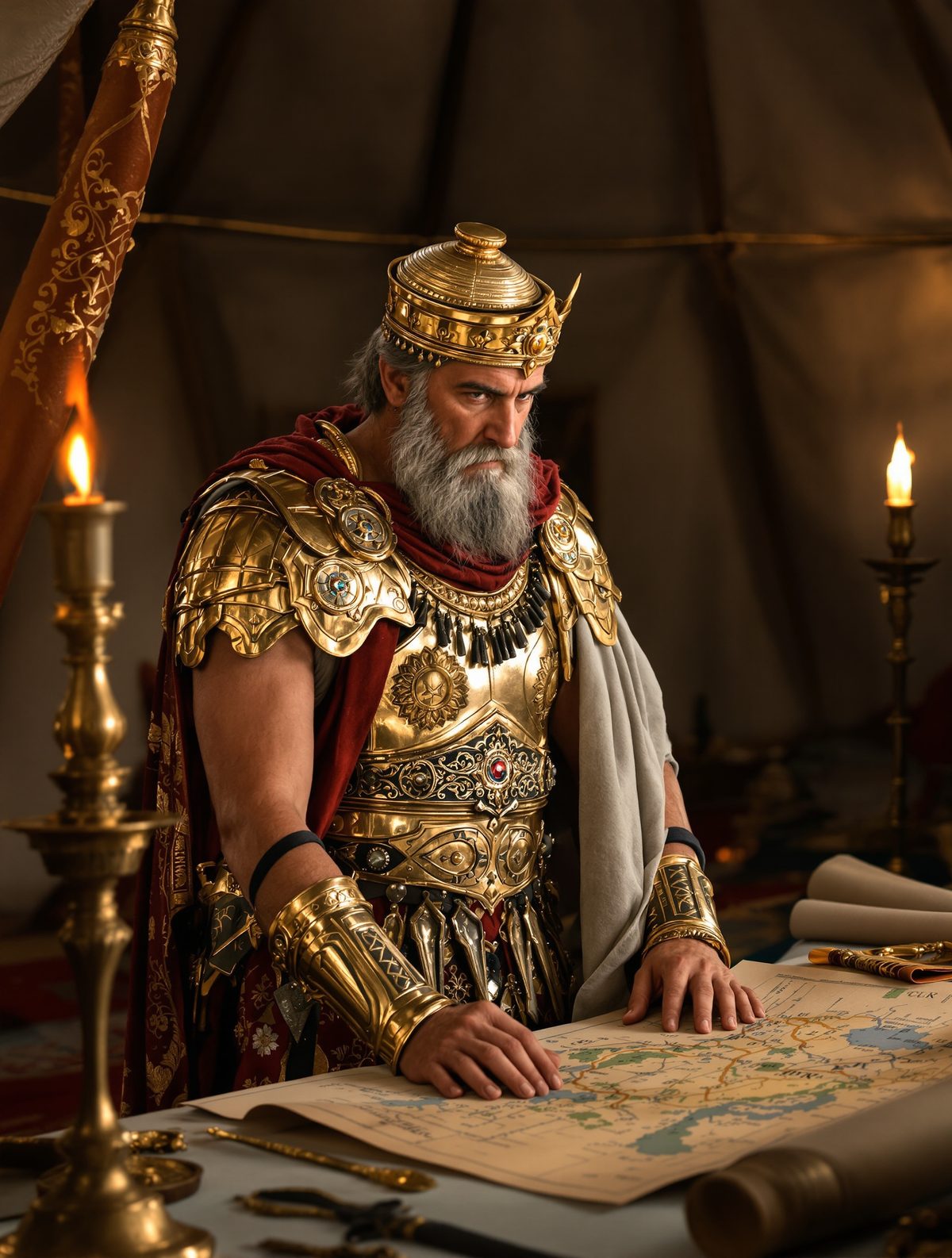
Imagine being so convinced that your guest is a god that you hand him the keys to your treasury—literally. On November 8, 1519, the most powerful emperor in the Americas did exactly that. Montezuma II, ruler of an empire spanning 80,000 square miles and commanding tribute from millions of subjects, welcomed a band of 600 foreign strangers into his gleaming capital city. Then he opened his treasure vaults and began showering them with gold, precious stones, and priceless artifacts. Within two years, his empire would lie in ruins, his people enslaved, and his cities burning. The gold he so generously gifted would fund the very weapons used to destroy everything he held sacred.
This is the story of history's most catastrophic case of mistaken identity—and the divine hospitality that doomed a civilization.
The Feathered Serpent's Prophecy
To understand Montezuma's fatal generosity, we must first understand the prophecy that haunted him. According to Aztec legend, the god Quetzalcoatl—the Feathered Serpent—had once ruled as a benevolent king before being tricked into exile by a rival deity. But he had promised to return in the year Ce Acatl (One Reed) to reclaim his throne. In the European calendar, this prophesied year corresponded to 1519.
The omens had been building for years. Aztec chroniclers recorded a series of disturbing portents: a comet blazing across the night sky, the temple of their war god spontaneously bursting into flames, and most unnervingly, the lake surrounding their island capital mysteriously boiling up in great waves despite no wind or earthquake. Montezuma's priests interpreted these signs as harbingers of Quetzalcoatl's return.
When reports reached Tenochtitlan of strange "floating mountains" appearing off the coast—Spanish galleons with billowing white sails—carrying pale-skinned, bearded men, Montezuma felt the prophecy's weight. The leader of these strangers, Hernán Cortés, seemed to match ancient descriptions of Quetzalcoatl perfectly. The conquistador even wore black clothing, the god's sacred color, and arrived from the east, the direction of Quetzalcoatl's exile.
A Capital of Wonder and Wealth
The Tenochtitlan that Cortés approached was nothing short of miraculous. Built on an island in Lake Texcoco and connected to the mainland by magnificent causeways, the Aztec capital housed between 200,000 and 300,000 inhabitants—making it larger than any European city of the time except Constantinople. Spanish conquistador Bernal Díaz del Castillo later wrote that when they first glimpsed the city, "we were amazed and said that it was like the enchantments they tell of in the legend of Amadis, on account of the great towers and buildings rising from the water."
The city's wealth was equally staggering. As the center of a tribute empire, Tenochtitlan received regular payments from conquered peoples across Mesoamerica. Every year, subject cities delivered precise quotas: 7,000 tons of corn, 4,000 tons of beans, 40,000 cotton mantles, and thousands of pounds of gold dust, precious stones, and exotic feathers. The imperial treasury overflowed with riches that would make European monarchs weep with envy.
At the heart of this empire sat Montezuma II—a warrior-philosopher who had ruled since 1502. Unlike the crude barbarian Spanish propaganda would later paint him as, Montezuma was highly educated, deeply religious, and an accomplished military strategist who had expanded Aztec territory to its greatest extent. He spoke multiple languages, composed poetry, and maintained one of the world's most sophisticated gardens, featuring plants from across his empire.
The Golden Welcome
When Cortés and his men approached Tenochtitlan's outskirts, Montezuma made a decision that would echo through history. Rather than test whether this pale stranger was truly divine through combat or challenges, he chose the path of reverent hospitality. On November 8, 1519, the emperor emerged from his palace to personally greet what he believed was a returning god.
The meeting was choreographed like a religious ceremony. Montezuma wore his finest regalia: a crown of brilliant quetzal feathers, gold ornaments that caught the morning light, and sandals with soles of pure gold—footwear reserved for gods and emperors. Carried on a litter by four nobles, he approached Cortés with the mixture of awe and respect due to a deity.
What followed was an exchange that would become legendary for all the wrong reasons. Montezuma presented Cortés with gifts of staggering value: necklaces of golden crabs alternating with precious stones, crowns of quetzal feathers set with gold ornaments, and mantles woven with threads of actual gold. The emperor then performed the ultimate act of submission—he removed his own royal necklace and placed it around Cortés's neck.
But this was only the beginning. Montezuma housed the Spanish in the palace of his deceased father, Axayacatl—a complex so vast it could comfortably accommodate all 600 conquistadors plus their horses and artillery. Then came the moment that would seal his empire's fate: he opened his personal treasury.
The Treasure Rooms of Doom
What the Spanish discovered in Montezuma's treasure chambers defied their wildest dreams of El Dorado. Room after room contained artifacts of breathtaking beauty and value: golden shields shaped like suns, silver shields shaped like moons, helmets of jaguar skin adorned with precious stones, and featherwork so intricate that European artists declared it superior to embroidery. There were golden ducks whose heads and wings moved, mechanical silver fish that seemed to swim through the air, and life-sized golden deer complete with movable joints.
The crown jewel was Montezuma's personal regalia collection. His ceremonial shields were masterpieces of gold work, and his feathered headdresses—particularly the famous one likely worn by Montezuma himself—contained over 500 iridescent quetzal feathers mounted on a framework of gold. Today, that single headdress resides in a Vienna museum and is considered priceless.
Conquistador accounts, usually focused on conquest and warfare, turn almost poetic when describing these treasures. They had never seen craftsmanship of such sophistication. The Aztec goldwork was so intricate that Spanish artisans couldn't replicate it. Yet within months, most of these irreplaceable artifacts would be melted down into crude ingots for easier transport to Spain.
Montezuma didn't just display these treasures—he actively gifted them to the Spanish. Over the following weeks, he presented Cortés with a daily stream of valuable gifts: golden ornaments, precious stones, fine textiles, and exotic foods. Conservative estimates suggest that in the first month alone, Montezuma gave the conquistadors gold equivalent to several million dollars in today's currency.
The Divine Trap Springs Shut
Montezuma's generosity had an unintended consequence: it revealed the true extent of Aztec wealth to men whose primary motivation was enrichment. The emperor's gifts were meant to honor a deity, but they served as an inventory of plunder for the conquistadors. Each golden ornament, each precious stone, each carefully crafted artifact became evidence of the fortune waiting to be seized.
The tragic irony deepened when Montezuma's own nobles began questioning his judgment. Aztec princes like his brother Cuitláhuac watched in horror as their emperor debased himself before foreign strangers. They whispered that if these were truly gods, why did they seem so interested in material wealth? Why did they melt down sacred artifacts? Why did they demand more gold with each passing day?
The breaking point came during the festival of Toxcatl in May 1520. While Montezuma remained convinced of Cortés's divinity, his people had grown restless under Spanish occupation. When Spanish forces massacred hundreds of unarmed Aztec nobles during the religious ceremony, any pretense of divine visitation evaporated. The city erupted in fury.
In a final, desperate attempt to restore peace, Montezuma appeared before his people to ask them to cease their rebellion. The emperor who had once commanded absolute obedience now faced a crowd that saw him as a collaborator. Stones and arrows flew. Whether struck by Spanish or Aztec projectiles remains debated, but Montezuma was mortally wounded. He died three days later, on June 29, 1520—killed while trying to mediate between his people and the men he had welcomed as gods.
Legacy of Golden Chains
The gold that Montezuma so freely gifted became the foundation of Spanish colonial power. Melted down and shipped to Europe, Aztec treasures funded Spanish armies, built Spanish fleets, and financed Spanish expansion across two continents. The emperor's generous hospitality had literally paid for his empire's destruction.
But perhaps the most profound tragedy was cultural. The artifacts Montezuma gifted weren't just valuable—they were irreplaceable masterpieces representing centuries of Mesoamerican artistic achievement. When conquistadors melted golden codices and feathered sculptures into unmarked ingots, they erased evidence of one of humanity's great civilizations. Of the thousands of precious artifacts Montezuma displayed in his treasure rooms, fewer than a dozen survive intact today.
Montezuma's story serves as a haunting reminder of how religious devotion, cultural misunderstanding, and simple human generosity can be weaponized by those with darker intentions. The emperor's fatal hospitality offers a timeless lesson about the dangerous gap between how we see ourselves and how others see us—and the catastrophic consequences when divine reverence meets ruthless opportunism. In our modern world of first contacts and cultural exchanges, Montezuma's golden tragedy reminds us that sometimes the greatest threats come not from enemies we recognize, but from guests we welcome with open arms.