Picture this: you're kneeling in prayer at one of medieval Europe's holiest shrines when suddenly, a blood-curdling shriek pierces the sacred silence. The sound is so intense, so primal, that it seems to shake the very stones of the ancient church. Other pilgrims turn in horror as a middle-aged English woman writhes on the floor, sobbing and wailing as if witnessing Christ's crucifixion firsthand. The priests rush over, not to comfort her, but to physically drag her from the building. Welcome to traveling with Margery Kempe, medieval Europe's most unwelcome pilgrim.
Between 1413 and 1433, this extraordinary woman crisscrossed a continent torn by war, plague, and religious upheaval. She visited Jerusalem when it was controlled by Muslim rulers, trudged through bandit-infested forests to reach Rome, and walked hundreds of miles to Santiago de Compostela in Spain. But Margery wasn't just any pilgrim—she was a walking, screaming spectacle who left a trail of bewildered clergy, furious fellow travelers, and ecclesiastical bans in her wake.
The Housewife Who Heard Voices
Margery Kempe began life as an ordinary merchant's wife in King's Lynn, Norfolk, around 1373. She married John Kempe, had fourteen children, and ran a brewery business that ultimately failed. But after a traumatic childbirth experience around 1393, something extraordinary happened. Margery claimed that Jesus Christ himself began speaking to her directly, commanding her to abandon worldly concerns and devote herself entirely to religious contemplation.
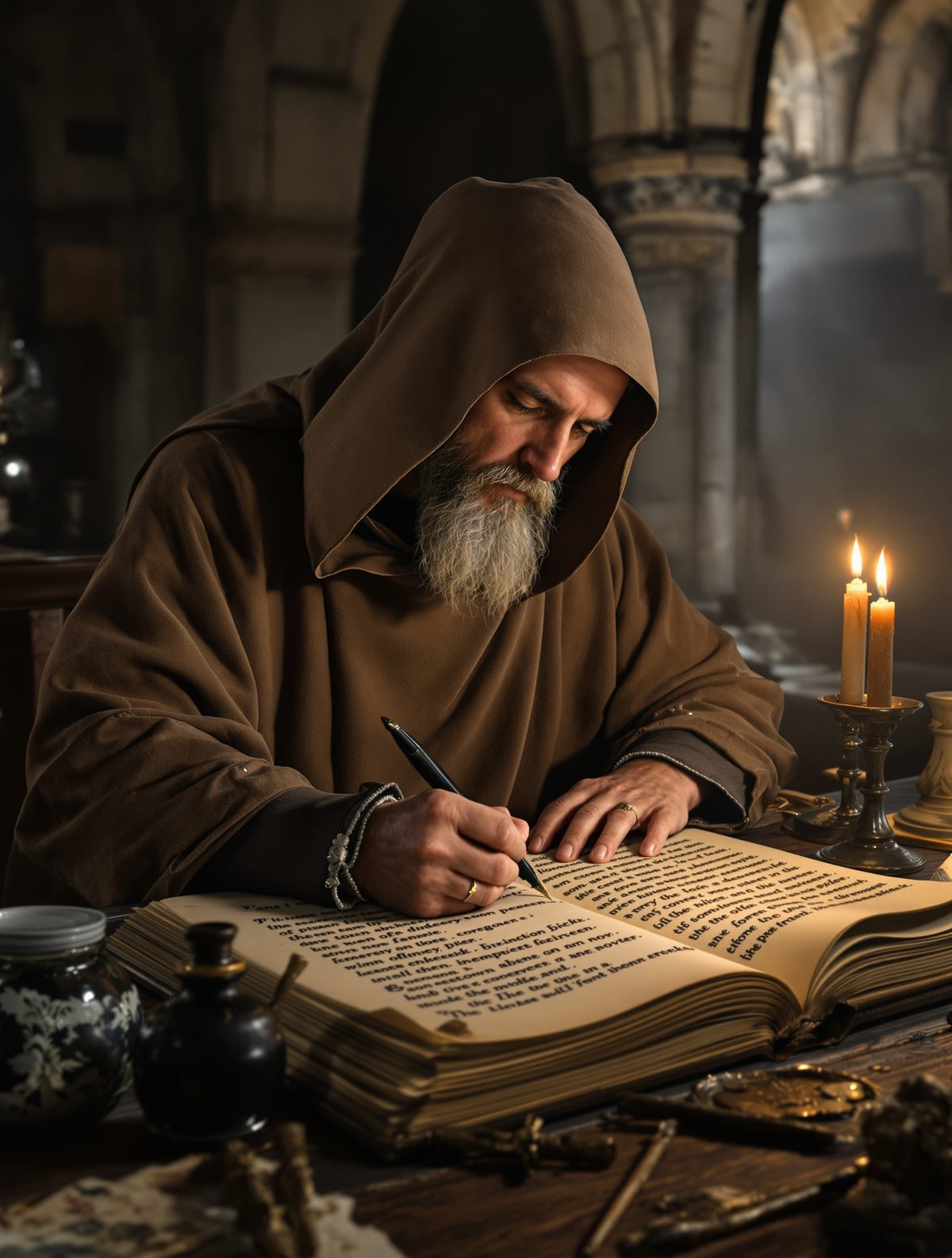
This wasn't a gentle, mystical communion. According to Margery's own account—dictated to scribes since she couldn't write—these divine encounters were dramatic, overwhelming experiences that left her physically convulsing and emotionally shattered. She described seeing "the manhood of Christ" and experiencing such intense spiritual ecstasy that she would collapse, screaming and weeping uncontrollably for hours at a time.
What makes Margery's story particularly remarkable is that we know it at all. Around 1436, she dictated what would become the first autobiography in English literature, "The Book of Margery Kempe." This 300-page manuscript, lost for centuries and only rediscovered in 1934, provides an unprecedented window into the mind of a medieval woman who refused to be silenced—literally and figuratively.
The Pilgrimage That Terrorized Jerusalem
In 1413, at age 40, Margery embarked on her first major pilgrimage to the Holy Land. This wasn't a weekend church trip—it was a grueling, dangerous journey that took months and cost a fortune. She sailed from England to the Low Countries, traveled overland through Germany, and eventually reached Venice, where she joined a group of English pilgrims boarding ships for the eastern Mediterranean.
From the moment they left port, Margery's fellow pilgrims realized they had made a terrible mistake. Her religious episodes weren't occasional inconveniences—they were daily, ear-splitting performances that could last for hours. When the ship stopped in ports along the way, local Christians would flee, thinking she was either possessed by demons or completely insane.
Things reached a breaking point in Jerusalem. At the Church of the Holy Sepulchre, Christianity's most sacred site, Margery's screaming became so intense that the Franciscan friars who controlled the church threatened to have her arrested. Picture the scene: pilgrims who had traveled thousands of miles and spent their life savings to pray at Christ's tomb, only to have their spiritual moment shattered by what sounded like someone being tortured.
Her companions had enough. In one of medieval travel's cruelest abandonments, they literally cut up her clothes to make them shorter and more conspicuous, hoping to humiliate her into silence, then left her stranded in Jerusalem with no money, no guide, and no way to get home. Most women—most people—would have panicked. Margery simply attached herself to a group of poor friars and continued her pilgrimage, screaming all the way.
Banned from God's House
When Margery returned to England in 1415, you might expect her to settle into quiet religious contemplation. Instead, she launched what can only be described as a one-woman campaign to disrupt every major church service in England. Her reputation preceded her wherever she went, and priests began posting what amounted to medieval restraining orders, banning her from entering their churches.
The city of Leicester tried her for heresy, convinced that no genuinely holy woman could be so disruptive. This was during the height of the Lollard persecution, when religious nonconformists were being burned at the stake for challenging church authority. Margery faced these accusations with characteristic boldness, defending her right to weep for Christ's sufferings and challenging her accusers' own spiritual authenticity.
What's fascinating is that despite the chaos she caused, many religious authorities couldn't quite bring themselves to condemn her outright. Her knowledge of scripture was extensive, her devotion seemingly genuine, and several respected bishops actually endorsed her spiritual experiences. She existed in a gray area that medieval religious law struggled to address: she wasn't technically breaking any rules, but she was making normal religious life impossible.
Rome, Spain, and the Screaming Continues
Undeterred by her reception in England, Margery set off for Rome around 1417. If anything, this pilgrimage was even more chaotic than her trip to Jerusalem. She traveled through a Europe ravaged by the Hundred Years' War, where English travelers were often viewed with suspicion or outright hostility. Her screaming fits made her even more conspicuous and vulnerable.
In Rome, she achieved what might be considered the pinnacle of medieval pilgrimage disruption: she was expelled from multiple papal basilicas during major religious festivals. Imagine being so loud during Easter Mass at St. Peter's Basilica that the priests had to stop the service and physically remove you while thousands of pilgrims looked on in amazement.
Her final great pilgrimage took her to Santiago de Compostela in Spain around 1417, following the ancient Camino route that thousands of medieval pilgrims had walked before her. Even here, at journey's end, she maintained her remarkable ability to alienate fellow travelers while remaining utterly convinced of her divine mission.
The Woman Who Wouldn't Be Silenced
What drove Margery Kempe to continue these disruptive pilgrimages despite universal rejection? Her own writings suggest a woman caught between intense religious conviction and what modern psychology might recognize as severe mental health struggles. She described her episodes not as choices, but as overwhelming spiritual experiences that she couldn't control even if she wanted to.
But there was also something deliberately defiant about Margery's persistence. In an age when women were expected to practice religion quietly and privately, she claimed the public spaces of medieval Christianity as her own. She refused to be embarrassed into silence, legally intimidated into conformity, or socially isolated into submission.
Her husband John, remarkably, supported her throughout these adventures, even agreeing to a chaste marriage so she could pursue her religious calling more fully. Their relationship challenges our assumptions about medieval marriage and women's autonomy. Somehow, this ordinary English merchant understood and enabled his wife's extraordinary spiritual journey.
Why Margery Matters Today
Margery Kempe died around 1438, probably in King's Lynn where her journey had begun. Her book disappeared into obscurity, and for centuries, historians knew her only as a footnote in medieval religious texts. But her rediscovery in the 20th century revealed something remarkable: the voice of a medieval woman who refused to be contained by social expectations, religious orthodoxy, or gender roles.
Whether you see Margery as a genuine mystic, a woman struggling with mental illness, or a medieval feminist avant la lettre, her story challenges our assumptions about women's agency in the Middle Ages. She traveled independently across a dangerous continent, defended herself against heresy charges, and left behind a literary work that predates most "famous" autobiographies by centuries.
In our own age of religious conflict and women's rights, Margery Kempe's screaming pilgrimages seem less like medieval curiosities and more like early examples of someone claiming space in a world determined to silence her. She reminds us that throughout history, there have always been people who insisted on practicing their beliefs loudly, proudly, and without apology—even when the whole world wished they would just shut up.