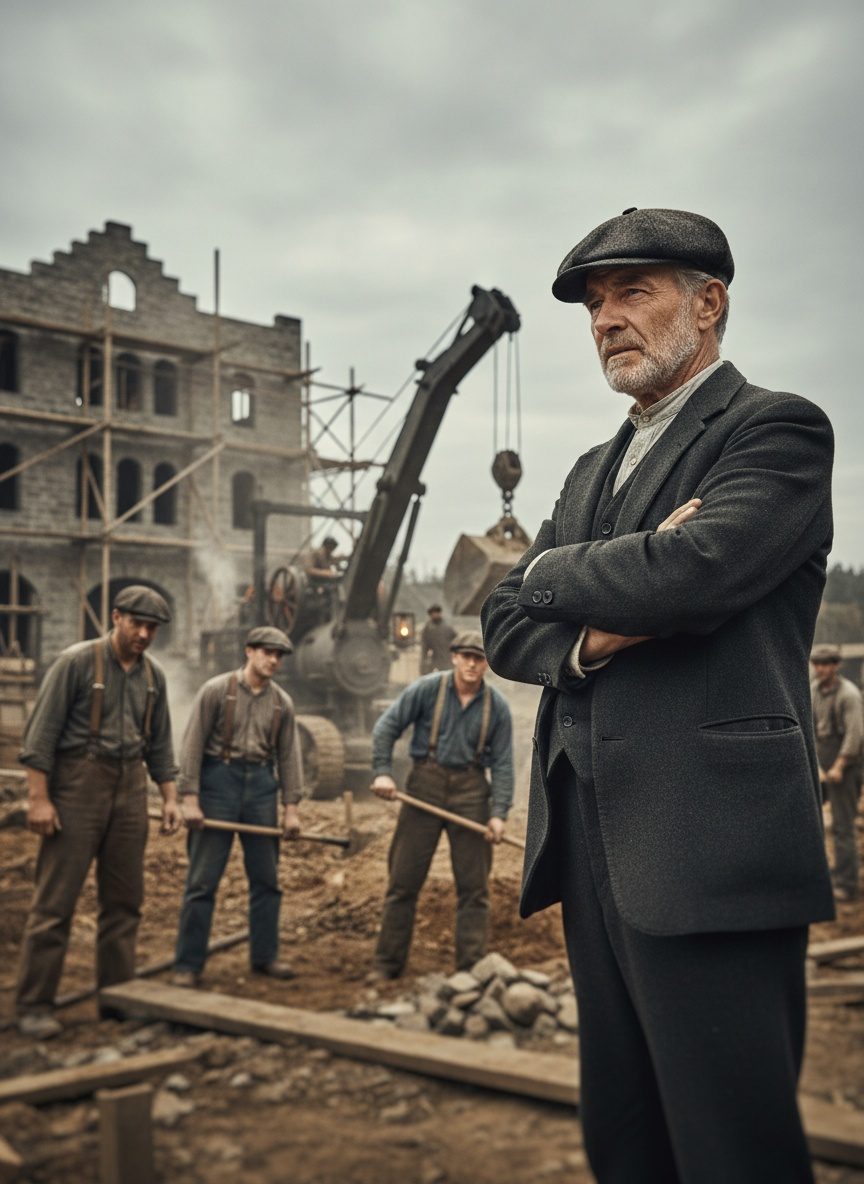
The clang of metal meeting metal reverberated through the crisp Pennsylvania morning air. The steam shovels, monstrous contraptions of steel and power, chugged into view, their gears grinding against the backdrop of the town's rolling fields. Milton Hershey stood firm, his eyes quietly assessing the scene unfolding before him. The foreman gestured proudly at the hulking machines, boasting of their capability to replace 40 men, compressing human labor into mechanical efficiency. But Hershey, a man whose empire was built as much on compassion as it was on chocolate, saw things differently.
The Heart of Sweet Ambition
In the balmy light of the early 1930s, America was floundering in the grips of the Great Depression. Factories stood silent while breadlines grew relentlessly longer. Millions of Americans were thrust into poverty, confronting hardships that offered little respite. It was within this crucible of despair that Hershey found himself looking at his beloved town in Pennsylvania, a place nurtured not just by the sweetness of cocoa but by the strength of a community.
Hershey had long understood that the success of the Hershey Company depended not only on the quality of its products but on the welfare of its workers. His vision extended beyond the factory walls and into the heart of the town itself. A town, built from the ground up, on principles of trust, solidarity, and human dignity. It was this interconnected fabric that Hershey sought to preserve when he faced the decision at hand.
The steam shovels, technological marvels of their time, promised not just efficiency but savings. For any other businessman, it might have seemed an irresistible proposition. Yet, for Hershey, it was the human cost that weighed most heavily. His decision wasn't just about erecting structures; it was about providing sustenance, a sense of purpose, and a lifeline to those who had come to depend on him. Hershey knew that true wealth wasn't measured in profits but in the prosperity of his people.
A Community Constructs Hope
Hershey's response to the foreman's enthusiastic pitch was swift and decisive. The steam shovels, promising to render dozens redundant, would have no place in his plans. With a simple gesture, he directed them away, determined to prioritize human hands over mechanical efficiency. The boss's directive set into motion a project that would become a beacon of hope during one of America's darkest times.
What followed was an audacious endeavor orchestrated by Hershey not for the sake of expanding a business outpost, but as a means to build bonds and feed families. Schools, houses, and community centers began to rise, brick by painstaking brick. The rumble of engines was replaced with the percussive rhythm of hammers, the melodic clanging of tools. Each structure was not just an architectural achievement but a testament to Hershey's conviction that industry should serve humanity, not the other way around.
The new constructions rekindled more than just the town's economy; they rekindled the spirits of its people. Workers and families alike watched as their labor reshaped the landscape, their efforts tangible evidence that they could weather the tempest. Hershey’s decision to employ men instead of machinery not only provided wages; it instilled an enduring sense of pride and stability, forging a resilient community even as the nation itself struggled to find its footing.
The Echoes of Empathy
The scene that played out in that small Pennsylvania town rippled across the country. In a period where industrial expansion often cast aside the individual in favor of profit-driven progress, Hershey’s actions were a clarion call for compassion. His choice to prioritize people over machines served as a rare, luminous example of an industrialist who saw beyond mere balance sheets.
This moment in history serves as more than just an anecdote about the benevolence of one man during the Great Depression. Instead, it stands as a reminder of the enduring power of empathy in shaping not just businesses, but societies. Hershey’s approach reflected a broader ethos that has resonance today: that commerce does not have to come at the expense of community, and that the successes of an enterprise can be measured in the wellbeing it brings to the lives it touches.
As the years have passed, Milton Hershey's decision to prioritize human dignity over mechanical convenience continues to inspire. In a rapidly evolving world, where automation increasingly challenges traditional employment, the story of Hershey watching those steam shovels arrive — and sending them away — feels all the more urgent. It is a tale that asks us to reconsider not just how we build, but why we build, urging today's entrepreneurs to consider the human impact of their innovations.