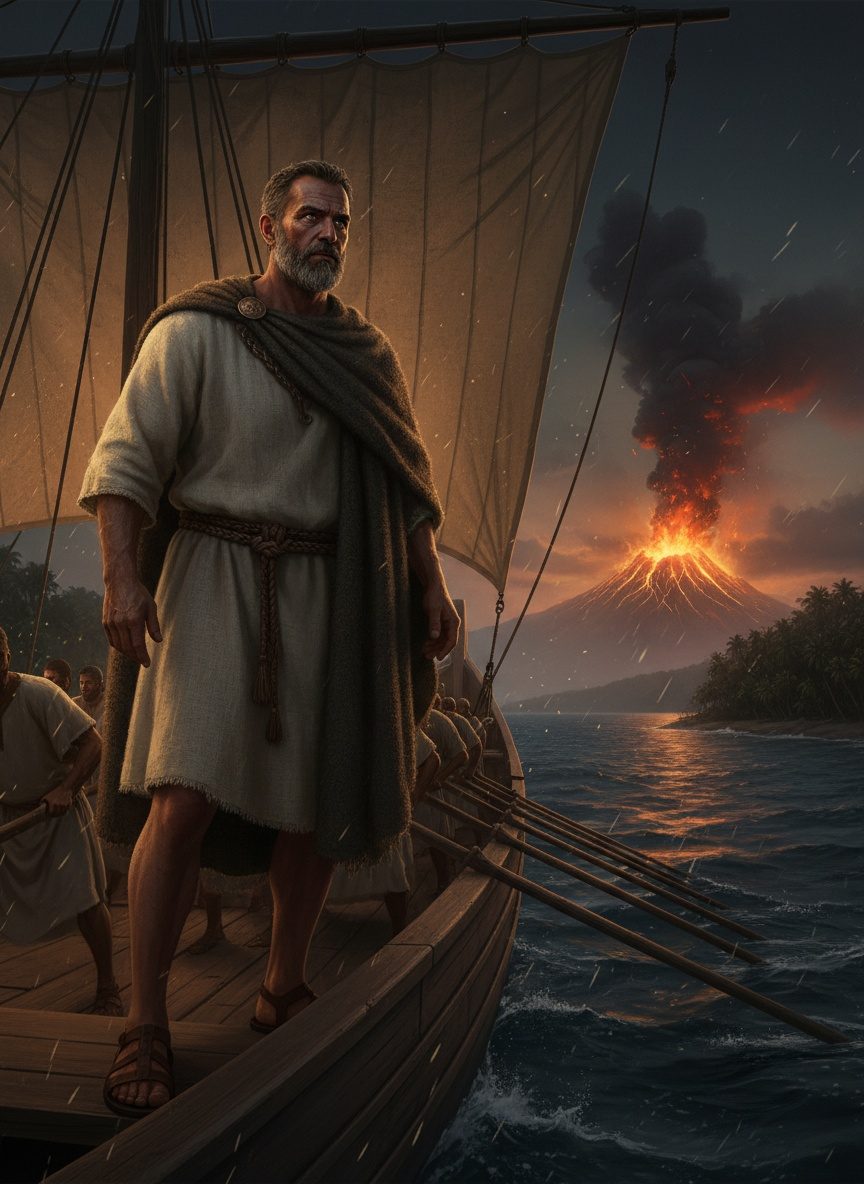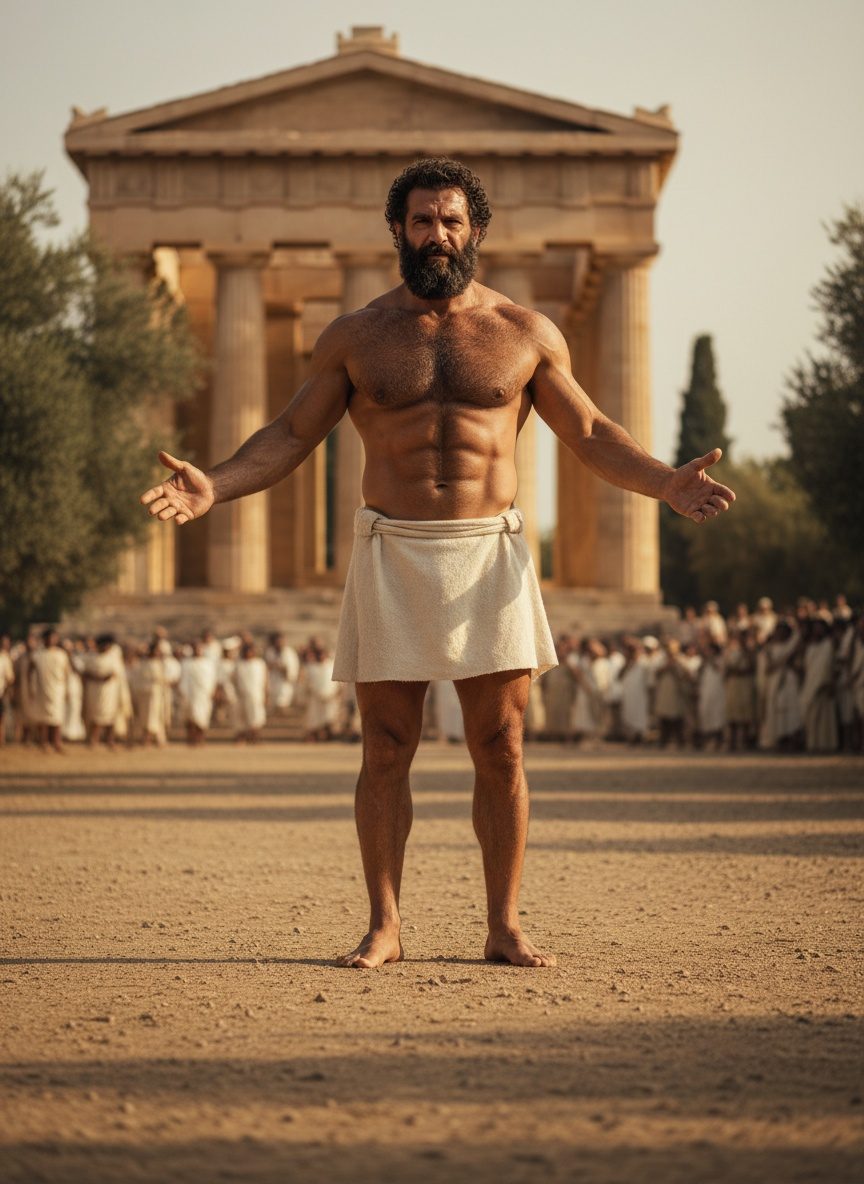
He was known for standing impossibly still in the middle of a roaring stadium. In that stillness, Milo of Croton embodied the immovable force that no man could topple.
Picture the scene at Olympia in 532 BC: a hot, buzzing atmosphere beneath a blazing Mediterranean sun, where the very air seemed to vibrate in anticipation. Among the pantheon of athletes gathered, one figure cast a shadow beyond compare. Milo of Croton, aged and seasoned from years of dominance, stood with a serene poise that defied the chaos around him. A pomegranate, a fruit no harder than a resolve might seem, was nested firmly in his hand. The challenge was simple yet audacious: whoever could manage to knock the veteran off his feet and cause him to bruise the pomegranate would earn both victory and glory. Time and again, contenders rose, only to fall back defeated, the fruit unblemished in Milo’s iron clutch.
Born in the Greek colony of Croton, Milo's early life was wrapped in the myths of his prowess. Legend tells of him as a child carrying a calf every day until it became a fully grown bull, symbolizing strength that matured in tandem with his years. Such feats etched his name into the annals of history, but it was in the arenas of the Hellenic world that Milo truly commanded awe. Six Olympic titles were etched into his impressive resume, along with six Pythian titles, marking him as a colossus of athletic achievement across Greece.
To the Greeks, the Olympic and Pythian Games were more than mere contests of strength; they were divine spectacles. Milo was not merely an athlete; he was a beacon of human potential against a backdrop of gods, myths, and ideology. His very presence in Olympia demanded reverence. The games provided a canvas for him to paint his narrative, each victory brush-stroked into the collective memory of his Hellenic spectators. They watched, mouths agape, as a man seemed to transcend his mortality.
The undefeated wrestler was a marvel in the arena, yet it was his eccentric displays of strength outside competition that stirred his legend. Milo had been known to bind his head with a cord until veins and muscles rippled with visible force, a terrifying spectacle that left none doubting the raw power he harnessed. He would stand on a greased discus, and challenge others to push him off; none succeeded. The standout tale, however, was of that pomegranate. The crowd's cheers folded into silent admiration whenever they saw this act, wondering how human flesh could create such an unyielding grip.
Beyond his physical dominance, Milo's lifestyle and decisions were equally captivating. He was often seen wearing a lion's skin and carrying a club, a homage to the mythical hero Heracles, whose legendary labors he sought to emulate. Milo's affinity for Heracles was not just in costume alone; it was told that he led his people into battle against the neighboring Greek colony of Sybaris, clad entirely in this garb, channeling the courage of his mythic idol.
His diet, too, was the stuff of legend. A regimen of devouring twenty pounds of meat and twenty pounds of bread, accompanied by copious quantities of wine, fueled his monumental physique. Whether these are exaggerations or glimpses of truth, they contribute to the allure surrounding his life. To some, his appetite underscored not only his prodigious strength but also his almost otherworldly endurance. Yet, it also spoke to the Greek understanding of balance, even amid excesses. Strength and sustainment were locked in a delicate dance.
In Croton, Milo transitioned into the city’s civic and cultural fabric, a symbol of identity and pride. His tales inspired imitations among the youth, pushing them toward the same podium they idolized from afar. The paragon of athleticism became not merely a competitor but a template for Greece's ideal male virtues: strength, dominance, and savvy leadership in war.
However, like all tragic heroes from tales of past and present, Milo’s story was not without its somber twilight. The record of his death paints a cautionary tale, one befitting the annals of Ancient Greece. Aged, but no less proud, he ventured into the forest to test his strength on a felled tree. In his attempt to cleave it asunder with his hands, he found himself trapped as the wood closed back around his fingers. According to the myth, alone and incapacitated, Milo was overtaken by wolves, a fate echoing the Greek reverence and fear of hubris. His strength had betrayed him, turning vulnerability into mortality’s reminder.
Yet, Milo's end does not mar the legacy he carved into time itself. The story of Milo of Croton resonates across millennia because it is deeply human. It bridges the divine and the earthly, the heroic and the tragic. In a mere mortal, a society dared to cast its greatest ideals. Through him, the Greeks saw how close a human could fly to the sun, and how inevitable it was, eventually, to fall. Legends like Milo’s are the foundational stones of culture—they teach and remind us of our potential, our limits, and the tenuous line that separates them.