The acrid smell of smoke fills the Roman air as flames lick hungrily at the wooden beams of a crowded apartment block. Desperate residents flee into the streets, clutching whatever possessions they can carry. But wait—salvation arrives in the form of Marcus Licinius Crassus and his private army of 500 firefighters, buckets and axes in hand. The property owner rushes forward, relief flooding his face. Surely the gods have sent deliverance!
Not quite. Crassus raises his hand, halting his fire brigade mid-stride. The flames continue to rage as he turns to the terrified owner with a proposition that would make a modern loan shark blush: "I'll save your building... but first, you sell it to me. Right now. For whatever I decide it's worth."
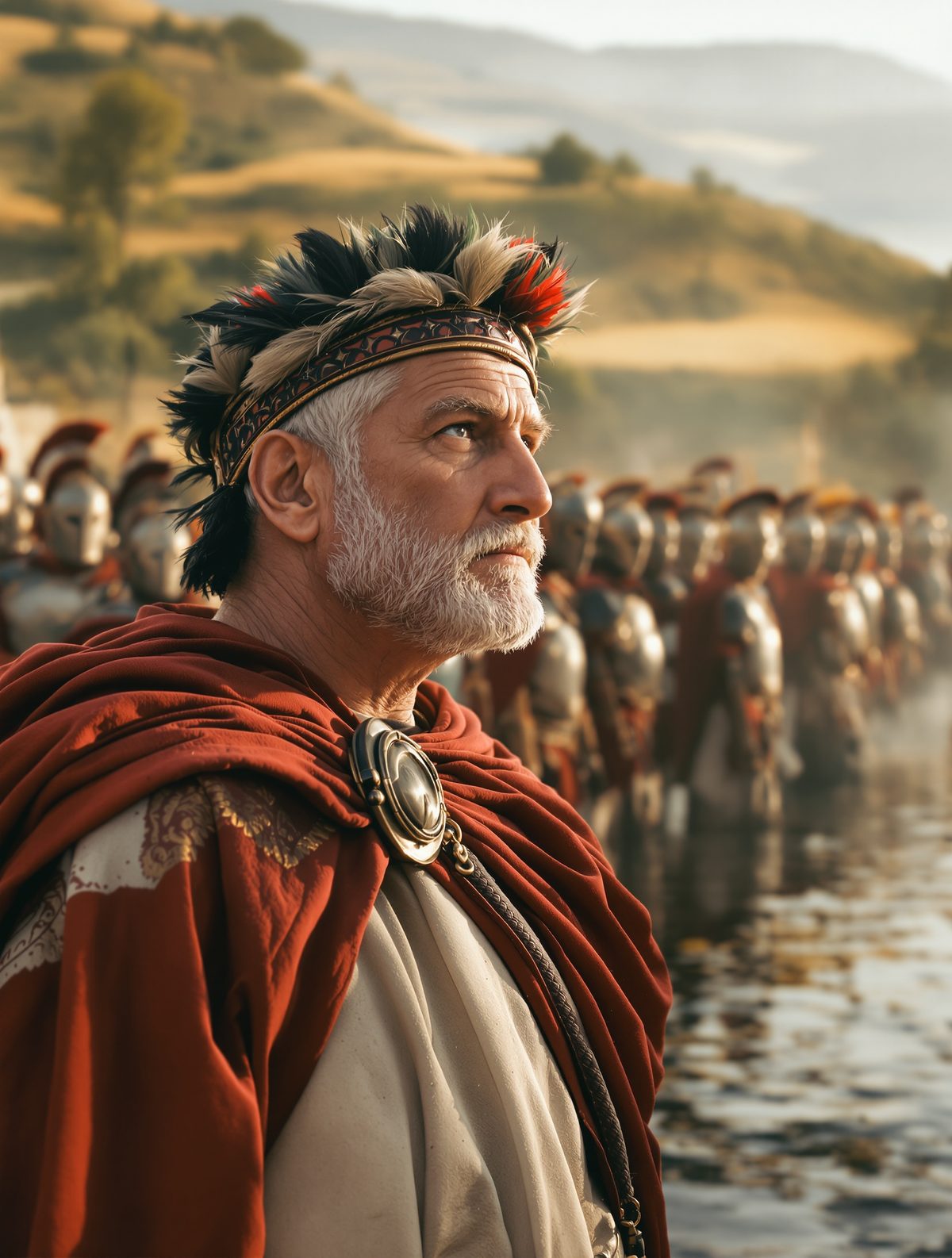
Welcome to the world of Marcus Crassus—Rome's richest man, military commander, and history's most ruthless disaster capitalist. While other Romans saw fire as a catastrophe, Crassus saw opportunity. And in a city where conflagrations could level entire neighborhoods in hours, business was very, very good.
The Man Who Made Misery Profitable
Marcus Licinius Crassus wasn't born into his legendary wealth—he had to scheme his way there. Born around 115 BC into a respectable but not extraordinarily wealthy family, Crassus learned early that in Rome, money wasn't just power; it was survival. When the brutal dictator Sulla rose to prominence in the 80s BC, Crassus backed the winning horse, profiting handsomely from the proscription lists—those death warrants that allowed supporters to legally murder political enemies and seize their property.
But it was fire that truly ignited Crassus's fortune. In a city of nearly one million people crammed into rickety wooden structures reaching six or seven stories high, fire wasn't just common—it was inevitable. Rome's apartment buildings, called insulae, were architectural disasters waiting to happen. Constructed cheaply with wood and mud brick, heated by open braziers, and lit by oil lamps, they were essentially vertical tinderboxes.
Most Romans accepted fire as an unfortunate fact of urban life. Crassus saw it as a business model.
Rome's Most Twisted Emergency Service
Around 60 BC, Crassus established what was technically Rome's first organized fire department. His familia publica consisted of over 500 trained slaves—architects, engineers, and firefighters who could respond rapidly to blazes across the city. On paper, it sounds almost philanthropic. In practice, it was extortion with extra steps.
Here's how the Crassus system worked: When fire broke out, his scouts—stationed throughout the city—would race to notify the fire brigade. Crassus himself would often arrive at the scene, not with water, but with a contract. As flames devoured the building and potentially threatened to spread to neighboring structures, he would calmly negotiate with the desperate property owner.
The conversation was always brief and decidedly one-sided. Crassus would offer to purchase the burning building and any adjacent properties he fancied—naturally, at a price that reflected their current distressed condition. A building worth 100,000 sestertii might be offered for 5,000. Take it or leave it. Literally.
If the owner agreed to sell, Crassus's firefighters would spring into action with remarkable efficiency, often saving much of the structure and all of the surrounding buildings he'd just purchased. If the owner refused? Crassus would politely withdraw his forces and watch the property burn to the ground—along with any hope of compensation.
The Economics of Desperation
What made this system particularly diabolical was its mathematical precision. Crassus understood that a building owner facing a raging fire wasn't really choosing between a good deal and a bad deal—they were choosing between a terrible deal and total loss. When your property is literally going up in smoke and threatening to take your neighbors' buildings with it (making you liable for their losses too), even a fraction of its value starts looking reasonable.
The timeline was crucial. Roman fires moved fast through the densely packed neighborhoods. Crassus's negotiation window was brutally short—often just minutes before a saveable situation became a total loss. Property owners had to decide immediately: accept whatever Crassus offered, or watch their life's investment become ash and charcoal.
But here's the truly ingenious part: Crassus didn't just profit from the initial purchase. Once he'd acquired fire-damaged buildings at rock-bottom prices, he'd rebuild them with his army of skilled slave labor. The same architects and engineers who'd saved the structures would now renovate them, often improving them significantly. Properties purchased for a song would be rented out or resold at full market value.
Ancient sources suggest that at his peak, Crassus owned over 7,000 talents worth of property—equivalent to roughly $200 million in today's money, and that's just his real estate portfolio.
A City Held Hostage by Flames
The most chilling aspect of the Crassus fire brigade wasn't just its predatory nature—it was how it shaped Roman urban policy. Because Crassus provided the only reliable fire response in the city, Roman authorities were essentially held hostage by his business model. They couldn't crack down on his practices without losing the only effective firefighting force in Rome.
Imagine modern-day New York or London with no fire department except a private company that refused to spray water until you signed over your deed. The city would face an impossible choice: accept extortion or watch entire neighborhoods burn. Rome chose to look the other way.
This arrangement continued for decades, making Crassus not just wealthy but indispensable. Property owners throughout Rome lived in constant anxiety, knowing that their security depended on the whims of a man who profited from their disasters. Neighborhood associations sometimes tried to organize their own fire brigades, but they lacked Crassus's resources, training, and city-wide infrastructure.
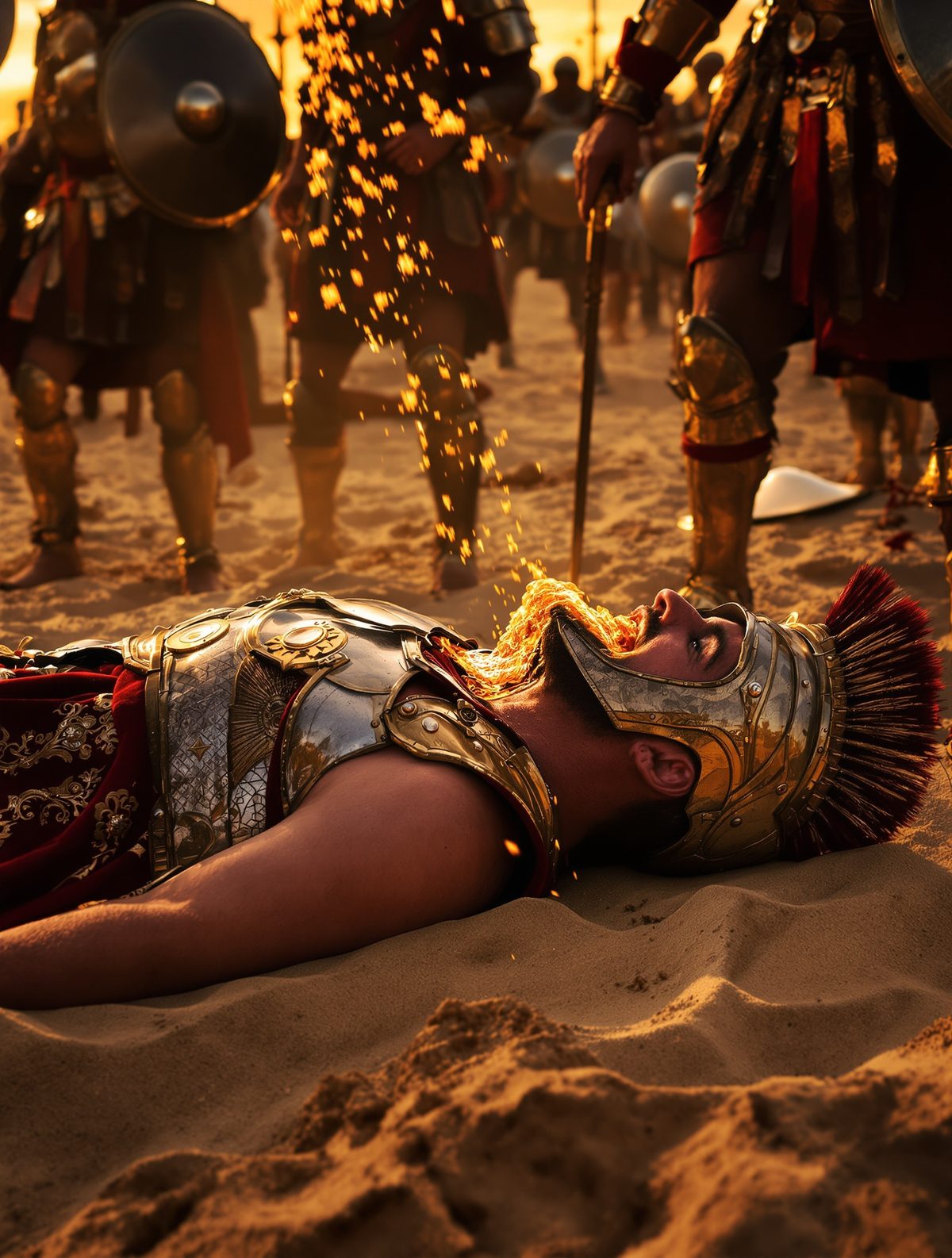
The system only ended when Crassus himself burned—metaphorically speaking. In 53 BC, his legendary greed finally caught up with him during a disastrous military campaign against the Parthians. After suffering one of Rome's worst military defeats at the Battle of Carrhae, Crassus was captured and, according to legend, executed by having molten gold poured down his throat—a fitting end for a man whose appetite for wealth knew no bounds.
The Legacy of Profitable Disasters
After Crassus's death, his fire-fighting monopoly crumbled, leaving Rome more vulnerable than ever. It wasn't until Emperor Augustus established the vigiles—a proper public fire department—in 6 AD that Romans could expect emergency response without extortion. The vigiles were public servants, not private contractors, and they fought fires for the common good rather than personal profit.
But Crassus had already proven a disturbing concept: that essential emergency services could be weaponized for profit. His model demonstrated how quickly civic necessity could become private opportunity, and how disaster capitalism could flourish when public services failed to meet basic needs.
Today, as we debate the privatization of emergency services, healthcare, and disaster response, the ghost of Marcus Crassus whispers from history. His fire brigade reminds us that when essential services are motivated by profit rather than public welfare, the results can be both efficient and morally horrifying.
Every time a private ambulance company charges outrageous fees, every time disaster relief becomes a business opportunity, every time emergency services are rationed based on ability to pay rather than human need, we're watching Crassus's business model flicker back to life. The man who turned Rome's fires into personal fortune offers us a stark lesson: some services are too essential to leave to the highest bidder, and some disasters are too important to waste on making money.
After all, when your house is burning down, the last thing you want to see is someone arriving with a contract instead of a hose.