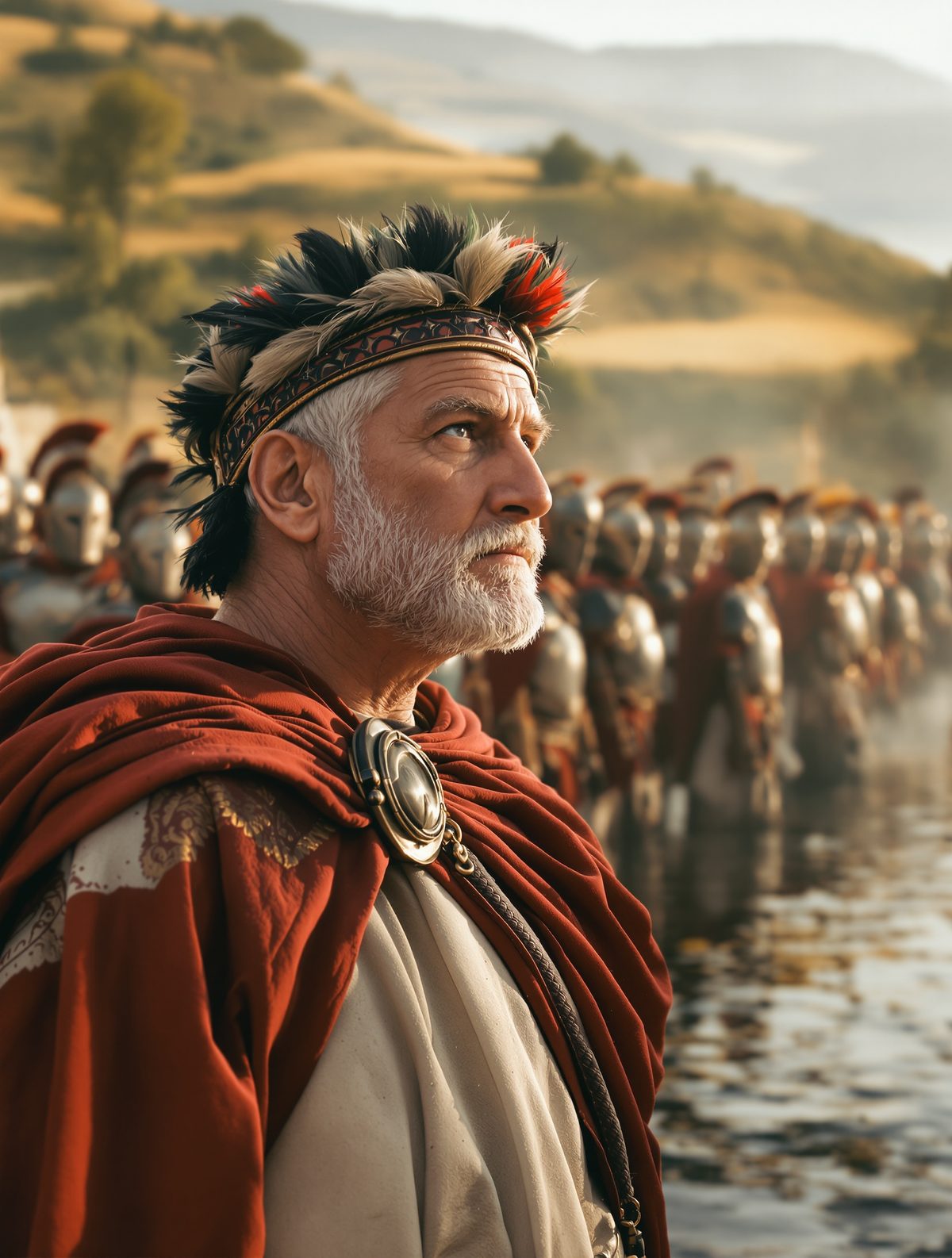
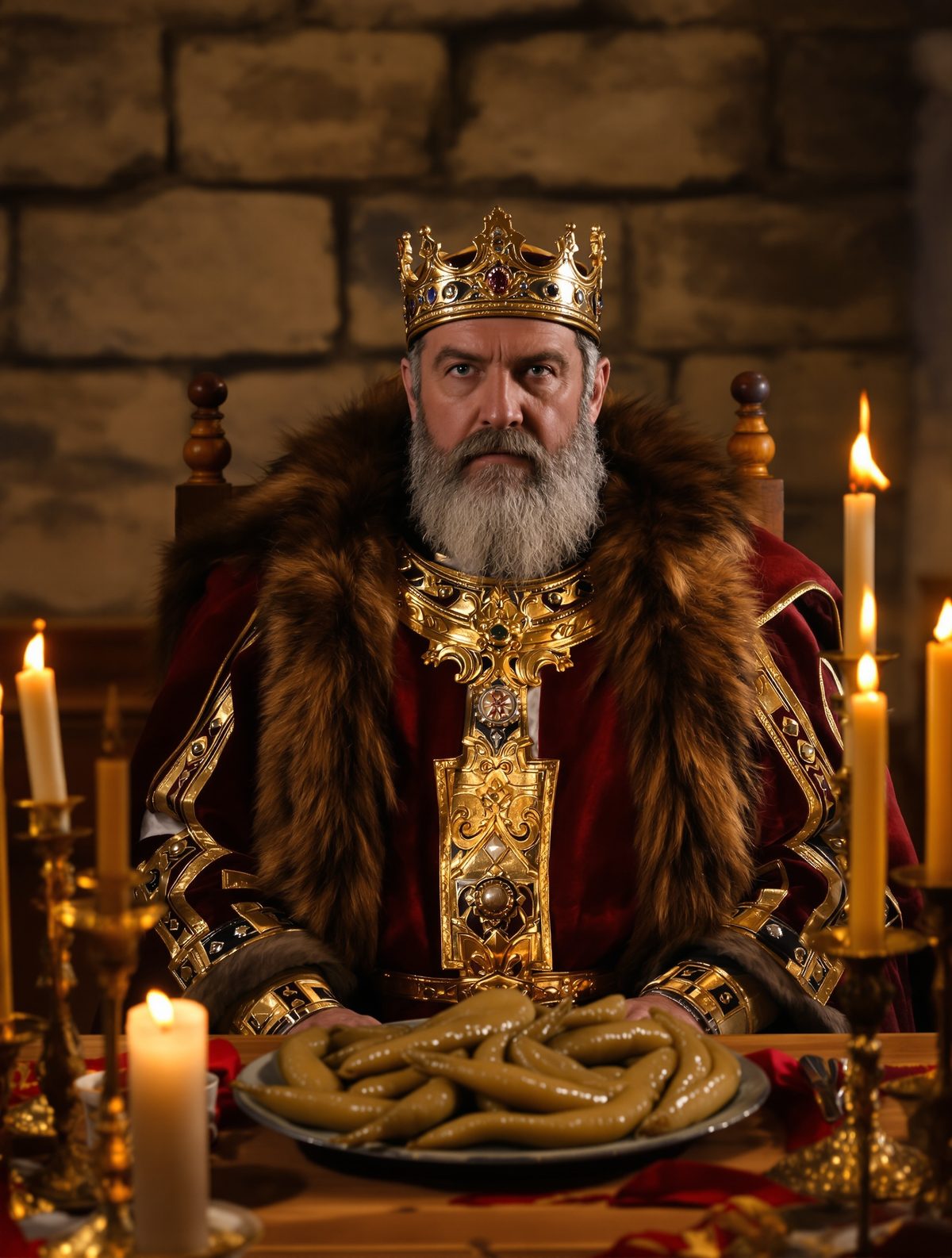
The scorching Syrian sun beat down mercilessly on the Roman general's blood-soaked face as Parthian soldiers held him upright. Marcus Licinius Crassus, the richest man in Rome, gasped for breath through shattered ribs and punctured lungs. Around him lay the mangled corpses of forty thousand Roman legionnaires—the greatest military disaster in Roman history. Yet even as his life ebbed away in the desert sand, Crassus managed to rasp out the words that would echo through history: "We have won a great victory here today."
It was perhaps the most delusional—or defiant—final statement ever uttered by a dying general. Within minutes, molten gold would be streaming down his throat as his Parthian captors fulfilled a promise more savage than any execution the Romans had ever devised.
The Man Who Bought Rome
To understand how Rome's most powerful triumvir ended up dying in such spectacular fashion, you need to grasp just how obscenely wealthy Marcus Crassus had become. Modern estimates place his fortune at roughly $2 billion in today's money—but even that doesn't capture his true influence. Crassus didn't just have money; he was the Roman economy.
His path to riches reads like a masterclass in ruthless capitalism. During Rome's brutal civil wars, Crassus would arrive at the scene of burning buildings with his private fire brigade—but he wouldn't fight the flames until the desperate owner sold him the property at a fraction of its value. He owned most of Rome's rental properties, commanded a private army of 500 slaves trained in construction and demolition, and had senators on his payroll like pieces on a chess board.
But for all his wealth, Crassus faced one humiliating problem: he was overshadowed by his fellow triumvirs. Julius Caesar was conquering Gaul and building a legend. Pompey the Great was, well, already called "the Great." Meanwhile, Crassus was known primarily for crushing Spartacus's slave rebellion—hardly the stuff of epic poetry. At age 62, he burned with the need for military glory that would match his fortune.
A Desert Mirage of Gold
In 55 BC, Crassus secured the governorship of Syria, viewing it as his gateway to immortal fame. His target: the Parthian Empire, Rome's greatest eastern rival. The Parthians controlled the lucrative Silk Road trade routes, and their capital at Ctesiphon glittered with unimaginable wealth. Roman intelligence suggested the Parthians were weak, distracted by internal disputes. It seemed like the perfect opportunity for an aging general to claim his place in history.
Crassus assembled a massive force: seven legions totaling 35,000 infantry, 4,000 cavalry, and 4,000 light infantry and archers. It was one of the largest armies Rome had fielded in decades. Yet from the beginning, ominous signs plagued the expedition. As the army prepared to cross the Euphrates River in 53 BC, a tribune named Gaius Ateius performed a public curse ceremony, calling down the wrath of the gods upon Crassus and his legions.
More practically concerning, Crassus had allied himself with Abgarus, the Arab king of Osroene, who promised to guide the Romans safely through the desert. What the trusting Roman general didn't know was that Abgarus was secretly in league with the Parthians, leading the massive Roman army directly into a carefully prepared trap.
The Killing Fields of Carrhae
On a blazing June day in 53 BC, near the town of Carrhae (modern-day Harran in Turkey), Crassus's army encountered what appeared to be a small Parthian force. The Roman general, eager for combat, ordered his legions into battle formation. What happened next shattered every assumption the Romans had about warfare.
The Parthian general Surena had assembled roughly 10,000 mounted archers and 1,000 heavily armored cataphracts (cavalry). Against 40,000 Romans, it seemed laughably inadequate. But Surena understood something the Romans didn't: in desert warfare, mobility trumped numbers every time.
The Parthian mounted archers began their deadly dance, circling the Roman formations like wolves around a wounded bear. They would gallop toward the Roman lines, fire volleys of arrows, then wheel away before the legionnaires could close for hand-to-hand combat. The famous "Parthian shot"—arrows fired backward while retreating—gave the tactic its name and carved bloody holes in Roman ranks.
Crassus ordered his son Publius to take 1,300 cavalry and 500 archers to drive off the harassers. It was exactly what Surena wanted. The younger Crassus and his men were lured away from the main force and systematically slaughtered. Publius's severed head was mounted on a spear and paraded before the horrified Roman army—a psychological blow that shattered morale more effectively than any weapon.
The Cruelest Mockery
As the sun set on the battlefield, Roman corpses stretched across the desert like scattered wheat. Of the 40,000 men who had marched confidently into Parthian territory, roughly 20,000 lay dead, 10,000 were captured, and only about 10,000 managed to escape. Crassus himself, wounded and delirious from blood loss, was taken alive along with his surviving officers.
What happened next became one of the most infamous executions in ancient history. According to the historian Plutarch, the Parthians decided to give Rome's richest man exactly what he had always craved: gold. They melted down precious metal and poured the molten liquid down Crassus's throat while he still lived.
"Drink your fill of wealth," Surena allegedly mocked as the screaming Roman general choked on the very thing he had spent his life pursuing. The symbolism was brutal and deliberate—a man who had never had enough gold was finally given all he could swallow.
But the humiliation didn't end with death. Crassus's severed head and hands were sent to the Parthian king, Orodes II, who was reportedly watching a performance of Euripides' tragedy "The Bacchae." In a macabre bit of theater, the actors incorporated Crassus's actual head into the play, using it as a prop for King Pentheus—a character torn apart for his hubris.
The Last Laugh of History
The Battle of Carrhae sent shockwaves through the ancient world that reverberated for centuries. Rome's aura of invincibility was shattered, and the Parthians proudly displayed captured Roman eagle standards in their temples. The disaster destabilized the First Triumvirate, accelerating the civil wars that would ultimately destroy the Roman Republic and birth the Empire.
Perhaps most ironically, Crassus's death achieved something his life never could: true immortality. While his business deals and real estate empire crumbled into historical footnotes, his spectacular demise became one of history's most retold cautionary tales about greed and hubris.
The story of Marcus Crassus feels remarkably contemporary in our age of billionaire space races and ego-driven ventures. Like modern moguls who translate financial success into grandiose ambitions, Crassus discovered that some pursuits can't be bought—they can only be earned through wisdom, preparation, and respect for one's limitations. His final, delusional declaration of victory while bleeding to death serves as a stark reminder that self-deception, no matter how wealthy its source, is no match for harsh reality.
In the end, the richest man in Rome got exactly what he deserved: a legacy that perfectly captured the golden poison of unchecked ambition.