Picture this: smoke billows from a grand Roman villa as flames lick hungrily at marble columns and painted walls. The owner rushes outside, clutching whatever valuables he can carry, his face etched with desperation as he watches his life's wealth turn to ash. Then, like a vulture circling carrion, a well-dressed man arrives with hundreds of slaves carrying buckets, ladders, and fire-fighting equipment. But instead of immediately battling the blaze, he calmly approaches the distraught homeowner with an offer that's as brilliant as it is cruel: "I'll buy your property right now—for one-tenth its value. Accept, and my men will save what's left. Refuse, and watch it all burn."
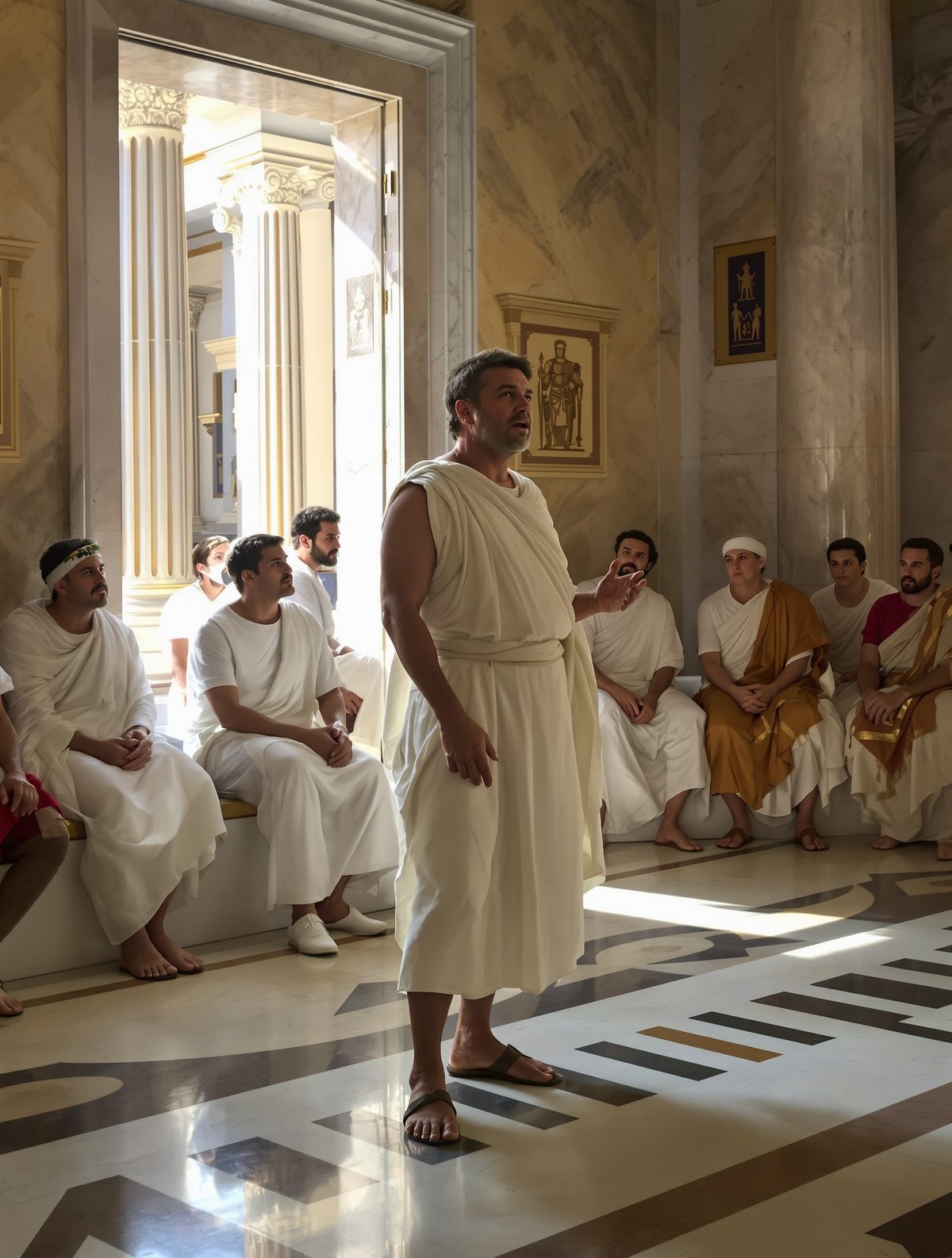
This wasn't extortion by some shadowy criminal—this was business as usual for Marcus Licinius Crassus, one of Rome's most powerful politicians and the man who would become known as the richest person in Roman history. In first-century BC Rome, when fire meant financial ruin and Crassus owned the only organized fire brigade in the city, desperation had a very specific price.
The Birth of History's Most Ruthless Fire Department
To understand Crassus's scheme, you need to picture Rome around 70 BC—a sprawling metropolis of over one million people crammed into buildings that were essentially tinderboxes waiting for a spark. The city had no public fire department, no building codes worth mentioning, and certainly no fire insurance. Most Romans lived in insulae—multi-story apartment buildings constructed primarily of wood, with open flames used for cooking, heating, and lighting. When fire struck, which it did with alarming frequency, residents had two options: fight the flames themselves or watch everything burn.
Crassus, born around 115 BC into an already wealthy family, recognized this gap in the market with the cold calculation that would define his entire career. While other Roman elites invested in land, slaves, or political careers, Crassus saw opportunity in disaster itself. He assembled what historians believe was a force of over 500 trained slaves—not to mention the equipment, organization, and logistics that made them effective. This wasn't a small operation; it was ancient Rome's first professional emergency response service.
But here's where Crassus's genius turned sinister: he didn't create this fire brigade out of civic duty or humanitarian concern. He created it as the enforcement arm of the most sophisticated real estate acquisition scheme in ancient history.
Fire Sale: Ancient Rome's Most Literal Business Model
When word reached Crassus that a fire had broken out somewhere in Rome, he and his brigade would race to the scene with impressive efficiency. Roman sources describe how his men would arrive with remarkable speed, carrying sophisticated firefighting equipment including pumps, hooks for tearing down burning structures to create firebreaks, and even primitive fire engines. To panicked property owners, the sight of this professional force must have seemed like salvation itself.
Then came the twist that transformed relief into extortion.
Instead of immediately deploying his firefighters, Crassus would approach the property owner—often as flames continued to consume their building—and make an offer to purchase the property on the spot. The prices he offered were deliberately insulting: often as little as 10-20% of the property's actual value. But here's the psychological brilliance of his strategy: he wasn't just buying a building, he was buying hope itself from people who had none.
Property owners faced an impossible choice. They could refuse Crassus's lowball offer and watch their property burn to nothing, losing 100% of their investment. Or they could accept his terms, salvage at least something from the disaster, and watch as his slaves immediately sprang into action to save what remained of their former property—which now belonged to Crassus.
According to the Roman historian Plutarch, who provides our most detailed account of these practices, most people took the deal. After all, some money was better than no money, and watching professional firefighters save your building—even if it no longer belonged to you—had to feel better than watching it burn to the ground.
The Economics of Engineered Desperation
What makes Crassus's fire brigade scheme particularly ingenious is how he monetized both the problem and the solution. He didn't just profit from buying properties at below-market prices during emergencies—he turned firefighting itself into a luxury service that only he could provide.
Once Crassus acquired a property, his firefighters would work with remarkable effectiveness. Roman sources suggest his brigade was genuinely skilled at their job, which makes sense: Crassus had invested heavily in training his slaves in firefighting techniques, and he needed them to be competent enough to actually save the properties he'd just purchased. A fire brigade that couldn't fight fires would have been a poor investment, even for someone as calculating as Crassus.
But the economic model extended far beyond individual fire sales. Crassus would renovate and repair the damaged properties he'd acquired, often using his own slaves as construction workers to minimize costs. He'd then either rent them out for premium prices—after all, they were now fireproof buildings maintained by the man who controlled the city's fire response—or sell them at full market value once the immediate trauma of the fire had faded from potential buyers' memories.
This created a perverse economic cycle: the more fires that broke out in Rome, the richer Crassus became. And given that fires were a regular occurrence in the crowded, poorly constructed city, Crassus had found himself a remarkably reliable revenue stream. Some historians estimate that at his peak, Crassus owned over 7,000 properties in Rome—many acquired through his fire brigade operations.
The Man Who Bought Rome, One Fire at a Time
By the height of his power in the 60s BC, Crassus had accumulated wealth that defied comprehension even by Roman standards. Plutarch records that his fortune totaled over 7,100 talents of silver—equivalent to roughly 200 metric tons of silver, or in modern terms, hundreds of millions of dollars. To put this in perspective, this was enough money to fund entire military campaigns, bribe half the Roman Senate, and still have enough left over to live in luxury for several lifetimes.
But Crassus's fire brigade was just one element of his broader business empire. He owned silver mines, invested heavily in the slave trade, and operated what amounted to ancient Rome's first real estate empire. He also pioneered another practice that would seem familiar to modern observers: he offered loans to cash-strapped politicians at favorable rates, then collected political favors instead of interest payments.
This combination of wealth and political influence made Crassus one of the three most powerful men in Rome, alongside Pompey and Julius Caesar—a political alliance known as the First Triumvirate. But unlike his partners, who built their power on military conquest and popular appeal, Crassus built his on the systematic exploitation of urban disasters and human desperation.
The fire brigade scheme also reveals something crucial about Roman society that often gets lost in stories about gladiators and conquests: this was a civilization where essential public services simply didn't exist, and private entrepreneurs filled the gap in whatever way proved most profitable. Crassus didn't invent corruption—he perfected the art of monetizing civic necessity.
When Greed Meets Greek Fire: The End of an Empire
Crassus's story might have ended with him as the undisputed master of Roman commerce, but his vast wealth couldn't satisfy his craving for the one thing money couldn't buy in Rome: military glory. While Pompey conquered the East and Caesar conquered Gaul, Crassus remained known primarily as a businessman—hardly the image of a Roman hero.
In 53 BC, driven by a need to prove himself as a military commander, Crassus launched an invasion of Parthia (modern-day Iran and Iraq) with a massive army funded by his fire brigade profits and real estate empire. The campaign was a disaster of epic proportions. At the Battle of Carrhae, Parthian cavalry destroyed his forces, killing an estimated 20,000 Roman soldiers and capturing 10,000 more.
Crassus himself was killed during negotiations with the Parthian general Surena. According to legend, the Parthians poured molten gold down his throat after his death—a symbolic gesture aimed at the man whose greed had become legendary even among his enemies. Whether this story is true or not, it perfectly captures how Crassus was viewed by the ancient world: a man whose appetite for wealth ultimately consumed him.
The irony is impossible to miss. The man who built his fortune by exploiting fire ultimately met his end in the desert, his body consumed by molten metal—a fitting end for someone who had spent decades turning other people's disasters into personal profit.
The Legacy of Rome's Original Disaster Capitalist
Marcus Crassus died over 2,000 years ago, but his fire brigade scheme offers a surprisingly modern lesson about the intersection of essential services, private enterprise, and human desperation. In a city where fire protection was a luxury rather than a public service, Crassus created a system that was simultaneously efficient and exploitative—his firefighters were genuinely skilled, but their services came with a price that went far beyond money.
Today, when we debate the privatization of public services, the story of Crassus's fire brigade serves as a historical cautionary tale. It demonstrates what happens when essential services become profit centers rather than public utilities, and how quickly efficiency can transform into exploitation when people have no alternatives during their moments of greatest need.
Perhaps most importantly, Crassus's story reminds us that behind every great fortune lies a great crime—or at least a great scheme. While we might admire his business acumen and organizational skills, we can't ignore the human cost of a system that turned neighborhood disasters into personal windfalls. In the end, Marcus Crassus didn't just own Rome's fire brigade; he owned a piece of every Roman's security, and he made sure they paid dearly for it.
The next time you see firefighters racing to save someone's home, remember: it wasn't always a given that help would come without strings attached. Sometimes the most important stories from history aren't about what people built, but about what they were willing to let burn.