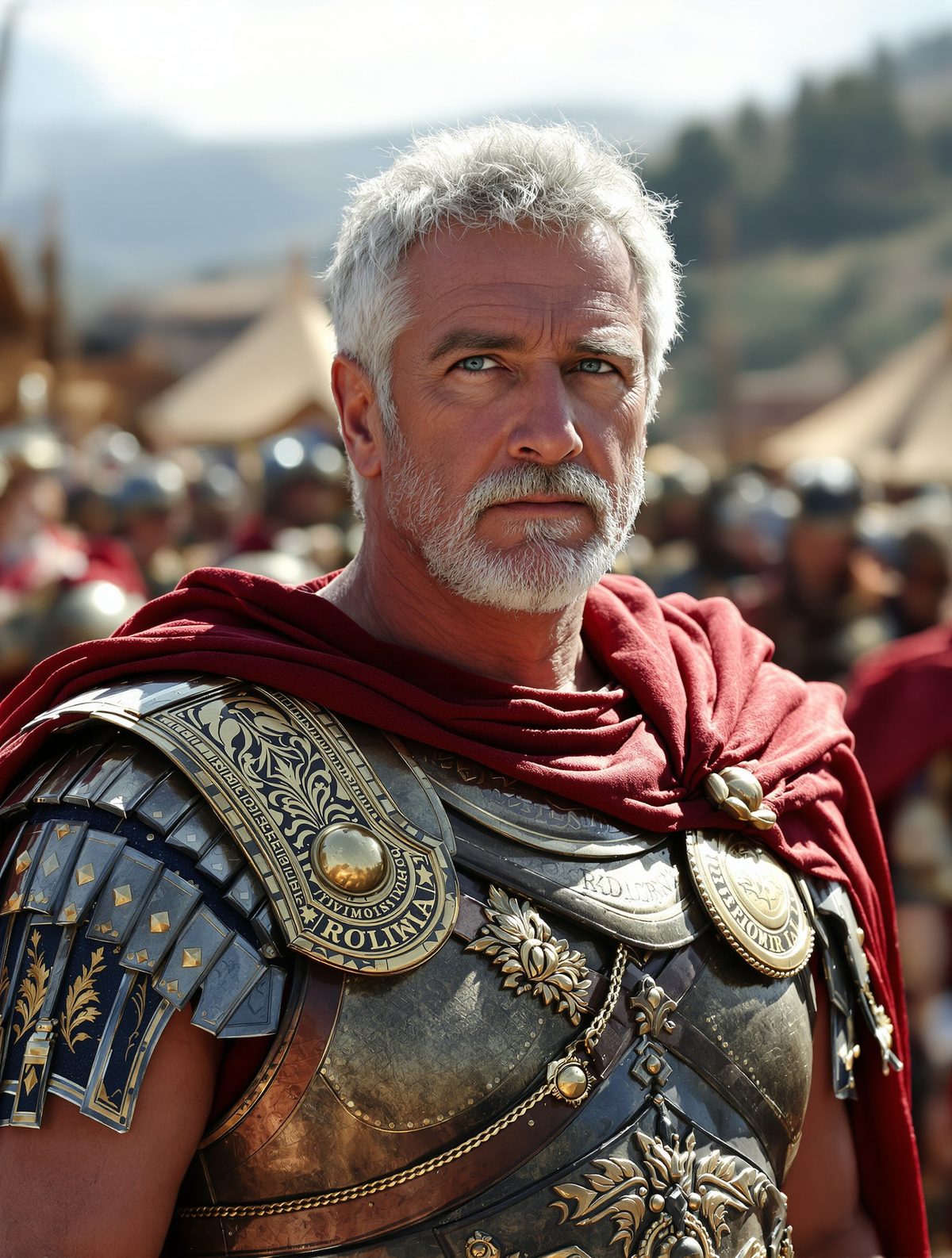
The acrid smoke fills your lungs as you watch orange flames lick at the wooden beams of your Roman home. Your neighbors have already fled, clutching whatever possessions they could carry. The fire spreads with terrifying speed through the narrow streets of the Subura, Rome's most crowded district. Just as despair sets in, you hear the thunder of approaching footsteps—hundreds of them. A man in a pristine toga emerges from the smoke, flanked by 500 slaves carrying buckets, axes, and firefighting equipment. This is your salvation... or is it?
"I'll give you 10,000 sestertii for your house," the man says calmly, his cold eyes reflecting the flames. "Right now." You recognize him immediately—everyone in Rome knows Marcus Licinius Crassus, the wealthiest man in the Republic. Behind him, his private fire brigade stands motionless, watching your home burn while awaiting orders. The choice is brutal in its simplicity: sell your property to Crassus for whatever pittance he offers, or watch it—and everything you own—turn to ash.
When Rome Burned, One Man Got Rich
Welcome to Marcus Crassus's business model—the most ruthless real estate scheme in ancient history. In the 1st century BC, Rome was a tinderbox waiting to explode. The city's population had swelled to over one million inhabitants crammed into wooden structures that rose six or seven stories high. These insulae (apartment buildings) were fire hazards by design, constructed with timber frames, heated by open braziers, and lit by oil lamps. Worse yet, Rome had no public fire department.
Into this urban nightmare stepped Crassus, who saw opportunity where others saw disaster. Rather than simply profit from Rome's misfortune, he systematized it. By 60 BC, Crassus commanded the largest private fire brigade in Roman history—500 trained slaves who could respond to any blaze in the city within minutes. But here's what made his scheme diabolical: they wouldn't lift a finger until property changed hands.
Plutarch, the ancient historian, documented this practice with barely concealed horror: "Observing how natural and common a thing it was at Rome for houses to fall and catch fire... he bought slaves that were architects and builders." Crassus didn't just build a fire service—he created a vertical monopoly that controlled both destruction and reconstruction.
The Richest Roman Who Ever Lived
To understand the audacity of Crassus's fire scheme, you need to grasp just how spectacularly wealthy this man was. Modern historians estimate his fortune at the equivalent of $170 billion in today's money, making him potentially richer than Jeff Bezos or Elon Musk. His contemporary Pliny the Elder claimed Crassus owned property worth 200 million sestertii—enough to fund eight Roman legions for an entire year.
But Crassus wasn't born into this wealth. The son of a respectable but not extraordinarily rich family, he built his fortune through a combination of political opportunism, military conquest, and sheer ruthlessness. During Sulla's bloody proscriptions in 82 BC, when Roman citizens were being murdered for their property, young Crassus bought the confiscated estates of the dead at bargain prices. It was his first taste of profiting from others' misfortune—and he developed quite an appetite for it.
His contemporaries both feared and mocked his obsession with wealth. Cicero quipped that no man could be considered rich unless he could afford to maintain a private army—a standard that only Crassus could meet. Caesar reportedly joked that Crassus would sell his own mother if the price was right. But behind the jokes lay a chilling truth: in a republic where money equaled power, Crassus was becoming dangerously influential.
How to Monetize Disaster: The Crassus Method
The mechanics of Crassus's fire business were as efficient as they were merciless. His intelligence network—likely composed of slaves, freedmen, and paid informants—would alert him to fires the moment they started. His brigades, stationed strategically throughout the city, could reach most locations faster than news could spread in an era before mass communication.
Picture the scene: smoke begins rising from a building in the Forum Boarium. Within minutes, a breathless messenger reaches one of Crassus's lieutenants. The fire brigade mobilizes immediately, their hobnailed sandals echoing through the streets as they race toward the emergency. But instead of immediately fighting the flames, they form a perimeter and wait.
Crassus himself would often appear on scene, his presence lending gravity to the negotiations. Property owners, watching their life's work literally go up in smoke, faced an impossible choice. Accept his offer—usually a fraction of the property's actual value—and his slaves would spring into action with remarkable efficiency. Refuse, and they would stand by and watch the fire consume everything.
The psychological pressure was unbearable. As minutes ticked by, flames spread to neighboring buildings, potentially making entire city blocks liable for damages. Roman law held property owners responsible for fires that spread to adjoining structures. Crassus wasn't just buying burning buildings—he was offering to save owners from financial ruin and legal liability.
The Human Cost of Burning Ambition
For ordinary Romans, Crassus's fire brigade represented a terrifying gamble with fate. The wealthy could afford his extortion—they often owned multiple properties and had diversified assets. But for shopkeepers, small business owners, and middle-class families who had invested everything in a single property, his arrival meant financial catastrophe.
Consider the case of Gaius Verres (not the famous governor, but a grain merchant of the same name mentioned in surviving tax records). When fire struck his warehouse near the Circus Maximus in 58 BC, Crassus offered 15,000 sestertii for a property worth at least 80,000. Verres refused and watched his inventory of Egyptian wheat—purchased with borrowed money—burn completely. He died in debtor's prison three years later.
The psychological impact extended beyond individual victims. Romans began to view fire not as a natural disaster but as a potential weapon wielded by the ultra-wealthy. Graffiti found in Pompeii includes the phrase "Cave Crassum"—"Beware Crassus"—scratched into a wall near what appears to be fire damage. The phrase became a popular warning throughout the empire.
But perhaps most disturbing was how Crassus's methods corrupted the very concept of emergency response. His slaves were genuinely skilled firefighters who could have saved countless lives and property if deployed immediately. Instead, their training was weaponized to maximize leverage during negotiations. Rome's citizens learned to fear both fire and rescue.
The Empire Strikes Back (Eventually)
Crassus's fire monopoly couldn't last forever, though it took a disaster of unprecedented scale to end it. In 64 AD, nearly a century after Crassus's death, the Great Fire of Rome raged for six days and seven nights, destroying ten of the city's fourteen districts. Emperor Nero, whatever his other faults, recognized that private fire brigades serving wealthy interests couldn't protect the empire's capital.
The response was revolutionary: Rome's first public fire department, the Vigiles, established around 6 AD under Augustus but greatly expanded after 64 AD. These weren't slaves serving private interests but professional firefighters serving the public good. They were organized into seven cohorts of 1,000 men each, with stations strategically placed throughout the city.
The Vigiles didn't just fight fires—they enforced fire safety regulations, conducted night patrols, and were empowered to punish landlords who maintained unsafe buildings. For the first time in Roman history, fire protection became a public service rather than private extortion. The transformation was so successful that similar systems spread throughout the empire, from Londinium to Alexandria.
When Disaster Capitalism Burns Everything Down
Marcus Crassus died in 53 BC, reportedly with molten gold poured down his throat by Parthian captors who mocked his legendary greed. But his fire brigade business model outlived him, copied by lesser entrepreneurs throughout the empire until public services finally replaced private exploitation.
Today, Crassus's story reads like a dark parable about disaster capitalism—the practice of profiting from human suffering during emergencies. When Hurricane Katrina devastated New Orleans, private contractors charged FEMA $2,480 for a simple tarpaulin that cost $300 in normal times. When California wildfires rage, some insurance companies have been accused of dropping coverage just before fire season, leaving homeowners vulnerable.
The parallels aren't perfect, but the underlying logic remains chillingly familiar: capitalize on desperation, monetize misery, and remember that in the midst of disaster, someone is always getting rich. Crassus understood something that disaster capitalists still know today—when people are desperate enough, they'll pay any price for salvation, even if it means enriching the very person who could have helped them avoid disaster in the first place.
Perhaps that's why his story still matters. In our age of private military contractors, privatized emergency services, and profit-driven healthcare systems, we might ask ourselves: when the next fire comes, who will control the water?