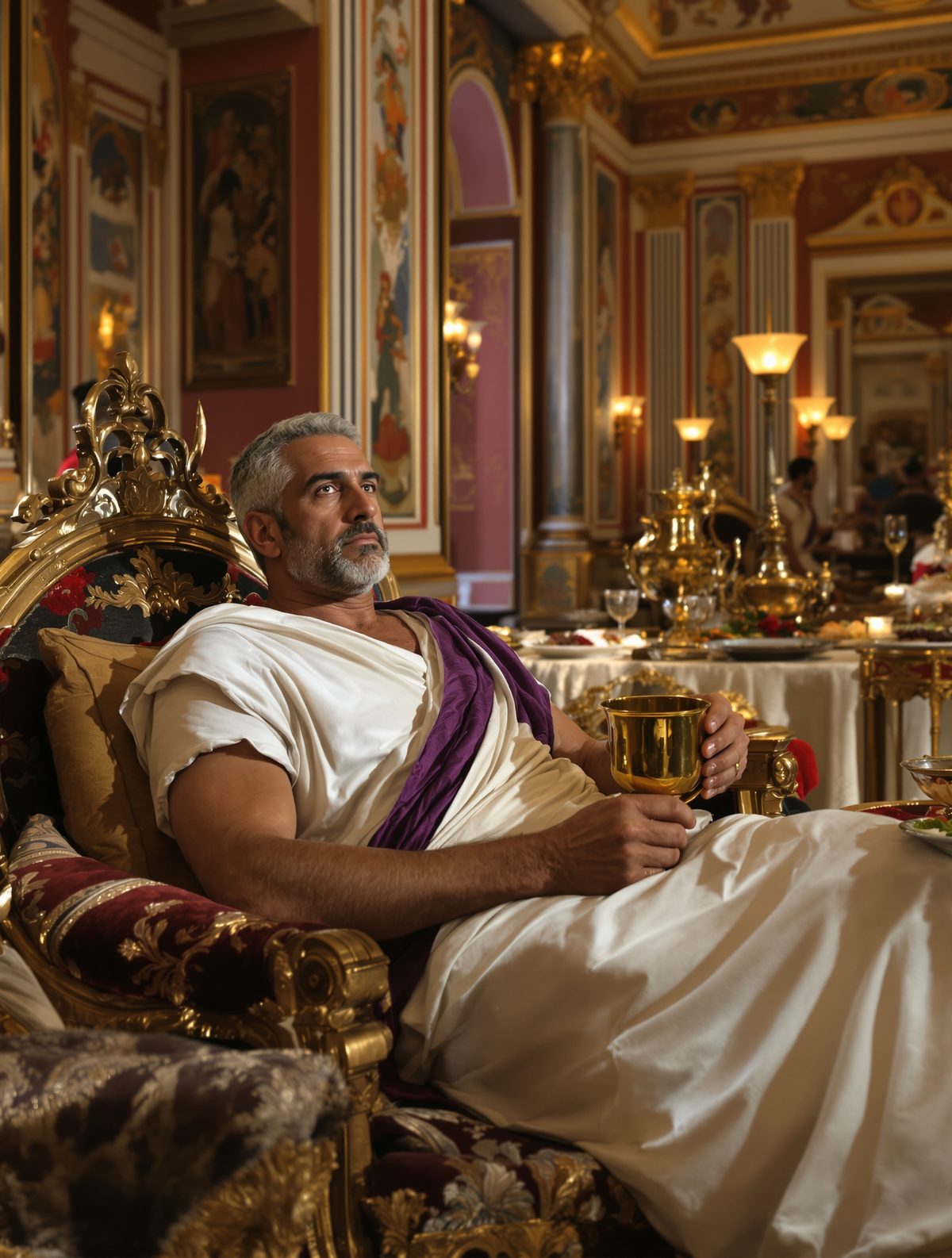
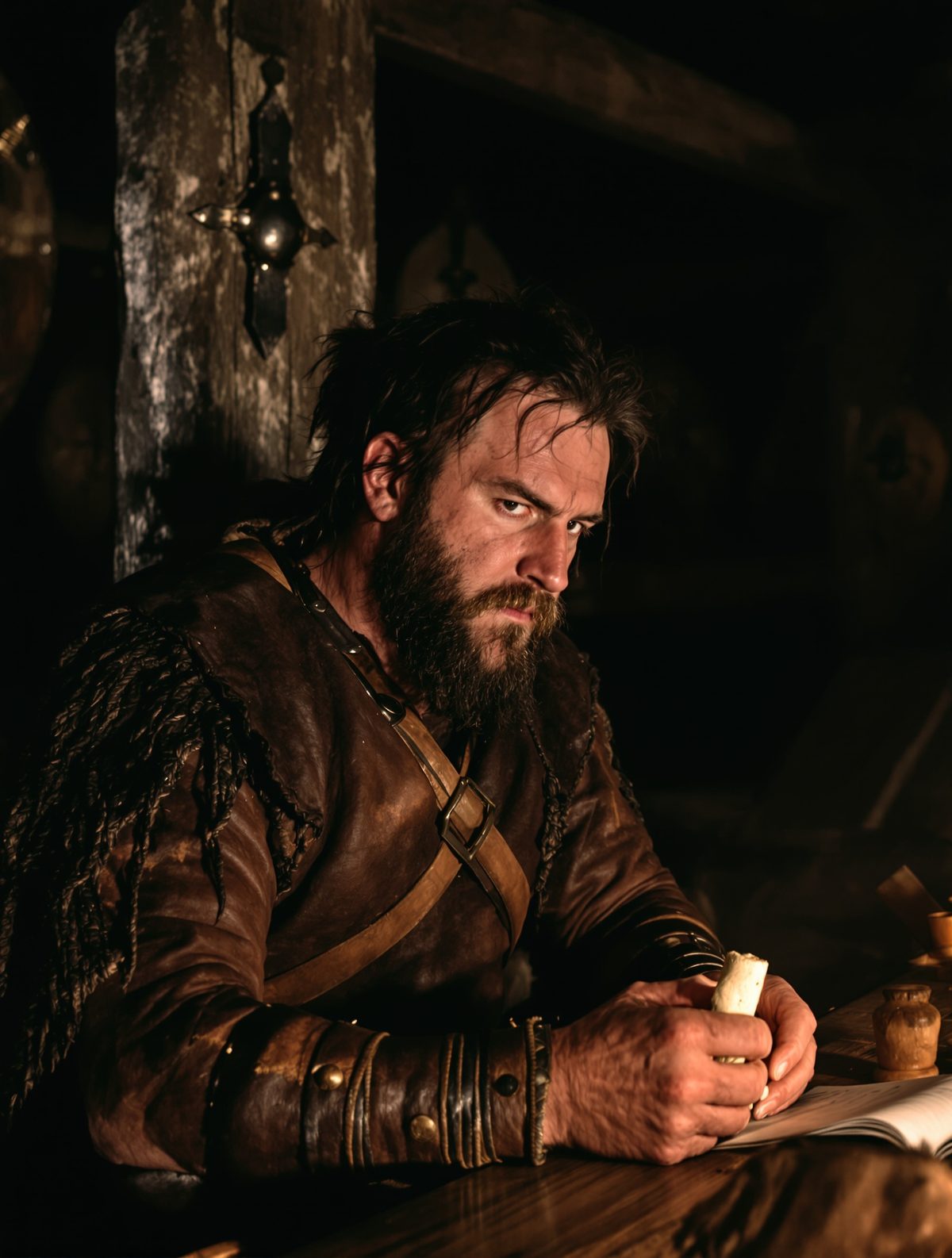
The crowd fell silent as the wooden rods whistled through the air, again and again, until the bodies of two young men lay motionless in the Roman Forum. What made this execution extraordinary wasn't just the brutality—it was the man who ordered it. Lucius Junius Brutus, Rome's first consul, had just watched his own sons die by his command. Their crime? Plotting to restore the very monarchy he had overthrown to create the Roman Republic. In that blood-soaked moment in 509 BC, Brutus chose Rome over family, duty over love, and forever changed the course of Western civilization.
This isn't the story of the more famous Brutus who stabbed Julius Caesar. This is about his ancestor—a man who literally founded the Roman Republic and then paid the ultimate price to preserve it. It's a tale that reveals the terrifying lengths Romans would go to defend their principles, even when it meant sacrificing their own children.
The Man Who Played the Fool to Topple a King
Lucius Junius Brutus lived a lie for years, and that lie saved his life. Born into the noble Junii family around 545 BC, Brutus had every reason to fear King Lucius Tarquinius Superbus—Tarquin the Proud. The paranoid monarch had already murdered Brutus's father and brother, viewing them as threats to his power. So Brutus did something brilliant: he pretended to be an idiot.
The name "Brutus" itself means "dullard" or "stupid" in Latin, and our hero played the part perfectly. He shuffled around the royal court, drooling and mumbling, acting like a harmless fool while secretly observing everything. Tarquin kept him around as a source of entertainment, never suspecting that behind those vacant eyes lurked one of Rome's sharpest political minds.
This charade lasted for years, until 509 BC, when Tarquin's son Sextus Tarquinius committed an act so heinous it would topple a dynasty. Sextus raped Lucretia, the virtuous wife of nobleman Lucius Tarquinius Collatinus. When Lucretia told her husband and father what had happened, she plunged a dagger into her own heart, declaring that no woman should use her example to justify living in dishonor.
It was then that Brutus dropped his mask forever. He pulled the bloody knife from Lucretia's chest, held it aloft, and swore a sacred oath that he would drive the Tarquins from Rome and never allow another king to rule the city. The fool had revealed himself to be a revolutionary.
Birth of a Republic Through Blood and Betrayal
What followed was a masterclass in political revolution. Brutus didn't just rally the nobles—he understood that real change required the people's support. He carried Lucretia's body through the streets of Rome, telling her story to anyone who would listen. The sight of the beautiful, innocent woman who had died rather than live with dishonor inflamed the Roman people like nothing before.
Within days, Brutus had organized a full-scale revolt. He marched on the gates of Rome with an army of citizens and soldiers, while Tarquin was away besieging the city of Ardea. When the king rushed back to reclaim his throne, he found the gates barred against him. The Roman people, led by their former court fool, had declared the monarchy dead.
But Brutus wasn't content to simply overthrow a tyrant—he wanted to create something entirely new. In 509 BC, he helped establish the Roman Republic, a system where power would be shared between elected officials rather than concentrated in a single ruler. He became one of Rome's first two consuls, sharing power with Lucretia's husband, Collatinus. It was a radical experiment that would eventually inspire democracies around the world, including the United States over two millennia later.
The Romans were so determined never to suffer under another king that they made the word "rex" (king) a curse. Anyone who sought to make himself king could be killed on the spot by any citizen—no trial necessary. This wasn't just political theater; it was a sacred vow written in blood and upheld by death.
When Revolution Comes Home: The Sons' Conspiracy
But revolutions create enemies, and Tarquin the Proud wasn't finished with Rome. Exiled but not defeated, the former king began plotting his return from his refuge in Etruria. He found willing allies among Rome's patrician families—nobles who missed the old ways and the privileges that came with royal favor.
The conspiracy that emerged was sophisticated and far-reaching. Secret meetings were held in aristocratic homes, coded messages were passed between sympathizers, and plans were laid to open Rome's gates to Tarquin's forces. The conspirators believed they could quickly overwhelm the new government and restore the monarchy before the people could react.
What they didn't count on was being discovered. Roman historians tell us that slave messengers were caught carrying incriminating letters between the conspirators and the exiled king. When these documents were brought before the consuls, they revealed not just the scope of the plot, but the names of the traitors.
Among those names were Titus and Tiberius, the sons of Lucius Junius Brutus himself.
Imagine Brutus's shock as he read his own sons' names among the conspirators. These weren't distant relatives or political allies who had betrayed him—these were the young men he had raised, taught, and loved. They had grown up in privilege under the old system and apparently couldn't adapt to their father's new Republic where noble birth didn't guarantee power.
Justice Without Mercy: A Father's Terrible Choice
What happened next reveals everything about Roman character and the brutal consistency of their moral code. As consul, Brutus was responsible for judging the conspirators. Roman law was clear: treason against the state demanded death. There were no exceptions for youth, for ignorance, or for family connections.
The trial was held in the Forum Romanum, the beating heart of Roman political life. Citizens packed the space between the great temples and government buildings, eager to see how their new Republic would handle its first great test. Would Brutus show mercy to his own blood? Would family loyalty trump justice? The answer would determine whether the Republic was real or just another form of aristocratic privilege.
Contemporary accounts describe Brutus sitting in his curule chair—the ivory seat of consular authority—his face like carved stone as the evidence was presented. Slaves testified about the messages they had carried. The treasonous letters were read aloud, including those bearing his sons' seals. Other conspirators confessed and implicated Titus and Tiberius.
Through it all, Brutus remained silent. Roman historians noted that his expression never changed, even when his sons were brought forward in chains. He didn't speak to them, didn't offer them a chance to explain or beg for mercy. In his mind, the moment they chose Tarquin over the Republic, they ceased to be his children and became enemies of Rome.
When the evidence was complete, Brutus rose and pronounced the sentence in a voice that carried across the silent Forum: death by beating with rods, followed by beheading. The crowd gasped. Even in a society that prized duty above all else, this was shocking.
The Execution That Shocked Rome
What made the scene even more horrifying was that Brutus didn't delegate the execution to subordinates—he watched every moment. The Roman historian Livy wrote that Brutus's face showed "the father's feelings" but never wavered in his resolve. As consul, he had sworn to protect the Republic, and not even paternal love would make him break that oath.
The lictors—the officials who served as bodyguards and executioners for Roman magistrates—carried out the sentence immediately. First came the beating with wooden rods, a brutal punishment that often killed victims before the final beheading. Then the executioner's axe fell, and Titus and Tiberius Brutus died as traitors to the Republic their father had created.
The crowd's reaction was complex and telling. Many wept—not just for the young men who died, but for the father who had to watch. Others nodded grimly, understanding that this terrible moment proved the Republic's laws applied to everyone, even the most powerful families. Still others wondered if Brutus had become a monster, sacrificing natural human feeling for cold political calculation.
But perhaps the most remarkable detail comes from the Roman sources themselves: after the execution, Brutus returned to his duties as consul as if nothing had happened. He didn't mourn publicly, didn't seek sympathy, didn't even mention his sons' names again. He had made his choice, and he would live with the consequences without complaint.
Legacy Written in Blood: Why This Moment Changed History
The execution of Brutus's sons became one of Rome's foundational myths—a story Romans told their children to explain what it meant to be Roman. It established the principle that no one, not even the founder's family, stood above the law. This wasn't just political propaganda; it became the core value that allowed the Republic to survive and eventually dominate the Mediterranean world.
For over 400 years, Romans would invoke Brutus's example whenever they faced the temptation to put personal interests above the state. When Cicero fought against Mark Antony, when Cato chose suicide rather than submit to Caesar, when countless other Romans chose duty over comfort, they were following the path Brutus had carved with his sons' blood.
The irony is almost overwhelming: Brutus created the Republic by destroying monarchy, then preserved it by destroying his own family. His descendant, Marcus Junius Brutus, would centuries later kill Julius Caesar while shouting about preserving that same Republic—though by then, the old values had been corrupted beyond recognition.
Today, we struggle to understand this kind of absolute commitment to abstract principles. We live in an age that prioritizes personal relationships and individual happiness over institutional loyalty. The idea of executing your own children for political crimes seems not just harsh but psychopathic. Yet Brutus's choice created the political system that would eventually inspire the American Constitution, the separation of powers, and the very concept of republican government.
Perhaps the most chilling aspect of this story is how it reveals the true cost of political transformation. Revolutions don't just change laws and leaders—they tear apart families, friendships, and the basic human connections that make life meaningful. Brutus paid the ultimate price for his Republic: he traded his humanity for his principles and spent the rest of his life living with that choice. Whether that trade was worth it depends on how much you value the civilization that grew from his sacrifice.