The firelight flickered across the stone walls of York's royal hall as one of history's most feared Viking warriors knelt in chains before his greatest enemy. Outside, the English winter of 948 AD howled through the streets, but inside, the tension was suffocating. Egil Skallagrimsson—poet, killer, and legend—had finally been captured by King Erik Bloodaxe, the man whose son he had slaughtered in battle. Dawn would bring the executioner's axe. But as the night stretched ahead, Egil would attempt something that had never been tried before: saving his life with nothing but words.
What happened next would become one of the most extraordinary tales in Viking saga literature—a story where poetry proved mightier than the sword, and where the ancient Norse tradition of verse-making literally meant the difference between life and death.
The Warrior-Poet Who Terrorized Two Kingdoms
To understand the magnitude of this moment, you need to know who Egil Skallagrimsson really was. Born around 910 AD in Iceland, Egil wasn't just another Viking raider—he was a walking contradiction that embodied the complex soul of Norse culture. Standing over six feet tall with a massive frame and a famously ugly face, he was as comfortable wielding a battle-axe as he was crafting intricate verses in his head.
By age seven, Egil had already killed his first man in a fit of rage over a ball game. By twenty, he was composing sophisticated poetry that would be remembered for centuries. This wasn't unusual in Viking society—the greatest warriors were often the most accomplished poets. But Egil took both arts to terrifying extremes.
His feuds were legendary and bloody. He had carved a path of destruction across Norway and the British Isles, accumulating enemies like other men collected silver. But his greatest mistake came during a raid in Norway, when he killed Harek, the beloved son of King Erik Bloodaxe. From that moment, Egil became a marked man, hunted across the North Sea by one of the most powerful rulers in Scandinavia.
What makes this even more dramatic is that Erik Bloodaxe wasn't just any king—he was the exiled former King of Norway, now ruling the Viking kingdom of Northumbria from his stronghold in York. Brutal, cunning, and absolutely ruthless, Erik had earned his nickname through decades of violence. He had killed his own brothers to secure the Norwegian throne, only to be driven out and forced to establish his rule in northern England. A man like this didn't forgive, and he certainly didn't forget.
The Storm That Changed Everything
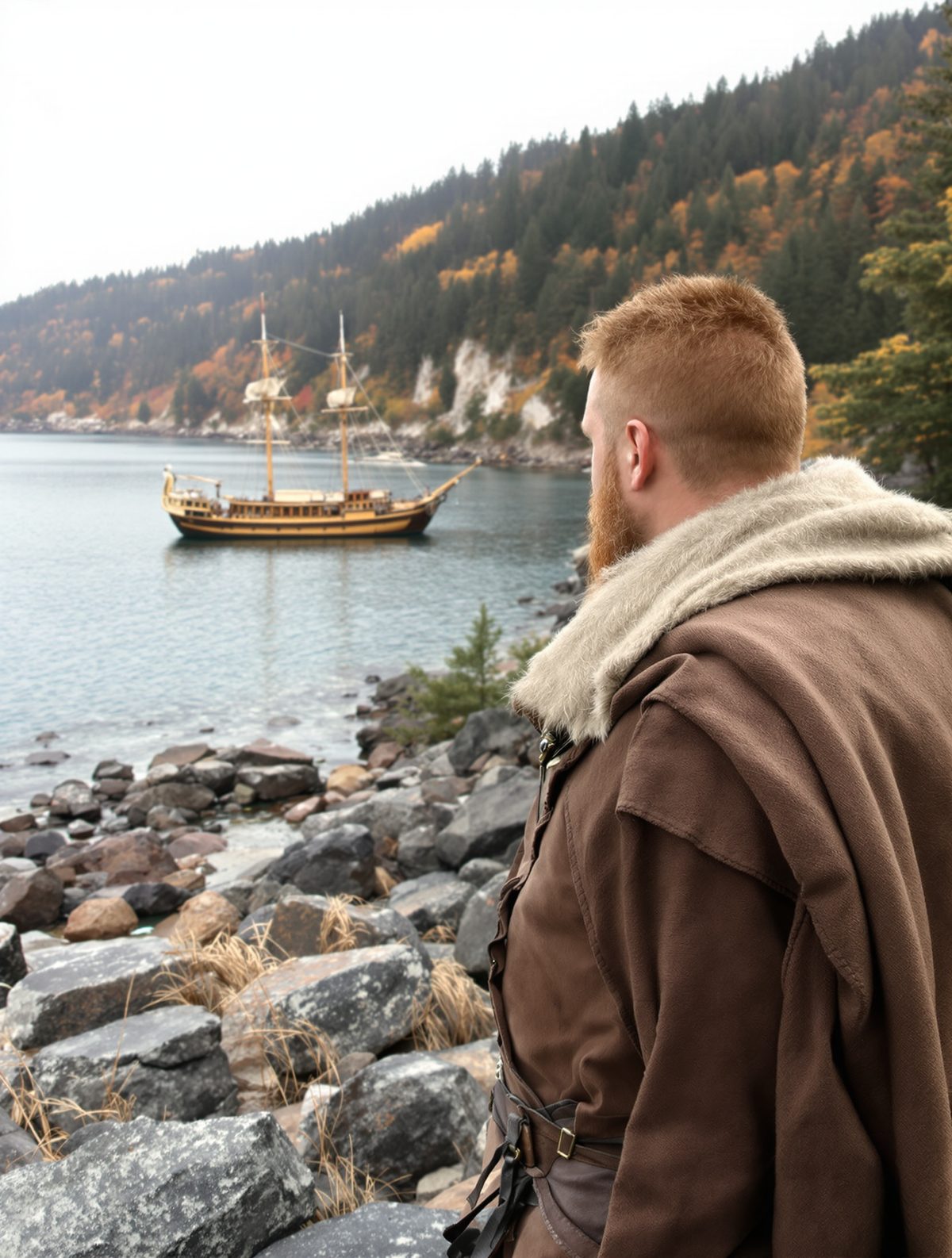
Fate has a cruel sense of timing. In 948 AD, Egil was sailing back to Iceland from a successful raiding season when a violent North Sea storm shattered his plans. His longship, battered by towering waves and screaming winds, was driven far off course. When the storm finally cleared, Egil found himself on the worst possible shore—the coast of Northumbria, deep in Erik Bloodaxe's territory.
Any sensible man would have tried to repair his ship quietly and escape under cover of darkness. But Egil Skallagrimsson was never accused of being sensible. Instead, he made a decision that seemed like madness: he would go directly to York and face his enemy head-on.
This wasn't bravery—it was strategic calculation mixed with Viking pride. Egil knew that Erik's men were already scouring the coast for him. Running would only delay the inevitable and make him look like a coward. Better to control the terms of the encounter and hope that the ancient laws of hospitality might offer some protection.
He was wrong.
The moment Egil Skallagrimsson walked into Erik's hall, weapons were drawn and chains were brought. There would be no hospitality for the man who had killed the king's son. Erik's wife, Queen Gunnhild—herself a sorceress of fearsome reputation—demanded immediate execution. The hall erupted in bloodthirsty cheers as Erik pronounced the sentence: death at dawn.
One Night, One Chance, One Impossible Gamble
As Egil was dragged to his prison, something remarkable happened. Arinbjorn the Generous, one of Erik's most trusted advisors and Egil's old friend from earlier days, stepped forward with a desperate plea. He couldn't openly defy his king, but he could invoke an ancient Norse tradition: the right of a condemned poet to compose a praise-poem for his executioner.
It was a long shot that bordered on the absurd. The tradition existed, but it had never been used by someone who had personally wronged the king. Erik had every reason to refuse and every right to order immediate execution. But perhaps curiosity got the better of him, or perhaps some part of him wanted to hear what the greatest poet-warrior of his generation might create when facing death.
Erik agreed to the delay, but with conditions that made the challenge almost impossible. Egil would have one night—and one night only. He would compose a complete drápa, a formal praise-poem of at least twenty stanzas, dedicated to the glory of Erik Bloodaxe. If the poem was deemed worthy, his life would be spared. If not, he would die with the sunrise.
Here's what makes this truly extraordinary: Egil would have to praise the man he despised most in the world, using the most complex poetic form in Old Norse literature, while chained in a freezing prison cell, knowing that his life hung on every carefully chosen word.
The drápa wasn't just poetry—it was verbal architecture. Each stanza had to follow intricate rules of alliteration, rhythm, and meaning. The language was deliberately cryptic, filled with elaborate metaphors called kennings that transformed simple concepts into riddling phrases. A warrior wasn't just a warrior—he was a "feeder of ravens" or "reddener of swords." The sea became "the whale-road," and gold became "the serpent's bed."
The Hofudlausn: The Head-Ransom That Made History
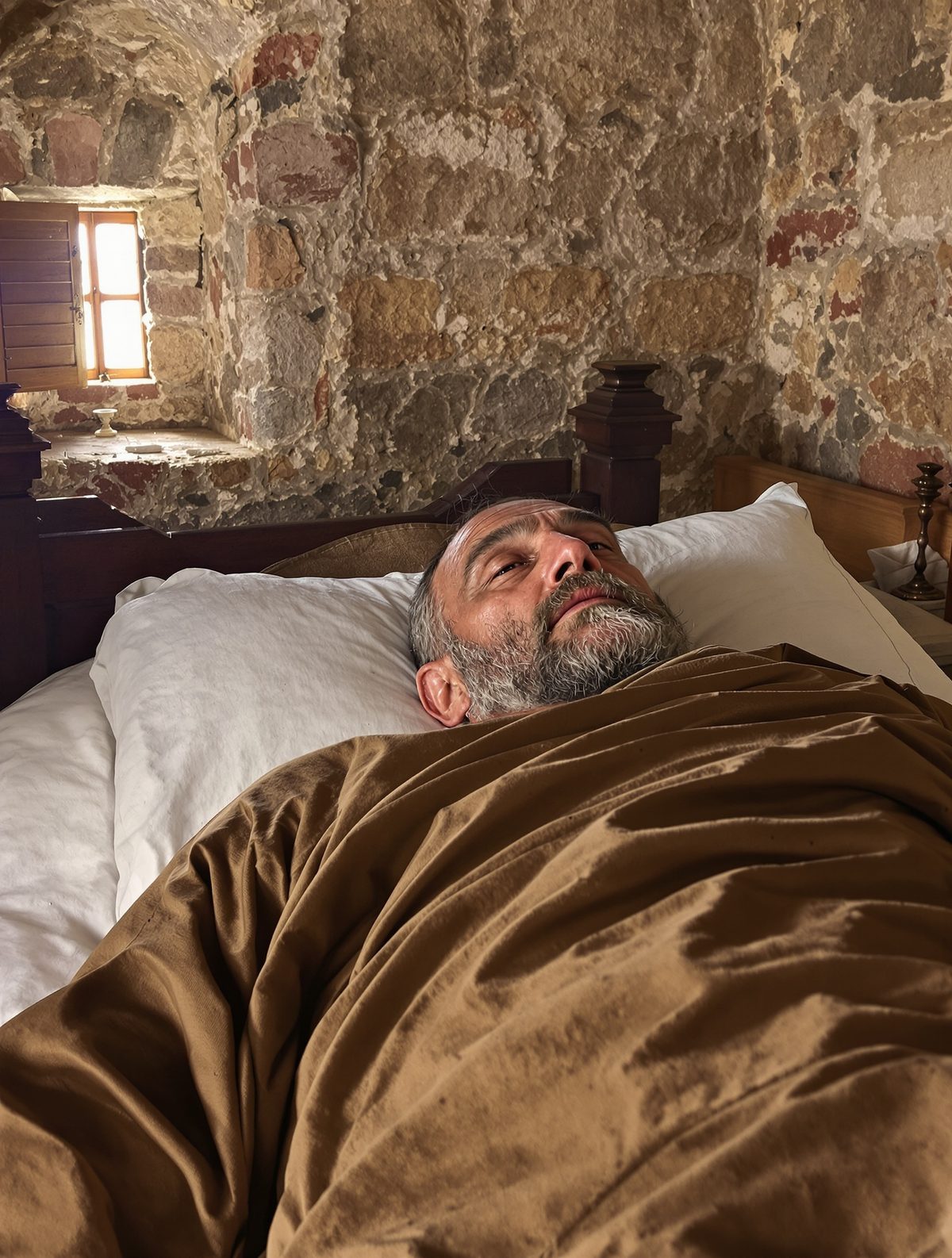
What Egil created that night was nothing short of miraculous. Working by the dim light of a single candle, fighting exhaustion and terror, he crafted twenty stanzas that would become known as the Hofudlausn—literally, "The Head-Ransom." The poem was a masterpiece of psychological manipulation disguised as royal praise.
Every line walked a razor's edge between sincerity and survival. Egil praised Erik's prowess in battle, his generosity to his followers, his wisdom in leadership. But he did it with such skill, such genuine artistry, that the words transcended their desperate purpose and became something approaching truth. He called Erik "the unflinching tree of battle" and "the generous ring-giver who gladdens his men."
The most brilliant stroke was how Egil wove his own story into the praise. He acknowledged his crimes but framed them within the context of warrior honor. He had killed Erik's son in fair combat, as warriors do. He had come to York not in surrender but in recognition of Erik's superior power. Every confession became a compliment, every admission of guilt became praise for Erik's justice.
But here's the detail that will give you chills: according to the saga, Egil was so focused on getting the poem perfect that he actually forgot about his impending death. For those hours before dawn, he was completely absorbed in the craft itself—the eternal struggle of finding exactly the right word, the perfect rhythm, the most elegant solution to an impossible puzzle.
Dawn, Poetry, and the Power of Words
As the first light crept through the windows of Erik's hall, Egil was brought forward in chains to face his judgment. The court assembled—hardened Vikings who had seen every form of violence and treachery imaginable. Queen Gunnhild sat beside her husband, still demanding blood for blood.
Then Egil began to recite.
The effect was immediate and electric. His voice, trained by years of composing verse and delivering it in the acoustically perfect longhouses of Iceland, filled every corner of the hall. The complex rhythms and intricate wordplay that defined skaldic poetry became music in his mouth. Even men who came expecting to see an execution found themselves leaning forward to catch every syllable.
The saga tells us that by the time Egil reached the final stanza, tears were streaming down Erik Bloodaxe's face. This man who had killed his own brothers, who had earned his crown through ruthless violence, who had been driven from his homeland and forced to carve out a new kingdom with sword and fire—this man was moved to weeping by the sheer beauty of his enemy's words.
When the last echoes faded, Erik rose from his throne. The sentence was commuted. Egil Skallagrimsson would live—but he had to leave Northumbria immediately and never return. Poetry had literally saved his life.
The Echoes That Never Die
Egil returned to Iceland, where he lived for another thirty years, continuing to compose poetry and fight battles until his death around 990 AD. The Hofudlausn became one of the most celebrated poems in Old Norse literature, studied and memorized by generations of scholars and poets. But its significance goes far beyond literary history.
This story reveals something profound about Viking culture that popular media consistently gets wrong. These weren't just mindless berserkers swinging axes—they were people who believed that words could be as powerful as weapons, that beauty could triumph over brutality, that even in the darkest moments, art could change everything.
In our age of Twitter storms and viral videos, when words can destroy careers in minutes and poetry seems increasingly irrelevant, there's something deeply moving about a world where verbal artistry could literally mean the difference between life and death. Egil's gamble reminds us that language, at its highest level, isn't just communication—it's transformation.
The next time someone tells you that poetry doesn't matter in the "real world," remember that winter night in York when the most feared warrior in Iceland bet his life on twenty stanzas—and won.