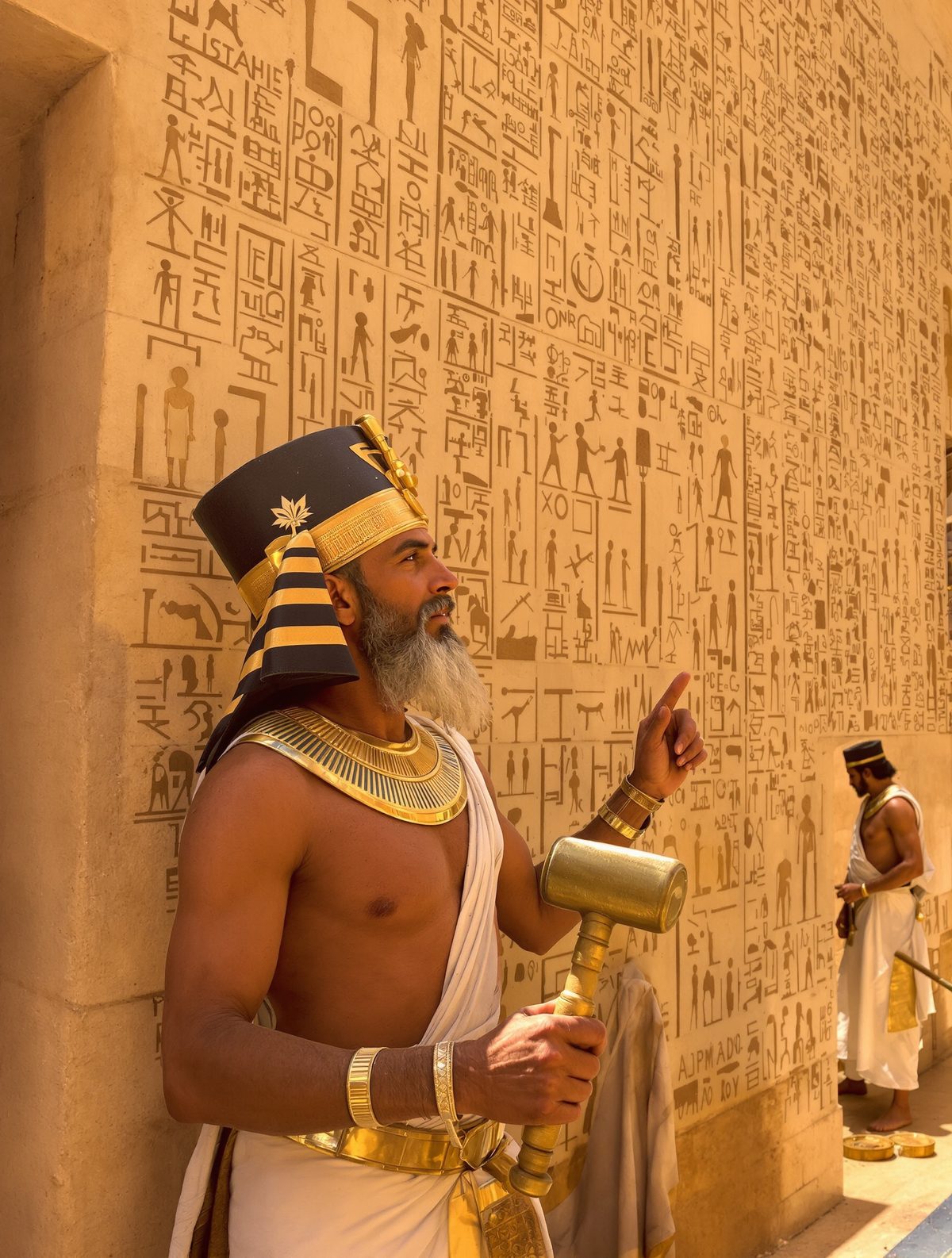
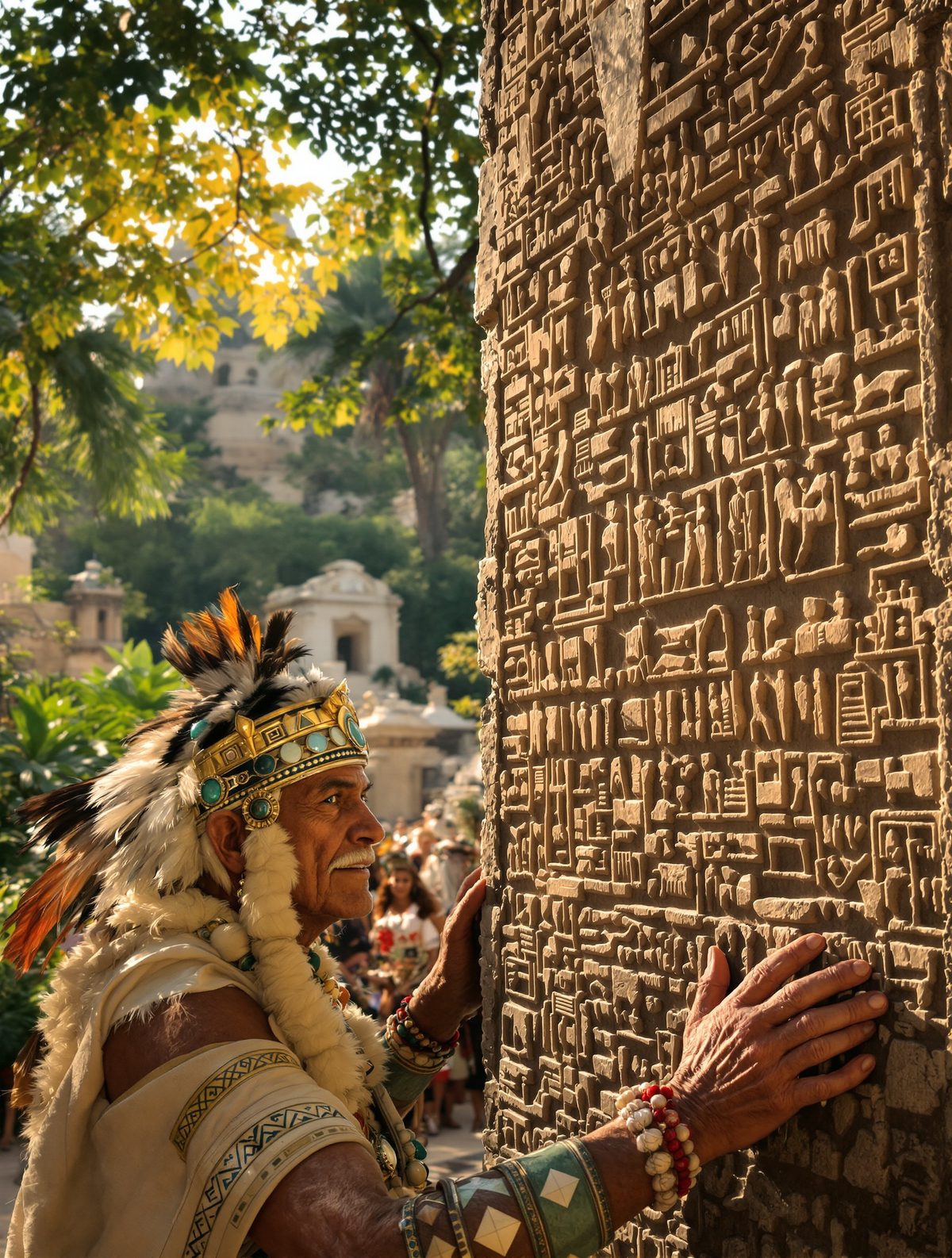
Picture this: In the dead of night, beneath the flickering light of oil lamps, hundreds of workers hammer away at solid volcanic rock with primitive tools. But they're not building upward toward the heavens like every other civilization in history. Instead, they're carving downward, deeper and deeper into the earth itself, following the fevered vision of a king who claims angels whispered architectural secrets in his dreams. The year is 1200 AD, and in the highlands of Ethiopia, something unprecedented is taking shape—or rather, taking shape by being carved away.
What emerged from this audacious 24-year construction project would defy everything we think we know about medieval architecture. Eleven churches, each carved entirely from a single piece of volcanic rock, connected by a maze of tunnels and trenches that mirror the sacred geography of Jerusalem itself. This is the story of King Lalibela, the ruler who turned his kingdom into a pilgrimage destination so magnificent that people still struggle to believe human hands could have created it.
The King Who Spoke With Angels
Gebre Mesqel Lalibela wasn't supposed to rule Ethiopia. Born around 1160 AD as the younger brother of King Kedus Harbe, he seemed destined for a life in the shadows of power. But according to Ethiopian Orthodox tradition, divine intervention had other plans. Legend tells us that when Lalibela was just an infant, his mother found him surrounded by a swarm of bees—a sign, she believed, that he would one day become king. The name "Lalibela" itself means "the bees recognize his sovereignty."
The prophecy proved remarkably accurate. After years of political intrigue and exile—including a period where his jealous brother allegedly tried to poison him—Lalibela ascended to the throne around 1185 AD. But it was during his exile that the most extraordinary chapter of his story supposedly began. Ethiopian chronicles record that Lalibela was transported to heaven in a divine vision, where angels showed him detailed architectural plans for a "New Jerusalem" that would serve Ethiopian Christians who couldn't make the pilgrimage to the real Jerusalem, then under Muslim control following Saladin's conquest in 1187.
What makes this story even more remarkable is the specificity of these alleged divine blueprints. The angels didn't just tell Lalibela to build churches—they showed him exactly how to carve them from living rock, complete with precise measurements, decorative details, and even the complex drainage systems that would prevent the structures from flooding during Ethiopia's rainy seasons. Whether divine inspiration or simply brilliant engineering, someone had thought through every detail of this impossible project.
Carving Heaven From Stone
When Lalibela returned to his kingdom around 1200 AD, he immediately set his most audacious plan into motion. Rather than constructing buildings in the traditional manner, he ordered his workers to begin carving directly downward into the area's volcanic bedrock—a type of soft, red volcanic tuff that was workable with medieval tools but strong enough to create lasting structures.
The logistics alone should have been impossible. Workers had to first remove thousands of tons of rock just to reach the depths where the churches would be carved. They used fire to heat the rock, then doused it with cold water to create cracks, allowing them to chip away massive blocks with hammers and chisels. Every piece of decorative carving, every window, every pillar had to be cut away from the surrounding stone with painstaking precision—because unlike traditional construction, there were no second chances. One mistake could ruin years of work.
But here's what makes the achievement even more staggering: recent archaeological analysis has revealed that the churches weren't carved haphazardly. The entire complex was planned as a unified whole, with sophisticated underground drainage systems, hidden passageways connecting different churches, and careful attention to acoustics that allowed priests' chants to carry perfectly throughout the structures. This wasn't the work of enthusiastic amateurs—this required engineering knowledge that wouldn't look out of place in a modern architectural firm.
Ethiopian tradition holds that the work continued around the clock, with angels taking over construction duties at night while the human workers slept. Skeptical historians might dismiss this as folklore, but there's an undeniable mystery in how workers using 13th-century technology managed to carve such intricate details in spaces barely large enough for a person to maneuver, working entirely by torchlight in chambers carved deep into solid rock.
The Crown Jewel: Bet Giyorgis
Of all Lalibela's rock-hewn churches, none captures the imagination quite like Bet Giyorgis—the Church of Saint George. Carved in the shape of a perfect Greek cross and standing 40 feet tall, it represents the absolute pinnacle of the rock-carving art. But Bet Giyorgis almost didn't exist at all.
According to local tradition, King Lalibela had completed his other ten churches when Saint George himself appeared to him in a vision, expressing displeasure that no church had been dedicated to him—Ethiopia's patron saint. The saint allegedly promised that if Lalibela built him a church more beautiful than all the others, it would ensure the king's place in heaven. Lalibela accepted the challenge, and his craftsmen spent several additional years creating what many consider the most perfect example of rock-hewn architecture in the world.
What makes Bet Giyorgis so extraordinary isn't just its perfect symmetry or the intricacy of its carved windows and doors. It's the fact that the entire structure—including decorative elements that appear to be separate architectural features—is carved from a single, monolithic piece of volcanic rock. The church sits in a deep pit carved into the bedrock, surrounded by trenches and connected to other churches by tunnels that visitors can still walk through today.
Modern engineers who have studied the structure remain baffled by certain aspects of its construction. The precision of the measurements, the sophisticated understanding of structural engineering required to ensure the church wouldn't collapse under its own weight, and the advanced drainage systems that have kept it dry for over 800 years all suggest a level of technical knowledge that challenges our assumptions about medieval African capabilities.
A Pilgrimage Site That Rivaled Jerusalem
Lalibela's gamble paid off spectacularly. By the time construction was completed around 1224 AD, his "New Jerusalem" had become one of Christianity's most important pilgrimage destinations. Ethiopian Christians who couldn't make the dangerous journey to the real Jerusalem now had an alternative that offered spiritual benefits while showcasing the remarkable achievements of their own civilization.
The site's layout wasn't arbitrary—it was designed to mirror the sacred geography of Jerusalem itself. The churches are divided into two main groups, representing earthly and heavenly Jerusalem, separated by a stream called the River Jordan. Pilgrims follow specific routes between the churches that recreate the journey of Christ, complete with symbolic stops that correspond to important biblical locations.
But Lalibela's creation served purposes beyond religious devotion. In an era when European Crusaders viewed Africa as a land of primitive peoples waiting for enlightenment, these magnificent churches provided undeniable proof of African architectural and engineering sophistication. Medieval European travelers who visited the site returned home with reports so extraordinary that many of their contemporaries refused to believe them.
The churches also helped establish Ethiopia's position as a major power in medieval Christianity. While European Christians were losing ground to Muslim expansion in the Holy Land, Ethiopian Christianity was creating monuments that demonstrated both faith and technical mastery. The site attracted pilgrims, scholars, and diplomats from across the Christian world, turning Lalibela's kingdom into an important center of medieval international relations.
Mysteries That Endure
More than 800 years after their completion, the rock-hewn churches of Lalibela continue to confound historians and archaeologists. Recent studies using ground-penetrating radar have revealed that the visible churches may represent only a fraction of what lies beneath the surface—there appear to be additional chambers, tunnels, and possibly even undiscovered churches still hidden in the bedrock.
Perhaps more intriguingly, some researchers have noted architectural and decorative elements that seem to draw inspiration from traditions far beyond medieval Ethiopia. Certain carved motifs resemble patterns found in ancient Egyptian temples, while some structural techniques appear similar to those used in Byzantine architecture. How did medieval Ethiopian craftsmen gain access to such diverse architectural knowledge? The answer remains one of history's tantalizing mysteries.
Carbon dating of organic materials found within the churches has also produced some puzzling results, with some samples suggesting construction dates that don't align perfectly with the traditional timeline of Lalibela's reign. While this might simply reflect the long construction period or later renovations, it has led some researchers to wonder whether the churches' origins might be even more complex than the already extraordinary official story suggests.
Why Lalibela Still Matters Today
In our current era of technological marvels and architectural wonders, it's easy to dismiss medieval achievements as quaint relics of a simpler time. But Lalibela's rock-hewn churches offer us something more valuable than historical curiosity—they provide a powerful reminder that human ingenuity and determination have always found ways to accomplish the seemingly impossible.
These churches also challenge us to reconsider our assumptions about medieval Africa and the global development of architectural knowledge. At a time when European cathedral builders were pushing the limits of upward construction, Ethiopian craftsmen were pioneering an entirely different approach that required equal measures of engineering skill and artistic vision. The fact that these structures have survived eight centuries of earthquakes, warfare, and weather without significant structural damage speaks to a level of technical sophistication that deserves recognition alongside humanity's other great architectural achievements.
Today, as Ethiopia's rock-hewn churches continue to serve their original religious function while also attracting thousands of visitors from around the world, they stand as testament to the enduring power of visionary leadership combined with masterful execution. King Lalibela's dream of creating a New Jerusalem succeeded beyond even his own ambitious expectations, leaving behind a legacy that continues to inspire wonder and challenge our understanding of what human hands can accomplish when guided by unwavering purpose.
Perhaps most importantly, Lalibela reminds us that the most extraordinary achievements often come from those willing to imagine entirely new approaches to old problems. Sometimes, the path to heaven isn't about building higher—it's about digging deeper and finding the sacred in the very ground beneath our feet.