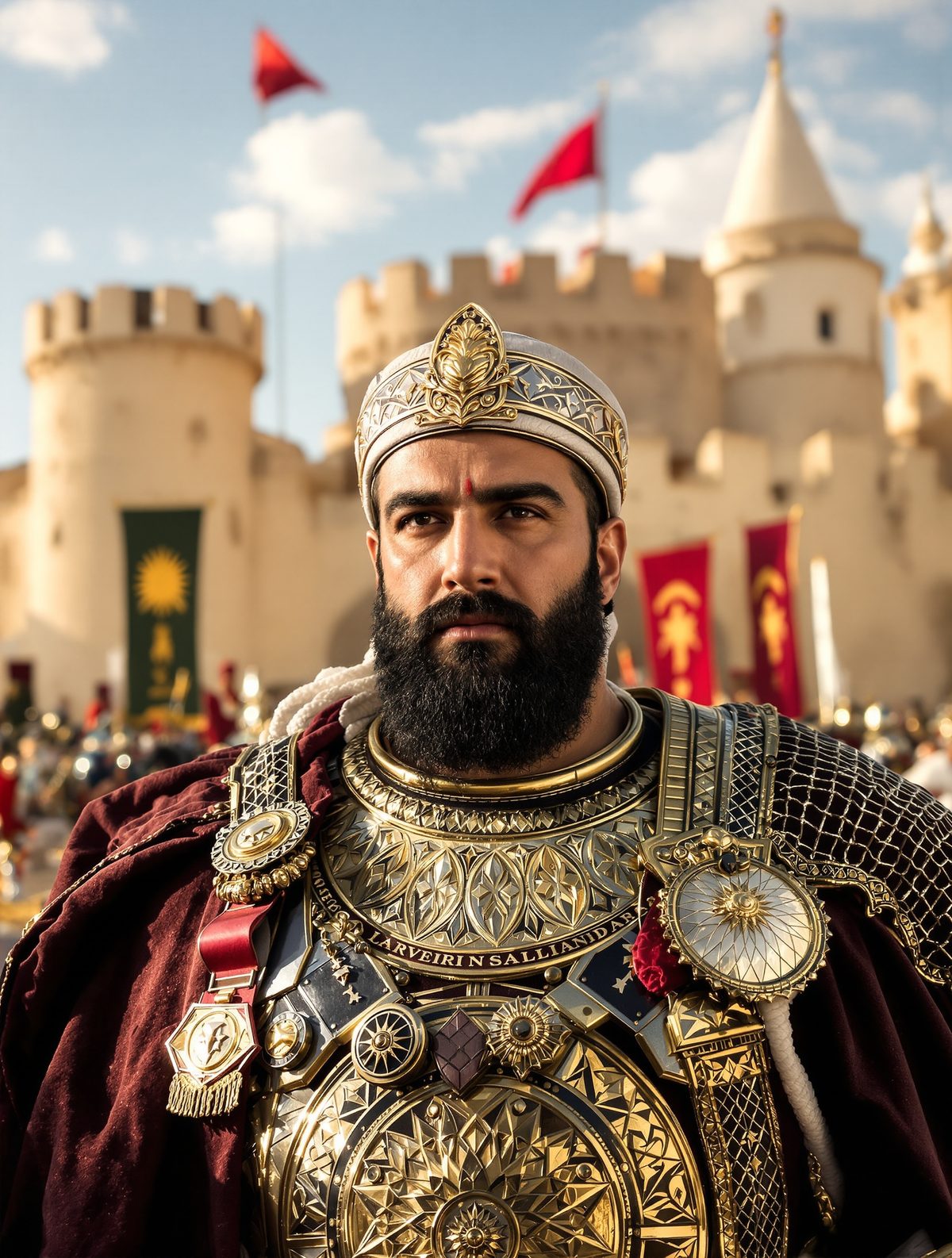
Picture this: It's 2580 BC, and the most ambitious construction project in human history is grinding to a halt. Twenty-three years into building what would become the last surviving Wonder of the Ancient World, Pharaoh Khufu faces an impossible choice. His royal treasury—once overflowing with gold from Nubian mines—sits empty. His pyramid, meant to carry him into eternal glory, stands unfinished. In the shadow of half-completed limestone blocks, the god-king of Egypt contemplates a decision so scandalous it would echo through history for over four millennia.
What happens next depends on who you ask. But according to the "Father of History" himself, Herodotus, Khufu made a choice that would make even modern tabloids blush: he sent his own daughter into prostitution to fund his pyramid's completion.
When Gods Run Out of Gold
To understand the magnitude of Khufu's alleged decision, you need to grasp just how monumentally expensive the Great Pyramid was. This wasn't just a tomb—it was a 481-foot-tall statement of divine power, requiring an estimated 2.3 million stone blocks, each weighing between 2.5 and 15 tons. The logistics alone would make modern project managers weep.
For over two decades, an army of workers—recent archaeological evidence suggests skilled laborers rather than slaves—had been fed, housed, and paid. Conservative estimates put the workforce at 20,000 people during peak construction seasons. These weren't volunteers working for the glory of pharaoh; they expected bread, beer, meat, and wages. Recently discovered workers' villages near the Giza complex reveal a sophisticated operation complete with bakeries producing 4,000 loaves daily and breweries working around the clock.
The financial drain was astronomical. Egypt's wealth, built on the fertile Nile floods and trade routes connecting Africa to the Mediterranean, was being poured into a single project. Copper tools wore out and needed constant replacement. Massive granite blocks had to be quarried at Aswan, 500 miles south, then floated down the Nile on specially constructed barges. The precision-cut limestone facing stones—most now lost to later construction projects—came from Tura quarries across the river, requiring another massive transport operation.
By year 23 of his reign, Khufu found himself in an impossible position. Stop construction, and face the possibility of an incomplete tomb—essentially ensuring his soul would wander eternally without proper housing. Continue, and bankrupt the kingdom that his divine ancestors had entrusted to him.
The Courtesan Princess: Herodotus Tells All
Enter Herodotus of Halicarnassus, the Greek historian who visited Egypt around 450 BC—over 2,000 years after Khufu's death. During his travels, Egyptian priests regaled him with stories that had supposedly passed down through generations. One tale, in particular, captured his attention for its sheer audacity.
According to Herodotus's account in his Histories, when Khufu's treasury ran dry, the pharaoh made an announcement that shocked his court: his daughter would become a courtesan, selling her favors to wealthy nobles and foreign dignitaries. But this wasn't just any prostitution—this was strategic, high-end escort work designed to extract maximum wealth from Egypt's elite.
The unnamed princess, according to the story, didn't just passively accept her fate. Herodotus claims she demanded that each client bring her a stone block as payment in addition to gold. These stones, piled up over months or years of operation, eventually formed their own small pyramid—a 150-foot structure that archaeologists believe might be one of the three smaller pyramids that stand near the Great Pyramid today.
The image is both tragic and bizarrely entrepreneurial: a royal daughter, stripped of dignity but not ambition, building her own monument from the payment stones of her clients. It's the kind of story that seems too outrageous to be true—which is exactly why it might have been whispered in palace corridors for centuries.
The Economics of Ancient Scandal
If true, Khufu's decision would have been coldly practical. In the ancient world, high-class courtesans could command enormous fees, especially one with royal blood. Egypt's wealthy class included foreign ambassadors, successful merchants, high-ranking priests, and provincial governors—men with access to gold, silver, and precious stones that had bypassed the royal treasury.
Consider the mathematics: if the princess entertained just one wealthy client per week for a year, charging the equivalent of what a skilled worker might earn in six months, she could generate enough revenue to keep thousands of pyramid workers employed. The scandalous nature of the arrangement would likely have driven prices even higher—wealthy men paying premium rates for the ultimate forbidden experience.
But the true genius, according to Herodotus's account, was requiring stone blocks as additional payment. This ensured that the prostitution directly served the pyramid's completion rather than simply refilling the royal coffers for other expenses. Every transaction literally built toward Khufu's eternal monument.
The psychological impact on Egypt's elite would have been profound. Here was their god-king, a man they believed was divine, pimping out his own daughter to complete his tomb. It was either the most desperate act of a failing ruler or the most ruthless decision of a pharaoh who would stop at nothing to achieve immortality.
Truth, Lies, and Ancient Gossip
Modern historians approach Herodotus's tale with considerable skepticism, and for good reason. The Greek historian, while pioneering the field of historical inquiry, was also fond of sensational stories that entertained his audiences. His accounts of Egypt include tales of phoenix birds, gold-digging ants, and other colorful impossibilities.
More problematically, Herodotus was writing over two millennia after Khufu's death. The Egyptian priests who told him these stories were themselves separated from the pyramid's construction by dozens of generations. In a world without written records accessible to commoners, oral traditions had plenty of time to grow, mutate, and become embellished with each retelling.
Archaeological evidence doesn't support the bankruptcy narrative either. Recent discoveries suggest that pyramid construction was funded through a sophisticated system of taxation and corvée labor that drew resources from across Egypt's provinces. The kingdom remained prosperous throughout Khufu's reign and beyond. His pyramid was completed with elaborate burial chambers, suggesting no financial crisis interrupted the final phases.
Yet the story persisted for a reason. Perhaps it reflected later Egyptians' ambivalence about the enormous resources devoted to royal tombs. Or maybe it was political propaganda, designed to undermine the Fourth Dynasty's reputation during later periods when different pharaonic lines competed for legitimacy.
The Pyramid's Dark Legacy
Whether true or fabricated, the story of Khufu's desperate decision reveals something crucial about ancient Egypt's priorities—and perhaps our own. The Great Pyramid stands today as humanity's most enduring architectural achievement, but at what cost? Even if Herodotus's tale is pure fiction, it forces us to confront uncomfortable questions about the price of monumental ambition.
The real Khufu, based on limited contemporary evidence, appears to have been an effective ruler who governed Egypt for 23 years during a period of remarkable prosperity and artistic achievement. His pyramid, whatever its true cost, employed thousands of workers, advanced engineering techniques that influenced architecture for millennia, and created a monument that has inspired wonder for over 4,500 years.
But the persistence of Herodotus's scandalous tale suggests that even ancient peoples wondered whether such achievements were worth their human cost. In a world where divine kings commanded absolute obedience, the story of a pharaoh sacrificing his daughter's honor for architectural immortality served as a powerful reminder that unchecked ambition could corrupt even the gods.
Today, as we grapple with our own mega-projects and billionaire vanity monuments, Khufu's alleged choice resonates with uncomfortable relevance. How much are we willing to sacrifice—of our environment, our workers' dignity, our social fabric—to build monuments to power and ego? The Great Pyramid endures, magnificent and eternal. But so, apparently, do the questions about what we're willing to destroy in pursuit of immortality.