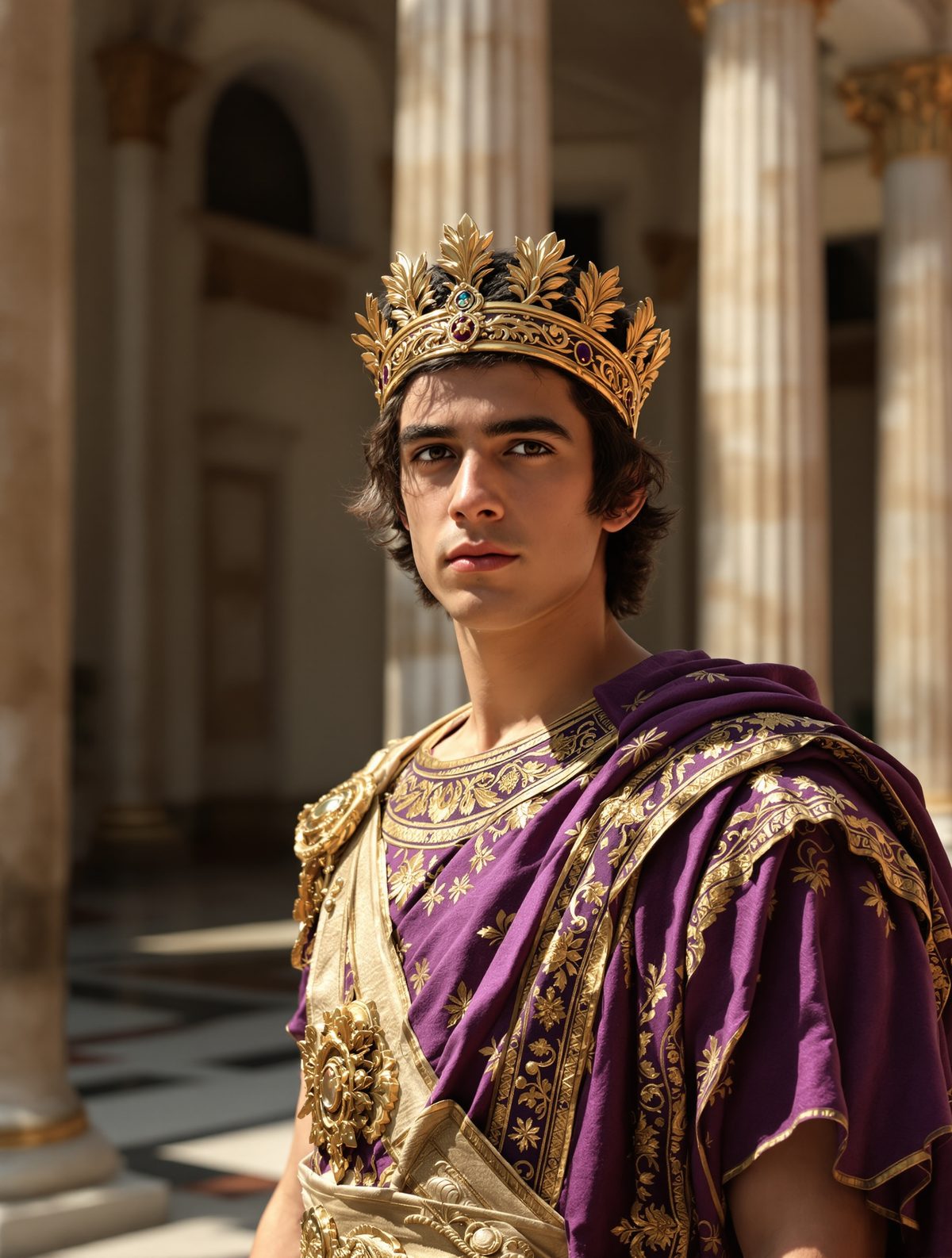
Imagine being handed the keys to a kingdom when you're barely old enough to tie your shoes. Now imagine that kingdom is surrounded by enemies who see your youth as an opportunity to strike. This was the impossible situation facing a seven-year-old Maya boy in 615 AD, when the jade crown of Palenque was placed upon his tiny head. His name was K'inich Janaab Pakal—literally "Sun-faced Shield"—and against all odds, he would not only survive but transform his crumbling city-state into the crown jewel of Maya civilization.
While most seven-year-olds today worry about homework and playground politics, young Pakal faced assassination attempts, military invasions, and the very real possibility that his lineage—and his city—might be wiped from history entirely. What happened next defies every expectation of what a child ruler should accomplish.
The Crown That Almost Wasn't
Palenque in 615 AD was a city on the brink of collapse. The great Maya metropolis, nestled in the lush rainforests of what is now Chiapas, Mexico, had suffered devastating defeats at the hands of the rival city-state Calakmul. Just nine years earlier, Palenque's previous ruler had been captured and likely sacrificed, leaving the kingdom without strong leadership and vulnerable to its circling enemies.
When Pakal ascended the throne on July 26, 615 AD—a date recorded with astronomical precision by Maya scribes—many must have seen it as the final act of a dying dynasty. The boy king's legitimacy was questioned from the start. In Maya society, kingship typically passed through the male line, but Pakal's claim came primarily through his mother, Lady Sak K'uk'. This was highly unusual and gave his enemies additional ammunition to challenge his right to rule.
But here's where the story takes its first surprising turn: rather than crumble under pressure, Pakal's mother proved to be a political mastermind. Lady Sak K'uk' served as regent, skillfully navigating the treacherous waters of Maya politics while her son learned the art of kingship. She didn't just keep the throne warm—she actively strengthened Palenque's position, forging crucial alliances and rebuilding the military that would later serve her son so well.
The Art of Staying Alive in a Dangerous World
The Maya Classical Period wasn't a time of peaceful coexistence between city-states. It was more like a deadly game of chess played with real armies, where capture meant torture, sacrifice, and the complete obliteration of your bloodline. The great powers of Tikal and Calakmul were locked in what archaeologists now call the Maya "Star Wars"—a series of proxy conflicts that drew in smaller kingdoms like Palenque.
Young Pakal spent his teenage years learning hard lessons about survival. In 599 AD, before his reign, Palenque had been so thoroughly defeated that its ruler was paraded through enemy streets before being sacrificed. The trauma of this defeat shaped everything about Pakal's approach to leadership. He understood that in the Maya world, showing weakness was tantamount to signing your own death warrant.
As he grew into his role, Pakal demonstrated an almost supernatural ability to read the shifting political landscape. He knew when to fight, when to negotiate, and when to simply wait for his enemies to make mistakes. By his twenties, he had transformed from a vulnerable child ruler into a formidable political operator who commanded respect throughout the Maya world.
Building an Empire in Stone and Blood
Pakal's military campaigns were as calculated as they were brutal. In 659 AD, he achieved what many thought impossible: he captured and sacrificed nobles from the very kingdoms that had once threatened to destroy Palenque. The psychological impact was enormous—the boy king who was supposed to be easy prey had grown into a predator.
But Pakal understood that true power wasn't just about military might. While he was winning battles, he was simultaneously engaged in one of the most ambitious construction projects in Maya history. The Palenque we can visit today—with its stunning palaces, intricate bas-reliefs, and soaring temple-pyramids—is largely Pakal's creation.
The Temple of the Inscriptions, Pakal's greatest architectural achievement, wasn't just a building—it was a massive propaganda project carved in stone. Its walls contain one of the longest Maya hieroglyphic texts ever discovered, telling the story of Pakal's reign and justifying his rule in terms that connected him directly to the gods. Every relief panel, every carved glyph, every architectural detail was designed to communicate one message: Pakal wasn't just a legitimate ruler, he was divinely chosen.
The Tomb That Stopped Time
In 1952, Mexican archaeologist Alberto Ruz Lhuillier made one of the most spectacular discoveries in the history of archaeology. After four years of painstaking excavation, he descended into the heart of the Temple of the Inscriptions and found something that took his breath away: Pakal's burial chamber, untouched for over 1,200 years.
What Ruz found defied every expectation. Pakal's sarcophagus, carved from a single block of limestone and covered with one of the most intricate pieces of Maya art ever created, sat in a chamber that had been designed as nothing less than a replica of the Maya underworld. The famous sarcophagus lid, weighing over five tons, depicts Pakal at the moment of death and rebirth, falling into the jaws of the underworld only to emerge as the reborn Maize God.
But it was Pakal's remains themselves that provided the biggest shock. Based on historical records, archaeologists expected to find the bones of an elderly man. Instead, they found someone who appeared to have died in his forties. For decades, this discrepancy puzzled researchers. Had they found the wrong person? Were the Maya records incorrect?
The mystery was finally solved through careful re-analysis of both the skeletal remains and the hieroglyphic records. Pakal had lived to be 80 years old, but his bones showed evidence of a life of luxury and careful health management that had preserved his body remarkably well. The Maya records were accurate—they had simply found a king whose lifestyle had been so privileged that it had literally slowed the aging process.
The Legacy of the Impossible King
When Pakal died in 683 AD at the age of 80, he had accomplished something unprecedented in the Americas: he had ruled for 68 years, making him the longest-reigning monarch in the history of the Western Hemisphere. His kingdom, which had once teetered on the edge of extinction, had become the most powerful city-state in the western Maya region.
But perhaps more importantly, Pakal had fundamentally changed how Maya kingship worked. His emphasis on monumental architecture, detailed historical records, and divine legitimacy became the template that other Maya rulers would follow for centuries. The concept of the god-king, while present before Pakal, reached its full flowering under his reign.
The boy who had inherited a crumbling kingdom left behind a legacy literally carved in stone. Today, visitors to Palenque can walk through palaces where Pakal held court, climb pyramids he commissioned, and see the very tomb where he was laid to rest with the treasures of a god.
Why Pakal Still Matters
In our modern world of rapid political changes and short attention spans, there's something almost incomprehensible about a leader who ruled for 68 years. Pakal's story challenges our assumptions about leadership, legitimacy, and what it means to build something that lasts.
His reign reminds us that true leadership often comes not from those who inherit perfect situations, but from those who face impossible odds and find ways to not just survive, but thrive. The seven-year-old boy who received a crown he had no right to expect he could keep ended up wearing it longer than any other ruler in the history of the Americas.
In an age when we often focus on immediate results and quick fixes, Pakal's story is a masterclass in long-term thinking. He understood that real change takes generations, that true power is built through patience and persistence, and that sometimes the greatest victories come not from dramatic battles, but from the steady accumulation of small advantages over decades.
The next time you face a challenge that seems insurmountable, remember the boy king of Palenque. Sometimes the most unlikely people, in the most impossible circumstances, end up changing the world.