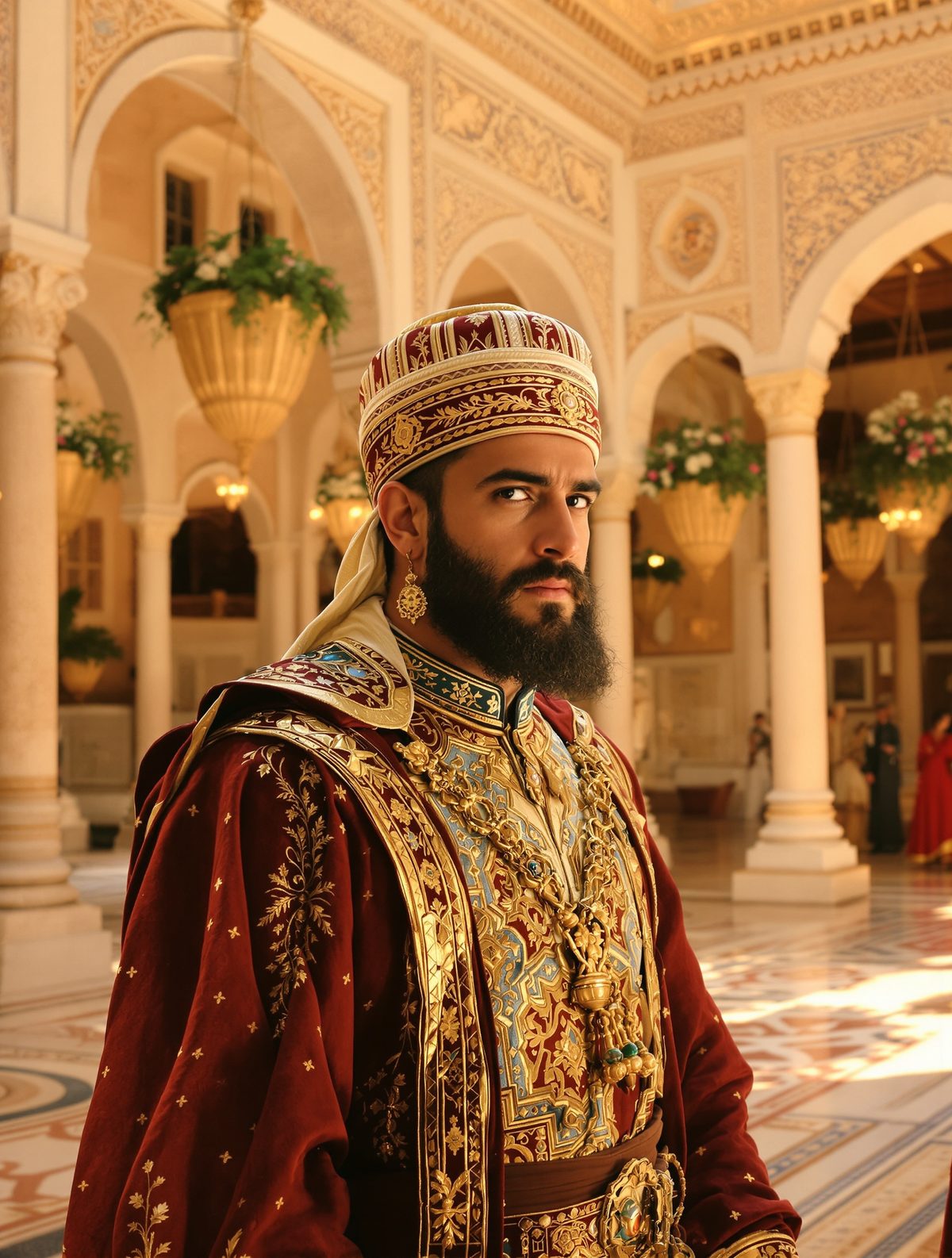
Picture this: a fourteen-year-old boy wearing silk robes and heavy makeup stands before the Roman Senate, declaring himself the living embodiment of a Syrian sun god. Within four years, this teenager would marry five different people, scandalize the ancient world with gender-bending ceremonies, and meet a violent end at just eighteen years old. His name was Heliogabalus, and his reign was so shocking that Roman historians spent centuries trying to erase him from memory.
But here's what they never taught you in school: this wasn't just teenage rebellion gone wrong. Heliogabalus's brief, chaotic rule reveals the fascinating collision between Eastern mysticism and Roman tradition, between personal identity and imperial power, in ways that feel surprisingly modern nearly two thousand years later.
The Boy Who Became God-Emperor
Marcus Aurelius Antoninus—later known as Heliogabalus—wasn't supposed to rule Rome. Born around 204 AD in Emesa (modern-day Syria), he was the hereditary priest of Elagabal, a Syrian sun god represented by a massive black meteorite. His path to the purple throne began with his grandmother, Julia Maesa, one of the most powerful women in Roman history.
When Emperor Caracalla was assassinated in 217 AD, Maesa saw her chance. She spread rumors that fourteen-year-old Heliogabalus was Caracalla's illegitimate son, despite the boy bearing no resemblance to the late emperor. What happened next was pure political theater: on May 16, 218 AD, Syrian legions proclaimed the teenager emperor while he performed religious rituals wearing golden silk robes and jeweled tiaras.
The existing emperor, Macrinus, marched to crush this rebellion, but his forces defected when they saw the boy who claimed divine heritage. Within months, a teenage priest from Syria controlled the most powerful empire on Earth.
Heliogabalus entered Rome in 219 AD not in military triumph, but in religious procession. He brought his god's sacred meteorite on a jewel-encrusted chariot pulled by white horses, while he walked backward before it, maintaining eye contact with his deity. Romans watched in stunned silence as their new emperor—wearing Eastern silk, his eyes lined with kohl—declared that Elagabal would now reign supreme over Jupiter and all Roman gods.
A Marriage Marathon That Shocked an Empire
If Romans thought their emperor's religious innovations were scandalous, they weren't prepared for his approach to marriage. Between 219 and 222 AD, Heliogabalus would marry five times, treating sacred Roman matrimony like a revolving door of political and personal experimentation.
His first wife was Julia Cornelia Paula, a respectable Roman noblewoman chosen to legitimize his rule. The marriage lasted barely a year before Heliogabalus divorced her, claiming divine inspiration demanded a new bride. The official reason given to the Senate? His god required him to marry someone more suitable.
Wife number two was Julia Aquilia Severa—a Vestal Virgin whose sacred vows of chastity made her marriage to anyone punishable by death. Heliogabalus announced that their union would produce "godlike children" for the empire. The scandal was extraordinary: Vestal Virgins were buried alive for breaking their vows, yet here was the emperor publicly marrying one of Rome's most sacred priestesses.
But Heliogabalus wasn't finished. He divorced Severa to marry Annia Aurelia Faustina, a wealthy widow with imperial connections. When that marriage failed to produce the desired political benefits, he divorced Faustina and remarried Julia Aquilia Severa—the same Vestal Virgin—in an unprecedented double violation of sacred law.
Each divorce was accompanied by elaborate justifications involving divine commands and mystical visions. Romans watched their teenage emperor cycle through wives like a modern celebrity, except each marriage and divorce involved sacred religious ceremonies and enormous state expenses.
The Wedding That Broke Rome
Nothing, however, prepared Romans for Heliogabalus's final marriage. In 221 AD, the emperor fell in love with Hierocles, a blond charioteer from Caria. Ancient sources describe Hierocles as strikingly handsome and athletic—exactly the kind of man who might catch a young emperor's eye at the races.
What happened next was unprecedented in Roman history: Heliogabalus married Hierocles in a full public ceremony, complete with traditional wedding rituals, dowry negotiations, and legal contracts. The emperor appeared at the ceremony dressed as a bride, wearing women's clothing and makeup, while Hierocles played the traditional masculine role.
The Roman historian Cassius Dio, who lived through these events, wrote that Heliogabalus "was bestowed in marriage and was termed wife, mistress, and queen." The emperor reportedly took the feminine name "Julia" in honor of his grandmother and insisted on being addressed with female pronouns during intimate moments.
This wasn't just personal scandal—it was political revolution. Roman law didn't recognize same-sex marriage, and the emperor's public adoption of feminine roles violated every principle of traditional Roman masculinity. Senators watched in horror as their supreme leader, who commanded thirty legions and ruled sixty million people, publicly embraced what they considered the ultimate degradation.
Ancient sources claim Heliogabalus promised doctors vast rewards if they could surgically transform him into a woman, though historians debate whether these accounts reflect reality or propaganda by his enemies. What's certain is that the emperor's relationship with Hierocles became the final straw for Rome's traditional elite.
The Blood-Soaked End of a Revolutionary Reign
By 222 AD, Heliogabalus's innovations had pushed Rome to the breaking point. His religious reforms had alienated traditional Romans, his sexual behavior scandalized conservatives, and his administrative chaos frustrated the military. Even his grandmother Julia Maesa, who had orchestrated his rise, began plotting his removal.
The conspiracy centered on Heliogabalus's fourteen-year-old cousin, Alexander Severus, whom Maesa promoted as a more suitable emperor. When Heliogabalus realized the plot, he tried to have Alexander killed, but the Praetorian Guard—Rome's elite military unit—had already switched sides.
On March 11, 222 AD, the Praetorian Guards cornered eighteen-year-old Heliogabalus in a palace latrine. They stabbed him to death, then dragged his body through Rome's streets before throwing it into the Tiber River. Hierocles was murdered alongside his imperial husband, their revolutionary marriage ending in shared violence.
The new emperor, Alexander Severus, immediately began erasing Heliogabalus from history. The Senate declared his memory damned, his laws void, and his name forbidden. Workers chiseled his face from statues and scratched his titles from inscriptions. For centuries, Roman historians would portray him as a monster of sexual depravity and religious madness.
Why This Teenager Still Matters
Modern historians increasingly question whether Heliogabalus was really the depraved monster described by ancient sources. Consider this: every account of his reign was written by his political enemies after his violent death. Would we trust only negative reviews from people who murdered their target?
What emerges from careful study is a more complex figure: a teenager thrust into absolute power, struggling with questions of identity, sexuality, and spirituality that resonant today. Heliogabalus experimented with gender roles, challenged religious orthodoxy, and defied social expectations in ways that feel remarkably contemporary.
His story reveals how little has changed about power, identity, and social acceptance. An eighteen-year-old exploring gender expression and same-sex relationships? That could be any modern teenager. The difference is that this teenager commanded the Roman Empire, and his personal journey became a political crisis that reshaped history.
Perhaps most fascinating is what Heliogabalus represents: a moment when the rigid structures of tradition faced direct challenge from personal authenticity. His reign asks uncomfortable questions about whether societies can accommodate leaders who don't fit conventional expectations, whether personal identity can coexist with public responsibility, and what happens when individual freedom collides with institutional power.
In our current era of debates about gender, sexuality, and traditional values, Heliogabalus's brief, chaotic reign feels less like ancient history and more like a preview of eternal human struggles. The teenager who married five times in four years and died for his defiance reminds us that the conflicts between personal truth and social expectations have been tearing societies apart—and pushing them forward—for nearly two thousand years.