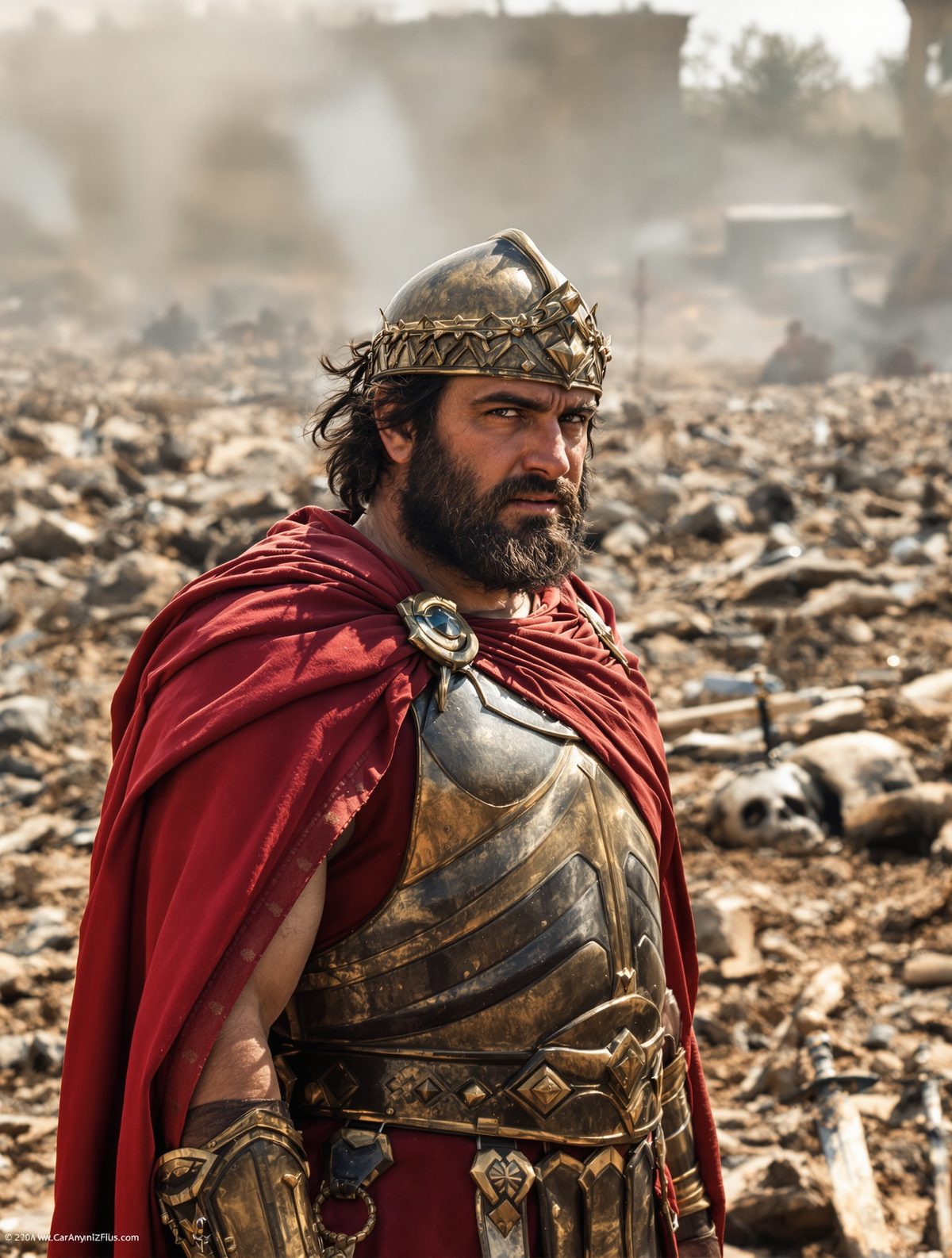
In the sprawling markets of Tollan, the greatest city in all of Mesoamerica, merchants hawked jade jewelry, obsidian blades, and feathered cloaks that shimmered like rainbows. But in the royal granaries, something was terribly wrong. The corn—the sacred grain that had sustained civilizations for millennia—sat rejected by the king himself. Not because it was rotten or insufficient, but because Huemac, the mighty ruler of the Toltec Empire, had decided it simply wasn't perfect enough for his divine status. This single act of cosmic arrogance would trigger a catastrophe that would topple one of history's greatest civilizations and leave archaeologists scratching their heads for centuries.
The Golden Age of Tollan
Picture Mexico around 1100 AD, and you're looking at a world dominated by the Toltecs—a civilization so influential that even the mighty Aztecs would later claim descent from them. Their capital, Tollan (modern-day Tula), stood as a marvel of engineering and artistry, its towering pyramids and palaces stretching across the central Mexican highlands like a stone symphony.
King Huemac ruled this empire at its absolute zenith. His domain stretched from coast to coast, controlling crucial trade routes that funneled obsidian, turquoise, and cacao through Tollan's bustling markets. The city itself housed an estimated 60,000 inhabitants—making it one of the largest urban centers in the world at the time. Massive stone warriors, carved from single blocks of basalt and standing 15 feet tall, guarded the Temple of Tlahuizcalpantecuhtli, their cold eyes surveying an empire that seemed destined to last forever.
But Huemac wasn't content with mere earthly power. According to the surviving chronicles recorded centuries later by Spanish missionaries, he believed himself to be the earthly representative of Quetzalcoatl, the feathered serpent god. This wasn't just political propaganda—in Toltec cosmology, the king literally was divine, responsible for maintaining the delicate balance between the human world and the realm of the gods.
When the Gods Came Calling
The trouble began during what should have been a moment of divine blessing. The Tlaloque—the rain gods who controlled Mexico's precious monsoons—appeared to Huemac in a sacred ceremony that likely took place atop one of Tollan's great pyramids. These weren't minor deities making small talk; the Tlaloque controlled the very lifeblood of Mesoamerican civilization.
In a gesture of cosmic generosity, they offered the Toltec king maize kernels "as thick as a man's arm"—corn so abundant and nutritious that it would have guaranteed bumper harvests for generations. To put this in perspective, average corn kernels in 1100 AD were roughly half the size of modern varieties. The gods were essentially offering agricultural abundance beyond anything previously known.
But here's where the story takes its fateful turn. Huemac, perhaps drunk on his own divine status or genuinely believing he could negotiate with cosmic forces like trade partners, rejected the offer. Instead, he made a counter-proposal that would echo through Mesoamerican legend for centuries: he demanded corn kernels as large as entire corn cobs—grain so impossibly massive that each kernel would be the size of what we'd consider a full ear of corn.
The audacity is almost breathtaking. Imagine turning down a guaranteed lottery win because you wanted to own the entire lottery system instead. The Tlaloque, according to the chronicles, were not amused.
The Curse That Broke an Empire
The rain gods' response was swift and merciless. They cursed Huemac's lands with drought so severe that it would become legendary throughout Mesoamerica. But this wasn't just any drought—it was a systematic unraveling of the cosmic order that the Toltec king was supposed to protect.
Archaeological evidence supports the legendary accounts with chilling accuracy. Climate data reconstructed from tree rings and lake sediments shows that central Mexico experienced one of the most severe droughts in recorded history between 1100 and 1200 AD. The timing aligns perfectly with the collapse of Toltec civilization, suggesting that the Huemac legend preserves the memory of a very real ecological catastrophe.
As the rains failed year after year, Tollan's agricultural system—which had sustained tens of thousands of people—began to collapse. The extensive irrigation networks that had made the Toltec heartland bloom turned into dusty channels. Tribute stopped flowing in from outlying provinces as local populations struggled with their own survival. The great markets that had once buzzed with international trade fell silent as merchants had nothing left to sell.
But the drought brought more than just economic collapse. In Toltec cosmology, the king's failure to maintain divine favor was proof of his unworthiness to rule. Rebellions erupted across the empire as subject peoples interpreted the ecological disaster as a sign that Huemac had lost his divine mandate.
The Fall of a Civilization
By 1150 AD, barely fifty years after his confrontation with the rain gods, Huemac's empire was disintegrating. Archaeological excavations at Tula reveal a city abandoned with startling suddenness—tools left where they fell, houses sealed but not emptied, as if the inhabitants simply walked away from everything they'd ever known.
The king himself, according to legend, fled to the caves of Cincalco, where he either died in exile or transformed into a supernatural being doomed to wander the earth forever. Some versions of the story claim he threw himself from a cliff rather than watch his empire crumble completely. Either way, the man who had once commanded an empire stretching from sea to sea died alone, his perfect corn nothing but a bitter memory.
What makes this collapse even more remarkable is its completeness. Unlike other Mesoamerican civilizations that fell and rose again, the Toltecs vanished so thoroughly that when Spanish conquistadors arrived 400 years later, Tula was nothing but ruins covered by jungle. The city that had once rivaled anything in Europe or Asia had become a cautionary tale whispered around Aztec campfires.
Yet the Toltec influence didn't disappear entirely. Their architectural styles, religious concepts, and artistic traditions spread throughout Mesoamerica, influencing everyone from the Maya of Chichen Itza to the Aztecs of Tenochtitlan. In many ways, Huemac's empire lived on—just not in the form he had envisioned.
The Archaeological Mystery
Here's what makes this story even more fascinating: modern archaeologists have found virtually no evidence of warfare or invasion at Tula during its final decades. There are no burned buildings, no mass graves, no signs of the violent conquest that marked the end of so many ancient cities. Instead, the archaeological record shows a gradual abandonment—people simply leaving as conditions became impossible.
This supports the legendary account in an unexpected way. If Huemac's empire really did fall because of ecological collapse triggered by his cosmic arrogance, we'd expect to see exactly what archaeologists have found: not destruction, but abandonment. The curse of the rain gods, viewed through a modern lens, looks remarkably like what we'd now call a climate-induced civilizational collapse.
Recent discoveries have added another layer to the mystery. Excavations in 2019 uncovered massive royal granaries at Tula—storage facilities large enough to feed the entire city for years. But analysis of the grain remains shows they were largely empty during the city's final decades, despite evidence of continued agricultural activity in surrounding areas. It's as if food was available but somehow not reaching the people who needed it most.
The Perfect Corn That Never Was
Huemac's story resonates today not because of its supernatural elements, but because of its very human warning about the dangers of perfection sought at the expense of sufficiency. In an age where genetic modification promises to create ideal crops, where leaders routinely reject "good enough" solutions while holding out for perfect ones, the Toltec king's fatal bargain feels surprisingly contemporary.
The rain gods offered abundance—not perfection, but enough to sustain a civilization for centuries. Huemac's rejection of their gift in favor of an impossible ideal mirrors modern tendencies to let perfect become the enemy of good. His empire fell not because he aimed too low, but because he couldn't accept that even divine gifts come with limitations.
Perhaps most haunting of all, recent genetic analysis of ancient corn varieties suggests that the Tlaloque's original offer—kernels "as thick as a man's arm"—was actually achievable through selective breeding over several generations. Huemac could have had his abundant harvests; he just couldn't wait for them to develop naturally. His impatience cost him everything, leaving archaeologists to puzzle over the ruins of what might have been Mesoamerica's greatest empire.
In the end, Tollan's empty granaries stand as monuments to a truth that transcends cultures and centuries: sometimes the good we reject in pursuit of the perfect is the best we'll ever get.