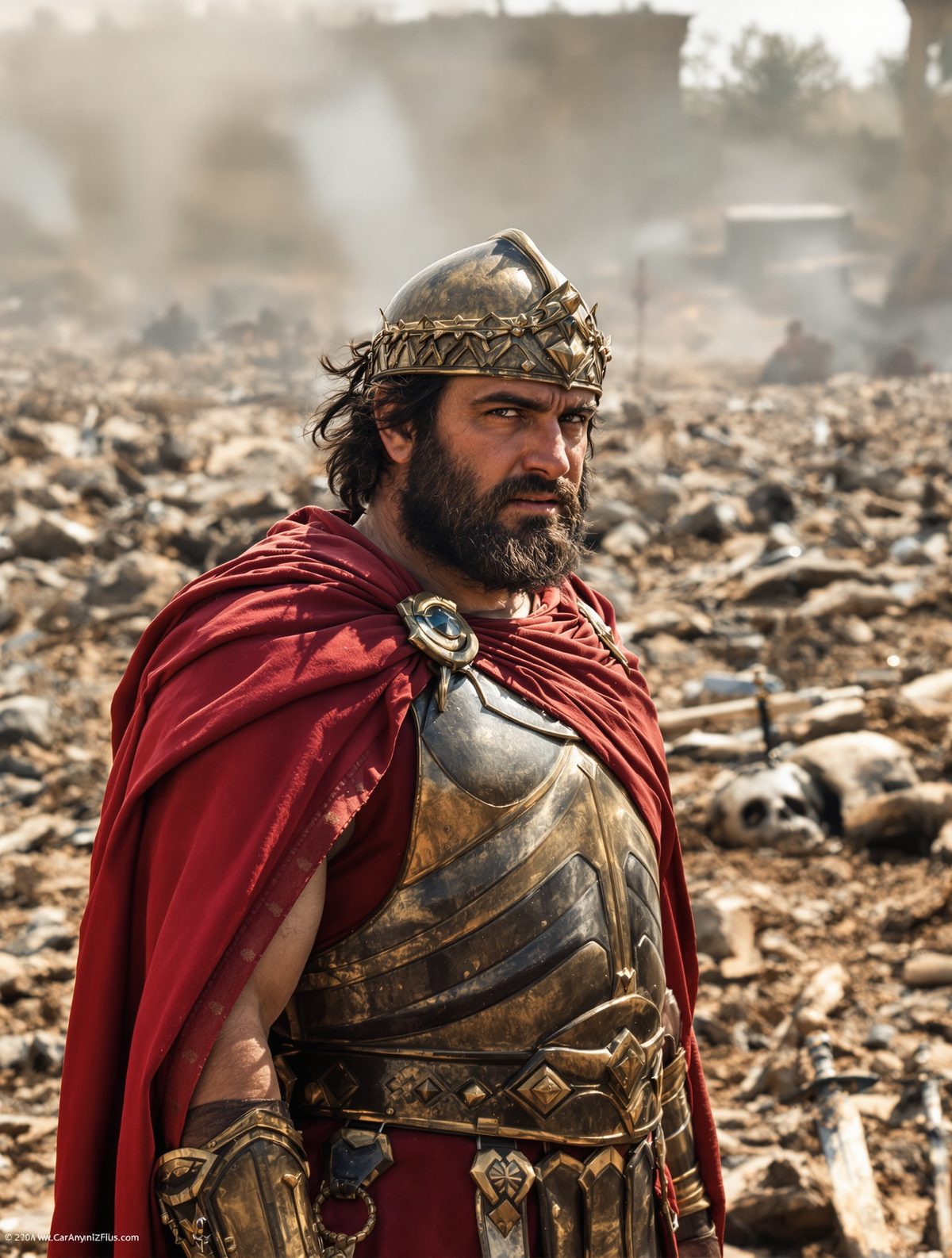
Picture this: It's 1594, and you're a high-ranking official in the Ming Dynasty, the most powerful empire on Earth. You've traveled hundreds of miles to Beijing with urgent matters of state—border conflicts, tax rebellions, natural disasters that demand imperial attention. You arrive at the Forbidden City's towering red walls, pass through its golden gates, and make your way to the Hall of Supreme Harmony, where emperors have held court for generations. But when you reach the throne room, you find nothing but empty space and echoing silence.
The Dragon Throne sits vacant. Not just today, but every day for the past twenty-two years. Somewhere deep within this labyrinth of courtyards and pavilions, the most powerful man in the world—Emperor Wanli—is hiding in his private chambers, refusing to see anyone. Your urgent reports will be converted to written memorials, slipped under doors, and maybe, if you're lucky, returned days later with a brief notation in vermillion ink.
Welcome to one of history's strangest political situations: an empire of over 100 million people being governed by a man who had essentially become a hermit in his own palace.
The Boy Emperor Who Started Strong
Zhu Yijun wasn't supposed to become history's most reclusive ruler. When he ascended to the Dragon Throne in 1572 at just ten years old, taking the reign name Wanli, he seemed destined for greatness. The Ming Dynasty was at its zenith—Chinese armies controlled territory from Korea to Burma, treasure fleets had once sailed to Africa, and the Forbidden City stood as the magnificent heart of the world's most sophisticated civilization.
For the first decade of his reign, guided by his capable Grand Secretary Zhang Juzheng, young Wanli showed promise. He dutifully attended court sessions, met with ministers, and oversaw a period of administrative reform and economic growth. The imperial coffers swelled with silver from global trade, and the empire's borders remained secure. Palace observers noted the young emperor's intelligence and his apparent dedication to the exhausting daily routine of imperial governance.
But Zhang Juzheng's death in 1582 marked a turning point. Suddenly, the 20-year-old emperor found himself facing the full weight of governing alone—and he didn't like what he discovered.
The Bureaucratic Prison
To understand Wanli's eventual retreat, you need to grasp just how suffocating life as a Ming emperor had become. This wasn't the freestyle autocracy of earlier dynasties. By Wanli's time, the imperial system had evolved into an incredibly rigid bureaucratic machine that treated the emperor more like a ceremonial component than an actual decision-maker.
Every day began before dawn with lengthy court sessions where hundreds of officials would present thousands of documents requiring imperial review. The emperor was expected to read memorial after memorial about grain prices in remote provinces, minor border skirmishes, personnel appointments for mid-level bureaucrats, and countless other administrative minutiae. One historian calculated that Wanli would have needed to review over 3,000 documents monthly to keep up with the paperwork.
But the real frustration came from the system's built-in paralysis. Confucian ideals had created a government where officials spent more time debating the moral implications of decisions than actually making them. Want to appoint a new governor? Expect months of arguments about the candidate's character. Need to raise taxes for military campaigns? Prepare for endless lectures about the ancient kings' benevolent policies.
The breaking point came in 1586 when Wanli tried to name his third son as heir instead of his eldest. What should have been an imperial prerogative turned into a 15-year bureaucratic nightmare, with officials submitting thousands of protests and staging what amounted to administrative strikes. The emperor of China couldn't even choose his own successor without his civil servants' permission.
The Great Disappearance
In 1589, something inside Emperor Wanli snapped. After yet another contentious court session filled with lecturing officials and endless paperwork, he simply didn't show up the next day. Or the day after that. Days turned into weeks, weeks into months, and months into years. The Son of Heaven had gone on strike against his own government.
What makes this story so fascinating is how the empire adapted. Without their emperor physically present, the Ming bureaucracy essentially learned to govern itself. Officials would submit written reports to the palace, and sometimes—though not always—receive responses. Important edicts would emerge from the imperial apartments, written in Wanli's hand or bearing his seal, but no one actually saw the emperor anymore.
The Forbidden City, normally bustling with the daily pageantry of imperial court life, became eerily quiet. The massive throne rooms gathered dust. Elaborate ceremonies were cancelled or performed without the guest of honor. Foreign ambassadors found themselves bowing to empty chairs. It was as if the political center of the world's largest empire had simply vanished into thin air.
But here's the most surprising part: it actually worked, at least for a while. The Ming administrative system was so sophisticated and well-established that it could function on autopilot. Provincial governors continued governing their territories, tax collectors kept collecting taxes, and the military maintained border defenses. The empire had become so bureaucratized that it barely needed an emperor at all.
Life in the Golden Cage
So what was Wanli actually doing during those 28 years of self-imposed isolation? Palace records and the accounts of brave eunuchs who dared to gossip give us glimpses into the emperor's hidden life. He hadn't become a complete hermit—he still lived in luxury within his private apartments, surrounded by concubines, eunuchs, and a small circle of trusted servants.
Wanli developed an obsession with his own tomb, personally overseeing the construction of what would become one of the most elaborate burial complexes in Chinese history. He spent enormous sums—some estimates suggest up to 25% of the imperial treasury—on this underground palace, complete with marble chambers and precious artifacts. Perhaps contemplating mortality was easier than dealing with living officials.
The emperor also became fascinated with European curiosities brought by Jesuit missionaries. Mechanical clocks, Western paintings, and scientific instruments filled his private chambers. In a delicious irony, while he refused to meet his own ministers, Wanli granted audiences to foreign priests like Matteo Ricci, perhaps finding their exotic perspectives more refreshing than another lecture about Confucian virtues.
But isolation took its toll. Palace physicians reported that Wanli's health deteriorated significantly during his reclusive years. He gained weight, suffered from what sounds like depression, and allegedly became increasingly paranoid about assassination attempts—ironic for a man who had essentially assassinated his own public role.
The Empire Begins to Crack
By the early 1600s, the consequences of absent leadership became impossible to ignore. Without imperial presence to mediate disputes, factional fighting among officials intensified. Important government positions remained unfilled for years because Wanli wouldn't emerge to conduct appointment ceremonies. Military commanders found themselves fighting border wars without clear strategic direction from Beijing.
The most serious crisis came with the Japanese invasion of Korea in 1592. This massive conflict required unprecedented Chinese military intervention, but coordinating the response proved nearly impossible with an invisible emperor. While Chinese forces eventually helped repel the invasion, the war drained the imperial treasury and exposed the weaknesses of governing by written memo.
Meanwhile, a new threat was emerging in the northeast that would ultimately prove fatal to the Ming Dynasty: the Manchus were consolidating power and beginning their own imperial ambitions. These early stirrings of what would become the Qing Dynasty might have been contained with vigorous imperial leadership, but Wanli's government was too paralyzed to respond effectively to distant border problems.
The Ghost Emperor's Legacy
When Emperor Wanli finally died in 1620, having spent more than half his 48-year reign in hiding, he left behind an empire that looked magnificent on the surface but was rotting from within. The Ming Dynasty would collapse just 24 years later, conquered by the very Manchu forces that had grown strong during the decades of imperial absence.
Wanli's story offers a fascinating meditation on power and leadership in the modern world. Here was a man who possessed absolute authority on paper but found himself trapped by the very system designed to serve him. His response—complete withdrawal—created a power vacuum that ultimately proved fatal to his dynasty.
In an age when we debate the proper role of leadership and the relationship between rulers and institutions, Emperor Wanli's 28-year disappearing act serves as a cautionary tale. Sometimes the most powerful response to an impossible situation is to simply refuse to participate—but the consequences of that refusal can echo through history long after the original frustrations are forgotten. The emperor who tried to escape his golden cage ultimately helped seal his dynasty's fate, proving that in politics, as in physics, every withdrawal creates a vacuum that something else will inevitably fill.