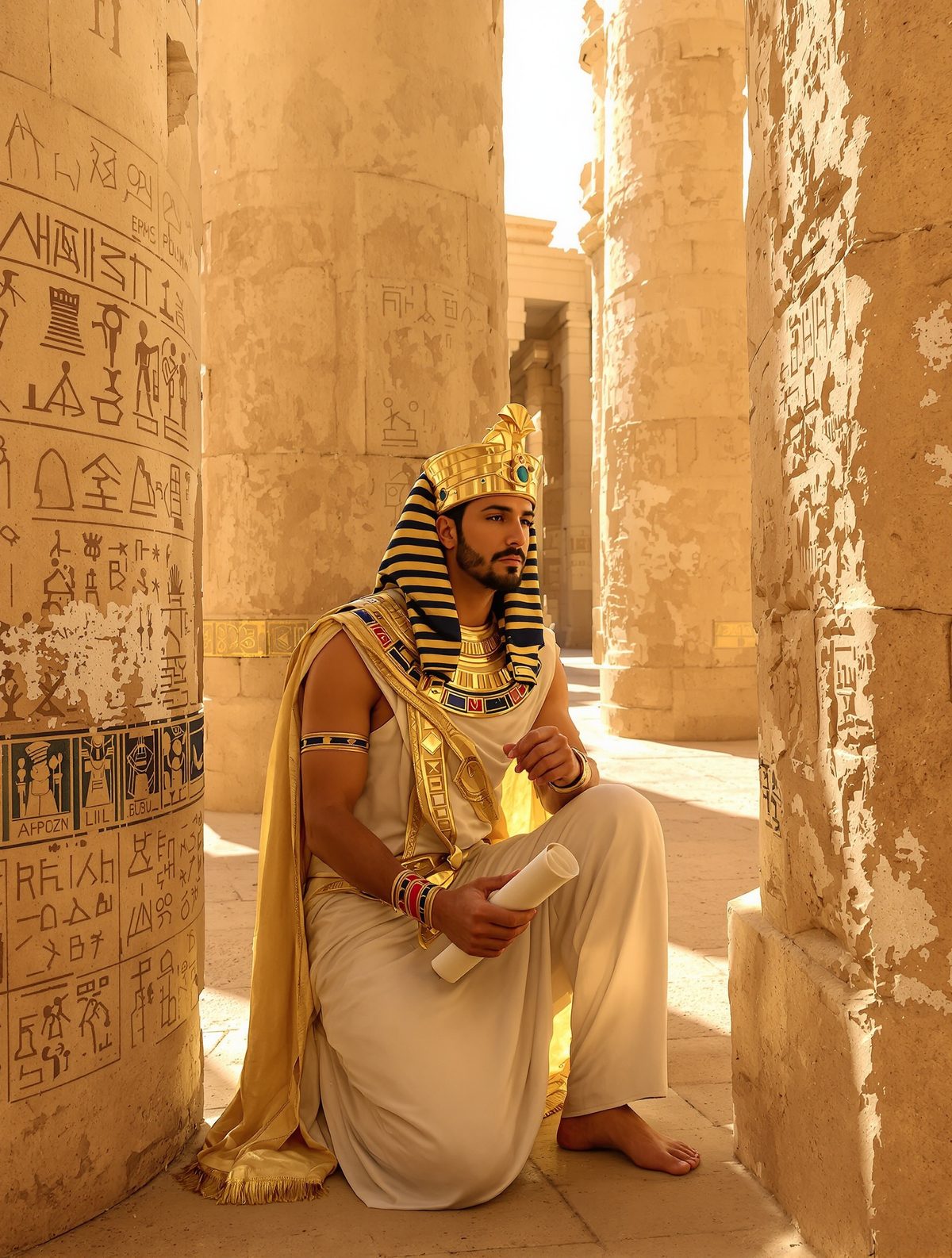
Picture this: It's a crisp morning in 2024, and hundreds of medical students across America are raising their right hands, solemnly reciting ancient words they believe were penned by history's greatest physician 2,500 years ago. "I swear by Apollo the physician..." they begin, invoking the sacred promise that has guided doctors since antiquity. There's just one problem with this touching scene of medical tradition: Hippocrates of Kos never wrote a single word of the oath that bears his name.
For more than two millennia, one of history's most enduring misattributions has fooled everyone from medieval monks to modern medical schools. The Hippocratic Oath—that cornerstone of medical ethics promising to "first, do no harm"—was actually written centuries after the great physician's death, by people who had never met him and lived in a completely different world.
The Real Hippocrates: Revolutionary Doctor of Ancient Greece
To understand this monumental mix-up, we need to travel back to the island of Kos in the 5th century BC, where a physician named Hippocrates was quietly revolutionizing medicine. Born around 460 BC, during the golden age of Athens, Hippocrates lived in a world where most people believed illness was punishment from angry gods or the result of evil spirits inhabiting the body.
But Hippocrates dared to suggest something radical: what if diseases had natural causes that could be observed, understood, and treated through reason rather than religious ritual? Picture him walking through the sun-drenched courtyards of his medical school on Kos, teaching students to examine patients' symptoms, record their observations, and look for patterns in nature rather than signs from Zeus.
This was revolutionary thinking. While other healers were performing elaborate ceremonies to appease Asclepius, the god of medicine, Hippocrates was developing what we now recognize as the scientific method. He established the concept of clinical observation, documented case studies, and—perhaps most importantly—introduced the idea that doctors should base their treatments on evidence rather than superstition.
The real Hippocrates left behind a substantial medical legacy: detailed descriptions of diseases like epilepsy (which he notably called a natural condition, not "the sacred disease"), surgical techniques, and a theory of the four bodily humors that would dominate medicine for centuries. He founded a medical dynasty—his sons and son-in-law all became physicians—and established a school that attracted students from across the Mediterranean.
The Hippocratic Corpus: A Case of Mistaken Authorship
Here's where things get complicated. Ancient Greeks had a habit of attributing important works to famous figures, even when those figures had nothing to do with writing them. Over the centuries following Hippocrates' death around 370 BC, dozens of medical texts began circulating under his name. Modern scholars call this collection the "Hippocratic Corpus"—about 70 treatises covering everything from fractures to dreams.
But here's the kicker: most experts believe Hippocrates himself wrote perhaps only a handful of these works, maybe none at all. The collection includes texts written over several centuries by different authors with wildly varying medical philosophies. Some contradict others entirely. It's as if someone collected every medical textbook written between 1800 and 2000, slapped "By George Washington" on the cover of each one, and called it a day.
The famous oath first appears in this corpus, but linguistic analysis reveals it was almost certainly written in the 3rd or 4th century BC—at least a century after Hippocrates' death. The language patterns, medical terminology, and philosophical concepts all point to a later period when Greek medicine had evolved far beyond what Hippocrates would have recognized.
Even more telling, the oath reflects medical practices and ethical concerns that simply didn't exist in Hippocrates' time. The real Hippocrates lived in an era when surgery was primitive, medical knowledge was limited, and the very concept of professional medical ethics was still forming.
Medieval Monks and the Great Preservation Project
Fast-forward to medieval Europe, where Christian monks were painstakingly copying ancient Greek texts in monastery scriptoriums. These dedicated scribes, working by candlelight with quill pens, became the inadvertent perpetrators of one of history's greatest misattributions.
The monks had no reason to question the authorship of the texts they were preserving. If a manuscript said "by Hippocrates," then by Hippocrates it was. They copied the oath along with dozens of other medical texts, cementing the false attribution for centuries to come. The irony is delicious: in their noble effort to preserve ancient knowledge, they were actually preserving ancient fake news.
What's particularly fascinating is how different medieval versions of the oath began to appear. Some scribes, apparently uncomfortable with references to pagan gods like Apollo, created Christianized versions that invoked God and Jesus instead. Others modified the text to reflect contemporary medical practices. By the Renaissance, there were dozens of different "Hippocratic Oaths" floating around Europe, each claiming to be the authentic words of the ancient master.
When Scholars Started Asking Questions
The first cracks in the traditional story began appearing in the 19th century, when German philologists—those obsessive scholars who analyze ancient texts with microscopic precision—started applying scientific methods to classical literature. Using techniques that would make modern forensic investigators proud, they began examining the language, style, and content of the Hippocratic Corpus.
The results were shocking. In 1922, German scholar Werner Jaeger published groundbreaking research showing that the oath contained philosophical concepts from Pythagorean and Stoic traditions that postdated Hippocrates by generations. The famous prohibition against "cutting" (interpreted as surgery) made no sense for a physician who lived in an era when surgery was a standard part of medical practice.
By the mid-20th century, the evidence was overwhelming. Ludwig Edelstein, a German-American classicist, published the definitive study in 1943, demonstrating conclusively that the oath was written by a later Pythagorean school, probably around 300 BC. His research revealed that the oath's ethical framework reflected philosophical developments that occurred long after Hippocrates' death.
Yet despite this scholarly consensus, medical schools around the world continued—and continue today—to treat the oath as if it were Hippocrates' own words. The power of tradition, it seems, is stronger than historical evidence.
The Oath That Never Dies
Perhaps the most remarkable aspect of this story is how little the truth has mattered to the medical profession. Even after scholars proved beyond doubt that Hippocrates didn't write the oath, medical schools kept right on using it. Why? Because sometimes mythology is more powerful than history.
The oath has been revised countless times to fit modern medical practice. The original's prohibition against surgery has been dropped. References to pagan gods have been replaced with secular language. Clauses about teaching medicine only to the children of one's teacher (an ancient form of guild protection) have been quietly deleted.
Today's medical graduates might recite something called the "Hippocratic Oath," but it bears about as much resemblance to the ancient text as a smartphone does to a telegraph. Modern versions focus on patient confidentiality, avoiding harm, and professional integrity—all worthy principles, but ones that would have been largely foreign to ancient Greek physicians.
The irony runs deeper still. While doctors swear by an oath Hippocrates never wrote, they've largely forgotten the medical innovations he actually contributed. His emphasis on careful observation, detailed record-keeping, and natural rather than supernatural explanations for disease laid the foundation for modern scientific medicine. Yet these genuine contributions are overshadowed by a text he had nothing to do with.
Why This Ancient Fake News Still Matters
In our age of viral misinformation and "alternative facts," the story of the Hippocratic Oath offers a fascinating case study in how false beliefs become embedded in institutional culture. For over 2,000 years, the medical profession has built part of its identity around a beautiful lie—and even when presented with overwhelming evidence of that lie, has chosen to maintain it for the sake of tradition.
This isn't necessarily a bad thing. The oath, regardless of its true authorship, has inspired generations of physicians to consider the ethical dimensions of their profession. It has served as a powerful symbol connecting modern doctors to the ancient roots of medicine. Sometimes, as the saying goes, when the legend becomes fact, we print the legend.
But the story also reminds us that even our most cherished beliefs deserve scrutiny. In a world where misinformation can spread faster than any ancient plague, the tale of Hippocrates and his non-existent oath serves as a humbling reminder that sometimes the most widely accepted "facts" are nothing more than very old mistakes that nobody bothered to question.
The next time you hear about a newly minted doctor taking the Hippocratic Oath, remember: they're not reciting the words of the father of medicine, but rather participating in one of history's most enduring and successful cases of mistaken identity. And perhaps that's exactly as it should be.