The air inside the cage was heavy, filled with the earthy smell of soil and the metallic tang of fear. From his cramped and uncomfortable perch, Kuyaté could just make out the figures of his captors through the narrow slits of light. A griot of the once-mighty Mali Empire, he had been reduced to little more than a captive songbird, locked away to silence his wisdom, his stories, his very essence.
The Silent Griot
In the vibrant kingdoms of 15th century West Africa, to be a griot was to be both a historian and a living archive. Entrusted with the oral traditions and tales of empires, griots like Kuyaté were the guardians of history and culture, revered figures who possessed the power of memory and speech. Yet, for the first time, Kuyaté found himself unable to fulfill his sacred duties. Sundiata's grand empire had collapsed into splintered factions, and in the ensuing chaos, he was captured by rival warlords seeking to harness the spiritual prestige of the griot for their own ends. For months, he lingered in a wooden cage, a prisoner of both circumstance and silence.
A Voice in the Dark
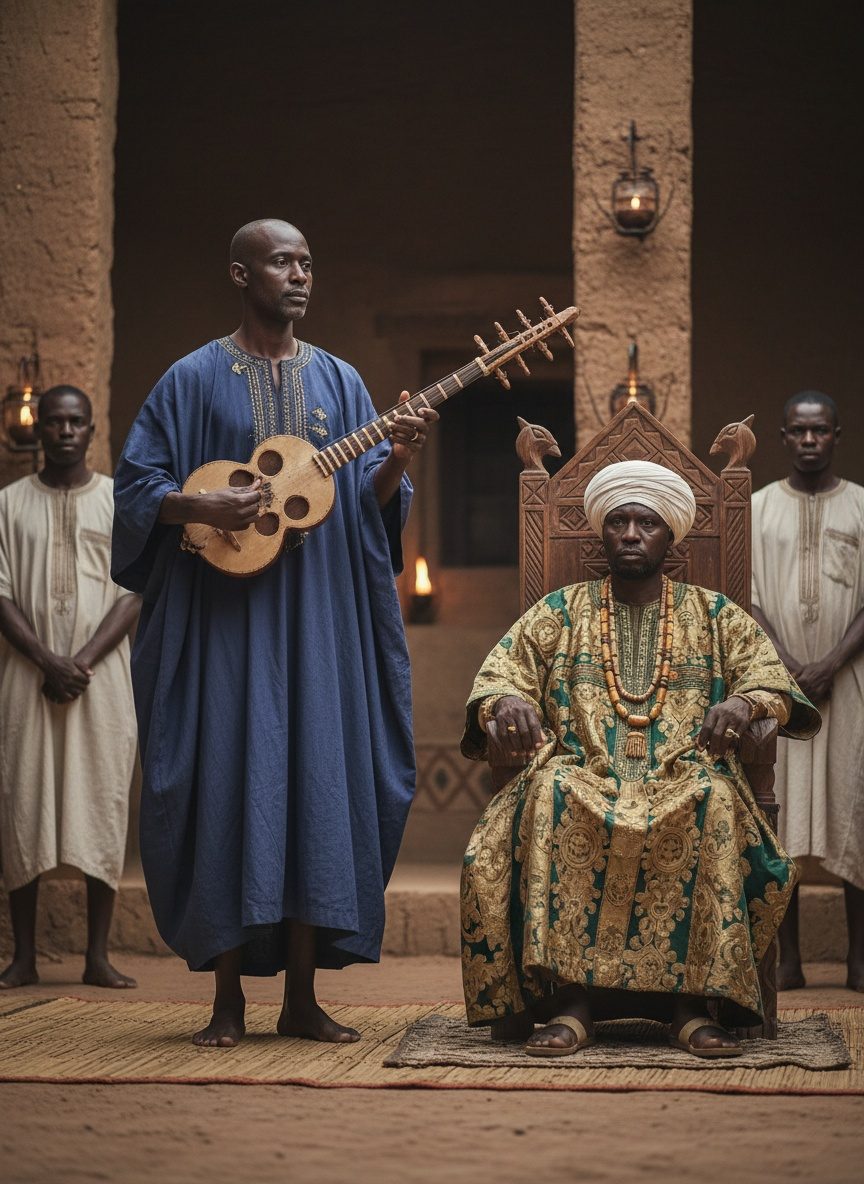
As the story goes, it was the reputation of Kuyaté's unparalleled gift for storytelling that reached the ears of Mansa Musa, the mighty emperor whose wealth remains the stuff of legend. Intrigued, Mansa Musa commanded that the caged griot be brought before him. The emperor's court was a scene of opulence, glittering with gold and attended by clattering nobles eager to witness the griot's fate. As Kuyaté was dragged before Musa, a hush fell over the assembly. Would the caged bird remain mute, or would his song finally break the silence?
In that charged, breathless moment, Kuyaté's voice rose clear and steady, as if drawn from the very core of his being. He sang of the vast savannahs, of the mighty Niger River, of the rise and fall of empires. His tales painted the history of Mali in rich tapestries of sound, each word a brushstroke. Captivated, Mansa Musa listened as the griot spoke of a lineage of kings, the glory once presided over by Sundiata, the great founder of the realm. As Kuyaté recounted stories filled with both triumph and loss, tears welled in the emperor’s eyes, for he was reminded of his own place within this grand narrative continuum.
The Redemption of Kuyaté
The moment was transformative. Recognizing the intrinsic value embedded in the griot's words, Mansa Musa ordered Kuyaté’s immediate release. More than just an act of mercy, it was a profound acknowledgment of the griot's role as the preserver of Mali’s cultural soul. Mansa Musa, renowned not just for his gold but for his wisdom, appointed Kuyaté as the royal historian, an accolade of immense honor and responsibility. Kuyaté was no longer a captive; he was now the herald of a civilization's legacy.
This appointment was more than ceremonial; it was a testament to the power of words and memory in shaping cultural identity. The griots were keepers of the past, and through Kuyaté, the stories of Mali would remain alive, whispered into eternity through the ears of successive generations. Thus liberated and esteemed, he assumed his duties with renewed vigor, his narratives weaving together the collective memory of his people, ensuring that history was never forgotten.
The Golden City
Under Mansa Musa’s reign, Mali flourished, with Timbuktu becoming the center of a vibrant trade network stretching across Africa and into the broader Islamic world. The city became synonymous with knowledge and discovery, home to libraries, schools, and a profound scholarly tradition. Kuyaté, from his new position of influence, contributed to this cultural zenith, sharing old tales and crafting new ones that reflected the evolving Mali Empire.
The role of Mali’s griots, exemplified by Kuyaté, was vital in ensuring that as the empire expanded and evolved, its cultural core remained intact. Through the griots, the achievements of great African civilizations were preserved and celebrated. Even today, the legends and songs from this era echo in the living heritage of West Africa, pointing to a time when the spoken word held transformative power.
Legacy of the Storyteller
The story of Kuyaté and his unlikely ascent from captivity to the halls of power speaks to the enduring legacy of the griots. In a world where written records were scant and memory fragile, these oral historians kept alive the essence of humanity's past. They were more than just entertainers; they were the vessels through which identity, culture, and history flowed.
Why does this narrative matter now? In our hyper-digital age, where information is both ubiquitous and evanescent, the lessons of Kuyaté remind us of the profound importance of storytelling in preserving human experience. Memory, after all, is not just about retaining the past but also shaping the future. As we grapple with fading histories and ephemeral narratives, perhaps we can look back to the wisdom of griots, those keepers of stories, who showed how vital — how alive — history can truly be.