The night air was thick with humidity, the kind of damp warmth that clung to the skin and soaked through uniforms. Starlit but moonless, the Burmese jungle was a shroud of shadows, the cacophony of insects and distant animal cries echoing through the trees. In this suffocating darkness, both nature and civilization seemed at odds; the quiet tension before a storm signaled more than just weather. In May 1945, this thick, unforgiving landscape held the hopes of Allied forces as they faced one of World War II's most formidable adversaries: the Japanese Imperial Army. Here, a seemingly insurmountable challenge was about to unfold in a trench no wider than a garden plot.
The Fragile Line in the Sand
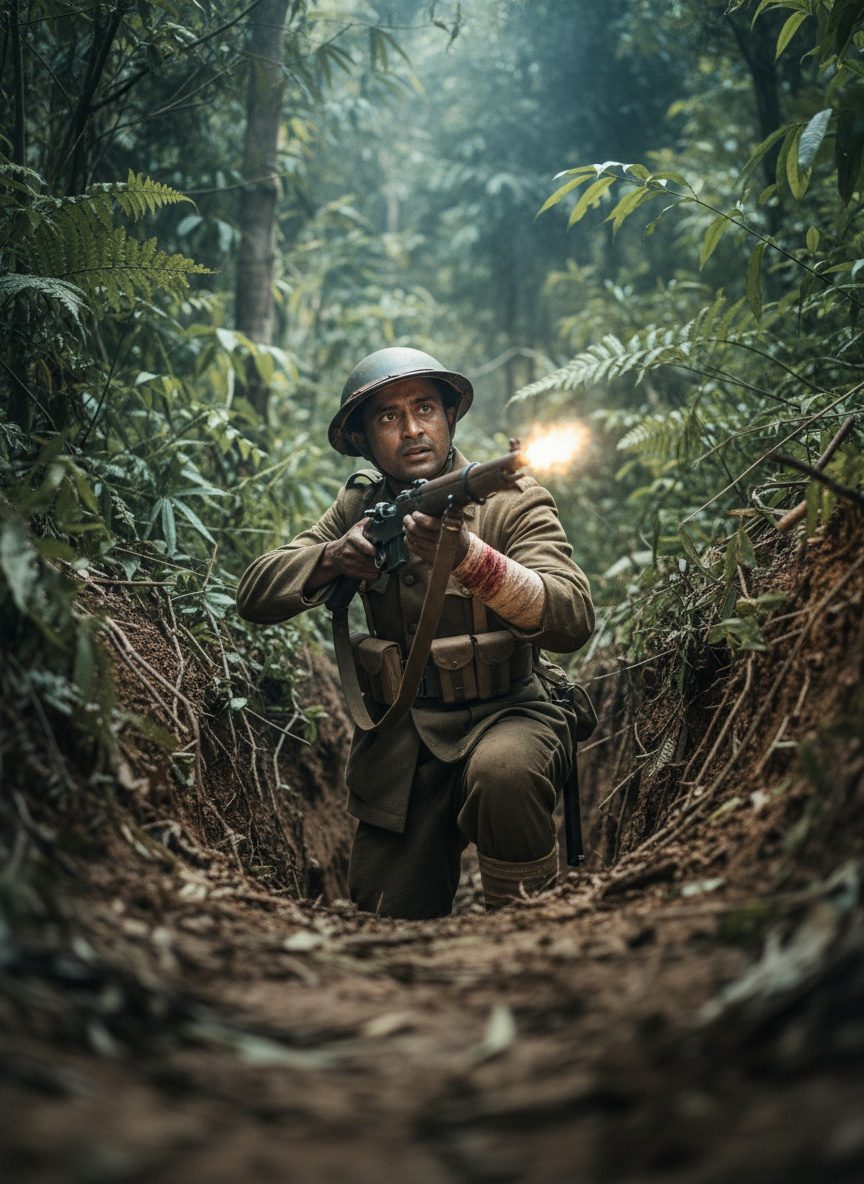
In one of these forward trenches, isolated and precariously exposed, stood Lachhiman Gurung, barely 4 feet 11 inches in height. Deceptively small in stature but indomitable in spirit, Gurung was a part of the forces trying to push back against a fortified Japanese presence. The war had expanded recruiting parameters, drawing in those who might've otherwise been overlooked. Despite his size, he had proven himself worthy; situations like these were where resolve and bravery spoke louder than the physical form.
Gurung was not alone in his trench, but he might as well have been. Strategically placed 100 yards ahead of the main line, the forward position served as both an early warning system and a first line of defense. Gurung expected danger, but the brutal onslaught of 200 Japanese soldiers charging through the underbrush in the black of night was something even seasoned soldiers could struggle to withstand. Scouts called it "Banzai charges"; attacks so relentless, so frenzied, they could break the will of any seasoned warrior.
In the chaos, Gurung's quick reactions saved him and his trench mates temporarily. They were surrounded, grenades hurled into their midst like deadly whispers in the dark. Gurung caught two, one after another, hurling them back before they could explode, turning the attackers’ own weapons against them. His hands, now caked with mud and sweat, tingled with a raw energy born out of necessity and primal fear.
The Firelight of Determination
As the third grenade landed, time seemed to stretch and compress in a paradox only such life-threatening situations can create. With no time to reconsider, Gurung grabbed for it. But fate was unforgiving and the grenade detonated in his grasp, tearing into his flesh and ripping away his hand at the wrist. A lesser man might have succumbed to shock or pain, but what Gurung did next was anything but expected.
Gritting his teeth against the anguish, he steadied himself. The disabling injury was not just a handicap but a potential death sentence, yet capitulation was never an option. With his good hand, he clutched his rifle, drawing on inner strength that belied his diminutive frame. Alone in the trench now, he became a solitary bulwark against the tide of enemy forces. The ensuing hours stretched mercilessly, filled with the mechanical rituals of survival: aim, fire, and reload.
How does one reload a rifle with a single hand? This was the puzzle Gurung solved in the heat of battle, utilizing both his feet and what remained of his arm, a testament to human adaptability under duress. Red streaks of dawn crept over the horizon, painting the sky with hues of resilience, and still Gurung's resolve held firm. For four hours, he persisted, holding his line where others would have faltered.
A Dawn of Unshakeable Legacy
As the first light slanted over the ravaged landscape, relief forces arrived to a scene of grim determination. The battle for this patch of earth had dusted the jungle floor with a cyclic tale of bravery and bloodshed. But the story that emerged was singular in its heroism. Gurung, diminutive in stature but grand in valor, had borne the weight of survival through a night hung heavy with mortality.
The story of Lachhiman Gurung might seem the stuff of legend if not for the undeniable evidence of his sacrifice. What does it take for one man to hold a position against so many? How does a single individual muster the fortitude to carry on so doggedly when physical capabilities are so violently stripped away? In these moments, the veneer of civilization is peeled back, revealing a raw courage that neither enemies nor explosions could silence.
This episode in Burma during the final throes of World War II is not simply an anecdote of gallantry; it is a stark reminder of the lengths to which ordinary people go to safeguard principles of freedom and survival. Sometimes, it is the actions of a single stalwart individual that embody the collective heart of countless others unseen yet equally steadfast. When future generations look back on the sacrifices made during these turbulent years, let them find in Lachhiman Gurung's story a luminous example of how courage is often found in the most unexpected places, burning brightly even against the darkest of nights.