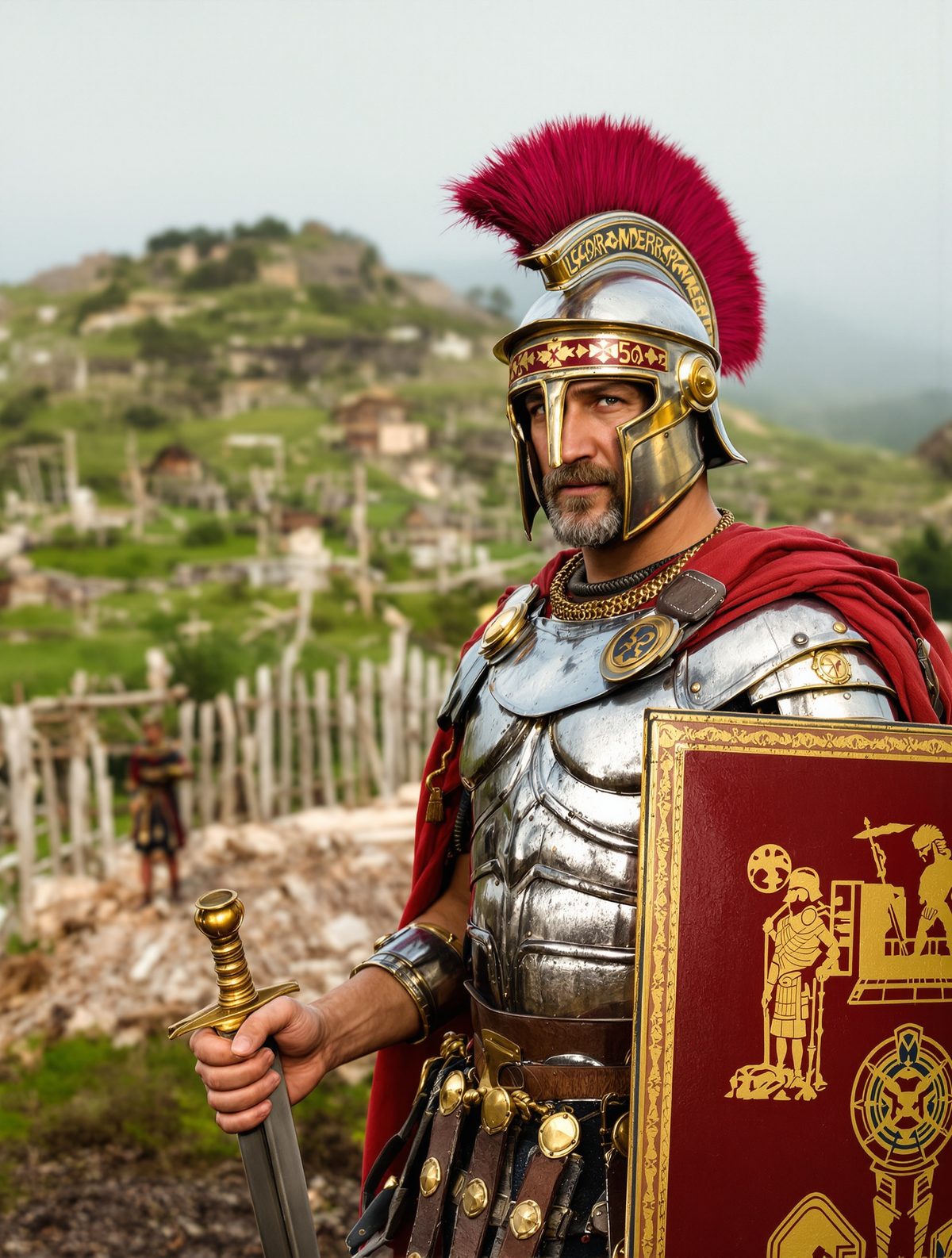
Picture this: It's 415 BC, and Athens' most charismatic general stands before a hostile court, accused of defiling the city's sacred statues in a drunken rampage. Rather than face trial, Alcibiades—golden boy of the Athenian elite—flees into the night, becoming an exile from the city he once called home. But this isn't just any ordinary story of disgrace. What happens next reads like the most audacious spy thriller ever written, except every twist actually happened.
Over the next decade, this brilliant, ruthless, and utterly shameless man would betray Athens to Sparta, then betray Sparta to Persia, then somehow convince Athens to take him back—all while the fate of the ancient world hung in the balance. Meet Alcibiades: history's most successful triple agent, whose loyalty was for sale to the highest bidder.
The Golden Boy's Fall From Grace
To understand the magnitude of Alcibiades' betrayal, you need to grasp just how high he had risen. Born into one of Athens' most prestigious families around 450 BC, he was everything the Athenians admired: devastatingly handsome, brilliantly intelligent, and wealthy beyond measure. Plato himself was smitten, writing dialogues about the young man's beauty and potential. Even better, Alcibiades had been personally tutored by Socrates, giving him philosophical credibility to match his political ambitions.
By 415 BC, he had maneuvered himself into commanding the most ambitious military expedition in Athenian history—the Sicilian Expedition. This massive fleet of 134 ships and 5,000 soldiers was meant to conquer Sicily and establish Athenian dominance over the western Mediterranean. It was the kind of glorious campaign that could make a man's reputation for eternity.
But then came the scandal that changed everything. Someone had vandalized hundreds of sacred statues called hermai throughout Athens, chopping off their faces and genitals in what appeared to be a coordinated attack on the city's religious foundations. Fingers pointed at Alcibiades and his hard-partying aristocratic friends. Had they desecrated the gods in a drunken spree?
Here's the kicker: Alcibiades probably didn't do it. Modern historians suspect his political enemies orchestrated the accusations to destroy him just as he was about to achieve ultimate glory. But in the paranoid atmosphere of wartime Athens, logic took a backseat to fear. Rather than return to face almost certain execution, Alcibiades made a choice that would reshape the ancient world—he defected to Athens' mortal enemy, Sparta.
Teaching Sparta How to Destroy Athens
When Alcibiades arrived in Sparta in 414 BC, the Spartans had every reason to execute him on sight. After all, this was the man who had been orchestrating Athens' war effort against them. Instead, they made one of the shrewdest decisions in military history—they listened to him.
What Alcibiades offered was priceless: a complete insider's guide to Athenian weaknesses. He revealed that Athens was overextended, with its best forces committed to Sicily. He showed them exactly how to exploit this vulnerability through a brilliant three-pronged strategy that would have made Sun Tzu weep with admiration.
First, Sparta should fortify Decelea, a strategic hilltop just fourteen miles from Athens. This permanent fortress would serve as a dagger pointed at Athens' heart, allowing Spartan forces to raid Athenian territory year-round instead of just during traditional campaigning seasons. Second, they should send military aid to Syracuse to help crush the Sicilian Expedition. Third, they should encourage Athens' subject cities to revolt by promising them freedom.
The results were catastrophic for Athens. The Sicilian Expedition—which should have been Alcibiades' crowning achievement—became an unmitigated disaster. In 413 BC, the entire force was destroyed or captured. Syracuse's harbor became a graveyard for Athenian ships, while thousands of captured soldiers were worked to death in Sicilian quarries. Meanwhile, the fortress at Decelea strangled Athens' economy, cutting off access to the silver mines that funded the war effort.
But Alcibiades wasn't finished proving his worth to his new hosts. In a move that would make Machiavelli proud, he sailed to Ionia (modern-day Turkey) to convince Athens' crucial allies to switch sides. City after city fell into Spartan hands, each defection bleeding away Athens' resources and prestige. The man who once symbolized Athenian greatness had become the architect of its destruction.
Betraying the Betrayers
Just when it seemed Alcibiades had found his true calling as Sparta's secret weapon, he managed to burn that bridge too. The problem? He couldn't keep his hands off other men's wives—specifically, the wife of King Agis II of Sparta.
While Agis was away campaigning, Alcibiades seduced Queen Timaea. The affair was so blatant that when she gave birth to a son, she allegedly whispered to her servants that the child's name was "Alcibiades." When the cuckolded king returned and discovered the scandal, he reportedly declared that the boy was "not his son, but Alcibiades'."
Suddenly, the Spartan court turned ice-cold toward their Athenian guest. By 412 BC, Alcibiades realized that his usefulness to Sparta was rapidly approaching its expiration date, along with quite possibly his life. Time for another reinvention.
Enter Tissaphernes, the Persian satrap (provincial governor) of western Asia Minor. Persia had been playing both sides of the Greek conflict, providing just enough support to keep Athens and Sparta bleeding each other dry. Alcibiades convinced Tissaphernes that he could be far more useful than whatever arrangement the Persians had with Sparta.
His pitch was masterful: Why help Sparta win decisively when you could keep both Greek powers weak and dependent on Persian gold? Alcibiades persuaded Tissaphernes to reduce aid to Sparta while secretly opening negotiations with Athens. Once again, his intimate knowledge of all parties' strengths and weaknesses made him invaluable to his new patron.
The Prodigal Son's Return
By 411 BC, Athens was in desperate straits. The democracy had temporarily collapsed, replaced by an oligarchic government called the Four Hundred. The city's finances were exhausted, its allies were defecting, and Spartan forces were practically camping in Attica. In this darkest hour, Athenian commanders in the eastern Aegean made a decision that would have been unthinkable just a few years earlier—they welcomed back the traitor Alcibiades.
The irony was delicious. The man who had taught Sparta how to strangle Athens was now being invited back to save the city from the very strategies he had devised. But Alcibiades had one more surprise up his sleeve: he was still brilliant at his job.
Almost immediately, he began racking up victories. At Abydos in 411 BC, his tactical genius helped the Athenian fleet defeat a larger Spartan force. At Cyzicus in 410 BC, he orchestrated a devastating ambush that wiped out an entire Spartan fleet and killed their admiral. The victory was so complete that captured Spartan messages read simply: "Ships lost. Mindarus dead. Men starving. Don't know what to do."
For three glorious years, it seemed like the old magic had returned. Alcibiades recaptured key strongholds, restored Athenian prestige, and even convinced some allies to switch back. When he finally sailed into Piraeus harbor in 408 BC, crowds lined the docks to welcome home the man they had once condemned to death.
The Final Betrayal
But Alcibiades' luck—and his city's—was running out. In 407 BC, while he was away raising funds, his subordinate Antiochus disobeyed orders and engaged the Spartan fleet at Notium. The resulting defeat wasn't catastrophic militarily, but it was enough to turn fickle Athenian public opinion against Alcibiades once more.
Rather than face another political trial, he chose exile again, this time retiring to fortified castles in the Thracian Chersonese (modern Gallipoli Peninsula). From this refuge, he watched helplessly as Athens stumbled toward its final defeat at Aegospotami in 405 BC, where the Spartan admiral Lysander destroyed the last Athenian fleet.
Even in exile, Alcibiades remained dangerous. When he offered to help the Persian court develop anti-Spartan strategies, Lysander decided enough was enough. In 404 BC, Spartan agents tracked down the 46-year-old exile and burned down his refuge. As Alcibiades tried to escape through the flames, they cut him down with arrows, finally ending the career of history's most successful serial traitor.
The Man Who Chose Himself Over Country
Alcibiades' story reads like a cautionary tale about what happens when brilliant individuals place personal ambition above all other loyalties. In an era when most Greeks defined themselves by their city-state identity, he proved that exceptional talent could transcend traditional boundaries—for better and for worse.
His legacy forces us to confront uncomfortable questions that echo through history to our own time. When does pragmatic flexibility become shameless opportunism? Can a society survive the ambitions of its most gifted members? And perhaps most troublingly: In a world where loyalty is often rewarded with suspicion and competence with envy, how do we prevent our most capable people from becoming our greatest enemies?
The ancient world never produced another figure quite like Alcibiades—a man so talented that three different civilizations were willing to overlook his betrayals for the chance to harness his abilities. Perhaps that's for the best. After all, some people are simply too dangerous to be trusted, no matter which side they claim to be on.