Picture this: you've just fought the battle of your life against bloodthirsty Vikings, crushing them so completely that only 24 of their 300 ships sailed home. Your exhausted warriors are still celebrating when a messenger arrives with news that makes your blood run cold. Another invasion force has landed 250 miles south—and this one might be even more dangerous than the last.
This was the impossible situation facing Harold Godwinson, the last Anglo-Saxon king of England, in September 1066. What happened next would be one of the most grueling military campaigns in medieval history, ending with Harold's death at the Battle of Hastings—reportedly with a Norman arrow piercing his eye socket. But the real story of those fateful weeks reveals a king pushed to his absolute limits, making decisions that would echo through nearly a thousand years of English history.
The Viking Storm That Nearly Broke England
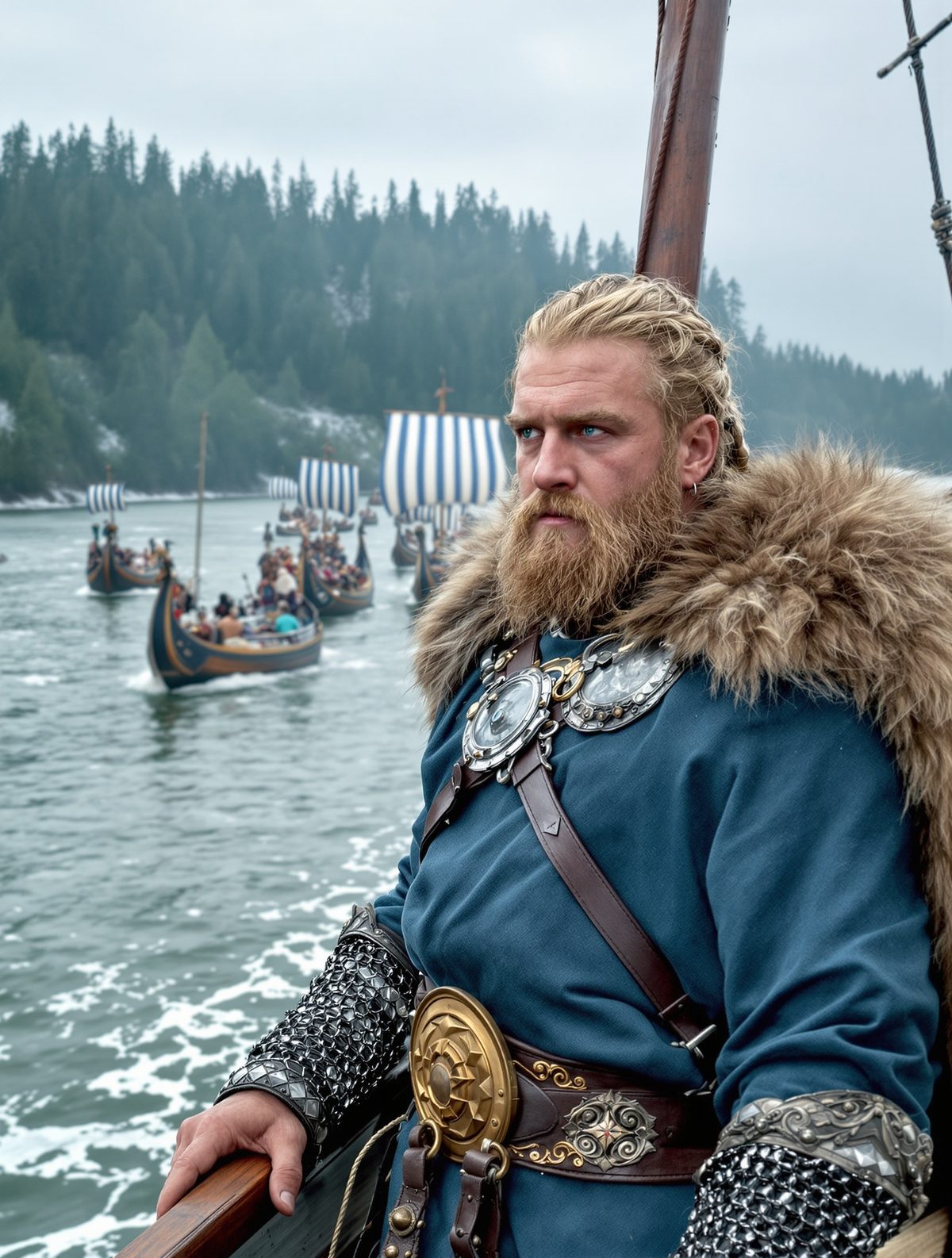
Harold's nightmare began on September 20, 1066, when his brother Tostig arrived in Yorkshire—not as a returning exile seeking forgiveness, but leading the most fearsome Viking army England had ever seen. Alongside him sailed Harald Hardrada, the six-foot-six Norwegian king whose very name meant "Hard Ruler." Hardrada wasn't just any Viking; he was a living legend who had fought from the Mediterranean to the Arctic Circle, amassing a fortune that required 150 men just to carry it.
The numbers were staggering: 300 longships carrying perhaps 15,000 battle-hardened warriors had sailed up the River Ouse. These weren't desperate raiders but a professional invasion force that had already crushed two English earls at the Battle of Fulford Gate, just outside York. The city surrendered without a fight.
But Harald Hardrada made a crucial mistake—the same one that had doomed countless Viking raids before him. After demanding hostages from the surrounding area, he allowed his army to relax at Stamford Bridge, eight miles east of York. Many warriors had left their armor on the ships, expecting nothing more challenging than collecting tribute from terrified English peasants.
They couldn't have been more wrong. Harold Godwinson was already marching north with the speed of a man possessed.
The March That Defied Belief
What Harold accomplished in the next five days shouldn't have been possible with medieval logistics. He covered 180 miles from London to Tadcaster in just four days, gathering troops along the way like a snowball rolling downhill. His household guards—the elite huscarls armed with their fearsome two-handed Danish axes—formed the backbone of his force, but he also swept up local militias, thegns, and anyone else who could swing a sword.
The Vikings at Stamford Bridge never saw them coming. According to the Anglo-Saxon Chronicle, Harold's army appeared on September 25th like an avenging storm, catching the invaders completely off guard. What followed was less a battle than a massacre.
The fighting was so intense that it entered legend. One anonymous Viking warrior supposedly held the narrow bridge alone, killing dozens of English soldiers with his massive war axe until a clever Anglo-Saxon floated under the bridge in a barrel and thrust a spear through the planks, ending the giant's defiant stand. Whether true or not, the story captures the desperate ferocity of that day.
When the blood finally stopped flowing, Harald Hardrada lay dead with an arrow through his throat. Tostig had fallen beside him. Of the 300 ships that had carried the invasion force up the river, only 24 were needed to take the survivors home. Harold had achieved what many thought impossible—he had ended the Viking Age in a single afternoon.
The Message That Changed Everything
Harold's warriors were still stripping armor from Viking corpses when the messenger arrived from the south. William of Normandy had landed at Pevensey Bay on September 28th with an army that made the Viking invasion look like a minor raid. Contemporary sources suggest William brought between 15,000 and 20,000 men—knights in mail hauberks, Norman archers with their deadly longbows, and Breton infantry hungry for English land.
Here's what most history books don't tell you: Harold could have waited. His victory at Stamford Bridge had made him a hero, and every day he delayed meant more English troops arriving from across the kingdom. His mother, Gytha, reportedly begged him to stay in London and let someone else lead the army south. She had already lost one son to Hardrada's axes; she couldn't bear to lose another to Norman swords.
But Harold was trapped by his own success and his royal obligations. William's forces were systematically devastating the English countryside around Hastings, burning villages and slaughtering civilians to force Harold into battle. As king, Harold couldn't allow his people to suffer while he waited safely in London. The psychological pressure was enormous—and William knew exactly what he was doing.
The Impossible Choice at Hastings
By October 14th, Harold's army had covered another 250 miles in just over two weeks. They were exhausted, depleted, and facing an enemy that had been resting and preparing for battle while they marched. Harold had perhaps 8,000 men; many of his northern troops had stayed behind to garrison York, and others had simply melted away during the grueling southern march.
The battlefield Harold chose on Senlac Hill was actually brilliant—a narrow ridge that negated William's numerical advantage and forced the Normans to attack uphill. The famous English shield wall was nearly impregnable when properly formed, creating a bristling wall of spears and axes that had broken countless enemies before.
For hours, it worked perfectly. Norman cavalry charges shattered against the English line like waves against a cliff. At one point, rumors spread that William had been killed, causing panic among his troops. The Duke was forced to lift his helmet and ride along his battle line, shouting that he still lived.
But Harold's exhausted warriors couldn't maintain their discipline forever. When groups of Normans began feigning retreat, some English troops broke ranks to pursue them—only to be cut down when the "fleeing" cavalry wheeled around to attack. Each gap in the shield wall made the next Norman assault more dangerous.
The Arrow That Ended an Age
The exact details of Harold's death have been debated for nearly a millennium. The Bayeux Tapestry shows a figure labeled "Harold" pulling an arrow from his eye, followed by another scene of a warrior being cut down by Norman cavalry. Some historians argue these represent two different moments in Harold's death; others believe they show two different men entirely.
What's certain is that by evening on October 14th, Harold Godwinson lay dead among his household guards, his body so mutilated that his wife Edith Swan-neck had to identify him by secret marks known only to her. William's victory was so complete that he earned his famous nickname "the Conqueror" and would be crowned King of England on Christmas Day, 1066.
The consequences rippled far beyond the battlefield. Norman French became the language of the English court, Norman architecture reshaped English cities, and Norman administrative systems replaced Anglo-Saxon traditions. The England that emerged from the conquest was fundamentally different—more centralized, more connected to continental Europe, and more hierarchical than anything Harold's ancestors would have recognized.
The King Who Tried to Do Everything
Harold Godwinson's tragedy wasn't that he was a bad king, but that he may have been too good a one. In less than a month, he had defeated the greatest Viking invasion in English history and nearly held off the Norman conquest that would reshape medieval Europe. His strategic thinking was sound, his personal courage unquestionable, and his loyalty to his people absolute.
But 1066 was the year when England faced more simultaneous threats than any kingdom could reasonably handle. Harold's story reminds us that even the most capable leaders can be overwhelmed by circumstances beyond their control—and that sometimes, being a hero isn't enough to change the course of history. The arrow that pierced his eye didn't just kill a king; it ended the Anglo-Saxon world forever and began the England we know today.